Custom Knife Manufacturer Guide: Packaging, Compliance, Delivery & Reorder Planning
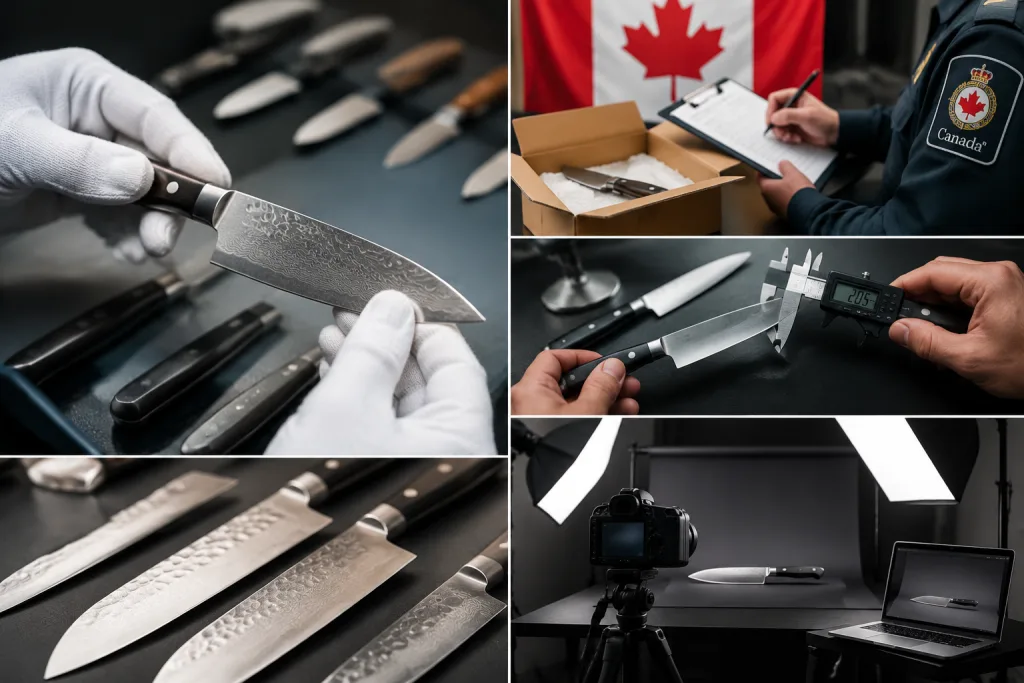
Custom Knife Manufacturer Guide: Packaging, Compliance, Delivery & Reorder Planning
**By Vincent Xi, Editorial Author**
B2B buyers rarely lose margin on unit price alone. In a **custom knife manufacturer** program, commercial risk often concentrates in packaging integrity, incomplete compliance documents, delivery variance, and weak reorder control. This guide organizes those four controls so importers, private-label brands, and retailers can move from a first sample to a repeatable supply plan.
This article is an editorial synthesis for procurement planning. It does not claim factory ownership, certifications, customer results, plant capacity, or first-hand production experience. Market figures are attributed to third-party source pages and should be treated as industry context, not as a quote guarantee for any single supplier or SKU.
Market context buyers should use carefully
China remains a major knife export base in published trade overviews. According to a B2B sourcing overview citing trade data, China exported **$1.66 billion** worth of knives in **2024**, equal to **51.5% of global knife exports** (Lee Knives sourcing guide). The same overview reports total production of knives, scissors, and blades at **2.9 billion units**, **up 8% year-over-year**, citing IndexBox material published for the 2024 market overview (Lee Knives sourcing guide).
Hub concentration also matters for capacity and logistics framing. The same guide states that Yangjiang’s knife and hardware industry exceeded **55 billion RMB** in output value in **2024**, with Yangjiang-made products accounting for **eight out of every ten knives China exports**, and that Yangjiang accounts for roughly **70% of China’s knife output** and **85% of its knife exports** (Lee Knives sourcing guide).
These are hub-level signals only. They are not proof that any single custom knife manufacturer can meet your SKU mix, packaging standard, hardness window, or destination compliance package. Use them to frame capacity conversations, then verify plant-level lead times, process control, and document readiness in the RFQ and first-article package.
Packaging specifications that protect product and brand
Packaging is both a product-protection system and a compliance surface. For fixed blades, folding knives, kitchen sets, and multi-tools, packaging decisions affect blade protection, edge condition in transit, retail presentation, and customs inspection outcomes.
Define packaging by function, not only by “gift box”
Ask the manufacturer to separate packaging into controlled layers:
1. **Primary contact packaging** — blade sleeve, edge guard, oil paper, VCI wrap, or sheath that prevents metal-to-metal contact and tip puncture. 2. **Secondary retail packaging** — color box, window box, sleeve, hang card, or clamshell, with barcode/GS1 placement if retail-ready. 3. **Tertiary logistics packaging** — inner cartons, master cartons, edge protectors, desiccant policy, moisture barrier if required, and pallet pattern. 4. **Labeling set** — product labels, carton marks, destination-language warnings, and any age or handling marks required by market.
A practical packaging brief for a custom knife manufacturer should lock measurable inputs:
- Blade length, thickness, tip geometry, and guard/sheath clearance
- Handle material sensitivity (wood, G10, resin composites, natural materials)
- Surface finish risk (satin, mirror, coated, bead-blasted)
- Drop-test expectation for master cartons (state method, drop height if buyer-defined, and sample size as a buyer requirement)
- Carton burst/strength target as a buyer assumption to confirm in the supplier quote
- Humidity-control method for long ocean transit
- Photo and physical sample approval gates before mass production
Ethical and material provenance topics can also touch packaging claims. Ethical-sourcing discussions for custom knives commonly cover responsible steel, wood, and other natural handle materials and the need for supplier diligence (Shokunin USA ethical sourcing article). If your brand prints sustainability claims on packaging, those claims must match documented material sourcing—not marketing language alone.
Packaging acceptance criteria to write into the PO
- Maximum allowed carton crush or corner damage after the agreed transit simulation
- Maximum allowed cosmetic defects after unpacking (scuffs, box crush, label skew, print misregistration)
- Exact insert fit so blades do not migrate, rattle, or contact adjacent units in transit
- Print proof approval for color, logo placement, legal text, and language set
- Master-carton count, net/gross weight, outer dimensions, and packing pattern for landed-cost modeling
**Example calculation (assumption to verify in supplier quote):** if a master carton holds **50 knives** and each finished unit weighs **0.28 kg net**, estimated carton net weight is **14.0 kg** before inserts and box mass. Confirm actual tare weight, dimensional weight, moisture-control add-ons, and palletization with the manufacturer before booking freight.
Compliance documents buyers should request early
Compliance is not a post-production scramble. For a custom knife manufacturer program, document readiness should be planned at RFQ stage because knives can trigger product-safety, labeling, materials, and import-control checks that vary by destination and retail channel.
Core commercial and technical documents
Request a document matrix that typically includes:
- Product specification sheet (steel grade, hardness target range, dimensions, finish, assembly method)
- Bill of materials with material identifiers for blade, handle, fasteners, coatings, and adhesives
- Process flow outline covering blanking/forging or stock removal, heat treatment, grinding, finishing, assembly, and final inspection—aligned with common custom manufacturing process stages discussed in industry overviews (BiliKnife custom manufacturing overview)
- Dimensional inspection report format and AQL sampling plan (**buyer-defined** method and defect classes)
- Hardness test report format, sample frequency, and measurement locations (**buyer-defined**)
- Packaging artwork proofs and final print approvals
- Packing list, commercial invoice, and certificate of origin as shipment documents
- Material declarations relevant to your market (for example restricted-substances statements if your legal team requires them)
Distinguish standards from supplier practice
Name a standard only when it is relevant to your contract. A standard’s requirement is not the same as a manufacturer’s claimed practice, and a practice is not the same as a current certification document. Do not accept certificate numbers without date, scope, and issuing-body verification. If a supplier references a testing body or quality center in a manufacturing hub, treat that as a possible verification pathway—not automatic product certification (Lee Knives sourcing guide).
Destination and product-control checks
Because knife categories (kitchen, outdoor, folding, collector, tactical-style) face different retail and import expectations, ask legal/compliance advisors to map:
- Required warnings and language localization
- Age-restricted retail rules where applicable
- Carrier and destination restrictions for certain blade types
- Retailer onboarding documents (test reports, packaging data, images, SDS if coatings/chemicals apply)
- Traceability needs for reorders (lot codes, steel heat lots, packaging print lots)
Ethical-sourcing diligence can support brand compliance narratives when materials and labor practices are documented, but ethical claims still require evidence discipline (Shokunin USA ethical sourcing article).
Delivery planning and lead-time controls
Delivery failures usually come from undefined gates, not from a single late truck. Structure the schedule around approval milestones with owners and freeze points.
Build a milestone schedule, not only an ex-works date
A workable custom knife manufacturer timeline typically includes:
1. RFQ and feasibility review 2. Engineering drawing freeze 3. Prototype or pre-production sample 4. Packaging sample and print proof 5. Pilot run / first article inspection 6. Mass production 7. Final inspection and document pack 8. Booking, export packing, and handover
Industry process descriptions commonly sequence design, steel preparation, heat treatment, grinding/finishing, assembly, and quality control before release (BiliKnife custom manufacturing overview). Your commercial schedule should attach owners and calendar days to each gate and define what freezes at each approval.
Delivery variables to lock in writing
- Incoterms and named place
- Split-shipment rules if packaging or accessories lag blades
- Inspection window and rework buffer
- Carton marking deadline relative to vessel cut-off
- Photo evidence of packed goods before handover
- Responsibility for demurrage/detention if documents are late
**Example planning assumption (verify in quote):** if sample approval takes **14 calendar days**, pilot production **21 calendar days**, mass production **35 calendar days**, and export packing/document finalization **7 calendar days**, a simplified critical path is **77 calendar days** before freight transit. This is an illustrative planning model only; actual capacity, steel availability, heat-treat queues, finishing load, and packaging tooling change the number.
Hub infrastructure can support logistics depth—trade cities, testing centers, and export clusters are frequently cited for major knife-producing regions—but buyers still need plant-level booking discipline and document readiness (Lee Knives sourcing guide).
Reorder planning for stable private-label supply
A first order is a trial. A reorder system is the business. Custom knife programs fail when packaging dies, steel lots, handle batches, or artwork versions drift between runs without written change control.
Create a reorder package at first PO
At first mass order, archive:
- Frozen CAD/2D drawings and revision index
- Approved sample photos with measurement points
- Steel grade and hardness acceptance window
- Handle material batch notes and substitute rules
- Packaging dielines, print proofs, and color references
- Carton specs and barcode masters
- Inspection checklist used for release
- Open issues log from first shipment
Reorder triggers and inventory policy
Set operational triggers before stockouts:
- Safety stock by SKU velocity
- Reorder point that includes production + transit + customs buffer
- MOQ breakpoints for blade blanks, handles, boxes, and sheaths
- Shared forecast horizon (for example **90/180 days**) as a planning input, not a binding forecast unless contracted
- Change-control rule: no material, heat-treat, geometry, finish, or packaging change without written approval
**Example calculation (assumption to verify):** if monthly sell-through is **1,200 units**, transit + clearance is **30 days**, and production is **45 days**, a simple cover target of demand during **75 days** is about **3,000 units** before safety stock. Add safety stock based on demand variance, then confirm MOQ, process bottleneck, and capacity with the manufacturer.
OEM/ODM and small-batch services are commonly listed among professional custom knife manufacturer offerings in industry explainers, which can support limited editions and replenishment models when revision control is strict (BiliKnife custom manufacturing overview).
Buyer decision table: packaging, compliance, delivery, reorder
| Decision area | Lower-risk choice for first scalable run | Higher-risk choice | What to verify before PO | Commercial impact | | --- | --- | --- | --- | --- | | Packaging | Edge guard + fitted insert + double-wall master carton + humidity control | Soft wrap only, no fit test, mixed SKUs in one master without dividers | Drop/fit samples, carton specs, label proofs | Lower damage claims; clearer landed cost | | Compliance pack | Spec sheet + BOM + inspection format + hardness report template + packing docs agreed pre-production | “Certificates later” with no scope/date | Document owners, test methods, retention period | Fewer customs/retailer delays | | Delivery plan | Milestone schedule with sample, pilot, and final inspection gates | Single ship date with no approval freezes | Capacity calendar, rework buffer, Incoterms | More predictable launch windows | | Reorder system | Frozen revision pack + change control + forecast cadence | Re-quote every run with open substitutions | MOQ by component, lead time by process step | Better continuity of fit/finish and packaging | | Supplier context | Capacity discussion tied to category focus and process-control evidence | Selection based only on catalog photos | Process capability, packaging line readiness, document sample set | Better match to private-label scale |
Practical RFQ checklist for a custom knife manufacturer
Use this checklist as the buyer-side attachment to your RFQ:
1. **Product definition:** knife category, target retail channel, blade steel preference, hardness window, dimensions, finish, handle material, and assembly method. 2. **Drawings:** 2D/3D files, tolerance table, logo/marking positions, and revision-control rule. 3. **Packaging brief:** primary/secondary/tertiary packaging, insert design, barcode needs, languages, and carton marks. 4. **Compliance document list:** required reports, declarations, and retention period; state that certificates must show current scope and date. 5. **Inspection plan:** sampling method, critical defects list, hardness/dimension checkpoints, and rework rules. 6. **Delivery plan:** sample date, pilot date, mass-production window, Incoterms, and allowed partial shipments. 7. **Reorder plan:** expected replenishment quantity bands, forecast horizon, and no-substitution clause. 8. **Material and ethical questions (if brand-relevant):** steel source documentation, handle material origin notes, and restricted-substance statements where required (Shokunin USA ethical sourcing article). 9. **Commercial terms:** MOQ by SKU, tooling ownership, sample fees, payment terms, and warranty/defect handling process. 10. **Evidence request:** blank inspection form, packing list template, and photos of packaging line/export packing method for evaluation only—not as certification proof.
Methodology: how the evidence in this article was derived
**Source contexts used**
1. A China-focused B2B knife manufacturing hub guide summarizing **2024** export value, global share, production volume growth, and Yangjiang concentration metrics, with citations to trade/industry references inside that page (Lee Knives sourcing guide). 2. An ethical-sourcing explainer focused on responsible material choices and supplier diligence themes for custom knives (Shokunin USA ethical sourcing article). 3. A custom knives manufacturing overview describing common process stages and service models such as OEM/ODM and quality-control sequencing (BiliKnife custom manufacturing overview).
**How the data was used**
- Exact market numbers were retained only when the source page stated them with year/scope and were re-attributed to that page.
- Process and packaging guidance was generalized into buyer controls (documents, gates, checklists) rather than presented as any one factory’s capability, certification, or measured yield.
- Example calculations are labeled as planning assumptions for quote verification, not measured factory results, audit findings, or guaranteed lead times.
Limitations and what to verify before you buy
- Hub export and output figures describe industry scale, not your supplier’s open capacity, quality yield, packaging competence, or current booking calendar.
- Ethical-sourcing principles do not automatically equal audited chain-of-custody for a specific steel heat lot or handle batch.
- Process stage lists are common manufacturing sequences; actual heat-treat control, finishing capability, and inspection discipline must be validated per plant and per SKU.
- Destination laws, retailer onboarding rules, carrier restrictions, and labeling requirements change by market and product type—confirm with qualified compliance counsel.
- Any standard, test report, or certificate is only useful with current scope, date, method, and traceability to the shipped lot.
- Packaging drop performance, hardness distributions, carton weights, MOQs, and lead times must be confirmed in writing on the supplier quote and first-article package.
Closing procurement view
Selecting a **custom knife manufacturer** for private-label or OEM supply is less about catalog breadth and more about operational completeness: packaging that survives freight, compliance documents ready before cargo is booked, delivery gates that freeze design and print risk, and reorder files that prevent silent substitutions. Use the decision table and RFQ checklist above to force those controls into the commercial process, then validate every number that affects cost, schedule, or market access against current supplier evidence.
---
**Author note:** Written by Vincent Xi, Editorial Author for TANGFORGE. Author profile: https://tangforge.com/authors/vincent-xi/. This article is editorial guidance for B2B sourcing workflows and does not present personal production experience, factory audits, certifications, customer outcomes, or unverified performance claims.
<script type="application/ld+json"> { "@context": "https://schema.org", "@type": "Article", "headline": "Custom Knife Manufacturer Guide: Packaging, Compliance, Delivery & Reorder Planning", "author": { "@type": "Person", "name": "Vincent Xi", "jobTitle": "Editorial Author", "url": "https://tangforge.com/authors/vincent-xi/" }, "publisher": { "@type": "Organization", "name": "TANGFORGE", "url": "https://tangforge.com" }, "mainEntityOfPage": "https://tangforge.com" } </script>