Custom Knife Manufacturer RFQ Guide: MOQ and Landed-Cost Controls
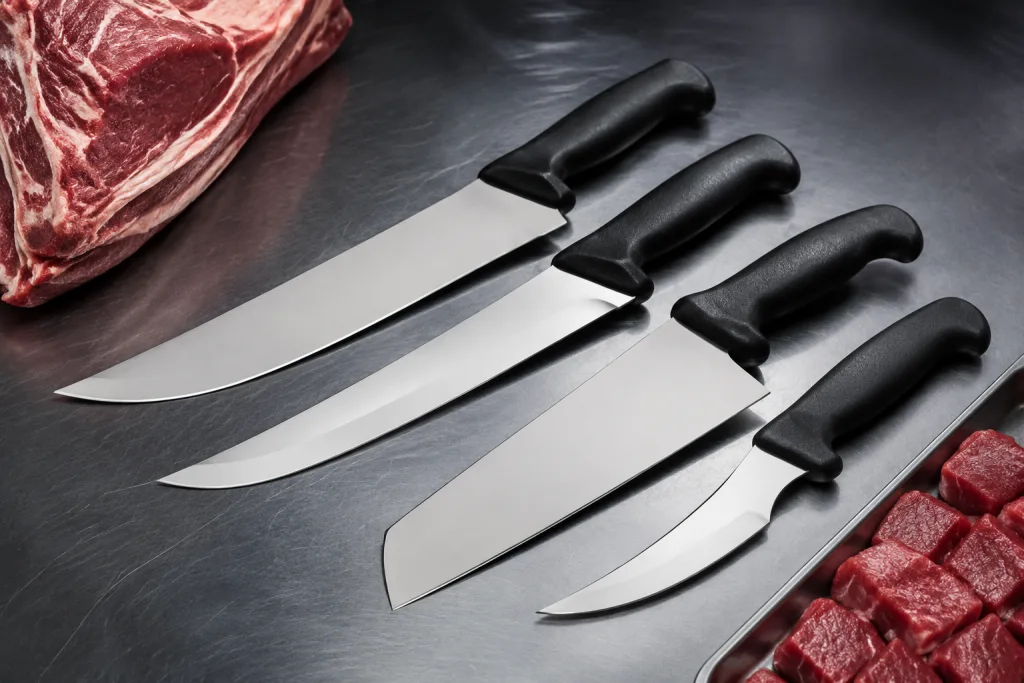
Custom Knife Manufacturer RFQ Guide: MOQ and Landed-Cost Controls
B2B buyers comparing a custom knife manufacturer need quote details they can audit, not broad supplier claims. This guide turns the supplied source context into RFQ questions, document requests, MOQ checks, packaging inputs, and landed-cost controls.
This article does not verify any specific manufacturer, brand, product, certification, compliance status, quality system, production capacity, MOQ, lead time, or price. Treat every supplier claim as unproven until the supplier provides order-specific documentation and the buyer validates it for the intended market.
Evidence Boundary From Supplied Sources
| Supplied source | Source-supported use in this guide | Boundary | |---|---|---| | China sourcing article | The source reports that China exported $1.66 billion worth of knives in 2024, equal to 51.5% of global knife exports, and describes Yangjiang, Guangdong as a knife manufacturing center with supply-chain support for steel sourcing, heat treatment, handle fabrication, finishing, and export logistics source. | This supports sourcing research context only. It does not prove the capability, compliance, quality, price, or reliability of any individual supplier. | | Custom knife production overview | The source describes production stages that may include design, steel preparation, forging or stock removal, heat treatment, tempering, grinding, finishing, assembly, and quality control source. | This supports turning production stages into RFQ checkpoints. It does not establish which process a specific supplier uses for a specific order. | | Ethical sourcing reference | The source frames ethical sourcing for custom knives around responsible and sustainable materials and production methods, and identifies blade steel, wood handles, and natural materials as areas where sourcing questions can arise source. | This supports asking for material evidence. It does not validate sustainability, traceability, food-contact, recycled-content, or origin claims for any item. |
What to Lock Before Deposit
Before sample approval, deposit payment, or purchase-order release, require the custom knife manufacturer to state each commercial and technical assumption in writing. The goal is to make the quote comparable, not to assume what is included.
| Control point | Buyer question | Required supplier output | |---|---|---| | MOQ basis | Is MOQ counted by total order, model, SKU, color, steel grade, handle material, finish, logo method, packaging version, or shipment? | MOQ definition for each commercial variant | | Price ladder | What is the unit price at trial, launch, and replenishment quantities using the same specification? | Tiered quote with unchanged product and packaging assumptions | | One-time charges | Which tooling, fixture, mold, jig, drawing, artwork, or setup fees apply? | Separate line items plus reuse, storage, and ownership terms | | Sample control | What sample type is being quoted, who pays freight, and what approval standard applies? | Sample cost, lead time, freight payer, and approval process | | Product specification | Which blade, handle, finish, logo, hardness target, dimensions, tolerances, and packaging details are included? | Drawing, spec sheet, approved reference sample, or annotated images | | Packaging | Is the quote based on bulk pack, sheath, pouch, retail box, insert, barcode, warning label, master carton, or palletization? | Packaging bill of materials and carton data | | Inspection | Which checks occur before shipment, and what defines an acceptable unit? | Inspection checklist, defect definitions, and acceptance criteria | | Freight basis | Which trade term, named place, shipment mode, carton dimensions, gross weight, and insurance assumption are used? | Comparable logistics assumptions | | Documents | Which material, product, export, and shipping documents can the supplier provide for this order? | Document list before deposit |
MOQ Controls
Do not treat an MOQ number as complete until the supplier states its counting basis. Use this table in the RFQ and require a filled response.
| Variant driver | Supplier must state | Buyer use | |---|---|---| | Base product | MOQ per model, pattern, or SKU | Confirms the minimum production commitment | | Blade steel | MOQ by steel grade, stock thickness, or finish | Shows whether material changes reset MOQ | | Handle | MOQ by material, color, texture, or fastening method | Shows whether cosmetic variation affects quantity | | Logo | MOQ by etching, engraving, stamping, printing, placement, or artwork | Separates branding choices from base-unit cost | | Packaging | MOQ by bulk pack, pouch, sheath, retail box, insert, barcode, or label version | Prevents packaging variants from creating hidden minimums | | Shipment | MOQ by consolidated order, split delivery, or destination | Clarifies whether split shipments affect price or MOQ |
Ask for the same specification at three buying volumes.
| Quantity tier | RFQ purpose | Quote requirement | |---|---|---| | Trial | Market test, distributor preview, or initial buy | Unit price, setup charges, and sample impact stated separately | | Launch | First commercial order | Unit price and packaging assumptions locked to the approved specification | | Replenishment | Repeat order | Unit price based on repeated specification and known one-time-charge treatment |
RFQ Pricing Controls
Ask every supplier to quote the same product, packaging, trade term, named place, and shipment assumption. Do not compare a base product quote against a retail-ready quote.
| Cost line | What to request | Buyer control | |---|---|---| | Unit price | Unit price by quantity tier | Keeps volume effect visible | | Tooling and setup | Fixtures, dies, molds, jigs, drawing fees, logo setup, packaging setup | Separates one-time charges from repeat-order pricing | | Samples | Sample cost, sample type, lead time, and freight payer | Clarifies pre-production approval cost | | Logo and branding | Method, size, placement, color, artwork format, setup fee, and unit charge | Prevents branding from being buried in the base quote | | Packaging | Bulk pack, sheath, pouch, retail box, insert, barcode, warning label, inner carton, master carton | Defines the quoted packing state | | Inspection support | Factory inspection access, third-party inspection cooperation, reinspection handling | Puts inspection work into the commercial discussion | | Origin handling | Inland delivery, export handling, forwarder delivery point, port or warehouse handoff | Makes logistics comparisons less ambiguous | | Accessories or spare parts | Screws, sheaths, clips, display items, replacement parts | Captures add-ons that may ship with or beside the product |
For EXW, FOB, CIF, DAP, DDP, or any other trade term, require the named place. Then normalize destination, shipment mode, carton data, insurance assumption, duty and tax treatment, and delivery point before comparing landed cost.
Landed-Cost Worksheet
Use this calculation as a buyer worksheet, not as a supplier performance claim:
Estimated sellable landed cost per unit = estimated total program cost / expected sellable units
Include only inputs that apply to the order, and label estimates separately from confirmed supplier charges.
| Input | Confirmed or estimated | Notes to request | |---|---|---| | Product unit cost | Confirmed quote | Same specification and same quantity tier | | One-time charges | Confirmed quote | Tooling, setup, artwork, drawing, mold, fixture, or jig terms | | Sample and approval cost | Confirmed or estimated | Sample unit cost, freight, and approval rounds | | Branding cost | Confirmed quote | Method, setup, unit charge, and artwork revision rules | | Packaging cost | Confirmed quote | Product packaging, labels, inserts, cartons, and pallet plan if used | | Origin handling | Confirmed or estimated | Inland movement and export handoff assumptions | | International freight | Estimated until booked | Shipment mode, chargeable weight or volume, routing, and insurance | | Duty, tax, and brokerage | Estimated until classified and entered | HS code review, destination rules, and broker input | | Inspection | Confirmed or estimated | Factory, third-party, reinspection, or travel-related costs | | Rework reserve | Estimated | Relabeling, repacking, remake, shortage, or credit assumptions | | Inventory cost | Estimated | Storage, financing, and sell-through assumptions |
Request carton data before freight modeling:
- Units per inner carton
- Units per master carton
- Master carton length, width, and height
- Gross weight and net weight
- Packaging material and retail-pack dimensions
- Pallet configuration if palletized
- Carton marking requirements
Model bulk pack, standard retail pack, and premium pack as separate scenarios when packaging differs. Keep the product specification unchanged so the cost change is tied to packaging rather than uncontrolled quote differences.
Specifications for the RFQ
The supplied production-stage source supports breaking the RFQ into process checkpoints: design, material preparation, forming or stock removal, heat treatment, tempering, grinding, finishing, assembly, and quality control source. For each relevant checkpoint, ask for measurable requirements instead of broad terms such as premium, upgraded, durable, or retail-ready.
| RFQ area | Technical details to specify | |---|---| | Product type | Kitchen knife, fixed blade, folding knife, multi-tool, outdoor knife, or other category | | Blade | Steel grade, stock thickness, blade length, profile, grind, bevel, edge geometry, surface finish, coating, polish, or stonewash | | Heat treatment | Target hardness range, test method if required, and acceptance range | | Handle | Material, color, texture, contour, fasteners, adhesive use if applicable, finish, and tolerances | | Mechanism, if applicable | Lock type, opening method, pivot hardware, clip, stop pin, safety feature, and functional checks | | Logo | Method, size, placement, color, artwork file format, and approval sample requirement | | Packaging | Sheath, pouch, retail box, insert, barcode, warning label, inner carton, master carton, and carton marks | | Quality | Cosmetic defect limits, functional checks, edge requirements, fit and finish criteria, corrosion or coating checks if required | | Market details | Destination country, sales channel, intended use, and buyer-required document list |
Separate custom branding from custom engineering. A logo on an existing pattern should be quoted apart from changes to blade geometry, steel, handle construction, locking mechanism, sheath structure, or packaging structure.
Material and Ethical Sourcing Evidence
The supplied ethical sourcing reference supports asking questions about materials and production methods; it does not support making unverified claims on packaging, listings, or sales sheets source. Treat material language as a documentation issue.
Before approving any claim such as recycled, sustainable, natural, traceable, food-safe, non-toxic, responsibly sourced, or origin-specific, ask for evidence that matches the target market and sales channel.
| Question | Supplier output requested | |---|---| | What materials are used? | Material declaration for blade, handle, fasteners, sheath, pouch, insert, packaging, labels, inks, coatings, and adhesives | | Are natural materials used? | Identification of wood, bone, horn, leather, shell, stone, or other natural inputs where applicable | | Are buyer claims supported? | Documents that support the exact wording proposed for packaging or sales content | | Can material changes occur after approval? | Written change-control rule requiring buyer approval before substitution | | Are packaging materials part of the claim? | Packaging component list and supporting documents where packaging claims are made | | Does the destination market require additional review? | Buyer-side compliance review before claim approval |
Do not transfer supplier marketing language into buyer-facing content unless the evidence is available, relevant, and reviewed for the destination market.
Supplier Document Request
Ask for documents by order and product, not as general company statements. Availability will vary by supplier and product, so the RFQ should ask the supplier to confirm what can be provided.
| Document type | Request wording | |---|---| | Product description | Full commercial description of the knife and accessories being shipped | | Material declaration | Declared materials for blade, handle, fasteners, sheath, packaging, and accessories | | Drawing or spec sheet | Current revision with dimensions, tolerances, finish, logo, and packaging references | | Approved sample record | Sample photos, sample ID, date, and approval notes | | Packaging artwork | Current artwork files, barcode data, warning labels, and carton marks | | Carton data | Units per carton, dimensions, gross weight, net weight, and pallet plan if used | | Export documents | Supplier list of documents available for the quoted trade term and destination | | HS code suggestion | Supplier suggestion only, subject to buyer or broker review | | Inspection checklist | Functional checks, cosmetic limits, packaging checks, and sampling approach if used | | Change log | Record of approved changes to design, material, packaging, quantity, or schedule |
Quote Comparison Worksheet
Use the same assumptions for every supplier before comparing totals.
| Comparison item | Supplier A | Supplier B | Supplier C | |---|---:|---:|---:| | MOQ definition by variant | | | | | Trial quantity unit price | | | | | Launch quantity unit price | | | | | Replenishment quantity unit price | | | | | Tooling and setup | | | | | Sample cost and sample freight | | | | | Logo setup and unit charge | | | | | Packaging cost | | | | | Inspection support or cost | | | | | Origin handling | | | | | Freight assumption | | | | | Duty, tax, and brokerage estimate | | | | | Estimated sellable landed cost | | | | | Missing assumptions | | | | | Documents confirmed available | | | |
For margin modeling, use a quote only when inclusions, exclusions, assumptions, and change triggers are visible. If the quote does not state them, request clarification before treating the number as comparable.
Purchase Order Controls
Attach or reference the approved documents in the purchase order so commercial terms and product requirements point to the same version set.
- Final drawing or specification sheet
- Approved pre-production sample record or approved sample photos
- Material and finish requirements
- Packaging artwork and packaging structure
- Carton specification
- Inspection checklist and acceptance criteria
- MOQ definition and quantity by SKU
- Final unit price and one-time charges
- Trade term and named place
- Lead time and shipment window
- Payment terms and release conditions
- Change-control process for design, material, packaging, quantity, and schedule
- Defect-resolution process for rework, replacement, credit, remake, and reinspection
A controlled custom knife manufacturer search should not depend on category-level source claims or unverified supplier marketing language. Build the decision around a written specification, a defined MOQ basis, separated costs, documented materials, comparable freight assumptions, and purchase-order terms that match the approved sample.