Custom Knife Manufacturer RFQ Guide: Specifications B2B Buyers Should Provide
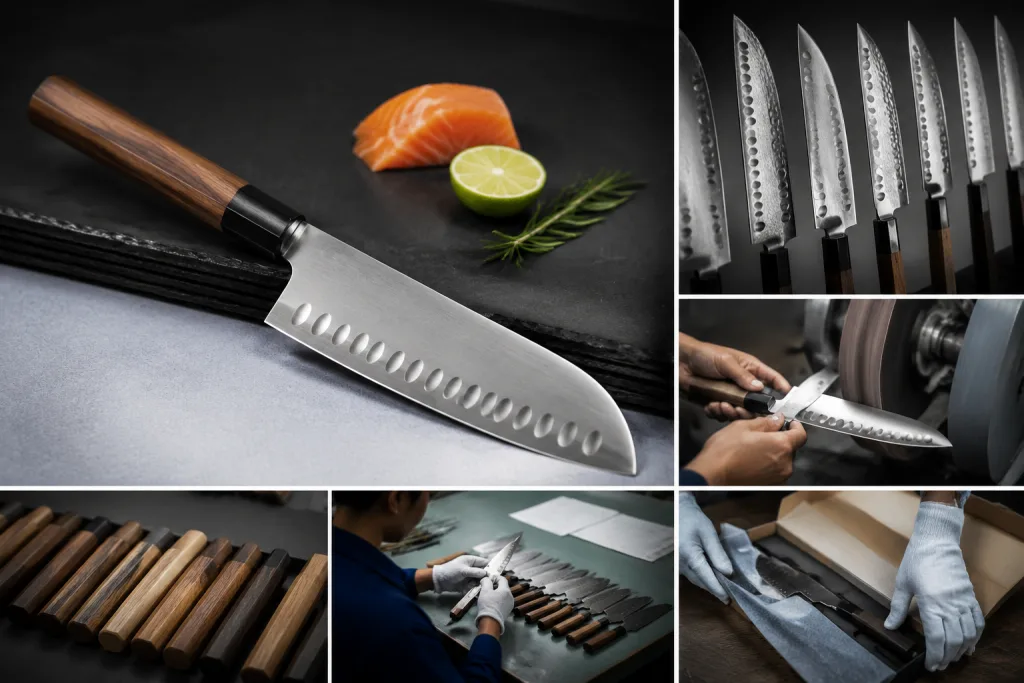
Custom Knife Manufacturer RFQ Guide: Specifications B2B Buyers Should Provide
A strong custom knife manufacturer RFQ gives every supplier the same technical, quality, packaging, documentation, and commercial requirements. The purpose is not to ask for a generally “better” knife. It is to define the product, the acceptance method, and the evidence required for any material, origin, performance, or sustainability claim.
Use market and supplier articles as sourcing context, not as substitutes for a controlled specification, supplier qualification process, inspection plan, packaging review, or destination-market compliance review. For additional sourcing context, buyers may review resources such as Lee Knives on Chinese knife manufacturing Lee Knives, BiliKnife on custom knife manufacturing topics BiliKnife, Shokunin USA on ethical sourcing considerations Shokunin USA, and specialist knife retail references such as KnifePurveyor KnifePurveyor.
This guide is an RFQ framework for B2B sourcing. It is not legal, customs, safety, or certification advice.
1. Define the Buying Requirement First
Start with the commercial context and use case. A kitchen knife, fixed-blade outdoor knife, folding everyday-carry knife, multi-tool, collector item, and promotional knife may require different materials, mechanisms, packaging, inspection criteria, documentation, and compliance review.
Include these fields at the top of the RFQ:
| RFQ field | What to state | Why it helps | |---|---|---| | Knife type | Chef knife, paring knife, hunting knife, folding knife, utility blade, multi-tool, or other defined format | Prevents broad quoting assumptions | | Intended use | Food preparation, outdoor utility, retail gift set, industrial cutting, collector item, or private-label line | Links the specification to performance, packaging, and review needs | | Destination market | Country or region of sale, sales channel, importer or distributor requirements, and any known restricted-material or labeling requirements | Gives the supplier review context without asking them to guess legal obligations | | Design status | Sketch, 2D drawing, 3D file, reference sample, working prototype, or existing SKU modification | Shows how much development work is needed before production quoting | | Order plan | Sample quantity, pilot quantity, production quantity, reorder forecast, and target launch date | Helps the supplier quote tooling, unit cost, capacity, and lead time | | Service expectation | Make-to-print production, private-label adaptation, or design-for-manufacture feedback | Separates production quoting from design support |
If suppliers use terms such as OEM, ODM, private label, or custom manufacturing, ask them to define exactly what they can provide for the specific knife category, order quantity, material set, and documentation requirements. Do not assume that the same service label means the same capability across suppliers.
2. Prepare the Product Definition Package
A useful RFQ package identifies each controlled part of the product. If a detail is not defined, the supplier may quote using its own assumptions. Those assumptions can affect cost, appearance, material selection, inspection, and packaging.
Attach the strongest available combination of:
- 2D drawings with dimensions, units, tolerances, datums, and revision numbers.
- 3D files, if available, with file format and revision number.
- Reference samples or photos with scale, marked to show which features are controlled.
- Blade material, handle material, hardware, accessory, and finish requirements.
- Logo, marking, etching, engraving, or laser artwork with placement dimensions.
- Packaging artwork, dielines, barcode files, warning labels, and carton marks.
- Inspection checklist, defect definitions, measurement locations, and acceptance criteria.
- Target price, sample quantity, order quantity, Incoterms, destination, and delivery deadline.
Control the revision history. Each drawing, artwork file, packaging file, and approved sample should have a version number or date. If a sample is approved, record which file version it represents and whether the approval covers appearance only or also covers dimensions, material, mechanism, finish, packaging, and labeling.
3. Specify the Blade in Measurable Terms
The blade is a controlled technical component. Avoid broad phrases such as stainless steel blade, premium steel, razor sharp, or durable finish unless the RFQ defines what those terms mean and how they will be checked.
| Blade field | What to put in the RFQ | Quote risk if omitted | |---|---|---| | Steel grade | Required grade, specification reference if used, and allowed substitutes | Suppliers may quote different steels at different cost levels | | Blade dimensions | Overall blade length, edge length, blade height, stock thickness, spine thickness, tip profile, and measurement tolerances | Samples may match the look but not the controlled geometry | | Units and datums | Metric or inch units, drawing datum points, and measurement locations | Suppliers may measure from different points | | Tang or construction | Full tang, partial tang, hidden tang, liner-based folder construction, or other defined format | Assembly cost and durability assumptions may differ | | Grind and bevel | Flat grind, hollow grind, convex grind, bevel angle, edge finish, and edge consistency requirement | Cutting feel, appearance, and inspection results may vary | | Heat treatment | Target HRC range, test location, sample size, lot record request, and retest rule | Hardness expectations may be unclear | | Surface finish | Satin, bead-blasted, stonewashed, mirror polish, coating, or other defined finish, with approved reference photos if possible | Cosmetic standards may be interpreted subjectively | | Marking | Marking method, artwork file, placement, size, depth or contrast expectation, and approval sample | Logos or required marks may be inconsistent | | Sharpness or edge test | Required test method, sample size, and acceptance rule, if the buyer uses one | Edge acceptance may rely only on visual judgment |
If substitutions are allowed, require the supplier to identify the proposed substitute before quoting or sampling. Ask for the expected difference in corrosion resistance, toughness, edge retention, availability, cost, and documentation. If substitutions are not allowed, state that in the RFQ, purchase order, and inspection plan.
4. Define Handle, Mechanism, Hardware, and Accessories
The handle and assembly details affect fit, appearance, repeatability, and cost. Define the material and construction instead of using broad descriptions such as black handle, wood handle, tactical handle, or luxury handle.
Useful handle and assembly fields include:
- Handle material, grade or specification if applicable, color, texture, finish, and thickness.
- Natural-material variation limits, if wood, horn, bone, or other variable materials are used.
- Fastener type, finish, thread treatment, tool size, and exposed or hidden fastener requirement.
- Tang construction, scale attachment method, bolster, guard, end cap, spacer, or liner details.
- Weight range, balance point, or handle contour requirement, if important to the product.
- Sheath, saya, pouch, clip, lanyard hole, display box, or accessory requirements.
For folding knives, add mechanism-specific requirements:
- Lock type.
- Opening method.
- Pivot hardware.
- Washer or bearing type.
- Liner or frame material.
- Clip orientation and screw pattern.
- Blade centering requirement.
- Lock engagement and lock play criteria.
- Closed-blade clearance and edge exposure acceptance criteria.
- Open force, close force, or detent feel only if the buyer defines a test method.
Ethical sourcing should be handled as a documentation requirement, not as unsupported marketing language. Shokunin USA discusses ethical sourcing considerations for custom knives Shokunin USA. For procurement, ask for material origin information, restricted-material declarations where relevant, and written support for any sustainability, responsibility, recycled-content, or labor-practice claim before using that claim in product listings, packaging, or sales materials.
5. Set Tolerances and Inspection Criteria Before Sampling
Quality needs an agreed measurement method. Without inspection criteria, a buyer and manufacturer may both agree to high quality while judging different things.
Identify critical-to-quality points for the specific knife type:
| Knife type | Common inspection points to define | |---|---| | Kitchen knife | Blade length, edge straightness, spine thickness, handle fit, weight, balance point, finish uniformity, marking placement, and packaging cleanliness | | Folding knife | Blade centering, lock engagement, lock play, pivot smoothness, open length, closed length, clip alignment, screw condition, closed-edge exposure, and edge safety | | Outdoor fixed blade | Tang exposure, handle scale alignment, sheath fit, edge consistency, coating condition, corrosion-prone areas, accessory fit, and retention fit | | Promotional or gift knife | Logo placement, cosmetic finish, packaging appearance, barcode placement, carton labeling, and set completeness |
State whether inspection will use AQL, 100 percent inspection for defined critical defects, or another agreed method. Define critical, major, and minor defects in practical terms. For example, unsafe lock failure, cracked handle scales, incorrect steel grade, exposed burrs on a cutting edge, unreadable required labeling, or incorrect packaging may need different severity levels depending on the product and destination market.
Useful QC checkpoints include:
- Pre-production sample approval.
- First-article inspection before mass production.
- In-process inspection after heat treatment.
- In-process inspection after grinding and finishing.
- Final inspection before packing.
- Carton inspection before shipment.
Ask what records the supplier can provide. Examples include dimensional reports, hardness data, material declarations, finish approval photos, packaging photos, lot or batch identifiers, and corrective-action reports for failed inspections.
6. Make Packaging and Labeling Part of the Specification
Packaging is part of the controlled product. A knife can meet the physical product specification and still fail the buyer's requirements if the unit packaging, warning label, barcode, carton mark, or country-of-origin marking is not defined and approved.
Define:
- Unit packaging type and materials.
- Blade protection, sleeves, oiling, anti-corrosion treatment, or desiccant use.
- User instructions and warning labels.
- Barcode type, number owner, file format, size, and placement.
- Retail carton, insert, tray, pouch, sheath, or gift box requirements.
- Master carton quantity, carton strength, gross weight limit, and shipping marks.
- Packaging artwork ownership and approval process.
- Translation responsibility, if multilingual packaging is required.
- Packing sample approval before production shipment.
Avoid placeholder language such as standard export carton unless the supplier provides a packing specification and the buyer approves it. For private-label knives, state who is responsible for dielines, barcode generation, warning language, translations, and final retail compliance review.
Do not use unsupported product claims on packaging or listings. Claims such as recycled steel, sustainably sourced wood, food safe, rustproof, military grade, handmade, certified, or responsibly sourced should be backed by supplier documentation and reviewed against destination-market requirements.
7. Compare Custom Knife Manufacturers With the Same Questions
Use one comparison table for every supplier. This keeps the decision focused on evidence instead of sales language.
| Decision factor | What to ask the custom knife manufacturer | Why it matters | |---|---|---| | Category fit | Which knife categories can you quote for this project, and what non-confidential examples can you share? | Category experience affects assumptions about tooling, materials, and inspection | | Development support | Can you quote from drawings only, or can you provide design-for-manufacture feedback? | Clarifies whether the supplier is quoting production, development, or both | | Materials | Which steel, handle materials, coatings, and hardware options are available for this design? | Prevents hidden substitution after sampling | | Heat treatment | What hardness range do you propose, where will hardness be tested, and what records can you provide? | Connects performance expectations to process control | | Tolerance control | Which dimensions will you measure, with what tools, tolerance, frequency, and report format? | Reduces subjective acceptance disputes | | Folding mechanism quality | How do you inspect blade centering, lock engagement, lock play, pivot smoothness, closed-edge exposure, and clip alignment? | Mechanism defects can create safety and return risk | | Finish consistency | What visual standard will define scratches, color variation, coating defects, grind marks, handle mismatch, and marking defects? | Cosmetic rejects can be costly in retail channels | | Packaging execution | Can you follow buyer-supplied packaging, labels, barcodes, warnings, carton marks, and artwork versions? | Packaging errors can delay shipment or channel acceptance | | Documentation | What inspection reports, material statements, photos, declarations, or batch records are available? | Documentation supports traceability and claim control | | Commercial terms | What are the sample cost, tooling cost, MOQ, lead time, payment terms, Incoterms, and quote validity period? | Makes supplier quotes easier to compare | | Change control | How are design revisions, approved samples, substitutions, and production changes documented? | Reduces the risk of unapproved changes |
8. Document Sample Approval and Production Handoff
The approved sample should become the production reference only if the approval is specific. Record the sample version, approval date, approved file versions, approved deviations, and whether approval covers appearance only or also covers dimensions, materials, mechanism, hardness, finish, packaging, and labeling.
Before production, request:
- Final bill of materials.
- Final drawing revision.
- Final packaging artwork and dieline revision.
- Approved sample photos.
- Inspection plan.
- Packaging specification.
- Written substitution rule.
- Production schedule and shipment plan.
- Required documentation list.
If substitutions are allowed, require written approval before use. If substitutions are not allowed, state no substitutions in the purchase order and inspection plan.
9. Practical Custom Knife RFQ Checklist
Use this checklist before requesting a quote from a custom knife manufacturer.
- [ ] Product category and intended use are defined.
- [ ] Destination market and sales channel are listed.
- [ ] 2D drawings, 3D files, reference samples, or sketches are attached.
- [ ] Unit system, datums, controlled dimensions, and drawing revisions are stated.
- [ ] Overall length, blade length, edge length, handle length, and thickness are specified.
- [ ] Blade steel grade and allowed substitutions are listed.
- [ ] Target hardness range, test location, and heat-treatment record request are included.
- [ ] Grind type, bevel angle, edge expectation, and finish requirements are defined.
- [ ] Handle material, color, texture, finish, and natural-material variation limits are specified.
- [ ] Folding mechanism, lock type, pivot, clip, liners, and hardware are defined where applicable.
- [ ] Sheath, saya, guard, bolster, pouch, or accessory requirements are included.
- [ ] Logo, marking, engraving, etching, or laser placement files are attached.
- [ ] Critical dimensions and tolerances are identified.
- [ ] Cosmetic defect standards are described, with photos where possible.
- [ ] Inspection method, AQL level if used, and critical defects are listed.
- [ ] Packaging structure, barcodes, labels, warnings, and carton requirements are included.
- [ ] Required documentation and declarations are listed.
- [ ] Sample quantity, approval process, and revision rules are stated.
- [ ] Target MOQ, production quantity, forecast, and delivery deadline are included.
- [ ] Incoterms, destination port or address, currency, and payment expectations are stated.
- [ ] Confidentiality, IP ownership, tooling ownership, and artwork use are addressed in the commercial agreement.
Bottom Line
A strong custom knife manufacturer RFQ creates a shared technical record for the buyer and supplier. It defines blade steel, hardness range, geometry, tolerances, finish, mechanism requirements, packaging, inspection records, documentation, and change control. It also separates supplier-supported facts from marketing claims, so product listings and packaging are based on evidence rather than assumptions.