How to Evaluate a Custom Knife Manufacturer for Sampling, QC, and Private Label Production
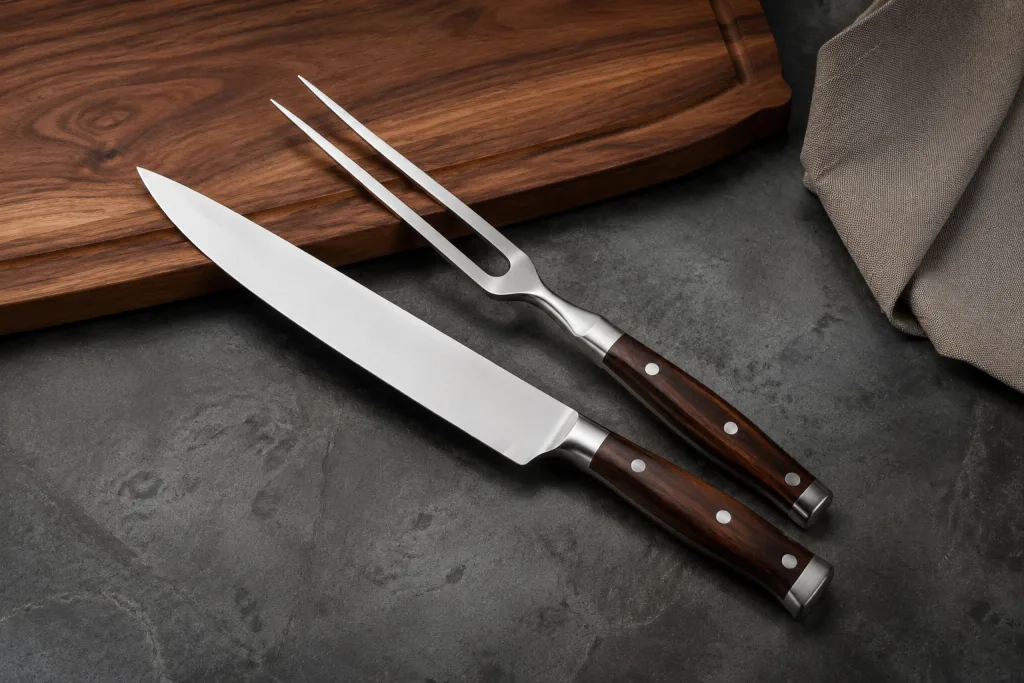
How to Evaluate a Custom Knife Manufacturer for Sampling, QC, and Private Label Production
By Vincent Xi, Editorial Author
<script type="application/ld+json"> { "@context": "https://schema.org", "@type": "BlogPosting", "headline": "How to Evaluate a Custom Knife Manufacturer for Sampling, QC, and Private Label Production", "description": "B2B guide to evaluating a custom knife manufacturer: RFQ questions, sampling controls, QC checkpoints, evidence requests, and verification limits.", "author": { "@type": "Person", "name": "Vincent Xi", "jobTitle": "Editorial Author", "url": "https://tangforge.com/authors/vincent-xi/" }, "publisher": { "@type": "Organization", "name": "TANGFORGE", "url": "https://tangforge.com/" } } </script>
Choosing a **custom knife manufacturer** is a supplier-control decision, not only a product-design decision. A buyer needs to verify whether a supplier can turn a drawing, material specification, finish requirement, logo method, packaging plan, and inspection standard into repeatable production.
A practical evaluation should answer five questions before sampling:
- Does the supplier make the required knife category and construction type?
- Which production steps are controlled in-house, and which are subcontracted?
- Can the supplier document materials, heat treatment, dimensions, finish, assembly, and packaging?
- Can the approved sample be repeated in batch production?
- Which claims, standards, and compliance documents must be verified before shipment?
This guide is for importers, private-label brands, outdoor goods companies, culinary brands, promotional product buyers, and procurement teams comparing custom knife suppliers.
Source Context, Methodology, and Evidence Boundaries
This article uses the supplied URLs as secondary source context and treats claims from those sources as items to verify before purchase-order approval. A sourcing guide on Chinese knife manufacturers reports knife export and production figures and describes Yangjiang, Guangdong, as a knife manufacturing center https://leeknives.com/chinese-knife-manufacturers/. A custom knife marketplace page separates everyday-carry knives and collector-grade custom knives as distinct product categories https://www.knifepurveyor.com/. A custom knife sourcing article describes ethical sourcing as responsible and sustainable sourcing of materials and production methods, including raw materials such as steel, wood, and natural materials https://www.shokuninusa.com/da-es/blogs/news/ethical-sourcing-custom-knives.
The buyer recommendations below are derived by mapping common B2B sourcing controls to knife-specific risk points: material traceability, heat treatment, blade geometry, edge consistency, handle or pivot assembly, surface finish, packaging durability, and pre-shipment inspection. This article does not verify any individual manufacturer's factory status, certifications, customer base, production capacity, test results, audit records, or shipment performance.
Author note: Vincent Xi is listed by TANGFORGE as an Editorial Author at https://tangforge.com/authors/vincent-xi/. No first-person factory visit, product testing, certification, or buyer outcome claim is made in this article.
Market Data to Treat as Context, Not Supplier Proof
Market figures can explain why structured supplier selection matters, but they do not qualify a specific manufacturer. One supplied sourcing guide reports the following data points and attributes them to external sources referenced in that guide https://leeknives.com/chinese-knife-manufacturers/:
| Data point | Unit, scope, and date context | Source context | How to use it | |---|---|---|---| | China knife exports | USD 1.66 billion, knife exports from China, 2024 calendar-year context as reported by the supplied guide | The supplied guide cites OEC data | Use as market context only; verify against the original OEC dataset before using in formal reports | | Share of global knife exports | 51.5 percent of global knife exports attributed to China, 2024 calendar-year context as reported by the supplied guide | The supplied guide cites OEC data | Use to understand reported market concentration; not evidence of any supplier's capability | | Knife, scissors, and blade production | 2.9 billion units, China production of knives, scissors, and blades, 2024 calendar-year context as reported by the supplied guide | The supplied guide cites IndexBox data | Verify the original dataset before relying on the category scope | | Year-over-year production change | 8 percent increase, China production of knives, scissors, and blades, 2024 compared with the prior year as reported by the supplied guide | The supplied guide cites IndexBox data | Useful for context, not for supplier selection by itself | | Yangjiang knife and hardware output value | More than RMB 55 billion, Yangjiang knife and hardware industry output value, 2024 calendar-year context as reported by the supplied guide | The supplied guide gives local industry context | Treat as regional context; confirm with local-government or trade-promotion records if material |
These figures are source-reported context, not independently verified figures in this article.
First-Screen Supplier Filter
Before requesting samples, ask the supplier to answer these questions in writing:
| Evaluation area | Buyer question | Evidence to request | Decision signal | |---|---|---|---| | Product fit | Which knife categories and construction types are produced most often? | Current production photos, drawings, anonymized specification sheets, product-category list | Stronger fit when examples match the buyer's knife type, such as kitchen, folding, fixed-blade, outdoor, promotional, or collector-style knives | | Manufacturing control | Which steps are in-house, and which are outsourced? | Process flow chart, workshop photos, subcontractor disclosure where relevant | Stronger fit when responsibility for heat treatment, grinding, finishing, assembly, and QC is clear | | Materials | Which blade steel, handle material, fasteners, coating, adhesive, and packaging are quoted? | Material certificates, supplier lot records, sample labels | Reject vague material descriptions such as "high quality steel" without grade and source | | Heat treatment | What hardness target and tolerance are used for the selected steel? | Batch-linked hardness record with test points and method | Proceed only when the target is connected to the steel grade and intended use | | Sample discipline | Are samples made by the intended production route? | Engineering sample, pre-production sample, signed golden sample | Stronger fit when both parties retain an approved golden sample | | QC system | What is checked before shipment? | Incoming, in-process, and final inspection checklist | Stronger fit when inspection covers dimensions, finish, assembly, sharpness, packaging, and safety | | Compliance | Which destination-market requirements apply? | Current certificates, test reports, declarations, importer review | Do not rely on verbal certification or compliance claims | | Communication | Who owns technical questions and corrective action? | Named technical, merchandising, or QC contact | Stronger fit when responsibility is clear before deposit |
Match the Supplier to the Knife Category
A custom knife supplier should be evaluated against the specific product type, not against a generic knife portfolio. Kitchen knives, folding knives, fixed-blade outdoor knives, promotional knives, and collector-style knives carry different production risks. The supplied marketplace page supports the category distinction between everyday-carry knives and collector-grade custom knives, but it does not verify any manufacturer's production capability https://www.knifepurveyor.com/.
For a kitchen knife RFQ, confirm blade steel grade, blade length, spine thickness, grind type, edge-angle target, handle material, handle sealing method, logo placement, corrosion-sensitive areas, packaging fit, and carton protection.
For a folding knife RFQ, confirm pivot construction, lock type, detent or opening behavior, blade centering, clip installation, fastener specification, closed-length tolerance, safety checks, and whether any parts require separate supplier documentation.
For a fixed-blade outdoor knife RFQ, confirm tang construction, handle fastener security, coating or finish, sheath fit, sheath retention, tip protection, carton protection, and whether natural materials create import or documentation concerns.
For promotional or private-label orders, confirm the logo method, packaging-only branding option, acceptable cosmetic variation, carton marks, retailer labeling needs, and whether the quoted MOQ and lead time apply to the exact customization requested.
Sampling Plan: What to Approve Before Production
Do not approve a custom knife from catalog photos, renderings, or social media images alone. A sample should be physically checked against the drawing, purchase specification, packaging requirement, and intended use case.
A practical sample sequence is:
- Concept sample: confirms shape, materials, approximate ergonomics, and visual direction.
- Engineering sample: confirms construction, dimensions, material grade, process feasibility, and packaging concept.
- Pre-production sample: confirms the intended production route, tooling, finish, assembly method, and packaging.
- Golden sample: signed and retained by both buyer and supplier as the mass-production reference.
Sample quantities should be defined by product risk, order value, and inspection needs. As an example calculation to verify in the supplier quote, a buyer could request **3 sample units per SKU for internal review**, **2 sample units per SKU for functional or destructive checks**, and **1 retained golden sample per SKU**, for a total of **6 sample units per SKU before production approval**. This is a buyer planning assumption, not an industry standard.
A sample approval sheet should record the SKU, drawing revision, material grade, finish, logo method, packaging version, measured dimensions, known deviations, approval date, and the person responsible for approval on each side.
QC Checkpoints for Custom Knife Orders
Knife QC should go beyond appearance. A clean finish does not prove steel grade, heat treatment, edge consistency, folding safety, handle stability, coating adhesion, or packaging durability.
At minimum, the QC plan should include:
- Incoming material checks for blade steel, handle material, fasteners, adhesive, packaging, sheaths, and accessories.
- In-process checks after cutting, grinding, heat treatment, polishing, coating, sharpening, assembly, cleaning, and packing.
- Final inspection for dimensions, finish, edge condition, logo position, handle fit, fastener security, packaging, carton marks, and order quantity.
- Functional checks relevant to the knife type, such as folding action, lock engagement, sheath retention, handle bond, blade balance, or screw retention.
- Safety checks for burrs, loose parts, cracked handles, unwanted exposed sharp edges, weak cartons, oil leakage, or rust.
Hardness testing should be defined by method, location, sample basis, and acceptance range. This article does not state a universal hardness requirement because the correct range depends on the steel grade, blade purpose, heat-treatment process, and buyer specification. If a supplier claims a hardness value, request a batch-linked report and confirm whether it is an internal factory measurement or an independent laboratory result.
Dimensional tolerances should be written into the PO or drawing. As an example calculation to verify with the supplier, a buyer may define a blade length tolerance of **plus or minus 1 millimeter per finished knife, measured from blade tip to handle junction, for one specified SKU**. As another buyer-defined cosmetic assumption, logo placement may be set at **plus or minus 0.5 millimeters per side, measured from the approved artwork position on one specified SKU**. These are not universal standards and should be adjusted to the product, tooling, and inspection method.
RFQ Checklist for Buyers
Include these items before paying for samples or sending a deposit:
- Supplier legal name, address, export entity, and primary contact.
- Product category: kitchen knife, folding knife, fixed blade, outdoor knife, promotional knife, or collector-style item.
- Drawing files with blade length, overall length, blade thickness, handle dimensions, tolerances, and finish notes.
- Blade steel grade, hardness target, surface finish, grind type, and sharpening requirement.
- Handle material, fastener type, adhesive use, texture, color, and finish.
- Logo method: laser marking, etching, stamping, engraving, or packaging-only branding.
- MOQ, tiered pricing, sample cost, sample lead time, production lead time, tooling cost, and payment terms.
- Confirmation of which processes are in-house and which are outsourced.
- Material certificates, hardness test records, and inspection checklist availability.
- Packaging structure: sleeve, box, sheath, insert, warning label, carton, and drop-test expectation if required.
- Destination market, compliance documents, customs classification support, and restricted-material concerns.
- Golden sample approval process and change-control process.
- Defect classification: critical, major, minor, and agreed remedy for failed inspection.
- Pre-shipment inspection timing, inspection location, sampling plan, and who pays for reinspection.
Ethical and Material Sourcing Questions
Ethical sourcing claims need document-based follow-up. The supplied custom knife sourcing article defines ethical sourcing in relation to responsible and sustainable sourcing of materials and production methods, including raw materials https://www.shokuninusa.com/da-es/blogs/news/ethical-sourcing-custom-knives. For procurement, that broad concept should become specific document requests.
For steel, ask for grade, mill or distributor source, material certificate availability, and whether recycled content is claimed. If recycled content is part of the product story, request documentation and confirm whether the claim applies to the blade, handle, packaging, or another component.
For wood handles, ask for species, origin, treatment method, moisture control, and any legality documents that may apply to the destination market. For bone, horn, shell, or other natural materials, ask whether the material is legal for import into the target country and whether a synthetic substitute is available.
If the buyer has a code of conduct, restricted substance list, retailer compliance manual, packaging requirement, or material restriction, attach it before quotation. Introducing these requirements after sample approval can change cost, lead time, and supplier eligibility.
Standards, Compliance, and Claims Control
Name standards only when they apply to the product and destination market. A supplier's internal practice is not the same as certification. For example, a factory may perform incoming inspection, but that does not prove certification to a quality management standard. A supplier may call packaging "export safe," but that does not prove compliance with destination-market labeling, customs, or retailer requirements.
Any certification claim should be supported by a current certificate, scope, issuing body, expiration date, and product relevance. Any test-report claim should identify the tested product, test date, laboratory, test method, and whether the report applies to the quoted material and SKU.
Control product claims before artwork, packaging, and marketplace listings are approved. Avoid unverified phrases such as "surgical grade," "military grade," "food safe," "professional chef approved," or "lifetime performance" unless the claim is supported by appropriate documentation and legal review for the destination market.
Purchase-Order Readiness Check
Before issuing the PO, confirm that the supplier file includes:
| File item | Why it matters before deposit | |---|---| | Final drawing and revision number | Prevents sample approval from drifting into a different production version | | Material specification and certificates | Connects quoted material to the approved sample and production batch | | Hardness target and test record format | Makes heat-treatment expectations measurable | | Golden sample record | Gives both parties a physical reference for production comparison | | Packaging specification | Reduces damage, relabeling, and carton-mark disputes | | Inspection checklist and defect definitions | Defines what happens when QC finds critical, major, or minor defects | | Compliance document list | Keeps market-entry requirements visible before shipment | | Change-control process | Prevents unapproved substitutions in material, finish, logo, or packaging |
Limitations and What to Verify
The supplied sources provide market context, category examples, and ethical sourcing themes, but they do not verify any specific manufacturer's current capacity, ownership, certifications, audit status, production equipment, batch quality, customer outcomes, or export performance. The export, production, and regional-output figures cited above should be checked against the original OEC, IndexBox, and relevant local-government or trade-promotion sources before they are used in investor materials, board reports, regulated disclosures, or strategic sourcing decisions.
Before purchase-order approval, verify the supplier's legal identity, production site, product-category experience, material records, heat-treatment controls, inspection records, packaging plan, export documents, and destination-market compliance. For higher-risk orders, consider an independent factory audit, laboratory testing, and pre-shipment inspection. For regulated materials, age-restricted products, platform rules, or destination-market restrictions, get written advice from the importer of record, compliance consultant, customs broker, or qualified legal adviser.
The strongest custom knife manufacturer shortlist is not the one with the most polished product photos. It is the one that can document materials, repeat approved samples, explain inspection points, control changes, and support corrective action before shipment.