How to Evaluate a Knife Supplier: RFQ, Samples, and Quality Inspection
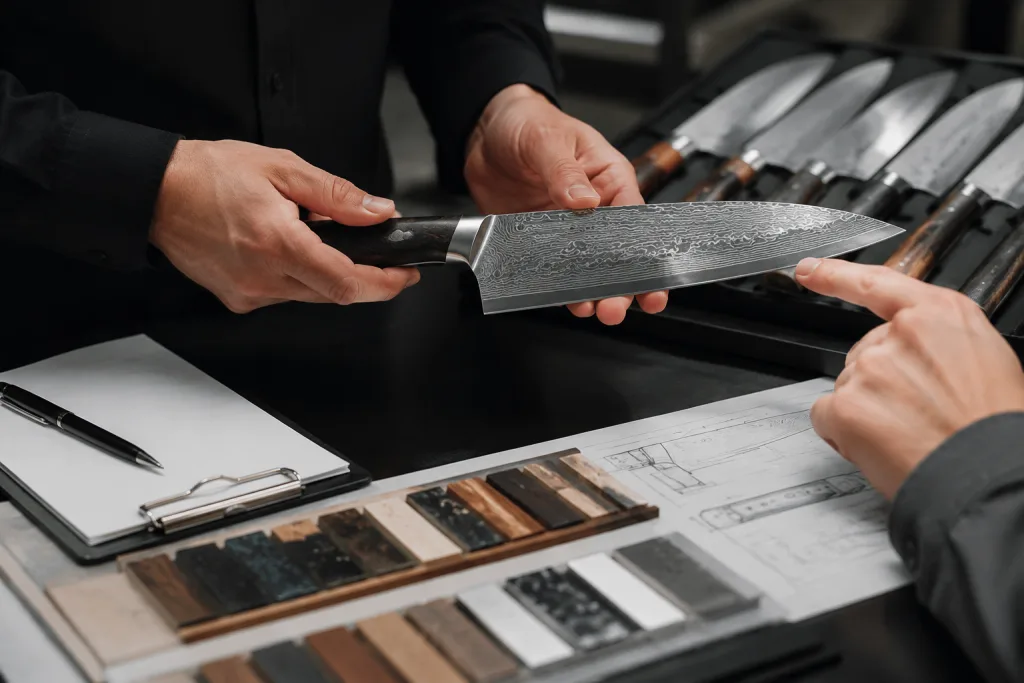
How to Evaluate a Knife Supplier: RFQ, Samples, and Quality Inspection
By Vincent Xi, Editorial Author, TANGFORGE.
Evaluating a knife supplier is easier when every candidate responds to the same written requirement. For a retailer, brand owner, distributor, or sourcing team, the goal is not only to collect unit prices. The goal is to confirm whether each supplier can quote, sample, document, and inspect the same product specification under the same commercial assumptions.
This guide organizes the supplied source material into a practical buyer workflow: identify the supplier type, prepare a complete RFQ, approve samples against a written record, and define quality inspection criteria before releasing a purchase order.
Source Context, Data Points, And Method
This article uses the supplied citations as buyer-research context. Supplier page statements are treated as public sourcing information, not as proof that any supplier can meet a specific order requirement. Vincent Xi is identified by TANGFORGE as an Editorial Author at the author profile linked in the byline; no factory visit, product test, supplier audit, certification review, or customer outcome is claimed.
Concrete source context used in this guide:
- SZCO's wholesale knife guide is dated July 13, 2026, in the supplied page context and discusses wholesale blade stocking for users such as hunters, chefs, campers, and collectors; it also warns buyers not to choose only by the cheapest bulk offer SZCO.
- LeeKnives' B2B knife manufacturing whitepaper page is presented in the supplied context as a 2026 sourcing resource and names buyer pain points including inconsistent quality, long lead times, and high MOQ barriers; it also lists specification topics such as blade steel, HRC, blade finishes, handle materials, and packaging LeeKnives.
- Blue Ridge Knives presents itself as a wholesale knife distributor and lists product categories including hunting and fishing, kitchen cutlery, traditional knives, military and tactical products, sharpeners, imports, multi-tools, camping and survival, and accessories Blue Ridge Knives.
- The Top Knives buyer FAQ index lists 90 guides in its RFQ Preparation section, as reviewed from the supplied excerpt on July 24, 2026 Top Knives.
- The same Top Knives excerpt lists 460 guides in its OEM/ODM Sourcing Guides section, as reviewed from the supplied excerpt on July 24, 2026 Top Knives.
- The same Top Knives excerpt lists 120 guides in its Brand Relationship Verification section, as reviewed from the supplied excerpt on July 24, 2026 Top Knives.
Methodology: the supplied pages were reviewed for buyer-facing sourcing themes: wholesale stocking, OEM/ODM sourcing, RFQ preparation, brand relationship verification, and distributor category range. The guidance below converts those themes into a structured buyer checklist. It does not verify factory capability, production capacity, pricing, certifications, inspection results, or supplier performance.
Identify The Supplier Type Before Comparing Price
Start by classifying the supplier being evaluated. Different supplier types require different evidence.
| Supplier type | What the page may show | Buyer-useful question | |---|---|---| | Distributor or wholesaler | Catalog range, stocked categories, branded assortment, reorder terms | Is the buyer purchasing available stock, authorized branded goods, or a resale assortment? | | OEM supplier | Manufacturing or customization language, material options, packaging options | Can the supplier quote the buyer's exact specification and document production controls for that order? | | ODM supplier | Existing design platform with modification options | Which elements are standard, which are custom, and who owns the resulting design assets? | | Trading company or sourcing coordinator | Broad supplier access or sourcing support | Which legal entity is responsible for quality records, documents, rework, and shipment? |
A broad catalog can help a buyer understand available product categories. It does not prove manufacturing control, material traceability, current certification, or inspection capability. A manufacturing-oriented page can introduce customization options, but the buyer still needs written evidence for the exact order.
Build The RFQ Around The Item To Be Inspected
A useful RFQ describes the product that will later be sampled and inspected. A short request for price can create comparison problems because suppliers may quote different materials, packaging, tolerances, or shipment assumptions.
Include these fields in the RFQ:
- Product type: kitchen knife, pocket knife, hunting knife, utility knife, sharpener, sheath, or accessory.
- Buyer market and intended sales channel.
- Blade material or acceptable equivalent.
- Heat-treatment expectation and HRC target or acceptable range.
- Blade length, spine thickness, grind, edge profile, finish, and tolerance expectations.
- Handle material, construction, texture, color, fasteners, bonding method, and finish.
- Folding mechanism, lock type, sheath, guard, or accessory requirements where relevant.
- Logo, private-label, packaging, barcode, carton mark, warning label, and instruction requirements.
- MOQ, sample cost, sample lead time, production lead time, tooling charge, packaging charge, payment term, shipping term, and quote validity period.
- Required evidence: legal entity name, official website, official email domain, sample process, inspection plan, and current certificates or test reports required for the destination market.
If a supplier proposes an alternative material, finish, packaging format, or MOQ, require it as a separate quoted option. Substitutions should be visible in the comparison record instead of hidden inside a single price.
Compare Suppliers With The Same Decision Grid
Use one grid for every shortlisted supplier. This makes differences visible before the buyer spends money on samples.
| Decision area | What to compare | What to verify before moving forward | |---|---|---| | Supplier identity | Legal company name, role, official domain, contact path | Whether the quote comes from the entity that will invoice, produce, ship, or support the order | | Product fit | Category, stock item, modified item, or custom item | Whether all suppliers quoted the same written specification | | Technical fit | Steel, HRC target, finish, handle material, packaging | Whether any alternative is clearly labeled and approved by the buyer | | Commercial fit | MOQ, sample terms, production lead time, payment terms, tooling, freight term | Whether quote validity, delay responsibility, and rework responsibility are written down | | Evidence fit | Photos, drawings, sample sheet, inspection plan, compliance documents | Whether documents are current, order-specific, and issued to the correct legal entity where applicable | | Destination-market risk | Product legality, labeling, safety documentation, food-contact documentation when relevant | Whether destination-market requirements are checked before order release |
This comparison is especially important when evaluating a distributor against an OEM or ODM supplier. A distributor may be suitable for available branded assortment or stocked goods. An OEM or ODM route may be more relevant when the buyer needs a defined blade steel, custom handle material, private-label packaging, or product modification.
Approve Samples Against A Written Record
A sample should not be approved only because it looks acceptable. It should be tied to a specification version and a sample approval sheet.
The sample approval sheet should include:
- Supplier name and legal entity.
- Product name or project code.
- RFQ version, drawing version, or specification version.
- Blade material, finish, HRC target, handle material, mechanism, sheath, and packaging version.
- Sample photos and measured dimensions.
- Appearance comments, functional comments, and open deviations.
- Buyer decision: approved, approved with correction, rejected, or pending revised sample.
Separate appearance review from functional review. Appearance checks can include finish consistency, handle alignment, fastener seating, surface marks, logo placement if applicable, and packaging presentation. Functional checks can include edge condition, handle security, sheath retention, blade centering for folders, lock engagement where relevant, and any buyer-approved sharpness or cutting protocol.
Set Inspection Criteria Before The Purchase Order
Inspection terms should be agreed before production starts. The purchase order or inspection booking should state what will be checked, when it will be checked, who will check it, and what happens if the goods fail.
For knife products, the inspection plan can cover:
- Material identity and traceability documents requested for the order.
- Blade dimensions and tolerance checks.
- Hardness readings according to an agreed method.
- Grind, edge, and finish consistency.
- Handle fit, fastener tightness, bonding, and surface finish.
- Folding action, blade centering, lock function, or opening mechanism where relevant.
- Sheath, guard, sleeve, or packaging fit.
- Barcode, label, warning, carton mark, quantity, and carton condition.
- Destination-market documents, including food-contact documentation for kitchen knives where required.
Defect categories should also be defined before shipment. Critical defects may include unsafe lock failure, wrong blade material, a mechanism prohibited in the destination market, exposed sharp edges where none are specified, or incorrect legal labeling. Major defects may include dimensions outside agreed tolerance, loose handle construction, poor blade centering, visible finish flaws, or wrong packaging. Minor defects may include cosmetic variation that does not affect agreed safety, function, or retail presentation.
If a statistical sampling standard is used, name the standard, inspection level, defect categories, and acceptance criteria in the order documents. A sampling standard defines an inspection method; it does not prove that a supplier is certified or that its normal practice matches the buyer's requirement. Certification should only be treated as current when the buyer has a valid document showing holder name, scope, issuing body, and validity period.
Practical RFQ Checklist
- [ ] Legal company name, official website, official email domain, and official contact path requested.
- [ ] Supplier role identified as distributor, wholesaler, OEM, ODM, trading company, or sourcing coordinator.
- [ ] Product category, buyer market, and intended use described.
- [ ] Blade steel or acceptable equivalent specified.
- [ ] Heat-treatment expectation and HRC target requested.
- [ ] Blade dimensions, grind, finish, edge, and tolerance expectations listed.
- [ ] Handle material, construction, fasteners, texture, color, and finish defined.
- [ ] Mechanism, lock type, sheath, guard, or accessory requirements stated where relevant.
- [ ] Packaging, barcode, carton mark, warning label, and instruction requirements included.
- [ ] MOQ, sample terms, lead time, payment terms, tooling, and shipping terms requested.
- [ ] Sample approval sheet required before bulk order release.
- [ ] Inspection plan and order-specific quality records requested.
- [ ] Current compliance documents requested where the destination market requires them.
- [ ] Defect categories and inspection acceptance method agreed before shipment.
- [ ] Destination-market legal restrictions checked before purchase order approval.
Limitations And What To Verify
The supplied sources do not verify TANGFORGE factory capability, supplier pricing, certifications, production capacity, inspection results, customer outcomes, or current legal documents. They also do not prove that any named supplier can meet a buyer's exact specification.
Before placing an order, verify the legal entity behind the quote, official communication channel, product specification, sample revision, current certificates or declarations if required, material traceability, inspection plan, defect limits, packaging artwork, shipment terms, and after-sales responsibility. For a distributor, verify brand authorization, stock availability, return policy, and destination-market restrictions. For OEM or ODM production, verify whether the supplier directly controls manufacturing or coordinates through another production entity, and reflect that answer in the commercial agreement.
The strongest supplier comparison is consistent: send the same RFQ to each shortlisted supplier, record responses in the same table, approve samples against written specifications, and inspect bulk production against the same criteria used at sample stage.
<script type="application/ld+json">{"@context":"https://schema.org","@type":"Article","headline":"How to Evaluate a Knife Supplier: RFQ, Samples, and Quality Inspection","author":{"@type":"Person","name":"Vincent Xi","jobTitle":"Editorial Author","url":"https://tangforge.com/authors/vincent-xi/"},"publisher":{"@type":"Organization","name":"TANGFORGE","url":"https://tangforge.com/"}}</script>