Incoming Material and In-Process QC for Pocket Knife Wholesale Orders
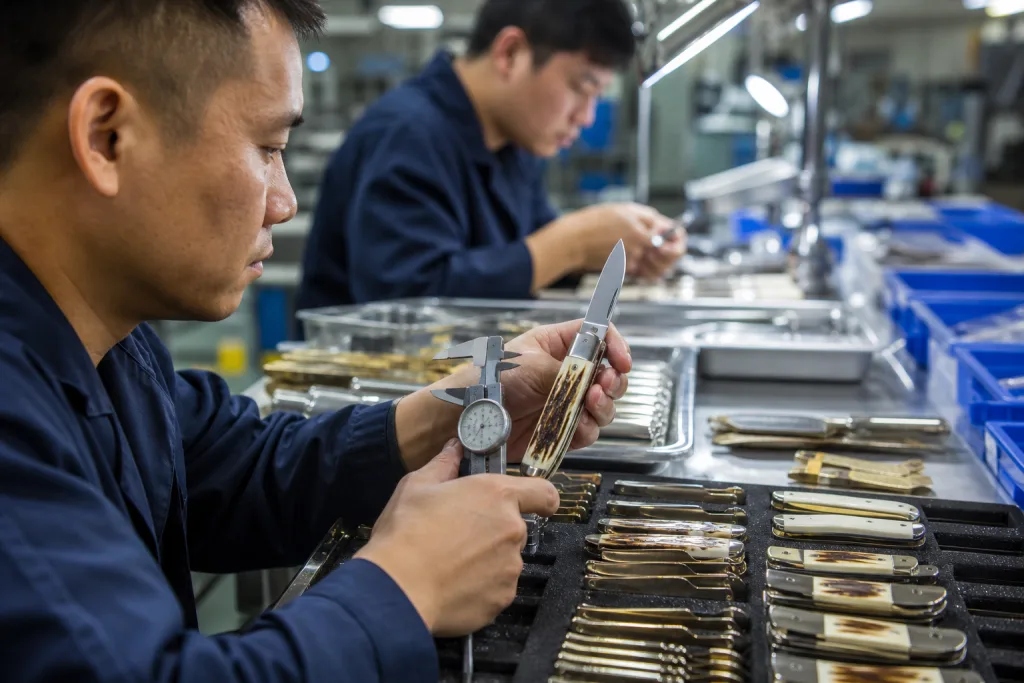
Incoming Material and In-Process QC for Pocket Knife Wholesale Orders
**By Vincent Xi — Editorial Author**
> **Editorial scope:** This buyer-side framework covers incoming material release, in-process defect prevention, and inspection evidence for pocket knife wholesale orders. It does not report factory visits, product tests, supplier performance, certifications, or independently verified manufacturing capabilities.
<script type="application/ld+json"> { "@context": "https://schema.org", "@type": "Article", "headline": "Incoming Material and In-Process QC for Pocket Knife Wholesale Orders", "description": "Plan incoming material and in-process QC for pocket knife wholesale orders with lot release rules, traceability, inspection evidence, and RFQ clauses.", "author": { "@type": "Person", "name": "Vincent Xi", "jobTitle": "Editorial Author", "url": "https://tangforge.com/authors/vincent-xi/" } } </script>
For incoming material and in-process quality control, the buyer’s immediate question is whether an identified lot or batch may proceed. The decision should be supported by records showing what was inspected, which requirement applied, what quantity was covered, what result was obtained, and who authorized release.
The cited wholesale sourcing guide identifies steel, lock, finish, sample approval, inspection standards, packaging, and reorder controls as pre-order considerations for wholesale knife purchasing. The cited sourcing library organizes purchasing topics around steel grades and finished knives within its knife-sourcing articles. A separate wholesale retail guide advises buyers to consider quality and product fit alongside price when choosing inventory.
Those sources provide purchasing context. They do not establish that a particular supplier uses the controls, records, equipment, production route, or release rules described here. The buyer should place each required control in the RFQ, approved specifications, drawings, inspection plan, and purchase order.
Define Lot Status and Release Authority
Every controlled incoming lot or in-process batch should have an explicit status:
| Status | Buyer-defined meaning | Permitted action | |---|---|---| | Released | Required checks are complete, results meet the approved requirements, and release is authorized | Only the identified quantity may proceed to the stated operation | | On hold | Evidence is missing, incomplete, under review, or linked incorrectly | The identified quantity remains segregated and may not proceed | | Nonconforming | A recorded result does not meet an approved requirement | The identified quantity follows the agreed containment and disposition process |
The control plan should connect these records and identifiers:
- Purchase order, model, and approved document revision.
- Supplier source lot or heat reference when supplied.
- Internal receiving-lot identifier.
- Process batch, traveler, or work-order identifier.
- Quantity and unit of measure covered by each record.
- Inspection characteristic and acceptance requirement.
- Actual measurement or defined observation.
- Disposition and release authorization.
The evidence chain should be readable in both directions:
**Purchase order and revision → source lot → receiving lot → process batch → inspection result → disposition → release authorization**
If a supplier splits, combines, or renames a lot, require a cross-reference showing the quantity transferred from each original identifier. When the evidence chain is incomplete, the affected material or production should remain on hold under the purchase-order rules.
Set the Incoming Material Inspection Gate
Required receiving-record fields
For each controlled incoming lot, require the receiving record to show:
- Purchase order, model, component identifier, and specification revision.
- Supplier, shipment reference, receiving date, quantity, and unit of measure.
- Source lot or heat reference when provided with the material.
- Internal receiving-lot identifier applied to the material or its container.
- Characteristic, nominal requirement, tolerance or visual limit, and inspection method.
- Actual results with measurement units, or a defined observation tied to an approved defect reference.
- Inspection-equipment identifier when contractually required.
- Quantity accepted, held, rejected, or awaiting review.
- Record author, disposition, release authority, and authorization date.
A pass mark by itself does not identify the result that supported release. Require actual values for measurable characteristics and defined observations for attribute checks.
Blade material
Specify only the blade-material characteristics applicable to the approved model. Candidate controls include:
- Material grade and supply condition stated in the purchasing specification.
- Thickness, width, flatness, or other stock dimensions controlled by the drawing or specification.
- Approved visual limits for corrosion, dents, scratches, scale, contamination, or edge damage.
- Source-lot identity and internal receiving-lot identity.
- Required material document and the fields that must match the received lot.
- Buyer-required verification method, test location, and result format when independent verification is included in the contract.
Treat a material certificate or test report as supporting evidence that still requires physical lot linkage. The RFQ should name the required document, identify the fields that must match the received material, and define the reaction to a mismatch. Material documentation does not provide evidence for later machining, heat treatment, grinding, finishing, or assembly operations.
**Copy-ready RFQ clause:**
> **Incoming blade-material release:** Each received blade-material lot shall remain on hold until its source reference, internal receiving-lot identifier, purchase-order reference, applicable specification revision, required material-document reference, actual incoming inspection results, covered quantity, disposition, and release authorization are recorded. Material lacking the required identity or document linkage shall not be used without written buyer approval.
Liners and mechanism components
When liners, lock parts, backsprings, or related mechanism components appear in the approved bill of materials, the incoming plan may control:
- Material or approved component designation.
- Thickness, flatness, profile, and drawing-controlled feature locations.
- Pivot, stop-pin, fastener, and mating-feature dimensions.
- Burr, deformation, contamination, corrosion, and visible-damage limits.
- Heat-treatment or finish requirements stated in the approved specification.
- Source-lot and receiving-lot identifiers.
The approved model drawing should control the inspection—not a generic mechanism-component checklist. Each record should identify the drawing characteristic or visual requirement evaluated.
Pivots, stop pins, washers, bearings, and fasteners
For applicable hardware, define the characteristics that affect the approved assembly:
- Component identifier and approved material or finish designation.
- Diameter, length, thread, head, shoulder, or mating-fit requirement shown in the drawing.
- Damage, burr, contamination, and finish limits.
- Inspection method, including controlled gauges or mating references where specified.
- Source-lot identity, received quantity, and release status.
A catalog description or packaging label should not replace the incoming inspection and lot-linkage evidence required by the purchase order.
Handle components
For handle scales, covers, or related parts, applicable controls may include:
- Approved material or component designation.
- Thickness, profile, hole position, counterbore, and mating-feature requirements.
- Warpage, crack, chip, void, contamination, and surface-damage limits.
- Color, texture, grain, or finish reference when appearance is controlled.
- Source-lot and receiving-lot identity.
An approved appearance sample may serve as a visual reference, but it should not be used as the sole evidence of material identity.
**Copy-ready RFQ clause:**
> **Component substitutions:** No unapproved substitution of blade material, liner material, handle material, mechanism parts, pivots, washers, bearings, stop pins, fasteners, coatings, or finishes is permitted. Before use, the supplier shall identify the proposed change, affected quantity, reason, supporting evidence, and requested disposition.
Build In-Process QC Gates Around Defect Prevention
The gate sequence should follow the supplier’s disclosed production route and the buyer’s approved requirements. The following table is an RFQ planning template, not a description of any supplier’s actual process.
| Proposed gate | Characteristics to define when applicable | Required inspection evidence | Hold or release rule | |---|---|---|---| | Profile cutting and hole making | Blade profile, pivot hole, stop-pin hole, fastener location, lock-interface feature, feature-to-feature relationship, and burr limit | Setup record, drawing revision, actual measurements, equipment identifier where required, inspected quantity, batch identifier, and disposition | Release only production covered by conforming setup and interval records | | Blade grinding | Grind location, bevel relationship, symmetry criteria, plunge reference, tip geometry, edge condition, drawing-controlled thickness, and surface limit | Setup approval, actual measurements or defined visual observations, controlled photographs where required, defect records, and rework records | Hold output associated with a missing or nonconforming check | | Heat treatment when specified | Material and batch identity, buyer-specified test requirement, test method, scale, test location, and distortion or flatness limit where specified | Batch traveler, incoming-lot linkage, processor identity, actual results, quantity covered, nonconforming quantity, and disposition | Release only when the required batch record, linkage, and results are complete | | Surface finishing or coating | Approved finish, color, coverage, masking boundary, marking location, and visible-defect limits | Appearance reference, process-batch identity, inspection record, and linked defect photographs when required | Hold components that do not meet the approved requirement or lack batch linkage | | Assembly and mechanism inspection | Blade centering, specified play limits, lock or retention criteria, opening and closing criteria, interference, fastener condition, edge condition, and component damage | Actual measurements where applicable, defined functional observations, inspected quantity, defect record, rework history, and lot linkage | Release only after the affected units and required verification records are identified |
Avoid using subjective phrases such as “good finish,” “solid lockup,” or “smooth action” as the sole acceptance language. Replace them with drawing requirements, measurable limits, approved defect examples, an appearance reference, or a defined functional reference for the order.
Setup, interval, and restart checks
For machining, drilling, grinding, finishing, and assembly gates, require the supplier’s control plan to define:
- Characteristics checked before routine production begins.
- Events that invalidate the previous setup approval, such as a tooling change, fixture adjustment, machine restart, material-lot change, or nonconforming result.
- Inspection frequency and inspected quantity.
- Record fields for actual results.
- Containment boundary following a failed or missing check.
- Reinspection required after correction.
- Role authorized to restart production.
The purchase order should also define the suspect-production boundary after a failed interval check. One possible boundary is all output produced since the last conforming check; a different boundary should be documented if the buyer and supplier approve it.
Example control values to resolve in the quotation
The figures below are buyer-side planning assumptions, not benchmarks from the cited sources. Each value should be accepted, replaced, or otherwise resolved in the supplier’s quotation and the approved purchase order.
| Control point | Example assumption to verify | |---|---| | Profile-cutting or hole-making setup | Inspect **5 consecutive pieces per new setup** before releasing the setup to routine production | | Routine profile, hole, or grind verification | Inspect **3 pieces per check after each 250 produced pieces or 2 production hours**, whichever occurs first, for the identified operation and batch | | Evidence for a held batch | Submit **1 overview photograph and 2 close-up photographs per held batch**, linked to the batch identifier, defect record, and inspection date | | Purchase-order record retention | Retain required incoming and in-process records for **24 months after final shipment** of the purchase order |
These illustrative values do not replace model-specific tolerances, process information, risk review, or a buyer-approved sampling plan.
Sampling requirements
If sampling is permitted, the purchase order should identify:
- Lot definition.
- Defect classes.
- Inspection level.
- Acceptance rule.
- Applicable sampling standard and edition.
List process-control frequencies, mandatory hold points, traceability fields, and buyer-approval requirements separately. Naming a sampling standard does not demonstrate that it was followed for the order; require the completed, order-linked sampling record.
Heat-treatment batch linkage
If heat treatment is part of the approved route, require a process-batch identifier linking the treated pieces to the applicable incoming material lot and model. If the process is subcontracted, the quotation should disclose the processor’s role and explain how material identity, batch identity, test results, nonconformance records, and release status will remain connected.
**Copy-ready RFQ clause:**
> **Heat-treatment evidence:** Before the identified batch proceeds, the supplier shall provide the required batch traveler, processor identity, incoming material-lot reference, applicable test method, test scale and location where specified, actual results, quantity covered, nonconforming quantity, disposition, and release authorization. A summary pass statement without the required batch linkage does not satisfy this purchase-order requirement.
Mechanism inspection
For the approved locking or retention mechanism, define:
- Mechanism type and applicable drawing revision.
- Feature or function being evaluated.
- Measurement method or controlled functional check.
- Acceptance requirement.
- Inspection frequency and covered quantity.
- Stop-work and containment rule.
- Reinspection requirement and release authority.
Do not apply a universal limit for lock engagement, play, opening force, or retention. The applicable requirement should come from the approved product specification and inspection plan.
Require an Order-Linked Inspection Evidence Pack
The evidence pack should allow the buyer to trace every reported result to the order, item, incoming lot, process batch, checkpoint, requirement, disposition, and release decision.
Require a master index and the applicable records from this list:
- Approved drawing, specification, bill-of-materials, and appearance-reference revisions.
- Incoming blade-material and component inspection records.
- Required material documents linked to the physical receiving lot.
- Process travelers linking incoming lots to in-process batches.
- Setup, interval, restart, and release inspection sheets containing actual results.
- Inspection-method and equipment identifiers where required by contract.
- Equipment calibration status where contractually required.
- Controlled photographs linked to the item, lot or batch, checkpoint, defect record, and inspection date.
- Nonconformance, containment, deviation, rework, reinspection, and scrap records.
- Approved change records for material, source, tooling, process, finish, or subcontractor changes.
- Release authorization identifying the exact quantity and records reviewed.
Use this record-acceptance test:
| Evidence question | Buyer acceptance condition | |---|---| | What was inspected? | The material, component, operation, or assembly output is identified | | Which order does it cover? | The purchase order and model are stated | | Which requirement applies? | The specification, drawing, or reference revision is stated | | Which production does it cover? | The incoming lot, process batch, and quantity are identified | | What was found? | Actual measurements or defined observations are recorded | | How was it evaluated? | The required method, equipment, gauge, or approved reference is identified | | What happened next? | Release, hold, rework, rejection, scrap, or buyer-approved deviation is recorded | | Who authorized the decision? | The responsible role and authorization date are recorded |
Photographs should be treated as supplemental evidence. A photograph is not a complete inspection record when it lacks the relevant item identity, lot or batch, checkpoint, specification revision, inspection date, or disposition.
Define the Nonconformance Reaction Before Production
The RFQ should require a documented reaction whenever a result is missing, outside the approved requirement, or linked to the wrong material or production batch.
| Reaction stage | Required record content | |---|---| | Identify | Defect or missing requirement, detection point, affected item, batch, and date | | Stop and contain | Physical or digital hold status and the defined production boundary placed on hold | | Quantify | Quantity produced, inspected, conforming, nonconforming, reworked, scrapped, and still under review | | Trace | Related incoming lots, process batches, tooling or setup records, subcontracted processes, and prior checks | | Decide | Rework, sort, scrap, return, deviation request, or other buyer-approved disposition | | Verify | Reinspection method, actual results, verified quantity, and record reference | | Release | Authorized decision and exact quantity permitted to proceed |
Reworked units should remain linked to the original nonconformance. The rework record should identify the affected quantity, approved method or work instruction, work performed, reinspection result, and release authorization.
**Copy-ready RFQ clause:**
> **Nonconforming production:** When a required inspection fails or its record is missing, the affected lot or batch shall be placed on hold. The supplier shall identify the containment boundary, affected quantities, traceability references, proposed disposition, reinspection method, actual verification results, and release authority. Rework or deviation does not authorize release unless the required approval and verification are documented.
Evaluate the Supplier’s QC Proposal
Request the proposed control plan and blank record templates with the quotation. A generic certificate, unrelated test report, or sample inspection sheet is not evidence for the quoted production order. It may be reviewed to determine whether the proposed format contains the buyer’s required fields.
| Review area | Complete proposal | Proposal requiring clarification | |---|---|---| | Incoming material identity | Defines source reference, internal lot, required documents, inspections, physical identification, and release status | States only that materials are checked | | Product requirements | References the buyer’s model, drawing, specification, and revision | Uses a generic checklist without document linkage | | In-process gates | Names checkpoints, characteristics, methods, frequency, containment boundary, and release role | Mentions inspection only before shipment | | Recorded results | Provides fields for actual measurements or defined observations | Provides pass marks without underlying results | | Traceability | Connects incoming lots, process batches, rework, and release records | Uses identifiers that are not linked across stages | | Outsourced processes | Discloses applicable subcontracted operations and the record-linkage method | Omits the processor role or batch-linkage method | | Nonconformance control | Defines hold, containment, disposition, reinspection, and restart authority | Promises correction without identifying affected production | | Change control | Requires documented approval before specified changes are used | Allows substitutions without buyer authorization |
RFQ Checklist for Incoming Material and In-Process QC
- [ ] Attach the approved drawing, specification, bill of materials, and applicable appearance or functional references.
- [ ] Identify the revision controlling the quotation and production order.
- [ ] Define incoming requirements for blade material and every applicable component category.
- [ ] State the required material documents and lot-linkage fields.
- [ ] Require actual measurements or defined observations rather than pass marks alone.
- [ ] Keep incoming material and components on hold until release is documented.
- [ ] Prohibit unapproved material, component, finish, source, process, and subcontractor substitutions.
- [ ] Require cross-references when lots are split, combined, or renamed.
- [ ] List the in-process gates applicable to the disclosed production route.
- [ ] Define the characteristic, method, frequency, record, containment boundary, and release authority at each gate.
- [ ] Define setup-invalidating events and restart verification.
- [ ] Define the lot, defect classes, acceptance rule, inspection level, and standard edition where sampling is used.
- [ ] Require traceability from incoming lots through process batches, rework, and release.
- [ ] Require disclosure and record linkage for applicable subcontracted processes.
- [ ] Define the physical or digital segregation method for held material.
- [ ] Define containment, disposition, reinspection, and restart requirements.
- [ ] Keep rework and deviation records linked to the affected quantity.
- [ ] Request the proposed control plan and blank inspection forms with the quotation.
- [ ] List the evidence required before each mandatory release point.
- [ ] State which role may authorize release and when buyer approval is required.
- [ ] Confirm or replace every illustrative control value in the supplier quotation and purchase order.
Methodology, Source Context, and Limitations
Methodology
This framework converts the cited sources’ broad purchasing topics—material selection, product requirements, sample approval, inspection planning, quality, and product fit—into buyer-authored RFQ fields. Its technical content consists of candidate controls, evidence requirements, and purchasing clauses. It is not presented as a source-reported supplier practice or measured performance result.
The document-to-lot-to-batch method asks whether each inspection result can be traced back to the controlling purchase order and forward to a recorded disposition and release decision. No factory-performance data, laboratory results, product-test results, supplier records, or audit findings were used.
Source context
- The sourcing library provides broad material and finished-knife purchasing context through its listed knife-sourcing topics.
- The wholesale sourcing guide identifies steel, lock, finish, sample approval, and inspection standards as pre-order considerations for wholesale purchasing.
- The wholesale retail guide advises considering quality and product fit alongside price when selecting products.
Limitations and matters to verify
This article is not a supplier audit, engineering specification, laboratory report, inspection result, legal opinion, or certification assessment. It provides no universal material grade, dimension, tolerance, test method, inspection frequency, sampling level, mechanism limit, or acceptance criterion.
Before placing an order, verify the approved model revision, material specifications, actual production route, lot-definition method, subcontracted operations, measurement methods, equipment requirements, sampling rules, containment boundaries, release roles, evidence-delivery format, and record-retention period. Evaluate any supplier capability, certification, test, calibration, or conformity claim using current documentation that is properly scoped and linked to the order.