Knife Supplier MOQ, Pricing Structure, and Landed-Cost Controls for B2B Buyers
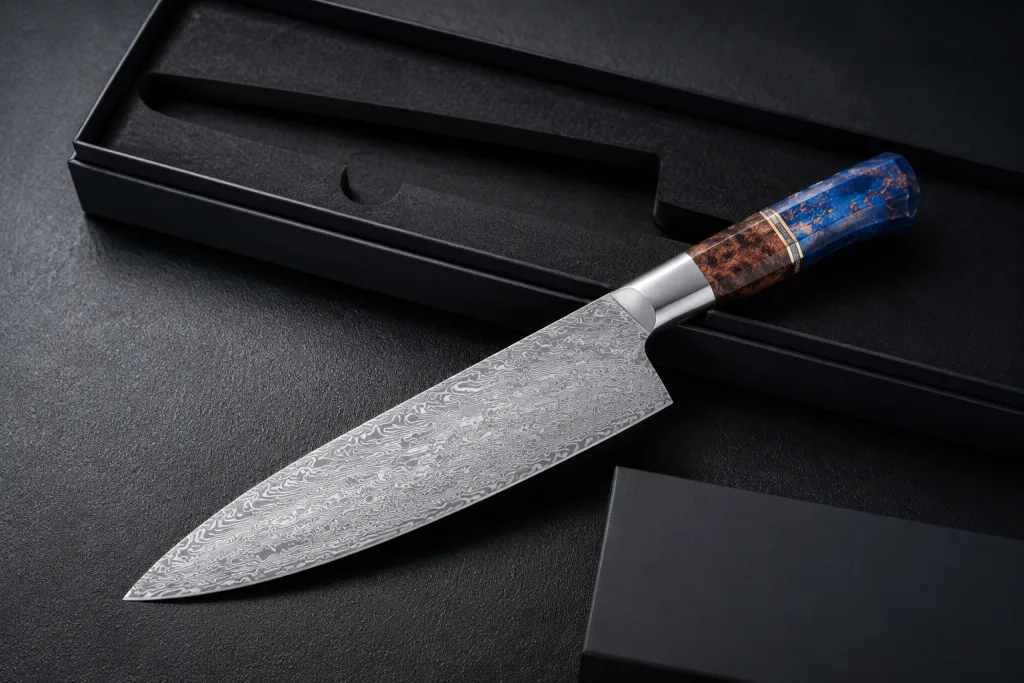
Knife Supplier MOQ, Pricing Structure, and Landed-Cost Controls for B2B Buyers
By Vincent Xi, Editorial Author
<script type="application/ld+json"> { "@context": "https://schema.org", "@type": "BlogPosting", "headline": "Knife Supplier MOQ, Pricing Structure, and Landed-Cost Controls for B2B Buyers", "author": { "@type": "Person", "name": "Vincent Xi", "jobTitle": "Editorial Author", "url": "https://tangforge.com/authors/vincent-xi/" }, "publisher": { "@type": "Organization", "name": "TANGFORGE", "url": "https://tangforge.com/" } } </script>
For a distributor, retail chain, promotional buyer, or private-label brand, selecting a knife supplier is a commercial-control decision as much as a product decision. A buyer needs to know what drives the minimum order quantity, what is included in the quoted unit price, how packaging affects freight assumptions, and which inspection responsibilities are agreed before the purchase order is released.
A low unit price can still create a weak landed-cost result if the order quantity is too high for demand testing, packaging is added late, inspection terms are vague, or freight planning starts only after the final sample is approved. A stronger sourcing process starts with a complete RFQ and a comparable landed-cost model, not only with a target unit price.
Source Context Used for This Buyer Guide
This guide uses the cited sources as buyer-context references, not as proof of current supplier performance. LeeKnives presents B2B knife sourcing topics including MOQ, blade steel choices, OEM/ODM customization, quality expectations, global shipping, and fulfillment paths https://leeknives.com/b2b-knife-manufacturing-whitepaper/. TOP KNIVES organizes buyer-facing material around official contact, RFQ preparation, OEM/ODM sourcing, brand relationship verification, and freight planning before sample approval https://top-knives.com/news/.
Blue Ridge Knives presents a wholesale knife distributor context with category navigation that includes hunting and fishing, kitchen cutlery, traditional knives, tactical knives, sharpeners, imports, multi-tools, and camping and survival products https://www.blueridgeknives.com/. SZCO frames wholesale knife stocking as an assortment and sell-through problem, not only a bulk-price exercise https://szco.com/blog/post/how-shops-stock-blades-that-actually-sell.
These sources do not verify current knife pricing, certification status, factory capacity, defect rates, audit results, production lead times, or buyer outcomes. They are used here to structure RFQ questions and landed-cost controls that buyers can verify with suppliers, inspection providers, freight forwarders, customs brokers, and destination-market counsel.
Start With MOQ Logic
MOQ should not be treated as a single supplier rule. In a knife order, MOQ may be driven by the knife model, blade steel procurement, handle material, coating or finish process, packaging printing, logo application, sheath production, inspection setup, or export-carton configuration. The buyer should ask which element is setting the minimum.
A stock item can have different order logic from a private-label knife with custom handle scales, a blade finish change, printed packaging, or a unique sheath. LeeKnives identifies OEM/ODM customization paths that include blade finishes, handle materials such as G10, Micarta, and wood, and packaging https://leeknives.com/b2b-knife-manufacturing-whitepaper/. That context supports a practical sourcing point: customized elements should be quoted and scheduled separately instead of hidden inside one MOQ number.
Ask the supplier to separate MOQ by commercial layer:
- Product MOQ for the knife model or SKU.
- Customization MOQ for logo, blade finish, handle material, sheath, insert card, or printed box.
- Packing and shipment MOQ for carton utilization, pallet planning, or the chosen freight method.
- Mixed-SKU rules, including whether different handle colors, packaging versions, or blade finishes can share the same production batch.
This prevents a common sourcing problem: the buyer approves a sample, then later learns that the printed box, coating process, handle material, or sheath vendor requires a different minimum quantity.
Make the Quote Comparable
A useful knife supplier quote should show what is included without requiring the supplier to disclose its margin structure. The purpose is to avoid comparing unlike products and unlike commercial terms.
Request separate quote lines for:
- Knife unit price by quantity tier.
- Blade steel or material grade included in the quote.
- Handle material, color, texture, and finish.
- Logo or marking method.
- Sheath, tray, insert, retail box, master carton, and outer carton.
- Sample fee and whether it can be credited against production.
- Tooling, mold, fixture, artwork, or setup charges.
- Inspection arrangement, defect definitions, and rework responsibility.
- Incoterm, named port or place, currency, payment schedule, and quote validity date.
Packaging should be treated as a commercial item. A knife packed in a plain sleeve, retail box, blister pack, magnetic gift box, or e-commerce mailer can change carton volume, damage exposure, handling requirements, and freight cost. LeeKnives identifies custom packaging and logo as part of its B2B manufacturing context, so buyers should confirm packaging cost and carton impact during quotation rather than after sample approval https://leeknives.com/b2b-knife-manufacturing-whitepaper/.
Quotes should be normalized before comparison. An EXW quote and a DDP quote are not comparable until the buyer accounts for origin pickup, export handling, freight, insurance, duty, destination clearance, brokerage, final delivery, and inspection cost. A supplier with a higher unit price may still produce a lower landed cost if the buyer's actual packaging, carton efficiency, documentation, and rework assumptions are different.
Buyer Decision Table
| Decision Area | What to Confirm | Why It Matters | Evidence to Request | |---|---|---|---| | MOQ logic | Product MOQ, customization MOQ, packaging MOQ, and mixed-SKU rules. | Shows which part of the order creates the minimum. | Written MOQ table by SKU and customization item. | | Price tiers | Unit price at each quantity break and what changes at each break. | Helps identify whether savings come from production scale, material batch size, or packaging scale. | Quote sheet with Incoterm, currency, named place, and validity date. | | Specification | Blade material, hardness target if used, handle material, blade finish, edge type, sheath, and packaging. | Prevents quote comparisons across different specifications. | Product spec sheet, approved sample reference, and packaging mockup. | | Inspection | Sample approval, in-line check if required, final inspection, defect definitions, and rework responsibility. | Reduces disputes before shipment and after delivery. | Inspection checklist, photo-report format, defect limits, and retained-sample process. | | Freight planning | Carton dimensions, gross weight, packing quantity, pallet preference, and freight method. | Packed volume and weight can change the true landed cost. | Draft packing list, carton marks, carton photos, and forwarder quote. | | Compliance | Destination-market restrictions, labeling needs, and available documents. | Knives can face import, age, blade-type, and local sales restrictions. | Buyer-side compliance review and current supplier documents where applicable. | | Official contact | Verified domain, email, phone, entity name, and bank-detail confirmation process. | Reduces payment fraud, impersonation risk, and quote confusion. | Official contact page and second-channel verification before payment. |
Blue Ridge Knives publishes a wholesale distributor context with contact information and broad category navigation https://www.blueridgeknives.com/. TOP KNIVES gives official contact and brand relationship verification their own buyer FAQ sections https://top-knives.com/news/. For buyers, the practical takeaway is to verify the official communication path before sending drawings, deposits, or bank information.
Build Landed-Cost Controls Into the RFQ
Landed cost is the total cost to place sellable inventory into the buyer's warehouse. For knife sourcing, it may include factory price, packaging, inspection, inland transport, export handling, freight, insurance, duties, tariffs where applicable, customs brokerage, destination handling, final delivery, legal review, and retailer-specific labeling.
Freight planning should start before final sample approval because packaging size, units per carton, carton strength, and master-carton weight may still be adjustable. TOP KNIVES includes buyer-facing sourcing material on knife freight cost and why shipping planning starts before final sample approval https://top-knives.com/news/. That source context supports treating freight as an RFQ input, not as an afterthought.
Example calculation to verify in the supplier quote: for a 1,000-unit trial order, if the buyer assumes USD 0.28 per unit for retail box, insert, and carton allocation, the packaging line equals USD 280 for that 1,000-unit order scope. Date context: this is an undated example calculation for RFQ modeling, not a market price claim. The buyer must replace it with the supplier's quoted packaging cost, currency, Incoterm, and quote validity date.
Example calculation to verify with the freight forwarder: if the packed order is estimated at 1.8 cubic meters for 1,000 units, and a forwarder quotes USD 95 per cubic meter for the relevant lane and quote date, the freight estimate is USD 171 before destination charges. Date context: this is an undated example calculation for RFQ modeling, not a freight-rate benchmark. The buyer must use actual carton dimensions, gross weight, route, Incoterm, and quote validity date.
Example calculation to verify in the purchase order budget: if a buyer budgets 2 percent of product order value for third-party inspection on an initial custom SKU, a USD 12,000 product order would carry a USD 240 inspection allowance. Date context: this is an undated internal budgeting example, not a supplier price, market benchmark, or required inspection standard.
The useful habit is to separate product cost, packaging cost, freight cost, and quality-control cost before the purchase order is placed.
RFQ Checklist for Knife Buyers
A practical RFQ should be concise enough for the supplier to answer and specific enough to prevent quotation gaps. Buyers can adapt the following fields for wholesale, private-label, OEM, or ODM knife sourcing.
- Buyer company name, destination market, intended sales channel, and target launch date.
- Knife category, such as kitchen knife, pocket knife, hunting knife, tactical knife, utility knife, multi-tool, sharpener, or accessory.
- Target SKU count and forecast quantity by SKU.
- Trial order quantity and expected reorder cadence.
- Required MOQ by SKU and acceptable mixed-carton or mixed-SKU structure.
- Blade material, blade length, thickness, finish, grind, edge type, and hardness target if known.
- Handle material, color, texture, fastener type, and ergonomic requirement.
- Locking mechanism or opening mechanism for folding knives, where applicable.
- Sheath, guard, storage, sharpener, or accessory requirements.
- Logo position, marking method, artwork format, and artwork ownership expectations.
- Packaging type, such as bulk, sleeve, inner box, retail box, display-ready carton, or e-commerce mailer.
- Carton requirement, including units per inner carton, units per master carton, gross weight limit, carton dimensions, and pallet preference.
- Inspection plan, including sample approval, in-line check if required, final random inspection, defect definitions, photo reporting, and rework process.
- Commercial terms, including Incoterm, currency, payment schedule, quote validity, sample cost, tooling cost, and refund or credit policy.
- Destination-market documents needed, without assuming certification unless current documents are provided.
- Requested lead-time split for sample, pre-production sample if used, mass production, inspection, and shipping.
- Required source documents, including spec sheet, packing-list draft, carton marks, product photos, and official contact confirmation.
This checklist also protects the supplier. A knife supplier cannot give a reliable quote when the buyer provides only a product photo and a target price. Better RFQ data reduces back-and-forth and makes final quotes easier to compare.
Match MOQ to Assortment Risk
MOQ discipline should be tied to assortment planning. SZCO's wholesale knife supply article frames the buyer's challenge as choosing a sellable mix of blades rather than simply buying the cheapest bulk lot https://szco.com/blog/post/how-shops-stock-blades-that-actually-sell. For B2B buyers, that point matters because a high MOQ may be reasonable for a proven replenishment SKU but risky for a new design, seasonal item, or retailer test.
Blue Ridge Knives' public category structure shows the variety a wholesale knife distributor may cover, including hunting and fishing, kitchen cutlery, traditional knives, military and tactical, sharpeners, swords and replicas, imports, multi-tools, lights, and camping and survival products https://www.blueridgeknives.com/. A buyer should not apply the same MOQ logic to every category. A compact sharpener, chef knife, fixed blade, and folding knife can differ in packaging, inspection needs, legal review, and freight density.
Assortment planning should connect MOQ to demand evidence. For example, a buyer may set a lower trial quantity for a new handle color, a higher reorder quantity for a proven SKU, and separate packaging tests for retail display versus e-commerce fulfillment. Those are buyer-side planning choices and should be verified against supplier MOQ rules, carton constraints, and the buyer's sales channel.
Quality, Standards, and Verification Boundaries
Quality language should be specific. A buyer can request hardness targets, edge consistency, corrosion-resistance expectations, handle fit tolerances, packaging-drop resistance, visual defect limits, and retained-sample controls. Those requirements should be written into the purchase order or quality agreement.
If the buyer uses an AQL-based final inspection, it should be described as the buyer's sampling and acceptance method for that order. It should not be presented as proof that a supplier is certified to a standard. Similarly, if a supplier provides a material test report, business license, or compliance document, the buyer should verify that the document is current, applicable to the quoted SKU, and issued by the relevant party. No certification should be assumed from website phrasing, a sales email, or an outdated document.
This article is published under Vincent Xi's TANGFORGE author profile as an Editorial Author https://tangforge.com/authors/vincent-xi/. It does not claim factory visits, laboratory testing, certification audits, customer outcomes, or first-hand sourcing experience.
Methodology and Limitations
This article was prepared from the supplied public source URLs and source contexts. The method was to use the sources only for attributable buyer-context facts, then convert those facts into an RFQ and landed-cost control framework. The source set includes a B2B knife sourcing whitepaper page from LeeKnives, a buyer FAQ and sourcing guide index from TOP KNIVES, a wholesale distributor website from Blue Ridge Knives, a wholesale knife stocking article from SZCO, and the Vincent Xi author profile on TANGFORGE.
The concrete data points in this article are labeled as example calculations to verify. They cover a 1,000-unit trial-order packaging calculation, a 1.8-cubic-meter freight-estimate calculation for 1,000 units, and a 2-percent inspection-budget calculation on a USD 12,000 product order. These figures are not supplier quotes, market benchmarks, or standard requirements. Buyers should replace them with current supplier quotes, freight-forwarder quotes, inspection-provider quotes, destination charges, currency, Incoterm, route, and quote validity date.
Important limitations remain. The supplied sources do not provide verified MOQ ranges, current knife prices, freight rates, factory audit results, certification documents, defect rates, customer outcomes, production capacity, or current supplier commercial terms. Buyers should verify all terms directly with the knife supplier, confirm official contact channels, request current documents, review destination-market restrictions, and calculate landed cost using current quotes from the supplier, inspection provider, customs broker, and freight forwarder.
Bottom Line for B2B Buyers
A strong knife supplier comparison is structured before price negotiation begins. Ask what drives the MOQ, what each price tier includes, which packaging and inspection assumptions are built into the quote, and when carton dimensions will be confirmed. Then compare suppliers on landed cost, documentation quality, responsiveness, and risk control, not only on unit price.
For a trial program, the best commercial outcome is usually not the lowest MOQ or the lowest quoted unit price in isolation. It is the order structure that gives the buyer enough inventory to test demand, enough specification control to protect brand quality, and enough landed-cost visibility to make reorder decisions with confidence.