Knife Supplier Prequalification: Packaging Configuration and Shipping Protection Evidence
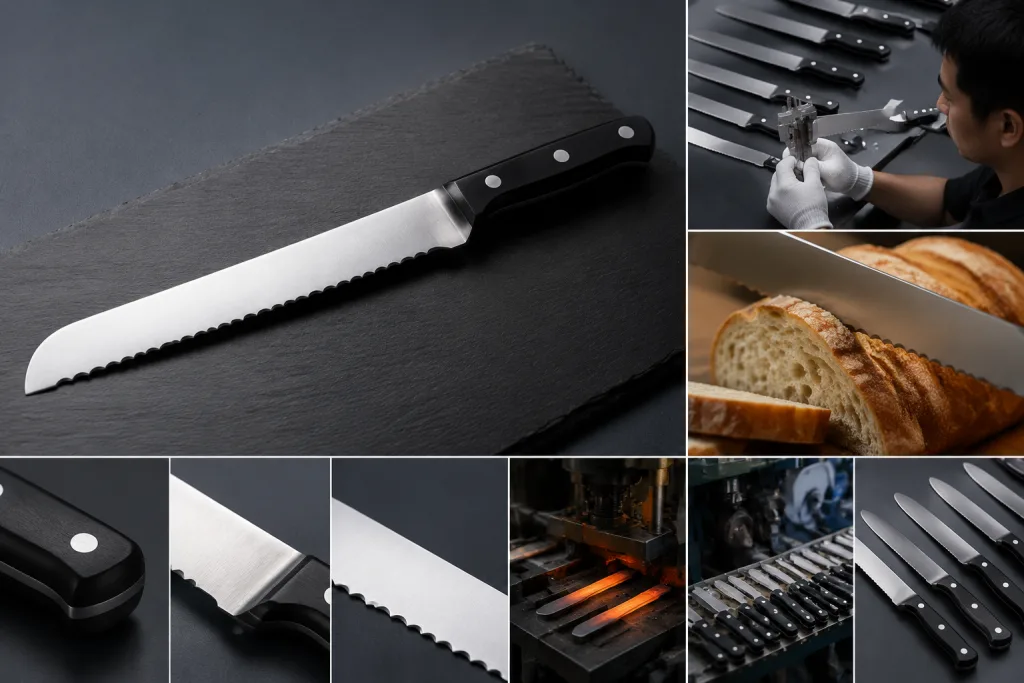
Buyer decision: A knife quotation is not packaging-comparable until the supplier identifies the quoted commercial SKU, product state, and packaging revision, then provides traceable evidence for unit containment, retail packaging, carton packout, freight configuration, and shipment release. Until then, mark the response as pending packaging evidence rather than using it for RFQ comparison or purchase-order release.
This is a buyer-side prequalification control. It does not claim that any supplier has a particular packaging, inspection, freight, or fulfillment capability.
By Vincent Xi | Editorial Author
Prequalify the Quoted Configuration
A supplier response is comparable for packaging review only when the quotation, sample record, packaging record, carton record, and freight assumption all identify the same configuration.
| Prequalification status | Minimum evidence condition | Buyer action |
|---|---|---|
| Comparable for packaging review | The current quotation, sample record, packaging record, carton record, and freight assumption identify the same commercial SKU, product state, packaging revision, quotation revision, and document date. | Compare commercial terms only for that stated configuration. |
| Pending packaging evidence | A required identifier, drawing or photo, packout value, freight assumption, inspection record, or document date is absent. | Hold the quotation and request the missing primary record. |
| Requote required | The quotation conflicts with the sample, retail pack, carton arrangement, protective components, or freight assumption. | Request a revised quotation with matching evidence before approval. |
| Shipment release blocked | No SKU-specific, revision-controlled packaging inspection and shipment-release record is available. | Do not authorize shipment release for the proposed configuration. |
Build an Evidence File Before Comparing RFQs
Require a document identifier, revision, document date, authoring party, and status such as proposed, sample-measured, or buyer-approved for each submitted record. These are buyer record-control requirements, not reported supplier practices.
| Evidence topic | Request for the quoted configuration | Primary record and buyer check |
|---|---|---|
| Configuration identity | Commercial SKU, product state, packaging revision, artwork revision when applicable, quotation revision, and document date. | Obtain the dated quotation, packaging specification, drawing, and configuration photos. Hold when records identify conflicting or unstated revisions. |
| Unit containment and retail pack | Product position, closure state, sleeve or sheath, edge or tip protection, restraint method, protective components, internal and external dimensions, packed-unit mass, and barcode position where required by the buyer. | Obtain open-pack photos, a component list, packing instruction, dimension record, mass record, and packed sample. Reconcile the sample with the quotation. |
| Inner and master carton | Units per inner carton, inner cartons per master carton, total units per master carton, carton dimensions, gross mass, construction or material description, internal protection, closure method, and orientation requirement where applicable. | Obtain a packout drawing, carton photos, count record, dimension record, and mass record. Reconcile the packout arithmetic before comparing price. |
| Freight configuration | Destination, transport mode, loose-carton or pallet requirement, carton orientation, pallet arrangement when in scope, stabilization materials, and buyer receiving constraints. | Require a written freight assumption in the quotation and a load plan or pallet photos when applicable. Treat an assumed freight arrangement as unverified. |
| Inspection, release, and change control | Buyer-issued or buyer-approved acceptance criteria, checkpoints, inspection method, measurement-tool identification where relevant, result record, nonconformance disposition, shipment-release record, and components requiring written approval before change. | Obtain an inspection plan and a sample or pre-shipment record tied to the SKU and packaging revision. Do not substitute a generic quality statement for a configuration-specific release record. |
Use Planning Figures Only as Provisional Inputs
The following values are buyer-planning examples, not supplier specifications, shipping results, test results, or acceptance thresholds. Replace them with the supplier's written values and verify them against a packed sample before approval.
| Buyer planning field | Illustrative input, scope, date context, and source |
|---|---|
| Packout reconciliation | 2 inner cartons x 12 retail packs = 24 retail packs per master carton. Scope: hypothetical closed folding-knife buyer-planning layout. As of: the buyer's RFQ issue date. Source: buyer planning model. Status: example calculation and assumption to verify in the supplier quotation and packed sample. |
| Retail-unit mass calculation | 0.42 kg per packed retail unit x 24 retail packs = 10.08 kg of retail-unit mass. Scope: the same hypothetical buyer-planning SKU and packout, excluding master-carton material, dividers, void fill, and pallet materials. As of: the buyer's RFQ issue date. Source: buyer planning model. Status: example calculation and assumption to verify in the supplier quotation and packed sample. |
| Unit-pack clearance layout | 20 mm tip-side clearance and 15 mm handle-side clearance. Scope: the same hypothetical retail-pack layout with the product held in a proposed restraint system. As of: the buyer's RFQ issue date. Source: buyer planning model. Status: example planning assumption to verify against the supplier's current packed sample and intended route conditions. |
Require the supplier to label each submitted value as quoted, sample-measured, or pending verification. Do not convert an illustrative planning value into an approved production requirement without written confirmation.
Put the Evidence Gate in the RFQ
Use these requirements in the packaging section of the RFQ or purchase-order terms:
- Supplier shall quote the exact commercial SKU, product state, packaging revision, and quotation revision stated by the buyer.
- Supplier shall disclose the unit-containment method, retail-pack specification, inner-carton configuration, master-carton configuration, and freight assumption used for the quotation.
- Supplier shall state units per inner carton, inner cartons per master carton, total units per master carton, external carton dimensions, and gross mass for the proposed configuration.
- Supplier shall provide proposed-configuration evidence, including photos or drawings, a packing instruction, a packout record, and packaging inspection records tied to the quoted SKU and packaging revision.
- Supplier shall state whether the quotation assumes loose cartons, palletized shipment, or another buyer-specified freight arrangement, including destination and transport-mode assumptions.
- Supplier shall not change approved packaging materials, protective components, pack count, dimensions, closure method, artwork, or freight configuration without written buyer approval.
- Supplier shall provide shipment-release evidence identifying the shipped SKU, approved packaging revision, carton count, gross mass, and pallet configuration when applicable.
Practical RFQ Checklist
Complete this buyer-side checklist for each quoted configuration. Mark an item complete only when the attached evidence identifies its document identifier, revision, document date, authoring party, and status. A completed checklist confirms that evidence was received; it does not establish supplier capability or approve a shipment.
- [ ] Attach the current quotation and confirm that its commercial SKU, product state, packaging revision, quotation revision, destination, and freight assumption match the RFQ.
- [ ] Request an open-pack photo or drawing showing product orientation, closure state, sleeve or sheath when used, edge or tip protection, restraint method, and protective components.
- [ ] Request the retail-pack specification, including material description, internal and external dimensions, packed-unit mass, closure method, and buyer-required barcode position.
- [ ] Request the inner-carton and master-carton packout record, including units per inner carton, inner cartons per master carton, total units per master carton, external carton dimensions, gross mass, internal protection, and closure method.
- [ ] Recalculate the supplier's stated packout from the submitted counts. Mark the response
pending packaging evidencewhen the arithmetic, drawings, photos, or quotation do not reconcile. - [ ] Record the destination, transport mode, loose-carton or pallet requirement, orientation requirement, receiving constraints, and stabilization materials assumed in the quotation.
- [ ] Obtain a packed sample for the quoted SKU and packaging revision, then reconcile its product position, protective components, dimensions, mass, pack count, and carton closure with the submitted records.
- [ ] Request a configuration-specific inspection plan or inspection record that identifies the acceptance criteria, inspection method, relevant measurement tool, result record, nonconformance disposition, and document date.
- [ ] Confirm written change control for packaging materials, protective components, pack count, dimensions, closure method, artwork, and freight configuration.
- [ ] Before shipment release, require a record identifying the shipped SKU, approved packaging revision, carton count, gross mass, and pallet configuration when applicable.
- [ ] Record the buyer decision as
comparable for packaging review,pending packaging evidence,requote required, orshipment release blocked, with the reason and the supporting record references.
Release Only When Records Reconcile
Before purchase-order release, compare the current quotation, buyer-approved sample, packaging specification, carton record, freight assumption, and inspection record. Request a requote or updated evidence when product position, protective components, dimensions, mass, pack count, carton closure, artwork revision, or shipping arrangement differs across those records.
Where shipping protection affects the buying decision, define a buyer-side handling assessment for the intended transport and receiving conditions. Record the configuration assessed, method used, observed result, approval decision, and document date. That assessment applies only to the configuration assessed and must not be represented as general supplier capability without current, product-specific supplier evidence.
Source Context, Method, and Limits
Source context: China Knives Wholesale. China Knives Wholesale's knife sourcing article index is retained as secondary sourcing context. It is not primary evidence of any supplier's SKU, packaging materials, inspection controls, shipping performance, price, MOQ, lead time, or fulfillment capability.
Source context: TOP KNIVES LLC. The TOP KNIVES LLC regional distributor buyer guide is retained as secondary buyer-process context. It is not primary evidence of any supplier's packaging controls, inventory, pricing, shipping performance, or regulatory status.
Methodology. This article applies a buyer-side document-reconciliation method across the quoted SKU, packaging revision, sample, packout, freight assumption, inspection record, and shipment-release record. The cited pages provide secondary context only. The decision gates, evidence requests, checklist, and RFQ language are buyer requirements, while the numerical values are explicitly labeled planning examples rather than supplier-specific facts.
Limitations and what to verify. The cited pages do not verify a supplier's current configuration or capability. Before ordering, obtain current primary records for the exact SKU and packaging revision, including a written quotation, packed sample, packaging materials, dimensions, mass, packout, freight assumptions, destination-market requirements, carrier conditions, buyer labeling obligations, inspection records, shipment-release records, and written change-control terms. If a supplier cites a packaging, material, quality, or regulatory standard, request current documentation, confirm its scope, and do not infer certification from a claim or logo.