Knife Supplier RFQ Checklist for B2B Buyers
Knife Supplier RFQ Checklist for B2B Buyers
A knife supplier RFQ should make every quote comparable. Use it to give suppliers the same product scope, technical specification, sample requirements, packaging brief, quality expectations, and commercial assumptions.
This is a buyer-side RFQ checklist for B2B knife sourcing. It does not certify any supplier, product, factory, material claim, legal status, compliance status, or performance result.
Source Scope and Citation Limits
The supplied citations are used narrowly:
- Blue Ridge Knives lists knife and related wholesale categories, including kitchen cutlery, traditional knives, hunting, fishing, camping, survival, tactical products, sharpeners, multi-tools, and accessories Blue Ridge Knives.
- SZCO discusses retail blade stocking across categories such as folding knives, hunting knives, fishing knives, camping knives, machetes, razors, blank blades, sheaths, sharpening tools, storage cases, and accessories SZCO.
- LeeKnives discusses B2B knife manufacturing topics including blade materials, HRC, customization, packaging and logo work, MOQ, lead time, and quality consistency LeeKnives.
- The TOP KNIVES news URL is retained from the supplied citation set. This article does not use it to claim supplier capability, certification, compliance, or product performance TOP KNIVES.
Before releasing a purchase order, verify supplier capabilities, test records, certificates, labeling requirements, destination-market rules, and product-specific obligations with current documents.
1. Start With Buying Context
Open the RFQ with the business case and product scope. The goal is to make supplier assumptions visible before pricing begins.
Provide:
- Buyer company, contact person, role, email, phone, and website.
- Billing country and shipping destination.
- Product category, such as kitchen knife, pocket knife, fixed blade, outdoor knife, hunting knife, utility knife, set, blank blade, sheath, sharpener, accessory, or replacement part.
- Intended use, such as food preparation, outdoor use, retail display, collection, worksite utility, promotional program, hospitality supply, or household use.
- Sales channel, such as retail store, e-commerce, distributor catalog, marketplace, corporate gifting, or internal procurement.
- Program type: one-time buy, replenishment program, seasonal assortment, private label, OEM, or ODM.
- First order quantity, estimated repeat volume if known, target launch date, and required delivery window.
Ask the supplier to return:
- MOQ by SKU, color, handle material, and packaging version.
- Price breaks by quantity.
- Sample lead time and production lead time after approval.
- Quote currency, Incoterms, payment terms, and quote validity.
- Any assumptions that affect price, tooling, packaging, or schedule.
2. Attach Product Definition Files
Do not rely on a short description when technical files are available. Attach the files that define the knife, accessory, or set being quoted.
Include when available:
- 2D drawing with dimensions and tolerances.
- 3D CAD file for custom shapes, molded parts, or complex assemblies.
- Reference sample or benchmark product.
- Bill of materials.
- Exploded view for multi-part products.
- Packaging dieline.
- Artwork files for logo, label, insert card, sleeve, carton mark, or barcode.
- Photo references for finish, surface quality, handle color, or packaging style.
Ask the supplier to identify missing files, unclear tolerances, and design features that need confirmation before final pricing.
3. Specify Blade Steel, HRC, and Geometry
LeeKnives identifies blade materials and HRC as B2B knife manufacturing variables LeeKnives. In the RFQ, replace broad descriptions such as premium steel or sharp edge with measurable buyer requirements.
Provide:
- Steel grade and acceptable substitute grades.
- Target hardness range in HRC.
- Required hardness test record, if needed.
- Test location or sampling point for HRC, if the buyer has one.
- Blade length, cutting-edge length, blade width, spine thickness, and overall product length.
- Dimensional tolerances for critical measurements.
- Blade profile, such as chef, santoku, paring, cleaver, drop point, clip point, tanto, spear point, sheepsfoot, or another defined shape.
- Grind, such as flat, hollow, convex, scandi, saber, chisel, or another specified grind.
- Edge type, such as plain, serrated, partially serrated, scalloped, or another specified edge.
- Edge angle per side and tolerance, if critical.
- Tip geometry and point tolerance, if relevant.
- Finish, such as satin, stonewash, bead blast, mirror polish, coated, Damascus style, or another specified finish.
- Corrosion or storage test method, if required by the buyer.
Ask the supplier to return:
- Confirmed steel grade.
- Proposed substitute grade, if any.
- Expected HRC range.
- Test method, test frequency, and report format available.
- Whether material reports or hardness reports can be supplied.
- Effect of material changes on price, MOQ, lead time, and sample timing.
4. Define Handle, Tang, Assembly, and Mechanism
LeeKnives lists G10, Micarta, and wood as examples of handle material customization pathways LeeKnives. The RFQ should state how the handle is built, finished, and inspected.
Provide:
- Handle material, color, surface finish, and texture.
- Tang or frame construction: full tang, partial tang, hidden tang, rat-tail tang, liner construction, frame construction, or folder-specific architecture.
- Fasteners: rivets, screws, pins, bolts, adhesive, molded construction, or another method.
- Spacer, bolster, guard, liner, clip, or scale requirements.
- Handle length, width, thickness, and tolerance.
- Grip texture requirement for wet, gloved, outdoor, or food-preparation use.
- Balance point target, if relevant.
- Color tolerance and grain variation rules for wood or other natural materials.
- Assembly requirements, such as flush rivets, no sharp handle transitions, no visible gaps beyond agreed tolerance, no adhesive overflow, and no handle movement.
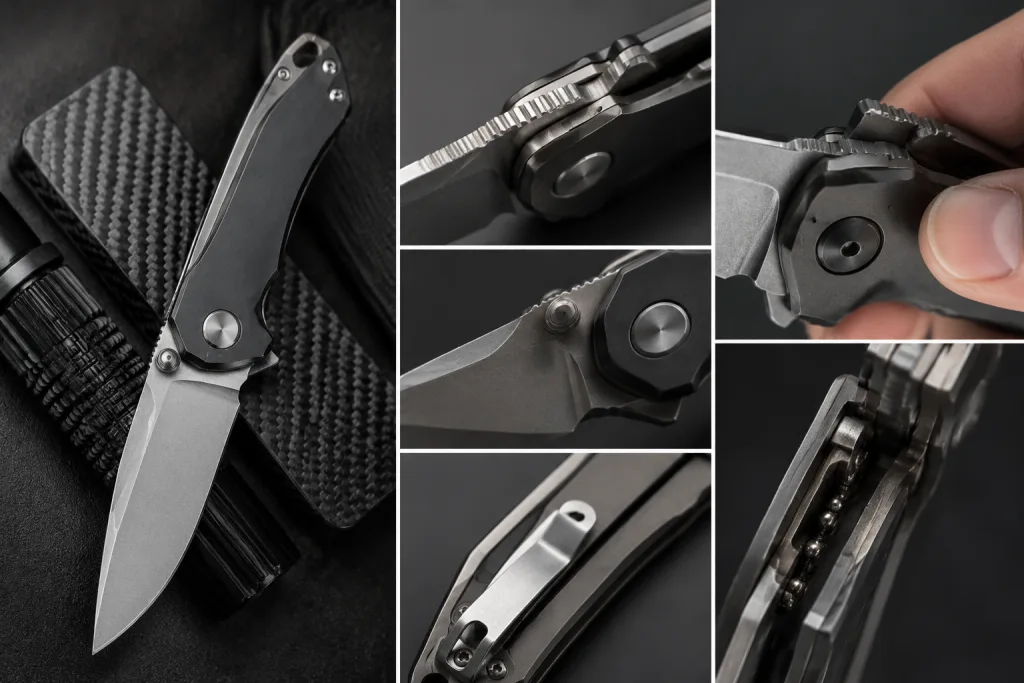
For folding knives, also specify:
- Lock type.
- Opening mechanism.
- Pivot hardware.
- Clip position.
- Closed length.
- Blade play tolerance.
- Lock engagement requirement.
- Closed retention requirement, if used by the buyer.
Ask the supplier to return any construction change needed for production, cost, tooling, or durability.
5. Include Branding, Packaging, and Labeling
LeeKnives includes packaging and logo work among B2B service topics LeeKnives. Put packaging, marking, and carton data in the same quote request as the product.
Provide:
- Logo file, artwork format, logo size, logo position, and marking method.
- Unit packaging type, such as bulk pack, individual box, clamshell, blister, sleeve, sheath, blade guard, display box, gift box, or set packaging.
- Inner carton quantity and master carton quantity.
- Requested carton dimensions or carton limits, if any.
- Barcode format and placement supplied by the buyer.
- Country-of-origin marking requirements supplied by the buyer.
- Warning label, age label, care label, or legal label requirements supplied by the buyer.
- Insert card, instruction sheet, care guide, or warranty card requirements.
- Rust prevention requirement for storage and shipment.
- Drop-test or compression-test requirement, if used by the buyer.
- Retail display requirements.
- Packaging material restrictions or recyclability requirements, if used by the buyer.
Ask the supplier to return:
- Whether unit packaging cost is included or excluded.
- Branding setup cost, tooling cost, or artwork requirements.
- Packaging sample cost and lead time.
- Export carton dimensions and estimated gross weight.
- Carton mark format.
- Barcode verification process, if applicable.
6. Set Sample and Approval Gates
Use approval gates before bulk production. State what must be reviewed, who can approve it, and what happens when a revision is required.
Recommended gates:
- RFQ clarification and supplier assumptions review.
- Engineering drawing approval.
- Material and finish confirmation.
- Logo and marking approval.
- Pre-production sample approval.
- Packaging sample approval.
- Golden sample sign-off.
- Bulk production release.
- Pre-shipment inspection.
For each gate, state the required files or samples, approval owner, revision process, rejection process, and whether approval changes the production lead time.
7. Write Quality Requirements Into the RFQ
Define quality expectations before asking for a QC plan. Use measurable inspection points, defect classes, sampling rules if used, and a required report format.
Inspect:
- Blade dimensions, cutting-edge length, and spine thickness.
- Hardness range and available HRC records.
- Edge consistency and bevel symmetry.
- Tip alignment.
- Blade warp or bend.
- Surface finish, scratches, stains, pits, rust, or coating defects.
- Handle fit, gaps, cracks, chips, color mismatch, or movement.
- Fastener tightness and alignment.
- Lock engagement, blade play, and closed retention for folding knives.
- Sheath or blade guard fit.
- Logo position, size, and clarity.
- Packaging condition.
- Carton quantity, carton weight, carton mark, and barcode.
Use defect classes such as:
- Critical defect: safety issue, wrong product, prohibited material identified by the buyer, failed lock, severe blade crack, exposed sharp edge in packaging, or required labeling failure.
- Major defect: wrong steel or handle material, obvious handle gap, incorrect logo, loose component, unacceptable blade warp, wrong carton quantity, or nonfunctional sheath.
- Minor defect: small cosmetic mark within agreed limits, slight color variation within approved sample range, or packaging scuff that does not affect saleability.
Ask the supplier to return:
- Proposed inspection plan.
- Sampling method or AQL level, if used.
- Measurement report format.
- Photo report format.
- Available material, hardness, or packaging records.
- Corrective action process for failed inspection.
8. Separate Commercial and Logistics Assumptions
LeeKnives identifies MOQ, lead time, and quality consistency as B2B knife sourcing topics LeeKnives. Treat commercial and logistics details as quote variables, not afterthoughts.
Request:
- MOQ per SKU, color, handle material, and packaging version.
- Sample cost and sample lead time.
- Tooling, mold, fixture, dieline, artwork, or setup charges.
- Production lead time after final approval.
- Incoterms.
- Export carton dimensions and gross weight.
- Loading quantity estimate by carton, pallet, or container, if available.
- Payment terms.
- Quote validity period.
- Price breaks.
- Spare parts, replacement, or after-sales process, if relevant.
- Replenishment or backorder process for repeat programs.
Supplier Quote Comparison Table
| Decision Area | Buyer Should Provide | Supplier Should Return | Quote Risk if Missing | |---|---|---|---| | Product scope | Category, use case, destination market, sales channel | Confirmed scope and exclusions | Supplier may quote against a different use case | | Blade specification | Steel, HRC, dimensions, grind, edge, finish | Confirmed material, HRC range, substitutions | Material or edge assumptions may differ by supplier | | Handle construction | Material, tang or frame, fasteners, texture, tolerances | Confirmed build method and production limits | Sample may not reflect intended bulk construction | | Branding | Logo files, marking method, artwork placement | Cost, setup, tooling, and artwork requirements | Branding may be excluded from unit price | | Packaging | Unit pack, carton pack, labels, barcode, inserts | Packaging cost, sample timing, carton data | Packaging and freight assumptions may be incomplete | | Samples | Drawing, reference sample, approval process | Sample cost, sample lead time, revision process | Production may begin from an unapproved interpretation | | QC | Inspection points, defect classes, reports | QC plan and available records | Disputes may depend on subjective acceptance standards | | Timeline | Quote deadline, launch date, delivery window | Sample, production, and shipment schedule | Delivery timing may not match the buying program | | Commercial terms | Target quantity, Incoterms, payment expectations | MOQ, price breaks, tooling, payment, validity | Low unit price may omit setup or logistics cost |
Copy-Ready Knife Supplier RFQ Checklist
1. Buyer information
- Company name.
- Contact person and role.
- Email, phone, and website.
- Billing country and shipping country.
- Quote deadline.
2. Product overview
- Product name or working SKU.
- Knife category.
- Intended use.
- Destination market.
- Sales channel.
- First order quantity.
- Estimated repeat volume, if known.
- Target launch date.
3. Technical specification
- Blade steel grade.
- Acceptable steel alternatives.
- Target HRC range.
- Required report type, if any.
- Blade length, cutting-edge length, width, thickness, and tolerance.
- Overall length and target weight.
- Blade shape and grind.
- Edge type and edge angle.
- Surface finish or coating.
- Logo position and marking method.
4. Handle and assembly
- Handle material.
- Color and finish.
- Tang, frame, or folder construction.
- Fasteners and hardware.
- Grip texture.
- Balance point, if applicable.
- Acceptable cosmetic variation.
- Folder lock, pivot, opening, and clip details, if applicable.
5. Accessories and packaging
- Sheath, blade guard, pouch, box, display, or set requirement.
- Packaging artwork status.
- Barcode and label requirements.
- Inner carton and master carton quantity.
- Rust prevention requirement.
- Instruction, care, warning, or warranty inserts.
6. Samples and approvals
- Sample quantity.
- Sample lead time requested.
- Sample cost request.
- Drawing approval process.
- Pre-production sample process.
- Golden sample approval process.
- Packaging sample approval process.
7. Quality and inspection
- Inspection standard, sampling method, or AQL, if used.
- Critical, major, and minor defect definitions.
- Required tests or measurement reports.
- Pre-shipment inspection timing.
- Photo report requirements.
- Corrective action process for failed inspection.
8. Commercial and logistics terms
- MOQ by SKU and packaging version.
- Price breaks.
- Tooling or setup fees.
- Production lead time after approval.
- Incoterms.
- Carton dimensions and gross weight.
- Shipping method options.
- Payment terms.
- Quote validity.
Final Buyer Check
Before awarding an order, compare quotes line by line. Confirm that each supplier priced the same blade steel, HRC range, dimensions, handle construction, packaging format, sample process, inspection plan, MOQ, lead time, and logistics assumptions.
Do not treat a source citation, supplier website, catalog listing, or sample as proof of compliance. Verify supplier capabilities, test records, certificates, regulatory status, labeling requirements, and product-specific legal obligations directly with current documents before releasing a purchase order.