Knife Wholesale Supplier Evaluation: Sampling, RFQ, and QC Guide
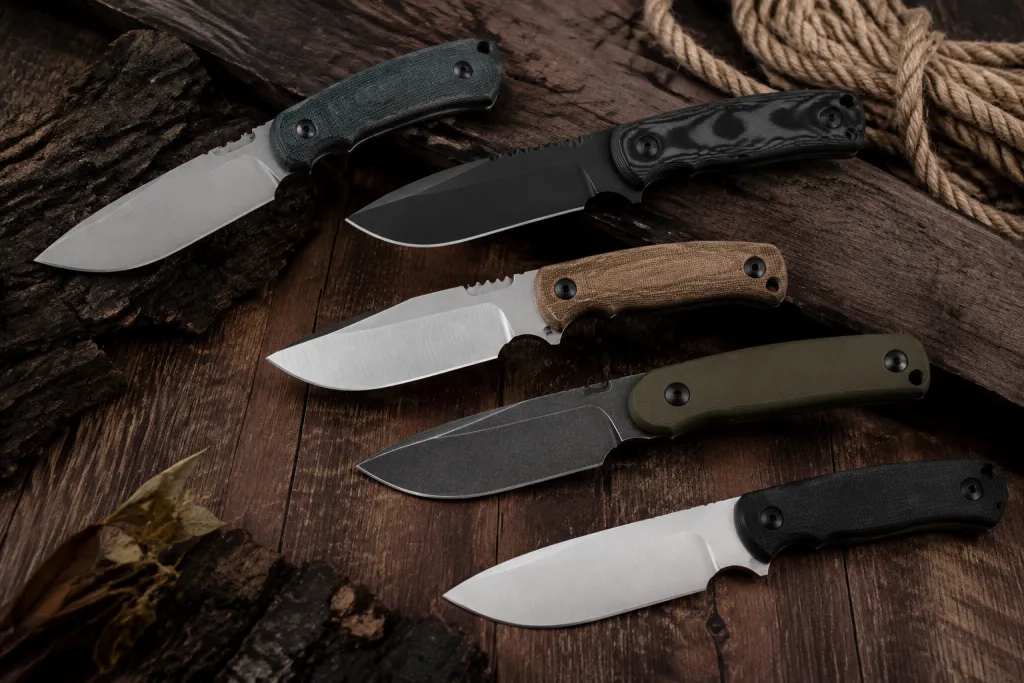
Knife Wholesale Supplier Evaluation: Sampling, RFQ, and QC Guide
By Vincent Xi, Editorial Author
<script type="application/ld+json">{"@context":"https://schema.org","@type":"Article","headline":"Knife Wholesale Supplier Evaluation: Sampling, RFQ, and QC Guide","author":{"@type":"Person","name":"Vincent Xi","jobTitle":"Editorial Author","url":"https://tangforge.com/authors/vincent-xi/"}}</script>
Knife wholesale sourcing should not start with the lowest unit price alone. Importers, distributors, private-label buyers, retail chains, marketplace sellers, and promotional buyers need a structured way to compare supplier identity, assortment fit, sampling discipline, packaging scope, inspection terms, minimum-order exposure, and compliance responsibilities before issuing a purchase order.
The practical buying question is whether a supplier can turn an inquiry into a quote file specific enough to inspect, approve, repeat, and review later. A catalogue can support early screening, but it does not verify current inventory, material consistency, packaging readiness, inspection results, legal suitability, or replenishment terms.
Scope, Sources, and Method
This guide uses the cited pages as source context for buyer-side evaluation. It does not treat any cited page as proof of a specific supplier's current MOQ, inventory, certificate status, lead time, inspection result, payment beneficiary, or destination-market legality.
Author attribution is limited to the supplied first-party author page: Vincent Xi is identified as Editorial Author, with the author profile at https://tangforge.com/authors/vincent-xi/. No first-person sourcing, factory-visit, testing, client-result, or certification claim is made.
| Source-based data point | Scope and date context | Buyer use | |---|---|---| | 4 category labels: folding, pocket, fixed blade, and EDC | The China Knives Wholesale article index is used as cited page context for assortment mapping; no separate publication date is stated in the supplied citation context China Knives Wholesale article index. | Use these 4 category labels to organize RFQ lines, not to assume current stock availability, product conformity, or shipment eligibility. | | 4 buyer-audience examples: hunters, chefs, campers, and collectors | The SZCO wholesale retail-store guide is dated July 13, 2026 in the supplied citation context SZCO wholesale knife supply guide. | Segment assortment by buyer channel and use case, then verify SKU-level legality, packaging, and documentation separately. | | 10,000 US dollars as a first-order example | The WholesaleSeeker guide is described in the supplied citation context as published May 15, 2026 and updated June 2026 WholesaleSeeker distributor guide. | Treat 10,000 US dollars as a cited market example to verify with each supplier, not as a universal knife wholesale minimum. | | 7 sample-record fields: SKU role, target account, material or construction target, packaging format, price band, approved sample date, and dealer review notes | The TOP KNIVES B2B guide provides the cited sample-matrix context; no separate publication date is stated in the supplied citation context TOP KNIVES B2B sourcing guide. | Convert sample review into a traceable approval record with 7 defined fields before purchase-order release. |
Methodology: the article extracts buyer-relevant sourcing signals from the cited pages, then converts those signals into RFQ, sampling, inspection, pricing, and pre-purchase-order checkpoints. The checklist language is buyer-side guidance derived from those contexts; it is not a claim that any cited company currently provides a specific product, certificate, MOQ, lead time, inspection service, or legal guarantee.
Limitations and items to verify: the cited pages do not verify any supplier's current legal entity, factory scope, product compliance, certificate validity, steel composition, hardness result, heat-treatment record, payment beneficiary, shipment readiness, or destination-market legality. Those items require current written documents, approved samples, and qualified compliance review before ordering.
Start With Channel Fit
A knife wholesale buyer should define the sales channel before asking for a bulk price list. A distributor, private-label buyer, retail buyer, marketplace seller, or promotional buyer may need different packaging, documentation, inspection, and reorder terms.
The China Knives Wholesale article index provides a source context for 4 category labels: folding, pocket, fixed blade, and EDC China Knives Wholesale article index. Those labels are useful for organizing the first RFQ table, but they do not verify current stock, current models, material claims, or shipment eligibility.
The SZCO retail-store guide provides a source context for 4 buyer-audience examples: hunters, chefs, campers, and collectors, with the supplied citation context dated July 13, 2026 SZCO wholesale knife supply guide. Buyers can use that audience framing to separate use cases, then add their own destination-market restrictions, packaging path, and excluded product features.
A practical RFQ should separate product role from product style. A folding knife may be quoted as a replenishment item, sample item, online marketplace item, or private-label item. Those roles can require different packaging versions, label responsibilities, inspection criteria, and reorder assumptions.
Supplier Screening Table
| Evaluation area | Request from supplier | Useful response | Hold the quote if | |---|---|---|---| | Seller identity | Legal seller name, payment beneficiary, export contact, invoice entity, and shipping-document entity | Names match across quotation, invoice, payment instructions, and shipping documents | Different entities appear without written explanation | | Channel fit | Product list organized by buyer channel, intended use case, and packaging path | Supplier separates standard wholesale, custom logo work, private-label packaging, and any made-to-order scope | Supplier provides only a generic bulk list | | Product definition | SKU code, blade style, handle target, finish, opening or sheath requirement, and restricted-feature exclusions | Quote identifies what is included and what remains optional | Critical details are deferred until after deposit | | Sample control | Sample code, dated photos, material target, packaging version, approval date, and deviation notes | Approved sample can be tied to the purchase order and inspection checklist | Supplier relies only on catalogue photos or informal messages | | Material claims | Steel grade statement, handle material statement, coating or finish description, and evidence available for each claim | Supplier distinguishes guaranteed specifications from descriptive catalogue language | Steel names, hardness claims, or coating claims appear without document context | | Packaging | Inner pack, sheath or box, barcode area, warning-label responsibility, carton mark, and artwork owner | Packaging version is approved before production | Packaging details are postponed until after price approval | | Inspection | Defect definitions, measurement points, photo requirements, sample reference, and approval process | Supplier accepts written inspection criteria before deposit | QC is described only as a general promise | | Commercial terms | MOQ, unit price, quote validity, sample fee, tooling fee, payment terms, lead-time trigger, and reorder assumptions | Terms are written by SKU and packaging version | MOQ or timing changes without a revised quote | | Compliance | Destination-market restrictions, platform rules, labeling duties, customs document needs, and buyer/supplier responsibility split | Buyer and supplier identify what must be verified before shipment | Supplier treats legality as a general assurance |
Build a Complete RFQ
The RFQ should give each supplier the same quoting scope. At minimum, request confirmation on product type, intended use case, destination market, sales channel, standard wholesale or private-label path, packaging format, artwork responsibility, inspection requirements, and shipment documents.
For commercial comparison, ask for MOQ by SKU, MOQ by assortment, MOQ by logo option, MOQ by packaging version, and MOQ for reorder. Ask whether the quoted lead time starts from deposit, purchase-order confirmation, sample approval, artwork approval, material readiness, or another defined trigger. If inspection is required, include the inspection window before balance payment and shipment release.
For compliance, do not ask the supplier for a broad promise that a knife is legal everywhere. Ask what the supplier can document, then have the buyer or a qualified compliance reviewer check destination laws, platform policy, carrier rules, customs documentation, labeling, and age-related requirements where applicable.
Sampling Before Bulk Approval
Sampling should answer a defined buying question. The buyer is not only checking whether the knife looks acceptable; the buyer is confirming whether the product, packaging, logo execution, material target, function, and carton concept match the intended order.
The TOP KNIVES B2B guide provides a source context for a sample-record approach with 7 fields: SKU role, target account, material or construction target, packaging format, price band, approved sample date, and dealer review notes TOP KNIVES B2B sourcing guide. Buyers can adapt those 7 fields into a controlled sample approval record, while separately verifying the supplier's current product scope and order terms.
A sample approval file should include the supplier name, quotation version, SKU code, sample code, dated photos, material target, packaging version, approved deviations, and unresolved items. If the supplier changes the clip, pivot, sheath, box insert, coating, logo position, carton mark, named material, or invoice entity after approval, require written deviation approval before production continues.
Inspection Criteria to Set Before Deposit
Inspection criteria should be written before the purchase order. The RFQ should state which issues are critical, which are major defects, and which are minor visual defects. The supplier should know in advance how the buyer will treat blade play, lock engagement problems, uneven grind, weak sheath retention, logo defects, carton crushing, rust spots, mismatched markings, label errors, and packaging damage.
For folding knives, buyer-defined checks can include blade centering, opening and closing action, lock engagement, clip attachment, screw condition, handle fit, edge condition, and cosmetic finish. For fixed blades, checks can include blade alignment, handle bonding or fastening, sheath fit, retention, grind symmetry, surface finish, and packaging condition. For kitchen knives, buyers may need additional review of food-contact documentation, handle finish, blade straightness, edge consistency, and corrosion-related claims.
Material claims require document discipline. A catalogue steel name is not the same as verified production material. If steel composition, hardness, heat treatment, corrosion resistance, or edge retention matters to the program, the quote should state what evidence will support the claim, such as a supplier declaration, material certificate, batch record, or product-specific test report. Do not imply certification unless a current document is provided and the company name, site, product scope, issuing body, issue date, expiry date, and applicability to the ordered product are checked.
Interpreting MOQ, Price, and Lead Time
The WholesaleSeeker guide's 10,000 US dollars first-order example, described in the supplied citation context as published May 15, 2026 and updated June 2026, is useful as a reminder to verify minimum order exposure early WholesaleSeeker distributor guide. It should not be treated as a fixed industry rule, supplier commitment, or automatic MOQ.
A unit price is comparable only when the scope is equal. A standard wholesale item is not the same quote as a private-label item with custom logo work, barcode packaging, carton marks, artwork review, inspection reporting, and shipment documentation. Ask suppliers to separate product cost, sample fee, tooling fee, packaging cost, artwork-related cost, inspection-related cost, and freight assumptions where applicable.
Lead time also needs a trigger. A supplier may quote differently for standard stock, made-to-order production, custom packaging, revised samples, or delayed artwork. The buyer should ask what event starts the clock and what event releases the shipment.
Pre-Purchase-Order Verification Pack
Before deposit, the buyer should assemble one decision file. It should include the latest quotation, supplier identity details, payment beneficiary, approved sample record, packaging artwork, inspection checklist, compliance responsibilities, payment terms, shipment expectations, and open-issue log.
The buyer should verify that any certificate or test report is current and relevant before referencing it externally. Check the company name, site, product scope, issuing body, issue date, expiry date, and whether the document applies to the product being ordered. A management-system document or a report for a different product line should not be presented as proof that the ordered knives are certified.
The purchase order should also state the change-control rule: no material, finish, logo, packaging, carton, supplier entity, payment beneficiary, or approved specification may change after sample approval without written buyer approval.
Final Supplier Decision
A useful knife wholesale evaluation ends with a clear decision: approve for purchase order, request revision, or reject. The decision should be based on traceable evidence, not on catalogue appeal or unit price alone.
The strongest file is the one a buyer can audit later. It shows which quote version controls the order, which sample was approved, which packaging version will ship, which inspection criteria apply, what commercial exposure remains, and which legal or documentation checks stay with the buyer.