Knives Manufacturer RFQ Checklist: Specs, QC, Packaging, and Quote Review
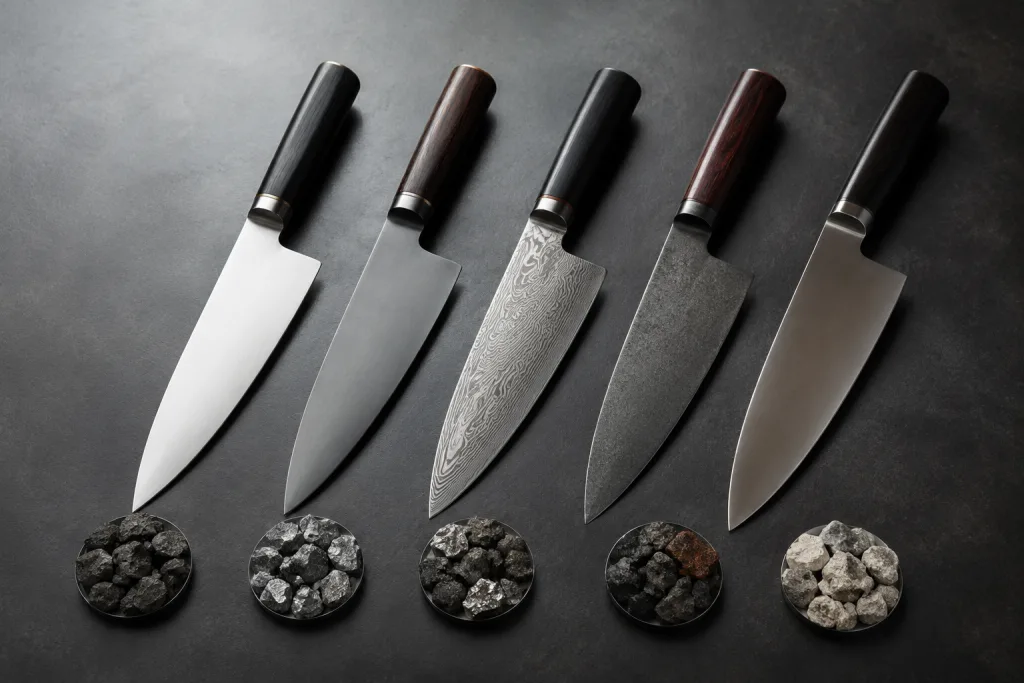
Knives Manufacturer RFQ Checklist: Specs, QC, Packaging, and Quote Review
A knives manufacturer RFQ should make each supplier quote against the same product definition, packaging plan, quality expectations, documentation requests, and commercial terms. Use this checklist to turn broad sourcing ideas into SKU-level requirements that can be compared, sampled, inspected, and verified.
This article is source-bounded. The supplied citations are used for sourcing-process guidance and market context only. They do not verify any individual supplier, factory, trading company, agent, quotation, certification, or product capability.
One cited B2B sourcing guide recommends preparing RFQ inputs before supplier outreach, including product category, target quantity, reference samples, packaging details, quotation requirements, quality control expectations, and export preparation https://marketvalue.cn/insights/. A cited wholesale kitchen knife page lists product types such as chef knives, paring knives, boning knives, utility knives, and scissors https://sourcingnova.com/products/wholesale-kitchen-knives/. A cited knife sourcing guide reports 2024 knife exports from China of $1.66 billion, equal to 51.5% of global knife exports, and describes Yangjiang, Guangdong as a knife manufacturing cluster with stainless steel sourcing, die-casting, heat treatment, electroplating, handle fabrication, and export logistics in the region https://leeknives.com/chinese-knife-manufacturers/. Treat those market claims as context from the cited page, not as supplier verification.
What a Knife Manufacturer RFQ Should Produce
The goal is to receive comparable, reviewable responses from every supplier. At minimum, the RFQ should let the buyer compare:
- SKU-by-SKU quotation details.
- Blade material, construction, hardness target, finish, and logo method.
- Handle material, construction, fit, finish, and branding method.
- Packaging structure, carton pack, labeling, and barcode requirements.
- MOQ, price breaks, tooling or setup costs, sample charges, and quote validity.
- Sample lead time, revision process, and approval standard.
- Quality control checks, defect definitions, and inspection reporting.
- Available documentation by SKU, material, and destination market.
- Incoterms, payment terms, production lead time, and shipping assumptions.
A clear RFQ does not prove supplier capability. It narrows assumptions, gives suppliers a place to flag infeasible requirements, and helps the buyer compare technical fit separately from sales language.
1. Define the Product, Market, and Sourcing Path
Start with the product category and use case. Treat each SKU as its own line item rather than asking for a generic knife range.
Include these project fields at the start of the RFQ:
- Buyer company name, country, contact person, and official email.
- Product type for each SKU, such as chef knife, santoku, paring knife, slicer, cleaver, steak knife, scissors, set, or accessory.
- Intended destination market.
- Target channel, such as retail, e-commerce, foodservice, distributor catalog, promotional program, or private label range.
- Estimated order quantity per SKU and expected reorder pattern if known.
- Reference product, drawing, photo set, CAD file, or physical sample availability.
- Required delivery window.
- Sourcing path: OEM, ODM, wholesale, private label, or custom development.
The cited sourcing guidance discusses preparing logo, material, packaging, sample, and quotation details before production discussion https://marketvalue.cn/insights/. State whether the supplier should quote an existing design, a modified design, or a new development project.
2. Build a SKU Specification Table
For multi-SKU programs, use a table. Paragraph specifications are easy to misread when blade length, steel, finish, handle, and packaging vary by item.
| RFQ field | Buyer should provide | Supplier should confirm | |---|---|---| | SKU name | Buyer SKU code and product type | Quoted SKU code and any naming changes | | Blade size | Blade length, total length, thickness, and target weight | Achievable dimensions and tolerance | | Steel | Required steel grade or requested options | Exact steel quoted for each option | | Hardness | HRC range and test location if required | Target range and measurement method | | Construction | Stamped, forged, full tang, partial tang, welded, laminated, or other construction | Construction used in the quotation | | Grind and edge | Grind type, bevel, edge angle, and sharpening expectation | Proposed edge geometry and any deviation | | Finish | Satin, mirror, stonewash, coating, Damascus-style pattern, bead blast, or other finish | Finish process and acceptable visual variation | | Logo | Logo position, size, artwork format, and marking method | Laser, etching, stamping, engraving, or other method | | Handle | Material, color, rivets, tang, bolster, texture, and finish | Material and assembly method quoted | | Packaging | Unit pack, blade guard, insert, carton pack, labels, and barcode | Packaging included in the price | | Documents | Required declarations, test reports, inspection photos, or shipment documents | Available documents and any testing gaps |
If the buyer is comparing materials, handle styles, finishes, or packaging formats, ask the knives manufacturer to quote each option as a separate line. Do not let one blended price represent several possible products.
3. Specify Blade Requirements That Affect Price
Use measurable blade requirements instead of broad descriptors such as premium, professional, high-end, or durable. Include enough detail for the supplier to price the requested material, production method, finishing process, and inspection standard.
Blade fields to include:
- Steel grade or requested steel options.
- Hardness target in HRC, including test location if required.
- Blade length, total length, spine thickness, and taper requirements where relevant.
- Construction method, such as stamped, forged, full tang, partial tang, welded, laminated, or other defined construction.
- Grind type and bevel structure.
- Target edge angle and sharpening expectation.
- Tip shape and blade profile reference.
- Surface finish and visual acceptance criteria.
- Logo method and artwork requirements.
- Corrosion testing request if needed for the destination market or sales channel.
If finish appearance matters, define the acceptance standard. For example, a satin finish should have a direction and visual reference. For a coated blade, ask the supplier to identify the coating type, color standard, adhesion test expectation if used, and any food-contact documentation available for the exact SKU.
4. Define Handle, Balance, and Assembly Requirements
Handle requirements should sit in the same SKU table as blade requirements. Ask the supplier to confirm the material, assembly method, and visible finish assumptions used in the quotation.
Handle fields to include:
- Material, such as wood, stainless steel, plastic, resin, composite, rubberized material, or another defined material.
- Construction, such as riveted, molded, welded, bolstered, full tang, hidden tang, or one-piece construction.
- Color standard or physical reference sample where color accuracy matters.
- Surface texture and finish.
- Rivet material, rivet count, and exposed or hidden fastener construction.
- Tang structure and visible tang requirements.
- Bolster design if applicable.
- Logo position, size, and process.
- Maximum acceptable gaps, burrs, sharp handle edges, misalignment, and adhesive residue.
- Balance point target if important to the product.
For handle feel, attach photos, drawings, and physical references when available. When weight, balance, texture, or grip shape matters, make those requirements part of the sample approval record.
5. Specify Packaging, Labeling, and Documentation Early
Packaging should be part of the SKU specification. Request separate pricing when the buyer is comparing multiple unit packs, cartons, inserts, barcode placements, or retail label formats.
Packaging fields to include:
- Unit packaging type, such as blade guard, sheath, paper sleeve, blister card, color box, gift box, insert tray, master carton, or e-commerce mailer.
- Unit pack dimensions if required.
- Blade protection method.
- Packaging artwork status: buyer-supplied, supplier-developed, or undecided.
- Print file format and artwork approval process.
- Barcode format and placement.
- Warning labels, country of origin marking, and market-specific label copy.
- Inner carton and master carton quantity.
- Carton marks, shipping marks, pallet requirements, and destination warehouse requirements.
- Drop test or transit test expectations if required by the buyer.
The cited sourcing guidance includes packaging, quality control, and export preparation in the RFQ preparation process https://marketvalue.cn/insights/. For RFQ purposes, ask what material declarations, food-contact test reports, packaging documents, or third-party testing can be provided for the exact product being quoted.
Avoid vague compliance shorthand such as approved or certified unless the buyer has identified the exact regulation, test report, lab, product scope, and validity period. A clearer RFQ request is: list available documents for this SKU and state whether additional third-party testing is required for the destination market.
6. Define the Sample and Approval Process
A cited wholesale kitchen knife page presents a sample workflow: send a design or choose a current design, receive samples for quality assessment and changes, then place a private label order https://sourcingnova.com/products/wholesale-kitchen-knives/. Use that as a workflow reference only. The buyer still needs to define the sample target before the first sample is made.
Ask each knives manufacturer to confirm:
- Sample cost per SKU.
- Sample lead time.
- Number of samples included.
- Freight method and freight payer.
- Whether the sample uses final material, final finish, final logo, and final packaging.
- Revision cost and revision lead time.
- Pre-production sample approval process.
- Golden sample retention by buyer and supplier.
- Whether mass production can start only after written approval.
For products where feel, balance, finish, sharpness, or packaging fit matters, use physical sample approval where possible. Keep one approved sample with the buyer and one with the supplier so both sides can refer to the same standard.
7. Put Quality Control Points in Writing
Quality control expectations should be written before mass production. For knives, the RFQ can ask the supplier to confirm inspection points for function, appearance, assembly, packaging, and documentation.
Functional checks may include:
- Blade length, total length, thickness, and weight.
- Hardness check against the agreed HRC target.
- Edge sharpness and edge consistency by an agreed method.
- Blade straightness and tip condition.
- Handle security and fit.
- Balance point if specified.
- Corrosion resistance testing if required.
- Packaging protection and carton strength where relevant.
Appearance checks may include:
- Scratches, stains, pits, burrs, uneven polish, or finish variation outside the approved range.
- Logo position, clarity, size, and color where applicable.
- Handle gaps, chips, color mismatch, adhesive residue, or sharp handle edges.
- Packaging dents, print defects, barcode errors, missing labels, or damaged cartons.
Define defect severity before inspection:
- Critical defects: safety, legal, or use-related failures that make the product unacceptable.
- Major defects: visible or functional issues likely to affect saleability or customer acceptance.
- Minor defects: limited cosmetic issues that do not affect safety, function, or core retail presentation.
If the buyer uses AQL, a third-party inspection plan, a restricted substance list, a packaging manual, or a customer-specific label template, attach it during the RFQ stage. Do not assume the supplier's internal QC standard matches the buyer's customer standard.
8. Normalize Quotations Before Selecting a Supplier
Treat each price as incomplete until the quotation states what is included and excluded. Packaging, tooling, logo marking, testing, samples, inland freight, and documentation support should be confirmed rather than assumed.
Compare each quotation by:
- SKU and product specification.
- Steel grade, hardness target, construction, and finish.
- Handle material and assembly method.
- Unit packaging and carton packaging.
- MOQ per SKU and per order.
- Price breaks by quantity.
- Tooling, mold, artwork, sample, and packaging setup costs.
- Sample lead time and production lead time.
- Incoterms, port, payment terms, and quote validity.
- Available documentation and testing responsibilities.
- Inspection plan and reporting format.
Supplier Response Comparison Matrix
| Decision area | What to request | Strong response | Buyer risk if unclear | |---|---|---|---| | Product match | Drawings, dimensions, steel, handle, finish, and packaging by SKU | Quote follows each SKU line and notes deviations | Wrong product quoted or sampled | | Technical feasibility | Comments on steel, hardness, finish, tolerances, and logo method | Supplier confirms achievable targets or proposes separately priced alternatives | Sample delays and price changes | | MOQ and price breaks | MOQ per SKU, mixed-SKU rules, and quantity tiers | Clear tiers by SKU and packaging option | False comparison across suppliers | | Sample process | Sample cost, lead time, revision rules, and approval steps | Written path from reference sample to approved sample | Production starts from unapproved assumptions | | Quality control | Inspection points, defect classes, AQL if used, and test methods | Measurable checks for blade, handle, edge, finish, and packaging | Inconsistent acceptance decisions | | Documentation | Available material documents and test reports by SKU | Documents tied to material and destination market | Unsupported market-entry claims | | Packaging | Unit pack, blade protection, carton pack, barcode, and marks | Packaging is clearly included or priced as an option | Hidden cost or transit damage | | Commercial terms | Incoterms, port, payment terms, lead time, and validity | Terms are stated in the formal quotation | Landed-cost calculation gaps | | Supplier verification | Official website, domain email, company details, and quotation identity | Contact path and company identity are consistent | Miscommunication or impersonation risk |
Verify the Supplier Before Payment or Production
Supplier verification is separate from product specification. A cited knife buyer FAQ and news hub includes due diligence topics such as company identity, official contact, RFQ preparation, OEM and ODM sourcing, brand relationship verification, and search result verification https://top-knives.com/news/. Buyers can use that structure as a due diligence checklist, but it does not replace supplier-specific verification.
Before paying for samples or production, confirm:
- The official contact path.
- The legal entity issuing the quotation.
- The website, email domain, and company details.
- Whether the quoting party is a factory, trading company, agent, marketplace seller, or another business type.
- Whether the quotation matches the RFQ and approved sample requirements.
- Whether product, packaging, testing, and documentation responsibilities are written into the order record.
Copy-Ready Knives Manufacturer RFQ Checklist
Use this structure when sending an RFQ to a knife manufacturer.
1. Project details
- Buyer company, country, contact person, and official email.
- Destination market and target channel.
- Product category and SKU list.
- OEM, ODM, wholesale, private label, or custom development path.
- Required delivery window.
2. SKU specification
- SKU name and product type.
- Blade length, total length, blade thickness, and target weight.
- Steel grade or requested steel options.
- Hardness target and test requirement.
- Blade construction, grind, edge angle, and sharpening expectation.
- Surface finish and visual acceptance criteria.
- Logo position, size, artwork format, and marking method.
- Handle material, color, construction, rivets, tang, and logo placement.
- Dimension, weight, color, and assembly tolerances.
3. Packaging and labeling
- Unit packaging type.
- Blade guard, sheath, sleeve, or insert requirements.
- Packaging artwork status and print file format.
- Barcode, warning label, country of origin, and retail label needs.
- Inner carton and master carton quantity.
- Carton marks, palletization, and shipping marks.
- E-commerce packaging needs if applicable.
4. Quantity and quotation
- Estimated order quantity per SKU.
- MOQ per SKU and per order.
- Price breaks for buyer-specific quantity tiers.
- Tooling, mold, artwork, sample, and packaging setup costs.
- Incoterms, port, payment terms, and quotation validity.
5. Sampling and approval
- Reference sample availability.
- Requested number of samples.
- Sample cost, sample lead time, and freight method.
- Revision process and approval signoff.
- Golden sample retention by buyer and supplier.
6. Quality control and inspection
- Incoming material checks if required.
- In-process inspection points if required.
- Final inspection standard and AQL level if used.
- Critical, major, and minor defect definitions.
- Blade sharpness, hardness, corrosion, handle security, drop, or packaging tests where relevant.
- Photo, video, or third-party inspection requirements.
7. Documentation
- Commercial invoice and packing list requirements.
- Material declarations and available test reports.
- Food-contact documentation for kitchen knives where applicable.
- Packaging material documentation if needed.
- Product photos, carton photos, and final inspection report.
A strong RFQ cannot prove supplier capability by itself. It creates a shared specification, sample path, inspection record, and quotation basis so the buyer can make supplier-specific checks before production.