Knives Manufacturer Sourcing: MOQ, Pricing, Packaging, QC, and Landed Cost
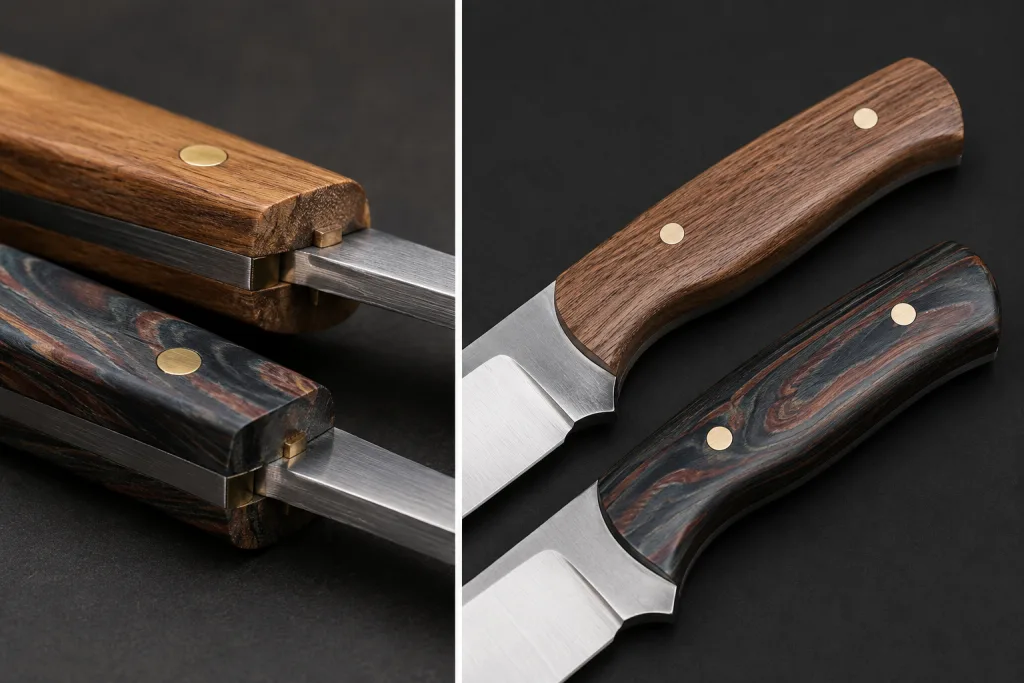
Knives Manufacturer Sourcing: MOQ, Pricing, Packaging, QC, and Landed Cost
**Byline:** Vincent Xi, Editorial Author, TANGFORGE. Author profile: https://tangforge.com/authors/vincent-xi/
Choosing a knives manufacturer is not only a unit-price exercise. Importers, distributors, retailers, and private label buyers need to confirm whether the supplier can support the required MOQ, customization scope, packaging format, inspection terms, compliance documents, shipment plan, and landed-cost target on the same quotation basis.
China is often included in knife sourcing research because of its reported export scale. One supplied industry guide reports that China exported **USD 1.66 billion of knives in calendar year 2024**, representing **51.5% of global knife exports for the product scope used by that guide**, citing OEC World as the underlying source https://leeknives.com/chinese-knife-manufacturers/. The same guide reports **2.9 billion units of knives, scissors, and blades produced in China in calendar year 2024**, up **8% year over year**, citing IndexBox 2025 https://leeknives.com/chinese-knife-manufacturers/. It also reports that Yangjiang, Guangdong's knife and hardware industry exceeded **RMB 55 billion in output value in calendar year 2024**, citing China Daily 2025 https://leeknives.com/chinese-knife-manufacturers/.
Those figures are useful market context, not supplier qualification. A large manufacturing cluster may give buyers more sourcing options, but each supplier still has to document the quoted blade specification, handle material, packaging format, inspection process, compliance paperwork, carton data, and freight assumptions.
**Method note:** This article uses the supplied source pages and the factual excerpts attributed to them. Market-scale figures are repeated as reported by the supplied sources and should be checked against the original statistical source, reporting period, product scope, and currency basis before being used in a formal sourcing memo. Supplier capability, pricing, certifications, lead times, and landed-cost estimates must be verified through current quotations, samples, inspection records, product-specific documents, and shipment documents.
Start With the Buying Scenario
Before asking for a price, define the order type. A stock-order distributor, a private label brand, and a retailer preparing a shelf-ready set may ask for similar knives but create different cost drivers.
A buyer should state:
- Destination market and sales channel
- Knife type, blade length, blade thickness if known, finish, handle material, and intended use
- Target order quantity by SKU and expected reorder quantity
- Whether the order is stock product, OEM, private label, or packaging-only customization
- Required packaging format, barcode or carton-mark needs, and delivery window
- Required inspection timing and compliance documentation
The Marketvalue resource hub frames RFQ preparation around product categories, target quantities, reference samples, packaging notes, quotation details, quality control, and export preparation https://marketvalue.cn/insights/. That structure is useful because many sourcing mistakes start when buyers compare quotes that do not describe the same product, packaging, or shipment scope.
MOQ: Separate the Minimums Behind the Price
MOQ is rarely one number. A supplier may have one minimum for a stock knife model, another for a handle color or material, another for logo application, and another for printed packaging. A private label order can therefore miss the practical MOQ even when the advertised product MOQ appears acceptable.
Request MOQ separately for:
- Each knife model and blade size
- Each handle material, color, or finish
- Each logo method, such as laser marking, etching, or printed packaging artwork
- Each retail packaging design, sleeve, insert, blister, or color box
- Each carton mark, barcode configuration, or destination-specific label
- Samples, pre-production samples, and sample cost refund terms if offered
For an example calculation to verify in the supplier quote: if a buyer requests **4 SKUs as an example planning scope**, and each SKU requires a separate printed retail box with a supplier-quoted packaging MOQ of **3,000 pieces per design as an example assumption**, the packaging minimum would be **12,000 retail boxes across the program as an example calculation**. This is not a claim about any supplier's MOQ.
MOQ negotiation should focus on reducing separate minimums. A buyer may ask whether SKUs can share neutral packaging, a common master carton, shared material procurement, or phased artwork. Those options must be confirmed in the supplier's current quote.
Pricing: Convert the Quote Into Comparable Lines
A useful knives manufacturer quotation should itemize both product and commercial assumptions. A single unit price with a short product description does not give enough detail to compare suppliers or control later changes.
Ask suppliers to quote the following lines:
- Blade material and grade as stated by the supplier
- Blade length, blade thickness, finish, edge specification, and tolerances if offered
- Handle material, construction, fastening method, and finish
- Logo method, artwork setup charge, fixture cost, mold cost, or tooling cost if applicable
- Inner packaging, retail packaging, inserts, export carton, and carton dimensions
- Units per carton, gross weight, net weight, and carton volume
- Sample cost, sample lead time, pre-production sample terms, and bulk lead time
- Incoterm, loading port, currency, payment terms, quote validity, and excluded costs
- Inspection plan, defect classification basis, and replacement or rework terms
Sourcing Nova's supplied page describes a private label order flow in general terms: the buyer sends a design or chooses an existing one, obtains samples for quality assessment and changes, and then places a private label knife order https://sourcingnova.com/products/wholesale-kitchen-knives/. Buyers should still treat sample approval as one checkpoint rather than full purchase approval. A sample can confirm appearance while leaving price-sensitive assumptions unresolved, especially packaging, carton efficiency, inspection scope, freight mode, and one-time setup charges.
For price comparison, separate first-order cash cost from repeat-order unit cost. Tooling, molds, artwork setup, packaging plates, or fixtures can make the first order look expensive even if repeat-order unit cost is competitive. The reverse can also happen if a low unit price excludes packaging, testing, or logistics items that another supplier included.
Packaging and Carton Data: Control Freight Assumptions Early
Packaging affects MOQ, damage risk, retail readiness, carton efficiency, and freight cost. A quote based on bulk neutral packing cannot be compared directly with a quote based on individual color boxes or a bundled knife set.
Before deposit, request:
- Inner packaging type and protective edge guard details
- Retail box, sleeve, insert, blister, or set-box specification
- Export carton dimensions in centimeters or millimeters
- Units per export carton
- Gross weight and net weight per export carton in kilograms
- Carton mark, barcode, and destination label requirements
- Whether packaging samples are included before bulk production
For an example calculation to verify in the supplier quote: if a buyer plans **6,000 pieces for one SKU as an example order quantity**, packed **60 pieces per export carton as an example packing assumption**, the shipment would require **100 export cartons before spare cartons, palletization, or mixed-SKU consolidation as an example calculation**. Current carton dimensions, carton weight, and freight quotes are still required before estimating landed cost.
QC and Compliance: Do Not Treat General Claims as Approval
Quality control should be agreed before mass production. Buyers should define sample retention, inspection timing, defect categories, measurement points, packaging checks, and the response if inspection fails.
A knife QC plan may include checks for:
- Blade length, blade thickness, finish, straightness, and edge consistency
- Handle fit, finish, fastening, and alignment
- Logo placement and appearance
- Packaging accuracy, barcode placement, carton marks, and carton strength
- Rust, scratches, burrs, contamination, or visible finish defects
- Quantity, assortment, and carton data against the purchase order
Compliance documents should be handled carefully. The Marketvalue excerpt notes that food-contact documentation support depends on product category, material, destination market, order requirements, and buyer-specific testing needs https://marketvalue.cn/insights/. That is a planning point, not proof that any supplier or product is certified. If a supplier names a standard, ask whether it is a destination-market legal requirement, a buyer requirement, a test method, or the supplier's internal practice. Do not treat an old report, logo, brochure statement, or general factory claim as current product-specific certification.
Landed-Cost Model: Build It Before Purchase Order
Landed cost should be calculated before the final purchase order, not after production is complete. The TOP KNIVES buyer FAQ page highlights freight planning as a sourcing topic and notes that buyers should connect freight cost, sample approval, packaging, production timing, and shipping plans before final order release https://top-knives.com/news/.
A practical landed-cost model should include:
- Ex-factory unit price by SKU
- Packaging cost by SKU and by set if applicable
- One-time tooling, mold, artwork, fixture, or packaging setup charges
- Carton dimensions, carton quantity, gross weight, and net weight
- Inland transport to port or consolidation warehouse
- International freight estimate by the planned mode
- Duty, customs brokerage, destination handling, inspection, and warehouse receiving fees
- Expected defect allowance, replacement handling, and rework terms
For an example calculation to verify in the supplier quote: if the ex-factory price is **USD 4.20 per knife as an example unit-price assumption** for **5,000 knives as an example order quantity**, the ex-factory goods value would be **USD 21,000 before packaging changes, tooling, freight, duties, inspection, or destination charges as an example calculation**. This is not a market price or supplier quote.
Supplier Comparison Table
| Decision area | What to request | Why it matters | What to verify before deposit | |---|---|---|---| | Product scope | SKU list, blade sizes, handle materials, finishes, and reference samples | Mixed SKUs can change MOQ, setup cost, and inspection work | Confirm each SKU's MOQ and whether variants can be combined | | Customization | Logo method, handle changes, blade finish changes, and packaging artwork | Custom parts can create separate minimums and one-time costs | Separate tooling, artwork, and repeat-order unit costs | | Packaging | Inner pack, retail box, insert, barcode label, carton mark, and carton size | Packaging changes carton volume, damage risk, and freight efficiency | Approve packaging sample and carton specification, not only knife sample | | Compliance documents | Food-contact or product documents relevant to the destination market | Missing or outdated documents can delay customs or retailer approval | Confirm documents are current and product-specific | | Quality control | Inspection timing, defect list, sample retention, and acceptance criteria | Rework, rejection, or sorting can affect delivery and margin | Agree defect categories in writing | | Logistics | Incoterm, port, shipment mode, lead time, carton data, and freight assumption | Freight changes can erase unit-price savings | Build landed-cost model before production release | | Commercial terms | Quote validity, payment terms, deposit, balance timing, and change-order process | Currency, materials, or scope changes can affect purchase cost | Lock scope, validity date, and excluded costs |
RFQ Checklist for Buyers
Use the RFQ to make quotes comparable and auditable.
- State buyer role: importer, distributor, retailer, private label brand, or promotional buyer.
- Define destination market, sales channel, and delivery window.
- List each SKU with blade type, blade length, blade thickness if known, handle material, finish, and target use.
- Provide drawings, reference photos, or approved samples if available.
- State target quantity per SKU and expected reorder quantity.
- Ask for MOQ per SKU, MOQ per handle color or material, and MOQ per packaging design.
- Request price breaks at example RFQ quantities of **1,000 pieces per SKU**, **3,000 pieces per SKU**, and **5,000 pieces per SKU**, clearly labeled as buyer-selected quotation quantities rather than market benchmarks.
- Ask whether mixed-SKU production can share material, packaging, or carton minimums.
- Request sample cost, sample lead time, bulk lead time, and pre-production sample terms.
- Ask for one-time costs separately: tooling, mold, logo setup, artwork, packaging plate, or fixture charges.
- Request packaging specification: inner pack, retail pack, export carton, units per carton, gross weight, net weight, and carton dimensions.
- Require Incoterm, loading port, currency, payment terms, quote validity date, and excluded costs.
- Ask what inspection plan and defect classification the supplier proposes.
- Ask which product-specific documents are available for the exact material and destination market, without assuming certification.
- Request sample-retention photos, carton-mark confirmation, and final inspection records where available.
Read Market Claims as Context, Not Supplier Proof
The supplied sources include broad information about manufacturing clusters, RFQ preparation, private label order flow, and freight planning. These contexts help buyers build a sourcing process, but they do not prove that any current supplier can meet a specific MOQ, price, quality, packaging, compliance, or delivery requirement.
The supplied Chinese manufacturer guide reports that Yangjiang accounts for approximately **70% of China's total knife output within the source's described scope** and **85% of China's knife exports within the source's described scope** https://leeknives.com/chinese-knife-manufacturers/. The supplied excerpt does not provide the full methodology in the article package, so buyers should verify the original source basis, date, and category definition before citing those shares in a sourcing report.
Buyers should be cautious with claims about factory scale, customer relationships, premium materials, fast delivery, or certification unless the claim is current, document-supported, and tied to the exact product being quoted. A large supplier may not be the right fit for a low-MOQ test order. A trading or coordination company may still be useful if it provides transparent sourcing, packaging, inspection, and logistics control. The practical test is whether the supplier can document the buyer's required scope and keep landed-cost assumptions visible.
Limitations and What to Verify
The market figures in this article come from supplied public source excerpts and should be treated as sourcing context, not live procurement data. Export values, production volume, regional output value, and cluster-share estimates can change by reporting period, product classification, data source, and methodology.
Before using these figures in a supplier scorecard or investment memo, verify the original statistical source, reporting date, product scope, currency basis, and whether the category definition matches the knives being sourced.
For each shortlisted knives manufacturer, verify current business details where relevant, official contact path, product-specific quotation, sample conformity, packaging specification, inspection plan, compliance documents, shipment terms, carton data, and logistics assumptions. For regulated or retailer-controlled channels, confirm destination-market requirements with a qualified compliance adviser or testing body before shipment.
The strongest sourcing decision is not the lowest quoted unit price. It is the supplier plan where MOQ, customization, packaging, QC, compliance documents, shipment assumptions, and landed cost are documented before the purchase order is released.
<script type="application/ld+json"> {"@context":"https://schema.org","@type":"BlogPosting","headline":"Knives Manufacturer Sourcing: MOQ, Pricing, Packaging, QC, and Landed Cost","author":{"@type":"Person","name":"Vincent Xi","jobTitle":"Editorial Author","url":"https://tangforge.com/authors/vincent-xi/"},"publisher":{"@type":"Organization","name":"TANGFORGE","url":"https://tangforge.com/"},"mainEntityOfPage":"https://tangforge.com/","description":"A practical B2B sourcing guide for comparing knife manufacturer MOQs, quotations, packaging specs, QC terms, compliance documents, freight assumptions, and landed cost."} </script>