Knives Wholesale Buying Guide: Packaging, Compliance Documents, Delivery, and Reorder Planning
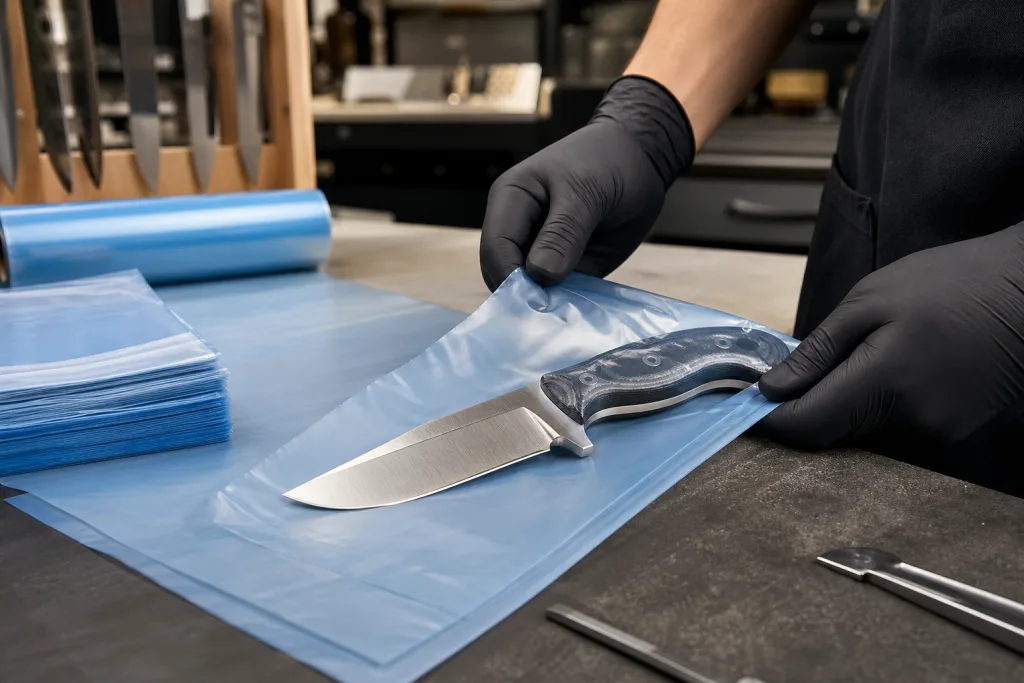
Knives Wholesale Buying Guide: Packaging, Compliance Documents, Delivery, and Reorder Planning
**By Vincent Xi, Editorial Author** Author profile: https://tangforge.com/authors/vincent-xi/
<script type="application/ld+json"> { "@context": "https://schema.org", "@type": "BlogPosting", "headline": "Knives Wholesale Buying Guide: Packaging, Compliance Documents, Delivery, and Reorder Planning", "author": { "@type": "Person", "name": "Vincent Xi", "jobTitle": "Editorial Author", "url": "https://tangforge.com/authors/vincent-xi/" }, "publisher": { "@type": "Organization", "name": "TANGFORGE", "url": "https://tangforge.com" } } </script>
Knives wholesale buying is not just a unit-price comparison. For importers, distributors, retail buyers, ecommerce sellers, and private-label buyers, many preventable problems start with unclear packaging assumptions, missing shipment documents, vague delivery dates, and weak reorder controls.
This guide turns public sourcing and distributor-page context into a practical RFQ checklist. It does not verify any supplier's inventory, factory capability, certificate status, delivery promise, legal importability, or product performance.
Evidence Basis, Methodology, and Limits
Vincent Xi is identified by TANGFORGE as an Editorial Author. This article does not claim factory visits, product testing, supplier audits, certification review, customer outcomes, or first-person sourcing experience.
Methodology: this guide was prepared by reviewing the cited public pages for buyer-facing topics, then translating those topics into RFQ controls for product specification, packaging, document collection, delivery planning, inspection timing, and reorder management. The cited pages are used as context sources only. The final source of truth for a purchase remains the supplier quote, approved sample, purchase order, current documents, customs file, legal review where needed, and shipment records.
| Data point | Scope and date context | Source | |---|---|---| | **May 15, 2026** publication date and **June 2026** update context | One USA-focused wholesale knife distributor guide page, as presented on the cited page | WholesaleSeeker | | **USD 10,000** first-order minimum described for many distributors | Minimum order value example from one USA-focused distributor guide; verify the actual minimum order value in each supplier quote | WholesaleSeeker | | **July 13, 2026** page date | One retail-store wholesale supply guide page, as presented on the cited page | SZCO | | **5Cr15MoV** steel designation, plus material examples including **G10**, Micarta, and wood | One B2B knife manufacturing whitepaper page; these are material examples, not verified specifications for any ordered SKU | LeeKnives | | **24 retail units per master carton**, **12 kilograms gross weight per master carton**, and **520 millimeters by 380 millimeters by 310 millimeters** carton size | Example pack-out assumptions for quote comparison only; verify in the supplier quote and carton drawing before purchase order approval | Example calculation in this guide |
Limitations: the cited pages do not verify live pricing, stock availability, carton dimensions, confirmed lead time, Incoterms, HS or HTS classification, test results, certificate validity, country-specific knife restrictions, marketplace eligibility, or import legality. Buyers should verify those items before deposit payment, mass-production approval, shipment release, and public listing.
Buyer Workflow at a Glance
A knives wholesale order should move through these controls before mass production:
| Stage | Buyer decision | Evidence to request from supplier | |---|---|---| | Product definition | Confirm the exact knife type, material, finish, mechanism, accessory set, and destination market | Product specification sheet, sample photos, drawings where applicable, and material declarations | | Packaging | Match the pack to retail, ecommerce, distributor, or bulk-handling needs | Retail pack photo, inner carton plan, master carton plan, barcode placement, and carton marking layout | | Compliance file | Build the commercial, customs, labeling, and product-support file before shipment | Commercial invoice template, packing list template, country-of-origin plan, material declaration, and applicable test reports | | Delivery | Quote dated milestones instead of general timing language | Sample timing, artwork approval timing, production schedule, cargo-ready date, inspection window, and document handover date | | Reorder | Convert sell-through into a purchasing trigger | Weekly sales data, replenishment lead time, safety stock target, repeat-order MOQ, and change-control agreement |
Packaging: Specify the Pack Before the Purchase Order
Packaging affects receiving, barcode scanning, retail presentation, parcel handling, carton cube, product protection, and repeat-order consistency. A buyer should define the pack before treating any unit price as comparable.
China Knives Wholesale publishes knife sourcing article topics that include product, logo, packaging, and carton themes, and it references knife categories such as folding knives, pocket knives, fixed blades, and EDC knives China Knives Wholesale. That supports treating packaging and carton planning as normal RFQ topics. It does not prove that any individual supplier can meet a buyer's packaging requirements.
SZCO's retail-store guide discusses stocking blades for shops and refers to assortment planning across knives, accessories, sheaths, storage cases, sharpening tools, and related products SZCO. For wholesale buyers, the practical packaging point is that the pack should fit the selling channel and product role.
Before issuing a purchase order, lock these packaging details in writing:
- Retail unit pack: box, clamshell, sleeve, pouch, bulk pack, gift box, or buyer-supplied format.
- Blade protection: edge guard, tip protection, sheath, insert, oiling requirement where applicable, and corrosion-prevention method where applicable.
- Labeling: SKU, barcode type, country-of-origin marking, warning label position, and buyer-approved wording.
- Artwork control: artwork file name, revision number, approved color reference if used, and approval date.
- Inner carton: retail units per inner carton, carton material, dimensions, weight, and marking method.
- Master carton: inner cartons per master carton, total retail units, carton dimensions, gross weight, net weight, and export marking layout.
Example pack-out for quote comparison only: **24 retail units per master carton**, **12 kilograms gross weight per master carton**, and carton size of **520 millimeters by 380 millimeters by 310 millimeters**. These figures are example assumptions to verify in the supplier quote; they are not sourced production specifications.
Compliance Documents: Treat Them as a Shipment File
Knife compliance is not a single document. The required file depends on destination country, knife type, blade length, locking or opening mechanism, intended use, product materials, packaging materials, claims made on the listing or package, and the buyer's role in the supply chain.
At RFQ stage, ask the supplier to state which documents they can provide and which documents the buyer, broker, laboratory, or legal adviser must prepare. A practical shipment file may include:
- Commercial invoice.
- Packing list.
- Bill of lading or air waybill.
- Certificate of origin where required.
- Product specification sheet.
- Material declaration.
- Country-of-origin label plan.
- Applicable test reports where relevant.
- Current certificates only when a valid certificate is actually being claimed.
- Carton labels and shipping marks.
LeeKnives' B2B knife manufacturing whitepaper page references blade steel selection from 5Cr15MoV to Damascus, hardness matched to target price points, OEM/ODM customization, and handle material examples including G10, Micarta, and wood LeeKnives. That supports asking suppliers to document material choices. It does not verify the steel grade, hardness, handle material, or test result of any specific wholesale shipment.
Standards should be named only when they apply to the product and destination market. A standard's requirement is different from a supplier's internal practice. A supplier statement that it follows a quality process is not the same as a current certificate. Do not claim certification unless the buyer has reviewed the current certificate, scope, issuing body, and expiry status.
For restricted knife types, confirm importability before paying a deposit. Public sourcing pages may use category terms such as pocket knives, butterfly knives, automatic knives, hunting knives, daggers, swords, or self-defense products China Knives Wholesale. Those category names do not establish legality in any specific country, state, province, marketplace, retailer, or customs entry.
Delivery Planning: Quote the Calendar
A knives wholesale RFQ should ask for a dated timeline. General terms such as "fast delivery" or "ready soon" are not enough for a buyer managing a launch, replenishment window, seasonal promotion, retail planogram, or marketplace inventory limit.
Ask the supplier to break the schedule into:
- Sample completion date.
- Artwork approval date.
- Deposit date required to start production.
- Production start date.
- Production finish date.
- Final inspection window.
- Cargo-ready date.
- Freight booking date.
- Estimated departure date.
- Estimated arrival date.
- Customs clearance estimate.
- Warehouse receipt estimate.
WholesaleSeeker's distributor guide discusses supplier selection, shipping speed, marketplace sellers, and listing risk in the context of a USA-focused distributor guide WholesaleSeeker. For B2B buyers, that source context supports treating delivery timing as a commercial control. It does not verify any supplier's current lead time.
Delivery terms should identify the Incoterm if used, named port or place, export-clearance responsibility, freight booking party, cargo insurance responsibility, and document handover timing. If the buyer uses a forwarder, confirm the supplier's cargo-ready notice process and warehouse loading rules. If the supplier arranges freight, require shipping documents early enough for customs and receiving preparation.
Inspection should be scheduled after goods are packed and before shipment release. The inspection checklist should cover SKU, quantity, visual finish, opening and closing function where relevant, sheath fit where relevant, edge protection, retail packaging, barcode scan, carton marks, carton count, and document match.
Reorder Planning: Use Sell-Through, Not Guesswork
Reorder planning should be defined before the first shipment arrives. The buyer needs opening stock, expected weekly sales, confirmed replenishment time, safety stock, reorder quantity, repeat-order MOQ, and packaging-change control.
A simple reorder formula is:
Reorder point = average weekly sales x total replenishment weeks + safety stock
Example calculation to verify with buyer sales data and supplier lead time: if **1 SKU** sells **30 units per week** in the buyer's channel, and confirmed replenishment time is **10 weeks** from purchase order to warehouse receipt, baseline demand during replenishment is **300 units**. If the buyer adds **4 weeks** of safety stock, safety stock is **120 units**, creating a reorder point of **420 units**. These figures are example assumptions only and should be replaced with the buyer's actual sales data and the supplier's confirmed schedule.
SZCO's retail guide frames wholesale knife supply around selecting stock that fits customer demand rather than buying only on bulk availability SZCO. For reorder planning, separate fast-moving SKUs from slow-moving SKUs after launch. Repeat orders should reference the approved sample, artwork revision, product specification, packaging specification, and previous purchase order number.
RFQ Checklist for Knives Wholesale Buyers
Use this checklist before requesting a final price:
- Product category: folding knife, pocket knife, fixed blade, kitchen knife, EDC knife, outdoor knife, or another defined type.
- Product specification: blade steel, blade length, handle material, finish, mechanism, sheath or accessory inclusion, and tolerance requirement.
- Packaging format: retail box, blister, clamshell, sleeve, pouch, plain bulk pack, gift box, or buyer-supplied design.
- Artwork control: logo file format, artwork revision number, barcode type, buyer-supplied warning label text, and country-of-origin placement.
- Carton details: units per inner carton, units per master carton, carton dimensions, gross weight, net weight, and carton marking layout.
- Compliance file: commercial invoice, packing list, certificate of origin if needed, product specification, material declaration, applicable test reports, and market-specific documents.
- Legal review: destination-market restrictions for blade length, lock type, assisted opening, automatic opening, butterfly knives, daggers, swords, self-defense products, or other sensitive categories.
- Sample approval: product sample, packaging sample, barcode scan, carton photo, and written approval record.
- Inspection plan: quantity check, visual check, function check, edge protection, sheath fit, packaging, carton marks, and document match.
- Delivery terms: Incoterm if used, named port or place, cargo-ready date, freight booking party, inspection window, and document handover date.
- Reorder plan: expected weekly sales, replenishment weeks, safety stock, reorder point, MOQ for repeat orders, and packaging consistency requirement.
- Change control: supplier notification before changes to steel, finish, handle material, packaging, carton count, artwork, or production site.
Supplier Comparison Table
| Question | Why it matters | What to request | |---|---|---| | Can the supplier quote the knife and packaging together? | A low unit price may exclude retail-ready packaging, inserts, labels, or export carton requirements | Itemized quote showing product, packaging, artwork, carton, and tooling costs where applicable | | Can the supplier document materials? | Public pages may mention steel and handle options, but the ordered SKU needs its own specification | Material declaration, product spec sheet, and test report where relevant | | Can the supplier support the destination market file? | Knife restrictions and labeling needs vary by market and mechanism | Written product description, HS or HTS support where applicable, and buyer-side legal or broker review | | Can the supplier commit to a dated schedule? | Replenishment depends on production, inspection, freight, customs, and warehouse receiving | Production timeline, cargo-ready date, and document handover date | | Can the supplier keep repeat orders consistent? | Small changes can cause receiving errors, listing issues, or customer returns | Change-control clause tied to approved sample, artwork, packaging, and previous order |
What to Verify Before Final Approval
Before paying a deposit or approving mass production, verify the product specification, packaging, document file, and delivery calendar in writing.
For the product, confirm the exact steel grade, hardness target if used, coating, grind, handle material, mechanism, sheath construction, and accessory set. Source pages may name broad categories and material examples, but the purchase order should identify the ordered SKU precisely.
For packaging, approve the retail pack, inner carton, master carton, barcode, warning label, country-of-origin marking, and carton marks. Packaging approval should be tied to a dated file or physical sample.
For documents, keep the commercial invoice, packing list, product specification, material declaration, certificates where applicable, test reports where applicable, and legal or customs classification support in the shipment file. Do not publish certification or compliance claims unless the current supporting document has been reviewed.
For delivery, confirm the cargo-ready date, inspection window, freight responsibility, document handover date, and warehouse receipt estimate. WholesaleSeeker's guide cites first-order minimums of **USD 10,000** for many distributors in the context of one USA-focused guide dated **May 15, 2026** and updated in **June 2026** WholesaleSeeker. Whether or not that minimum applies to a specific supplier, it shows why buyers should verify order value, schedule, and reorder commitments before treating a quote as final.
Bottom Line
A strong knives wholesale order is built around the product, the pack, the paperwork, the calendar, and the reorder plan. Public supplier and distributor pages can frame useful questions, but the purchase decision should rely on verified quotes, approved samples, current documents, legal review where needed, and written change control.
The most useful RFQ makes the supplier quote the knife, packaging, documents, delivery timing, and repeat-order terms together.