MOQ Negotiation for Pocket Knife Wholesale: Approval Gates, Order Economics, and Escalation Paths
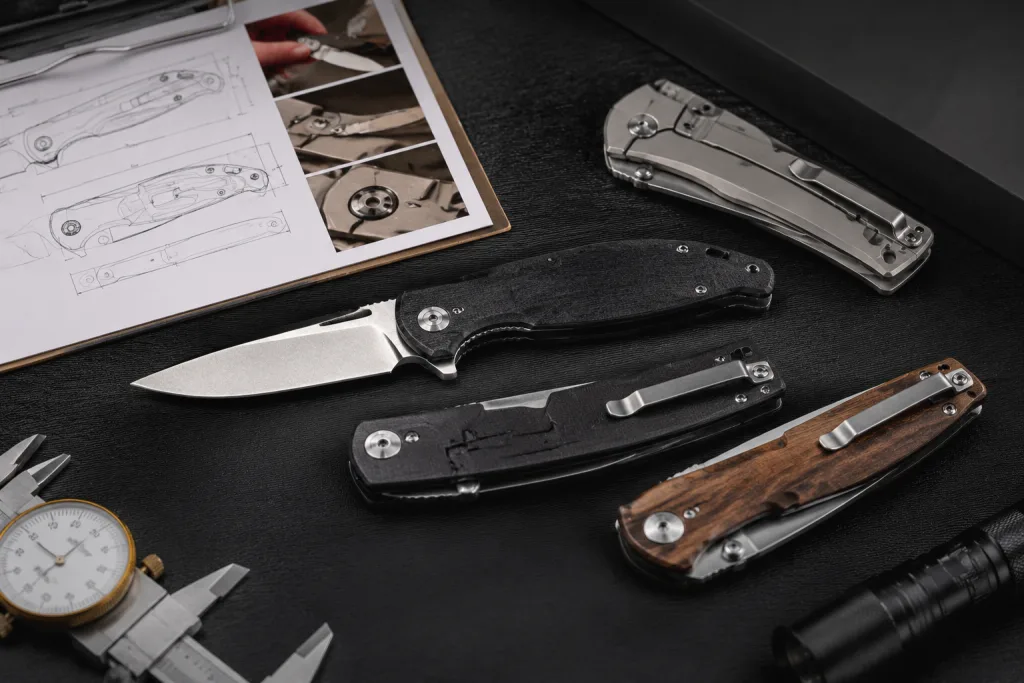
MOQ Negotiation for Pocket Knife Wholesale: Approval Gates, Order Economics, and Escalation Paths
**By Vincent Xi, Editorial Author** | TANGFORGE
A pocket knife wholesale MOQ should be evaluated as a complete, documented order scenario rather than as a quantity alone. The supplier's written response should connect the requested configuration, quantity, quoted price, separate charges, payment schedule, approval evidence, and escalation contacts.
This article addresses one buyer decision: whether an MOQ proposal contains enough commercial and approval detail to approve, reject, or renegotiate the proposed order. The process below is an editorial buyer-control framework. It does not represent any supplier's current terms, capabilities, pricing, or performance.
Define the MOQ Scenario Before Requesting a Concession
Assign a scenario identifier to each quantity option and require it on the quotation, approval record, revision request, and escalation notice.
For each proposed scenario, ask the supplier to state:
- The exact product, variant, branding, packaging, and carton configuration covered.
- Whether the MOQ applies per SKU, variant, packaging format, customization request, purchase order, or another defined basis.
- The order quantity and any permitted allocation across variants.
- The currency, trade term, shipping handoff point, payment terms, quotation validity period, and exclusions.
- The unit price and each separate setup, artwork, tooling, packaging, inspection, logistics, or project charge.
- Which terms change when the quantity changes.
- The documents and buyer approvals required before production or shipment release.
- The commercial, product, quality, and management contacts authorized to respond to or escalate order questions.
Do not treat a lower quantity as an MOQ concession unless the supplier confirms the complete revised scenario in writing. If the product, packaging, inspection scope, trade term, exclusions, or another controlled input changes, compare it as a separate scenario rather than as a direct quantity-only alternative.
Build a Comparable Order-Economics Model
Use the same cost structure for every scenario:
Modeled order total = product cost + project charges + packaging cost + inspection cost + logistics cost + applicable import costs + other approved charges
Modeled cost per accepted sellable unit = modeled order total / accepted sellable units
Keep ordered quantity and accepted sellable units in separate fields. Do not treat them as equal in a final approval model unless the buyer has explicitly adopted that assumption. Mark unknown costs as unknown; do not enter them as zero.
Record the payment amount due at each milestone as well. A modeled order total does not show the buyer's cash requirement unless the supplier's documented payment schedule is included.
Illustrative Scenario Comparison
Every numerical value in the table is an illustrative calculation assumption to verify in the supplier's written quote. Scope: one hypothetical pocket knife order per scenario. As-of context: not applicable because these are undated editorial examples, not supplier facts, market data, or transaction records. Source: editorial calculations using the stated assumptions. Duties and taxes are excluded, and accepted sellable units are assumed to equal ordered units only for this example.
| Cost input | Scenario A: illustrative 800-unit order | Scenario B: illustrative 500-unit order | |---|---:|---:| | Product price | US$7.80 per unit | US$8.45 per unit | | Product subtotal | US$6,240 per scenario | US$4,225 per scenario | | Project setup | US$600 per scenario | US$600 per scenario | | Packaging | US$0.42 per unit; US$336 per scenario | US$0.42 per unit; US$210 per scenario | | Inspection allowance | US$250 per scenario | US$250 per scenario | | Freight allowance | US$920 per scenario | US$700 per scenario | | Duties and taxes | Not modeled | Not modeled | | Modeled order total | US$8,346 per scenario | US$5,985 per scenario | | Assumed accepted sellable units | 800 units per scenario | 500 units per scenario | | Modeled cost per accepted sellable unit | US$10.43 per accepted sellable unit | US$11.97 per accepted sellable unit |
For this illustrative worksheet, the lower-quantity scenario reduces modeled order commitment by US$2,361 per hypothetical order while increasing modeled cost by approximately US$1.54 per assumed accepted sellable unit. That calculation does not determine which scenario should be approved. It separates the buyer's total-commitment decision from the cost-per-accepted-unit decision.
Replace each example input with current written documentation. Confirm whether setup or inspection charges recur on reorders, whether freight covers the same route and handoff points, and whether the quotation excludes any cost relevant to the approval.
Request Comparable Alternatives From the Supplier
Use one written request that requires every alternative to follow the same response structure. For example:
> Please quote the requested options as separate scenarios under the referenced RFQ. For each scenario, identify the exact configuration, MOQ basis, quantity, unit price, separate charges, payment terms, trade term, shipping handoff point, validity period, exclusions, required approvals, and production lead-time basis. State every variable that differs from the base scenario. Return an accepted change in a revised quotation carrying the scenario identifier.
Request only alternatives relevant to the MOQ decision:
- The requested configuration at the supplier's stated MOQ.
- The requested lower quantity, with every changed term identified.
- A stock-compatible or less-customized configuration, if the supplier offers one, with each deviation identified.
- Quantity options using the same specification, packaging, inspection scope, trade term, and exclusions.
- A scenario that separates recurring per-unit costs from order-level or project-level charges.
- A quantity commitment or allocation option only when its timing, pricing, release obligations, and cancellation terms are documented.
If a supplier identifies a variable as the MOQ driver, ask for the resulting configuration and commercial change to appear in the revised quotation. An explanation alone is not an approval record.
Use Approval Gates Tied to Governing Documents
Each gate should identify a buyer owner, the required supplier response, and the document that records the decision.
| Approval gate | Required record | Buyer decision | |---|---|---| | Quote alignment | Quotation showing scenario identifier, exact configuration, MOQ basis, quantity, price schedule, payment terms, trade term, validity, and exclusions | Approve the scenario for detailed review, or return it for correction | | Product and packaging alignment | Controlled specification, sample or sample reference where required, artwork or packaging proof where required, and written deviation list | Approve, reject, or request a documented revision | | Order-economics approval | Scenario worksheet using current quoted and buyer-obtained costs, with unknown costs identified | Approve the modeled commitment or renegotiate the scenario | | Commercial release | Final quotation or purchase-order record covering quantity, charges, payment schedule, delivery basis, approval conditions, and agreed remedy route | Authorize or withhold purchase-order release | | Shipment evidence | Evidence required by the approved order, tied to the correct scenario and document versions | Authorize shipment, request correction, or keep shipment authorization on hold |
The buyer should define which role may approve each type of change. A commercial approver may accept quantity or price within an authorized range, while product, packaging, quality, or finance owners retain approval over their assigned fields. An email acknowledgment should not replace the revised quotation, specification, approval record, or another document that governs the changed term.
Establish Escalation Paths Before Purchase-Order Release
Ask the supplier to name the response contact and escalation contact for commercial, product, packaging, and quality matters relevant to the order. Record the expected written response date in every escalation notice.
| Escalation trigger | Supplier response contact | Escalation contact | Required close-out record | Buyer release position | |---|---|---|---|---| | MOQ scope or variant allocation is unclear | Commercial contact | Commercial lead or management contact | Revised quotation defining the MOQ basis and allocation | Do not approve the quantity scenario | | Quotation differs from the RFQ | Commercial contact | Commercial lead | Revised quotation with deviations and exclusions identified | Do not approve the affected terms | | Product or packaging differs from the approved record | Product or packaging contact | Quality contact and commercial lead | Controlled revision, deviation list, and updated approval record | Hold the affected release | | A new charge appears after commercial approval | Commercial contact | Commercial lead, then management contact | Revised charge schedule and updated order-economics worksheet | Do not accept the charge without authorized buyer approval | | Inspection evidence does not address agreed order criteria | Quality contact | Senior quality or commercial contact | Corrected response and replacement or revised evidence | Keep shipment authorization on hold | | A material change remains unresolved | Responsible functional contact | Supplier management contact | Revised governing document or written refusal of the requested term | Escalate internally for approval, rejection, or renegotiation |
Every escalation notice should include:
- The RFQ or purchase-order reference.
- The scenario identifier.
- The affected quotation, specification, approval, or evidence version.
- The exact discrepancy.
- The requested corrective action.
- The assigned buyer and supplier owners.
- The deadline for a written response.
- The release currently being withheld, where applicable.
Close the escalation through the document that controls the affected term. Close a price discrepancy through a revised quotation and updated order-economics worksheet, for example, rather than only through a message stating that the price will be corrected.
Record the Final MOQ Decision
Before purchase-order release, the buyer's approval record should answer:
- Which scenario identifier is approved?
- What exact configuration and packaging are included?
- What is the MOQ basis, and how is quantity allocated?
- What are the unit price, recurring charges, project charges, and modeled order total?
- Which costs remain estimates or unknown?
- What payment is due at each milestone?
- Which specification, sample, artwork, packaging, and deviation records are approved?
- What inspection and shipment evidence are required?
- Who may approve a post-approval change?
- Which supplier contact receives the escalation, and who receives the next escalation?
- Which revised document is required before an approved term can change?
The decision should be recorded as an approved documented scenario, a rejection, or a defined renegotiation request. An unresolved verbal or message-based concession is not an approved MOQ scenario under this workflow.
Evidence, Method, and Limitations
**Source context:** Vast State is retained as general context for wholesale knife buying. It is not used as evidence of a specific supplier's MOQ, pricing, capacity, quality, delivery performance, inspection outcome, or commercial terms.
**Source context:** China Knives Wholesale is retained as general knife-sourcing context. It is not used as evidence that a category-level MOQ, configuration, packaging option, or customization term applies to a particular pocket knife order.
**Method:** The scenario identifiers, calculation structure, approval gates, supplier communication template, and escalation matrix are an editorial buyer-control framework. The cited sources are not represented as prescribing these procedures.
**Limitations and verification:** No cited source establishes a specific supplier's current MOQ, price, configuration, capacity, quality performance, delivery timing, inspection result, payment terms, remedy terms, or final landed cost. Before purchase-order release, replace illustrative assumptions with current supplier quotations, buyer-obtained cost records, controlled approval records, and applicable transaction documents.
**Author identification:** The byline identifies Vincent Xi as Editorial Author and links to the supplied author profile. No first-hand manufacturing, sourcing, factory-visit, testing, or inspection experience claim is made in this article.
<script type="application/ld+json"> { "@context": "https://schema.org", "@type": "BlogPosting", "headline": "MOQ Negotiation for Pocket Knife Wholesale: Approval Gates, Order Economics, and Escalation Paths", "author": { "@type": "Person", "name": "Vincent Xi", "jobTitle": "Editorial Author", "url": "https://tangforge.com/authors/vincent-xi/" } } </script>