Pocket Knife Bulk Order Guide: MOQ, Pricing Structure, and Landed-Cost Controls
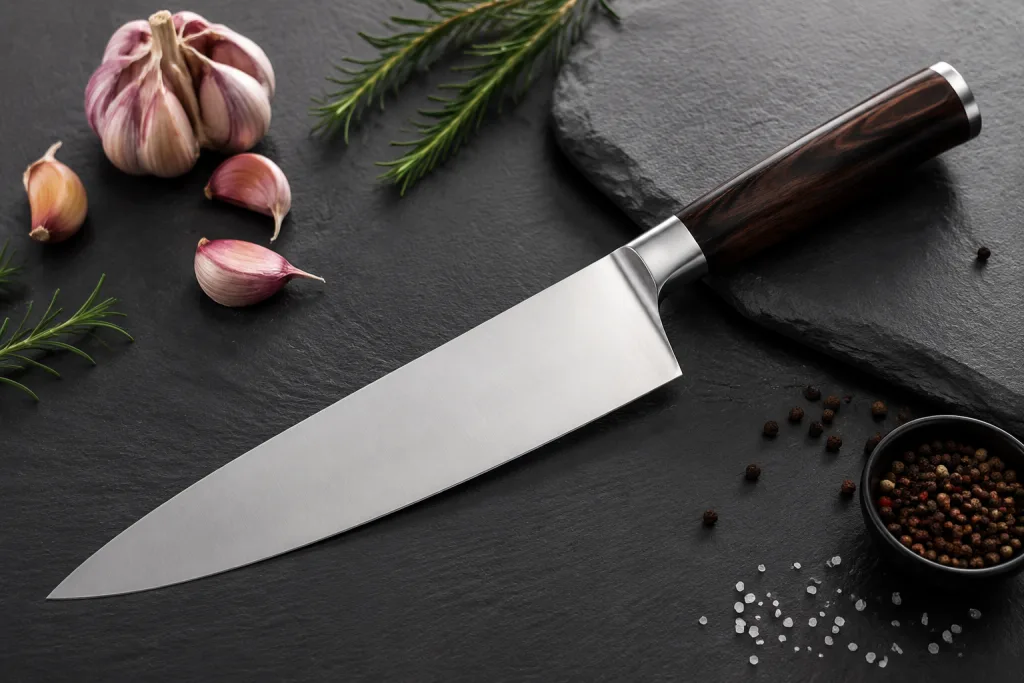
Pocket Knife Bulk Order Guide: MOQ, Pricing Structure, and Landed-Cost Controls
**By Vincent Xi, Editorial Author**
A **pocket knife bulk order** is rarely decided by unit price alone. Importers, private-label brands, distributors, and retail buyers usually win or lose margin on three linked variables: minimum order quantity (MOQ), commercial pricing structure, and landed-cost controls.
This guide is for B2B buyers evaluating folding everyday-carry (EDC) and related pocket-knife programs. It focuses on three practical outcomes:
1. Request quotes that can be compared line by line 2. Model total cost before purchase order (PO) release 3. Reduce avoidable variance between sample approval and shipment release
China remains a primary high-volume production base for commercial knife programs. In **2024**, China exported **$1.66 billion** worth of knives and held **51.5%** of global knife exports, according to trade-profile figures summarized in a B2B sourcing guide that cites OEC World (Lee Knives). The same guide reports total Chinese production of knives, scissors, and blades at **2.9 billion units**, up **8%** year over year (IndexBox, **2025**, as cited there). For multi-SKU pocket knife programs, that national-scale output can support mid-volume private-label runs and larger commodity folds—**if** MOQ, tooling, inspection, and logistics are specified early in the RFQ.
Market context for pocket knife bulk orders
Bulk demand usually concentrates in a few buyer profiles:
- **Private-label brands** that need consistent finish, logo application, and packaging across reorder cycles
- **Distributors** that buy fewer SKUs but need stable delivery windows and spare-parts logic for clips, screws, and washers
- **Retailers and promo programs** that trade feature depth for cost and packaging simplicity
- **Outdoor/EDC labels** that care about lock type, steel-grade communication, and edge-retention claims that must be supportable in documentation
Within China, Yangjiang is repeatedly described as the dominant knife cluster. A **2025** China Daily figure cited in the same sourcing guide states that the local knife and hardware industry exceeded **55 billion RMB** in output value in **2024**, with Yangjiang-made products accounting for **eight out of every ten knives China exports** (Lee Knives). The guide also attributes approximately **70%** of China’s knife output and **85%** of knife exports to Yangjiang.
For pocket knife bulk order planning, that concentration is useful as **market context**: blade steel supply, heat treatment, handle fabrication, plating, packaging, and export logistics are often available inside one industrial ecosystem. Cluster concentration does **not** by itself prove any single factory’s capacity, process control, or lead-time reliability.
Capacity examples cited for the region include runs as low as **500 pieces** for some private-label knife projects and as high as **50,000 units** for budget pocket-knife volumes (Lee Knives). Treat those figures as secondary-reported capacity markers, not as a guaranteed MOQ for every factory or every specification. Actual MOQ is driven by steel batching, handle material, lock geometry, surface finish, packaging complexity, and whether the program needs new tooling.
Minimum order quantity (MOQ): what actually drives the number
MOQ is not a single number. In pocket knife programs, buyers usually encounter several layered thresholds:
1. **Blade and steel batch MOQ** — Steel grade, thickness, and heat-treatment lot size affect the lowest economical run. 2. **Handle and hardware MOQ** — G10, FRN, wood, aluminum, titanium, liner materials, pivots, bearings/washers, and pocket clips often have different supplier MOQs. 3. **Process MOQ** — Anodizing, PVD/coating, stonewash, satin, laser marking, and assembly fixtures can raise the floor. 4. **Packaging MOQ** — Retail boxes, clamshells, hang cards, manuals, and multi-language inserts frequently set reorder minimums higher than the bare knife. 5. **Color/SKU MOQ** — Each additional colorway, blade finish, or logo plate can create a sub-MOQ even when the master style is already tooled.
Practical MOQ framing for RFQs
Ask suppliers to quote MOQ in three layers rather than one line:
| Layer | What to request | Why it matters | | --- | --- | --- | | Pilot / first production | Lowest sellable run after sample approval | Tests fit/finish and packaging without overcommitting inventory | | Standard production MOQ | Economical reorder quantity by SKU | Sets ongoing working-capital planning | | Packaging / color change MOQ | Extra units needed when artwork or color changes | Prevents hidden cost on merchandising updates |
If a supplier quotes only one MOQ, treat the quote as incomplete. A folding knife with a simple FRN handle and basic packaging can often clear a lower floor than a multi-finish G10 model with custom clip geometry and retail gift boxes—**subject to the factory’s steel, tooling, and packaging constraints**, which must be confirmed in writing.
The buyer decision is not “lowest MOQ available,” but “lowest MOQ that still protects dimensional consistency, heat-treatment control, and packaging quality.”
**Example calculation / assumption to verify in the supplier quote:** if a factory states pilot MOQ of **500 pcs** for one color and **1,000 pcs** per additional colorway, a three-color launch is **2,500 pcs** before safety stock—not **500 pcs**. Confirm whether packaging print plates, logo dies, and spare hardware kits are included in that floor. These quantities are illustrative RFQ math only; they are not published market averages and are not Tangforge production claims.
Pricing structure: read the quote as a stack, not a unit price
B2B pocket knife pricing is usually a stack of commercial components. Comparing only FOB unit price is a common source of landed-cost surprise.
Core commercial line items
- **Unit price by quantity break** — Tiered pricing should be tied to confirmed MOQ breaks and steel/handle options.
- **Tooling / mold / fixture amortization** — New liners, scales, clips, or assembly jigs may be charged as NRE, amortized, or absorbed above a volume threshold.
- **Sample and revision fees** — Functional samples, pre-production samples, and packaging proofs should be itemized.
- **Marking and branding** — Laser, etch, print, or medallion options change both cost and lead time.
- **Packaging and inserts** — Retail-ready packs often move cost more than a steel upgrade.
- **Spare parts ratio** — Clips, screws, and washers requested as a percentage of order quantity reduce after-sales friction.
- **Inspection and documentation** — Third-party inspection, material certificates, and carton drop-test records are cost items, not free defaults.
- **Payment and production terms** — Deposit structure, balance timing, and revision cutoffs affect cash cost even when unit price is unchanged.
Quantity breaks without invented market prices
Do not rely on generic “market average” knife prices published without scope, date stamp, Incoterm, and bill-of-materials (BOM) definition. Force every quote into a comparable structure:
1. Same steel family and hardness target range 2. Same lock type and blade length tolerance band 3. Same handle material and finish 4. Same packaging configuration 5. Same Incoterm and port 6. Same inspection standard and AQL plan
**Example calculation / assumption to verify in the supplier quote:** if Tier A is **1,000 pcs**, Tier B is **3,000 pcs**, and Tier C is **10,000 pcs**, request the delta drivers in writing (steel yield, coating batch, assembly labor, packaging print). A lower tier price that removes hardness testing, edge angle control, or packaging board grade is not a true like-for-like reduction. These tier sizes are example planning breakpoints only; verify actual breaks on the dated supplier quotation.
Industry process descriptions for custom and production knives commonly separate design, steel preparation, heat treatment/tempering, grinding/finishing, assembly, and quality control (BiliKnife). Map price line items to those process stages so omitted controls are visible before PO release. Process-stage lists are industry framing, not proof that any one supplier performs every stage in-house or to a named certification.
Landed-cost controls that protect margin
Landed cost is the fully loaded cost to the buyer’s warehouse or 3PL after product cost, export handling, international freight, insurance, duties/taxes, brokerage, domestic drayage, and quality leakage. For a pocket knife bulk order, the largest controllable variables are usually specification discipline, packaging cube, inspection timing, and Incoterm choice.
1) Lock the commercial basis early
Define Incoterms before comparing freight. FOB, CIF, and DDP shift risk and cash differently. A lower FOB unit price can lose to a cleaner DDP structure if the buyer lacks import process capacity. Request:
- HS code assumption used by the supplier (buyer must validate with a licensed broker)
- Net/gross weight per carton and master carton dimensions
- Units per inner and outer carton
- Palletization pattern if ocean freight is planned
- Insurance responsibility and claim documentation path
2) Control cube and packaging density
Pocket knives are small, but retail packaging can destroy freight efficiency. Ask for carton fill rate, void fill type, and whether knives ship blade-safe without oversized inserts.
**Example assumption to verify:** if one packaging option yields **100 units** per export carton and another yields **60 units** at similar protection, model ocean or air cost per unit before approving the “premium” box. Unit-per-carton figures are planning assumptions only; use supplier carton drawings and carrier quotes with date stamps.
3) Separate first-article risk from production risk
Most cost leakage appears between approved sample and mass production: pivot tension variation, lockup inconsistency, clip alignment, finish lot drift, and logo placement. Build a release gate:
- Golden sample retained by both parties
- Critical-to-quality checklist (blade centering, lock face engagement, detent, hardness sampling plan, corrosion resistance test method if claimed)
- Pre-shipment inspection timing and non-conformance disposition rules
Yangjiang’s ecosystem includes a government-backed quality supervision and inspection center referenced in market overviews of the knife cluster (Lee Knives). That is regional infrastructure context, not a substitute for the buyer’s own AQL plan, product-specific acceptance criteria, or third-party inspection scope.
4) Model duty, compliance, and channel restrictions as cost, not afterthought
Folding knives can trigger destination-market restrictions by blade length, locking mechanism, assisted-opening design, marketing claims, or retail channel rules. Landed-cost models should include:
- Brokerage and classification review
- Labeling/manual language requirements
- Restricted-feature redesign risk
- Potential rework or relabeling at destination
This guide does not state duty rates, blade-length legality thresholds, or certification status for any market. Those determinations belong to the buyer’s compliance counsel and customs broker for each destination.
5) Ethical and material provenance as commercial risk controls
Ethical sourcing discussions for custom and branded knives commonly focus on responsible material acquisition, fair production practices, and buyer trust (Shokunin USA). For bulk pocket knives, convert that into RFQ controls: steel source declarations where relevant, restricted-substance expectations, wood legality documentation if natural handles are used, and labor-compliance evidence appropriate to the buyer’s policy. These are risk and brand-protection line items; specify them rather than assume them. Policy language alone is not documentary proof.
Buyer decision table: match order profile to sourcing approach
| Buyer profile | Typical order pattern | MOQ priority | Pricing structure priority | Landed-cost control priority | Best first step | | --- | --- | --- | --- | --- | --- | | Private-label EDC brand | 1–6 SKUs, recurring reorders | Pilot MOQ + colorway MOQ clarity | Tooling amortization and logo process control | Sample-to-production consistency, packaging cube | Approve golden sample and packaging dieline before mass PO | | Distributor / wholesaler | Fewer SKUs, higher volume | Standard production MOQ and spare-parts kit | Quantity breaks with stable BOM | Carton density, lead-time reliability, claim process | Lock BOM revision control and spare ratio | | Retail / promo program | Artwork-heavy, seasonal | Packaging MOQ often dominates | Packaging and print plate costs | Label compliance, inbound carton integrity | Freeze artwork and insert languages early | | Outdoor specialty label | Feature-led folds | Process MOQ for steel/finish | Heat-treat and finish cost transparency | Performance claim support and inspection depth | Define test methods for hardness, corrosion, and lock function | | Multi-market importer | Mixed destinations | SKU rationalization before volume | Incoterm comparison across destinations | Duty, restrictions, and relabel risk | Validate HS assumptions and restricted features by market |
Use the table to prevent false comparisons. A promo buyer optimizing packaging MOQ is not running the same program as a specialty label optimizing lock geometry and finish control. Patterns in the table are buyer-side planning heuristics, not measured order statistics from a specific factory dataset.
Practical RFQ checklist for a pocket knife bulk order
Copy this checklist into the RFQ so every supplier answers the same commercial questions.
Product definition
- [ ] Blade steel grade and acceptable equivalents
- [ ] Target hardness range and sampling frequency
- [ ] Blade length, thickness, grind style, and edge angle target
- [ ] Lock type and function-test method
- [ ] Handle material, texture, color standard (Pantone/physical swatch)
- [ ] Hardware set: pivot, washers/bearings, stop pin, clip style, fastener type
- [ ] Surface finishes for blade, liners, and hardware
- [ ] Logo method, size, placement drawing
- [ ] Open/close force or detent expectation if relevant to the design
Commercial structure
- [ ] Pilot MOQ, standard MOQ, and color/packaging change MOQ
- [ ] Unit price by quantity break under identical BOM
- [ ] Tooling/NRE list with ownership and reuse terms
- [ ] Sample fees, revision rounds, and lead times
- [ ] Payment terms and production kickoff dependencies
- [ ] Validity period of quote and metal/surcharge assumptions, if any
Quality and release controls
- [ ] Golden sample policy
- [ ] AQL plan and critical defect definitions
- [ ] In-process checks vs final inspection scope
- [ ] Hardness, salt-spray/corrosion, or drop/clip retention tests only if claimed and method-defined
- [ ] Non-conformance rework/scrap rules and timeline
- [ ] Required photos/videos before shipment
Packaging and logistics
- [ ] Unit pack, inner pack, export carton specs
- [ ] Carton gross weight and dimensions
- [ ] Units per carton and estimated container/pallet loading
- [ ] Marking requirements and language inserts
- [ ] Incoterm, port/airport, and lead-time calendar
- [ ] Insurance and document set (packing list, invoice, material declarations as needed)
Compliance and brand risk
- [ ] Destination markets and restricted-feature review
- [ ] Restricted substances / material declarations requested by buyer policy
- [ ] Wood or natural-material documentation if used
- [ ] After-sales spare parts availability window
This checklist is intentionally evidence-oriented. It does not replace legal counsel, a licensed customs broker, or product-safety review for a specific destination market. Name a standard only when the buyer’s compliance team confirms relevance to the program; do not treat a general process description as certification evidence.
How to control total cost without weakening the product
Cost control is most effective when it removes variance rather than stripping necessary process steps.
**High-leverage controls**
- Freeze the BOM before asking for final pricing tiers.
- Limit first-run colorways and packaging variants.
- Standardize clip, screw, and washer platforms across SKUs where design allows.
- Prefer inspection gates over post-arrival rework.
- Compare freight on a per-unit and per-cubic-meter basis, not only total invoice freight.
**Low-quality savings to avoid**
- Undefined “same grade steel” substitutions
- Removing hardness sampling to hit a price target
- Approving packaging that increases damage rate
- Accepting vague lock-function standards
- Ignoring spare hardware on first production
Collector and custom-knife markets emphasize craftsmanship, finish, and long-term value (Knife Purveyor), while bulk commercial programs emphasize repeatability. The bulk buyer’s objective is not artisan uniqueness; it is controlled repetition at a landed cost that still supports brand claims and return-rate targets. That contrast is market-positioning context only; it is not a performance claim for any named commercial SKU.
Methodology, source context, and limitations
Source contexts used
1. **China knife manufacturing scale and Yangjiang cluster context** — export value, global export share, production volume, Yangjiang output share, and capacity examples drawn from a B2B Chinese knife manufacturer guide and the third-party figures it cites (Lee Knives). 2. **Process staging for knife manufacturing and OEM/ODM project framing** — design-to-QC process steps and professional manufacturer service categories used as industry process context (BiliKnife). 3. **Ethical sourcing considerations** — material responsibility and supplier-selection themes for knife programs (Shokunin USA). 4. **Market positioning contrast** — custom/collector value framing used only to distinguish commercial bulk priorities from artisan one-off priorities (Knife Purveyor).
How the data was derived
Market statistics and cluster figures above are taken from the cited secondary sourcing pages and the third-party references those pages attribute (including OEC World, IndexBox **2025**, and China Daily **2025** as presented in the Lee Knives guide). MOQ layers, pricing stacks, and landed-cost controls are structured as buyer-side RFQ methodology—not as factory-quoted prices from a specific manufacturer and not as Tangforge production claims. Example calculations are labeled as assumptions that must be verified inside an actual supplier quote with matching BOM, Incoterm, and date stamp.
Limitations / what to verify before PO
- Export totals, unit production, and regional output shares are national or cluster-level statistics; they do not prove any one factory’s capacity, lead time, or quality system.
- The **500-piece** and **50,000-unit** figures are capacity examples reported in secondary sourcing content, not universal MOQs.
- No duty rates, freight rates, or pocket-knife unit prices are presented here as current market facts; those must come from broker advice, carrier quotes, and supplier offers with date stamps.
- Standards, restricted-substance rules, and knife-feature legality are destination-specific. Name and apply standards only when the buyer’s compliance team confirms relevance; do not treat a general process description as certification.
- Ethical-sourcing statements require documentary evidence from the chosen supply chain; policy language alone is not proof.
- Hardness ranges, lock-function methods, corrosion tests, and packaging protection claims are valid only when the RFQ defines method, sample size, acceptance criteria, and disposition rules.
Editorial basis
This article is prepared for Tangforge under the byline of Vincent Xi, Editorial Author (author profile). It does not claim factory visits, lab tests, customer results, certifications, awards, or first-person operational experience. Buyers should validate every commercial number against current supplier quotations, inspection records, and import counsel.
A disciplined pocket knife bulk order starts with a complete RFQ, comparable pricing stacks, and a landed-cost model that includes packaging cube, inspection gates, and destination compliance. When those controls are written into the quote request, MOQ and unit price become decision inputs—not expensive surprises after production has already started.