Pocket Knife Manufacturer Guide: Specs, QC Evidence, and RFQ Checklist for B2B Buyers
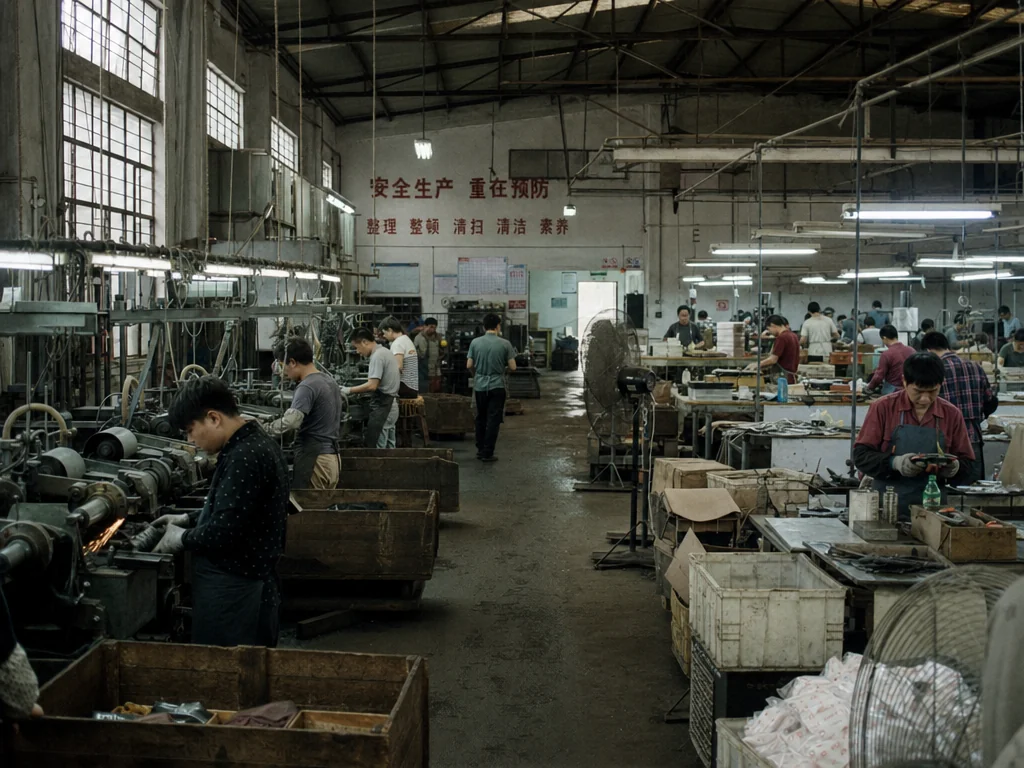
Pocket Knife Manufacturer Guide: Specs, QC Evidence, and RFQ Checklist for B2B Buyers
**By Vincent Xi, Editorial Author** Author profile
B2B buyers evaluating a **pocket knife manufacturer** need controlled specifications, not catalog photos. Folding knives combine blade metallurgy, lock geometry, pivot stack-up, handle materials, and repeatable finishing. Gaps in those controls often show up later as edge-retention complaints, lock walk, corrosion returns, or lot-to-lot assembly drift.
This guide is a practical technical brief for importers, private-label brands, and industrial buyers preparing OEM/ODM RFQs. Use it to:
1. Convert product intent into drawings and acceptance criteria 2. Compare quotes on equivalent BOM and inspection scope 3. Require lot-level evidence before tooling deposit and mass production 4. Shortlist manufacturers by process control, not unit price alone
This article is research-based buyer guidance. It does not present first-hand factory audits, proprietary test results, certifications, or Tangforge product claims.
Market Context to Capture Before RFQ
Secondary B2B reporting positions China as a major export base for knives. A 2024 trade summary cited by a B2B sourcing guide reports that China exported **$1.66 billion** worth of knives and accounted for **51.5% of global knife exports** (Lee Knives sourcing guide). The same guide cites IndexBox data that total production of knives, scissors, and blades reached **2.9 billion units**, up **8%** year over year (Lee Knives sourcing guide).
Within China, Yangjiang is frequently described as the dominant cluster in that reporting. The guide states that Yangjiang’s knife and hardware industry exceeded **55 billion RMB** in output value in 2024; that Yangjiang-made products account for roughly **eight of every ten knives China exports**; and that the city accounts for about **70% of China’s knife output** and **85% of knife exports** (Lee Knives sourcing guide).
**How buyers should use these figures**
- Useful for capacity and ecosystem planning only
- Aggregate knife-category statistics, not pocket-knife-only volumes
- Not a substitute for verifying line capacity, tooling ownership, and export experience on the exact SKU family
- Secondary-source figures; re-check original statistical publishers before commercial planning
The same guide also notes Yangjiang infrastructure such as wholesale trade facilities, a government-backed knives and scissors quality supervision and inspection center, and an annual hardware knives and scissors fair (Lee Knives sourcing guide). Cluster density may improve access to steel supply, heat treatment, plating, and handle fabrication for some programs. It does not guarantee fit for a brand’s lock design, hardness window, packaging compliance, or cosmetic grade.
Core Technical Specs a Pocket Knife Manufacturer Must Quote Against
A complete RFQ should force the manufacturer to quote against dimensions, materials, process controls, and acceptance criteria—not only unit price and MOQ.
Blade and edge geometry
Define the following in drawings or a controlled specification sheet:
- Overall length, closed length, blade length, and blade stock thickness (mm), with tolerances
- Blade shape (drop point, clip, sheepsfoot, tanto, or other controlled profile) and tip geometry
- Grind type (flat, hollow, saber, convex) and primary bevel angle target
- Edge angle and finish level (for example, factory edge vs. distribution-ready edge)
- Choil, jimping, and spine geometry where they affect ergonomics or lock engagement
Example calculation/assumption to verify in the supplier quote: if a buyer targets a closed length of **100 mm ±0.5 mm** and a blade stock of **3.0 mm ±0.05 mm**, the quote should state whether those tolerances apply after heat treatment and final grind, or only after blanking. Verify in writing which process step owns the measurement and which instrument is used.
Lock, pivot, and deployment system
Pocket knives often fail in use when lock geometry and pivot stack-up are poorly controlled. Specify:
- Lock type: liner lock, frame lock, lockback, button lock, compression-style, or other controlled design
- Lockbar thickness, detent ball diameter/material, and stop-pin arrangement
- Pivot hardware: screw type; washer type (phosphor bronze, PTFE, ceramic, or ball-bearing); preload method
- Opening method: nail nick, thumb stud, flipper, hole, or assisted mechanism (only if legally allowed in target markets)
- Blade play acceptance: measurable vertical/horizontal play limits after a defined open/close cycle count (example request range: **50–100 cycles**); define the test fixture, measurement method, and sample size
Do not accept vague claims such as “smooth action” without a measurement method, fixture description, and sample size.
Handle, clip, and hardware
- Handle material: G10, FRN, aluminum, titanium, wood, Micarta, or other approved substrate
- Texture, thickness, and insert/liner construction
- Pocket clip: deep-carry or standard; reversible or fixed; screw torque specification; clip steel and finish
- Fasteners: stainless grade, threadlocker policy, and spare-parts kit expectations
- Weight target and balance point only if they are part of the brand’s written acceptance criteria
Markings, packaging, and brand controls
- Logo method: laser, etch, stamp, or printed insert
- Serialization or batch coding if required for recalls and warranty tracing
- Retail packaging, master carton counts, drop-test packaging notes, and barcode ownership
- Instruction sheet language set and restricted-feature warnings by destination market
Materials, Heat Treatment, Finish, and Ethical Sourcing Inputs
Common steel families buyers specify
Pocket knife programs often start from commercial stainless and tool-steel families. Typical buyer-side request ranges—always to be confirmed with mill certificates and heat-treat coupons—include:
- Budget/mid stainless families such as 8Cr13MoV / 8Cr14MoV-class steels for corrosion-tolerant EDC programs
- Higher-alloy stainless options when the buyer prioritizes edge retention and corrosion resistance
- Tool steels such as D2-class for wear resistance where corrosion exposure is controlled
A manufacturer quote should state steel grade, supplier region if known, hardness target after temper, and whether hardness is measured on the blade body, near the edge, or both.
Example calculation/assumption to verify in the supplier quote: a buyer may request **58–60 HRC** for a stainless folder. That is a specification request, not evidence of performance. Ask for Rockwell method (scale, load), number of test points per blade, instrument identification, calibration date, and scrap rules when readings fall outside the window.
Heat treatment and finishing controls
Industry process descriptions for custom and production knives commonly sequence steel preparation, stock removal or forging, heat treatment and tempering, grinding/finishing, assembly, and quality control (BiliKnife manufacturing overview). For B2B RFQs, convert that sequence into control points:
- Austenitize/temper recipe ownership: who sets it, who can change it, and how lot changes are logged
- Distortion control after quench and temper
- Grind stock allowance and final thickness after heat treatment
- Surface finish: stonewash, satin, bead blast, black oxide, DLC/PVD, or polished flats
- Corrosion resistance evidence: salt-spray protocol only if both parties agree in writing on standard, duration, specimen preparation, and pass/fail criteria
Distinguish a standard’s requirement from a factory’s practice. Naming a standard is not the same as holding a current certificate for a specific process or product. Request current documents only when they apply to the exact process route used for your SKU.
Handle and material ethics questions
Ethical sourcing discussions in custom-knife supply chains emphasize responsible material acquisition for steel, wood, and other natural or composite handle materials, plus fair production practices (Shokunin USA ethical sourcing article). For commercial pocket-knife programs, convert that into RFQ questions:
- Steel traceability: mill certificates, grade callouts, and scrap segregation
- Wood or natural materials: species, legality documentation, and moisture control if used
- Composite handles: resin system, fiber type, and VOC/process notes if required by the buyer’s compliance team
- Labor and facility documentation requested by the brand’s supplier code of conduct
Ethical claims should be documented, not assumed from marketing copy.
Quality Control, Sampling, and Evidence Pack for Incoming Lots
Professional manufacturing overviews list quality control and testing as a final gate after grinding, finishing, and assembly (BiliKnife manufacturing overview). Define the evidence pack before tooling deposit:
- First-article inspection (FAI) package with dimensional report against the controlled drawing
- Hardness report with instrument identification and calibration date
- Lock engagement photos or force notes if lock strength is critical
- Pivot torque and blade centering checks
- Edge geometry spot checks (angle and burr condition)
- Finish defect AQL or defect code list: pits, grind marks, clip misalignment, handle voids, logo depth errors
- Functional cycle test: open/close count, detent consistency, and re-check of blade play
- Packaging audit: count accuracy, desiccant/rust prevention method, and carton labeling
Request whether inspection is 100% on critical dimensions or sampling-based, and who signs the certificate of conformance for each lot.
Buyer Decision Table: Match Specs to Program Goals
Use this table as a negotiation frame. A pocket knife manufacturer can usually optimize for cost, cosmetics, or metallurgical performance, but not all three at once without explicit acceptance of risk.
| Buyer priority | Spec focus to emphasize in RFQ | Typical trade-off to document | Evidence to require before mass production | | --- | --- | --- | --- | | Lowest landed cost EDC | Common stainless grade, simple liner lock, molded handle | Edge life and fit/finish consistency may vary by lot | FAI + hardness sample + AQL finish audit | | Brand-differentiated midrange | Controlled grind geometry, better washers/bearings, refined detent | Higher tooling and scrap risk on cosmetics | Pilot run of agreed quantity with full dimensional report | | Higher wear resistance | Tool steel or higher-alloy stainless, tighter HRC window | Corrosion risk or grinding cost may rise | Coupon heat-treat report + corrosion protocol if needed | | Fast deployment / assisted feel | Pivot stack, detent ball, stop geometry, washers | More sensitive to assembly torque variation | Cycle test protocol and play limits after burn-in | | Retail compliance-sensitive markets | Restricted blade features, packaging warnings, material docs | Longer compliance review and SKU variants by market | Packaging proofs + material declarations + shipment sample | | Private-label scale-up | Stable BOM, spare parts, clip/hardware commonality | Design freezes needed to protect cost | Process control plan + lot coding + spare-parts price list |
Practical RFQ Checklist for a Pocket Knife Manufacturer
Copy and complete the following checklist in the RFQ package. Require written answers against each line item before comparing price.
1. **Program type**: OEM from buyer drawings, ODM adaptation, or catalog customization 2. **Annual volume and first PO quantity**, plus forecast horizon 3. **SKU matrix**: blade shapes, handle colors, left/right clips, assisted vs. manual 4. **Controlled drawings**: 2D/3D files, revision letter, critical-to-quality callouts 5. **Blade steel grade** and acceptable alternates 6. **Hardness window** (HRC), measurement locations, and scrap rule 7. **Grind and edge targets**, including factory edge policy 8. **Lock type and lock function tests** 9. **Pivot system BOM** (washers/bearings, lubricant policy if any) 10. **Handle material and texture**, including insert or liner construction 11. **Clip design**, screw torque, and reversibility 12. **Surface finishes** by component and cosmetic grading standard 13. **Logo method**, depth/contrast standard, and placement drawing 14. **Dimensional tolerances** after final assembly 15. **Blade play and centering limits** after defined cycle count 16. **Corrosion or coating tests**, only if method and pass criteria are named 17. **Incoming inspection plan**: AQL, 100% checks, and instrument list 18. **Packaging**: unit pack, master carton, barcodes, rust prevention 19. **Compliance documents requested**: material declarations, restricted-substance statements, factory social audits if required by the buyer 20. **Tooling ownership**, mold/fixture amortization, and spare-parts commitment 21. **Sample ladder**: prototype, pre-production, golden sample, and mass-production retainers 22. **Lead times** by stage, capacity reservation notes, and change-order process 23. **Warranty boundary**: manufacturing defects vs. misuse definitions 24. **Shipment terms**, inspection window, and nonconformance response time 25. **Price breakdown request**: unit price, tooling, packaging, testing, and spare clips/screws
Quote comparison fields that prevent false savings
When comparing manufacturers, normalize at least these fields:
- Steel grade and hardness window, not only “stainless blade”
- Whether washers/bearings are included at the quoted price
- Whether logo and custom clip are in tooling or per-unit cost
- Whether inspection reports are included per lot
- Whether packaging is retail-ready or bulk only
- Whether the quoted lead time includes heat-treatment queue time
Methodology, Source Context, and Limitations
**Source contexts used in this article**
1. A China-focused B2B knife sourcing guide summarizing 2024 export value, global export share, production volume, and Yangjiang cluster statistics, with references to trade and market-data publishers (Lee Knives sourcing guide). 2. Manufacturing-process and service framing from a custom-knives manufacturer/supplier overview describing design-to-QC stages and OEM/ODM project types (BiliKnife manufacturing overview). 3. Ethical-sourcing considerations for steels, woods, and related materials in custom-knife supply chains (Shokunin USA ethical sourcing article).
**How the data was derived** Market figures above are taken from secondary B2B publications that themselves cite trade and market-statistics sources. Process and RFQ guidance is synthesized from publicly described manufacturing sequences and from common buyer-side control points used in folding-knife OEM programs. Example tolerances, hardness windows, and cycle counts are labeled as request examples for quote verification, not as results from Tangforge testing, factory visits, or supplier audits.
**Limitations / what to verify before award**
- Export and production statistics aggregate broad knife categories; they are not pocket-knife-only demand models.
- Regional share figures for Yangjiang are industry claims reported in secondary sources; validate current capacity for your SKU.
- No manufacturer certification, customer outcome, price, lead-time guarantee, or factory audit result is implied by this article.
- Steel performance depends on heat-treat execution, geometry, and use case; grade names alone are incomplete.
- Legal restrictions on assisted opening, blade length, locking mechanisms, and import marking vary by market and must be checked by the buyer’s compliance team.
- Always re-verify original statistical sources, current mill certificates, calibration records, and the manufacturer’s written process control plan before tooling and mass production.
Selecting a Pocket Knife Manufacturer Without Over-Claiming Fit
A capable pocket knife manufacturer should translate drawings into a controlled BOM, freeze critical dimensions, and provide lot-level evidence. Prioritize:
- Engineering communication quality on lock and pivot stack-up
- Willingness to document hardness, materials, and inspection methods
- Transparent tooling ownership and revision control
- Stable packaging and labeling execution
- Clear boundaries between catalog customization and true custom design
Cluster location, export share, or general OEM experience can support shortlisting only. Award decisions should rest on first-article evidence, pilot-run stability, and contract terms tied to the checklist above.
Practical sequence for private-label or industrial pocket-knife programs:
1. Lock the specification sheet 2. Issue the RFQ checklist 3. Require a first-article package 4. Run a pilot lot against written acceptance criteria 5. Scale only after nonconformances are closed in writing
---
*Editorial note: Prepared by Vincent Xi, Editorial Author for Tangforge. This article is research-based buyer guidance compiled from the cited secondary sources and standard RFQ control points. It does not present first-hand factory claims, certifications, customer outcomes, or proprietary test results.*