Pocket Knife Product Specification Drafting for Defect Prevention and Inspection Evidence
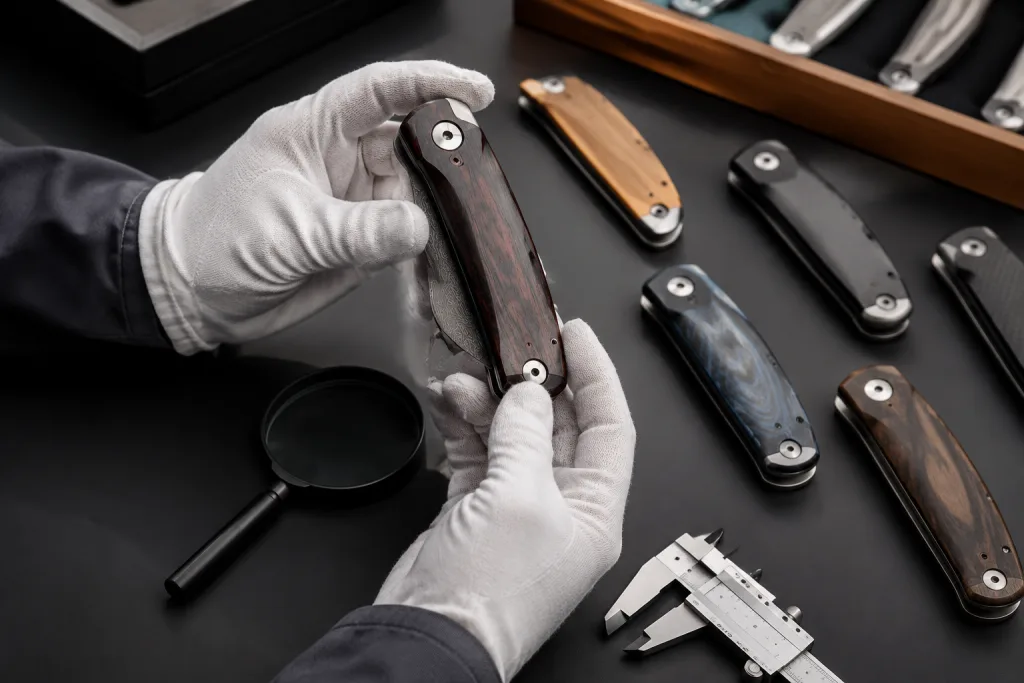
Pocket Knife Product Specification Drafting for Defect Prevention and Inspection Evidence
A pocket knife product specification should convert buyer expectations into controlled requirements, measurable acceptance criteria, inspection methods, and shipment evidence. For each model and production lot, it should tell the supplier and inspector what to verify, how to verify it, what constitutes a defect, and which records are required before shipment review.
Build the specification package as four linked, revision-controlled documents:
1. Product specification 2. Model-specific defect catalog 3. Inspection and sampling instruction 4. Shipment evidence schedule
Source and Scope Boundary
The supplied sources provide broader context on wholesale knife sourcing (Vast State), knife-sourcing topics (China Knives Wholesale), and retail stocking considerations (SZCO). They are not used here to establish knife-specific tolerances, test loads, sampling plans, defect classifications, legal conclusions, or shipment-release rules.
All bracketed values in this drafting framework must be selected and validated for the actual design. Applicable legal and market requirements should be established separately, then incorporated by controlled document title, revision, or another unambiguous reference.
1. Define the Controlled Product Configuration
Begin by identifying the exact product configuration and every document that controls it.
| Control field | Required entry | |---|---| | Buyer product identity | SKU, model, variant, colorway, and packaging version | | Supplier reference | Supplier model, quotation, or internal item number | | Intended market | Buyer-selected country or region | | Specification identity | Document number, revision, issue date, and approval status | | Order identity | RFQ, purchase order, production lot, and shipment references | | Approved sample | Unique sample ID, approval date, custodian, and characteristics it controls | | Controlled attachments | Drawings, artwork, dielines, defect images, test methods, and packaging files, each identified by revision | | Document precedence | Buyer-defined order of precedence among amendments, specifications, drawings, approved samples, and other references |
Issue one controlled specification for each defined product configuration. If variants share a specification, add a variant matrix covering every permitted difference in material, dimensions, mechanism, finish, marking, labeling, and packaging.
State exactly what an approved sample controls. It may establish a comparison boundary for selected visual or functional characteristics, but it should not silently override written dimensions, material designations, artwork files, or packaging requirements.
2. Build a Defect-to-Requirement Register
Draft from rejection risks, not promotional language. Complete one register row for every characteristic the buyer intends to control.
| Drafting field | Required decision | |---|---| | Characteristic | Product, marking, or packaging feature being controlled | | Defect condition | Observable condition that would be rejected | | Prevention control | Material approval, first article, process check, fixture, work instruction, or other required control | | Requirement | Condition the finished product must meet | | Acceptance limit | Numerical range, prohibited condition, or approved visual boundary | | Inspection state | Open, closed, cycled, unloaded, fixtured, unpackaged, or packaged | | Inspection method | Measurement point, instrument, fixture, procedure, and result calculation | | Inspection stage | Incoming material, first article, in-process, final, or pre-shipment | | Sampling rule | Quantity, selection method, controlled sampling-plan reference, or 100% inspection | | Required evidence | Raw readings, records, photographs, videos, or controlled forms | | Failure response | Hold, classification, review, rework, deviation, or reinspection rule |
Do not use terms such as “smooth action,” “solid lockup,” “centered blade,” “sharp edge,” “premium finish,” or “good packaging” as stand-alone requirements. Replace each phrase with an observable condition, a defined inspection method, and a buyer-approved acceptance boundary.
3. Use a Consistent Inspection-Clause Format
Write every controlled characteristic using the same structure:
- **Requirement:** What the unit must contain, measure, withstand, or do.
- **Acceptance criteria:** The target, tolerance, visual boundary, or prohibited condition.
- **Product state:** How the knife or package is conditioned and positioned.
- **Inspection method:** Measurement points, instrument or fixture, applied force or sequence where relevant, and result calculation.
- **Sampling rule:** Quantity, selection method, and inspection stage.
- **Required evidence:** Raw results and required records, images, or videos.
- **Failure response:** Applicable nonconformance and disposition procedure.
A closed-blade centering clause can follow this pattern:
> After [buyer-defined conditioning or cycle count], place the knife fully closed in fixture [ID and revision] without an externally applied side load. Assess blade position at [datum or drawing reference] using method [ID and revision]. Accept the unit when [buyer-defined offset or clearance criterion] is met and no prohibited blade contact is observed. Record the result for every sampled unit and submit the required datum-view photograph with the unit ID visible.
Complete the method, location, limit, sample quantity, and evidence fields for the actual model. Do not copy a limit from another design without documented approval.
For visual characteristics, define the cosmetic zone, viewing distance, lighting, viewing angle, and any controlled inspection time. Attach visual boundary images showing the acceptable condition, last acceptable example, and first rejectable example.
4. Draft Material and Construction Controls
The broader sourcing topics listed by China Knives Wholesale can be used as prompts for specification coverage, but the actual requirements must remain model-specific.
| Characteristic | Specification content | Required inspection evidence | |---|---|---| | Blade material | Exact designation; permitted-equivalent policy; prohibited substitutions; required supplier or laboratory record; lot-linking rule | Record showing issuer, date, material designation, and applicable material or production lot | | Hardness | Buyer-approved range; units; method reference; test location; surface-preparation rule; sample quantity; disposition of tested units | Individual readings, sample IDs, test date, method, equipment ID, and result disposition | | Heat-treatment control | Required process approval or record fields; contractually controlled parameters; change-approval rule | Lot-linked process record containing the buyer-specified fields | | Blade dimensions | Nominal values, tolerances, datums, measurement locations, product state, and instrument | Individual readings by sample ID, including units and pass/fail result | | Handle and scale dimensions | Controlled interfaces, thicknesses, alignment limits, and drawing references | Individual readings and photographs where alignment is visually controlled | | Component identity | Controlled bill of materials or component table, including finish and revision where applicable | Required lot, batch, or sampled identity records | | Substitution control | Characteristics for which substitution is prohibited or requires written approval | Approved change or deviation reference linked to the affected lot |
If the buyer requires independent verification in addition to supplier documentation, state who may perform it, which method applies, how samples are selected, and which report fields are mandatory. Define how each submitted record will be reviewed before treating it as evidence of conformity.
5. Draft Functional and Workmanship Controls
| Characteristic | Decisions required in the specification | Defect condition to define | Minimum evidence to require | |---|---|---|---| | Edge condition | Geometry or performance method; test medium; test location; number of trials; pass rule; prohibited damage | Dull area, roll, chip, burr, or result outside the approved boundary | Unit-level result and close-up images of rejected conditions | | Closed-blade centering | Knife state; datum surfaces; measurement location; offset or clearance rule; contact prohibition | Blade contact or position outside the approved limit | Raw result and standardized datum-view photograph | | Blade play | Product state; clamping points; load direction; applied force; measurement point; displacement calculation | Movement beyond the approved limit | Applied-force and displacement results, fixture ID, and unit ID | | Lock engagement | Product position; engagement dimension or visual boundary; measurement method; prohibited conditions | Engagement outside the approved boundary | Unit-level reading or classification and representative images | | Lock security | Buyer-approved test method; guarded fixture; load direction; sequence; duration; pass/fail rule; sample disposition | Release, permanent movement, damage, or another defined failure during the test | Raw results, setup image, equipment ID, unit ID, and post-test disposition | | Opening and closing action | Instrumented force or torque method, or identified comparison sample; cycle point; controlled speed if applicable; prohibited scraping, binding, or unintended opening | Result outside the approved operating boundary | Unit-level readings or checklist; video where motion is needed to document the condition | | Detent or closed retention | Knife state; opening direction; fixture; force application; release criterion | Release outside the buyer-defined range or unintended opening under the specified method | Raw reading or pass/fail result by unit ID | | Fastener assembly | Fastener identity and finish; assembly instruction; specified torque where applicable; permitted adjustment; prohibited head damage | Loose, missing, damaged, incorrect, or improperly seated fastener | Required process record and sampled visual or torque results | | Surface finish | Finish designation; cosmetic zones; approved boundary images; viewing conditions; permitted and prohibited conditions | Scratch, coating gap, discoloration, mismatch, or another condition outside the boundary | Defect counts by zone and controlled-view photographs | | Marking and artwork | Controlled file; application method; size; location tolerance; orientation; controlled color reference; legibility boundary | Missing, incorrect, distorted, misplaced, or unauthorized marking | First-article image and sampled production images linked to revision and lot |
Use buyer-approved methods and suitable controls for lock, edge, and other tests that may expose the operator to harm or alter the product. Do not invent a load, duration, or test sequence to complete an otherwise unresolved clause. Mark the clause unresolved and withhold specification approval until an authorized party supplies and approves the method.
For any test that marks, damages, or changes a unit, define:
- Sample-selection and identification rules
- Whether samples come from production inventory or separate test pieces
- Segregation requirements for tested units
- Whether tested units may be reworked, retained, returned to inventory, or destroyed
- How final sample disposition is recorded
6. Draft Packaging and Identification Controls
| Characteristic | Decisions required in the specification | Minimum evidence to require | |---|---|---| | Unit packaging | Dieline and artwork revision, contents, protective features, closure method, and workmanship boundaries | Completed checklist and sampled photographs | | Label and barcode data | Controlled data source, buyer-selected symbology, placement, orientation, and verification method | Recorded verification result and readable report image | | Pack quantity | Units per inner pack and master carton; permitted variance, if any; counting method | Count result for every inspected carton | | Master carton | Material or construction requirement, dimensions, weight limit, arrangement, marks, and sealing method | Dimensions, weight, count, and photographs by carton ID | | Lot identification | Required batch, date, carton, or other traceability code and its placement | Images and report fields linking the code to the inspected lot | | Packaging condition | Defined rejectable crushing, tearing, contamination, incorrect sealing, or print damage | Defect count by class and representative defect images |
Artwork approval alone should not be used as the acceptance criterion for print placement, packaging construction, pack count, or barcode verification. Draft separate inspection clauses for each characteristic the buyer intends to verify.
7. Create a Model-Specific Defect Catalog
Define each defect class in the specification or an identified attachment. “Critical,” “major,” and “minor” are drafting labels until the buyer approves model-specific definitions and examples; do not assume the labels have an unstated acceptance meaning.
For every listed defect, record:
| Catalog field | Required content | |---|---| | Defect ID | Unique identifier used in the inspection report | | Characteristic | Affected specification clause | | Description | Observable reject condition | | Product state | Condition in which the defect is assessed | | Location | Drawing reference, component, or cosmetic zone | | Boundary | Numerical limit or approved visual example | | Classification | Buyer-approved defect class | | Counting rule | How occurrences and affected units are counted | | Evidence rule | Required photograph, reading, video, or record |
Where visual comparison is used, attach images or diagrams showing the acceptable condition, last acceptable boundary, and first rejectable boundary. State how multiple defects on one unit are counted.
Require inspectors to document unlisted observations and refer them for buyer classification. Do not permit an unlisted condition to be accepted or assigned a defect class by assumption.
8. Connect Prevention Controls to Inspection Stages
Assign each requirement to the stage at which the buyer requires verification. Do not rely only on finished-goods inspection for a characteristic that the buyer has chosen to control earlier in production.
| Stage | Required specification decision | Evidence to request | |---|---|---| | Before production | Current revisions, approved materials, approved samples, supplier exceptions, and unresolved clauses | Signed compliance matrix and approved exception list | | First article | Buyer-selected dimensions, component identity, mechanism, marking, finish, and packaging configuration | First-article readings, images, and approval reference | | In-process | Buyer-selected characteristics assigned to an in-process check | Lot-linked process or inspection record | | Final production | Finished-unit function, dimensions, workmanship, identity, and packaging checks | Unit-level or sample-level results as specified | | Pre-shipment | Lot identity, quantity, selected sample results, packaging, and evidence-package completeness | Inspection report and indexed attachments |
For each required in-process record, define its fields, responsible role, inspection frequency, lot link, required retention period where applicable, and response to an out-of-limit result.
9. Complete the Sampling and Inspection Instruction
The wholesale sourcing overview from Vast State provides general sourcing context, but the buyer must supply or approve the model-specific inspection rules.
The instruction should state:
- Definition of one inspection lot
- Rules for separating SKUs, variants, colorways, artwork revisions, production dates, and production sites
- Minimum production and packing status required before inspection
- Method for selecting cartons and units without supplier substitution of samples
- Sampling standard and edition, if the buyer selects one
- Inspection level or other sample-size rule
- Acceptance and rejection rule for each defect class
- Exact buyer-selected rule for critical defects
- Characteristics requiring 100% inspection
- Separate sample quantities for destructive, marking, or specialized tests
- Replacement-sample rule, if replacement is permitted
- Response when the required sample cannot be completed
- Failed-inspection, containment, rework, and reinspection procedures
- Responsibility for additional inspection costs where addressed by the purchase agreement
Do not use an AQL value or another sampling-plan label as the entire inspection instruction. Link the selected plan to the controlled lot definition, defect catalog, sample-selection method, test procedures, acceptance limits, and evidence requirements.
Where characteristics use different sample quantities, include a characteristic-level sampling table:
| Clause ID | Characteristic | Lot basis | Sample quantity or plan | Selection rule | Acceptance rule | Destructive or marking test | |---|---|---|---|---|---|---| | [ID] | [Characteristic] | [Lot definition] | [Quantity or controlled reference] | [Method] | [Ac/Re or other approved rule] | [Yes or no; disposition] |
10. Specify the Inspection Evidence Package
Create an evidence schedule that follows the numbered specification clauses. Every controlled characteristic should point to a report field, raw-data table, photograph, video, or external record.
Require the report package to identify:
- Supplier and inspected production location
- Buyer model, SKU, variant, purchase order, and specification revision
- Production quantity, packed quantity, and lot identifiers
- Inspection date and stated production status
- Selected cartons and units, including the selection method
- Sample quantity used for each characteristic
- Pass, fail, not inspected, or not applicable status for every checklist item
- Individual readings for buyer-designated characteristics, including units
- Test method, fixture, and equipment identification
- Calibration or verification status where the buyer has defined the required record and acceptance rule
- Photographs of sample selection, unit identity, test setup, markings, labels, packaging, cartons, and observed defects
- Videos for specified motion-dependent checks
- Defect IDs, affected unit IDs, counts, and classifications
- Nonconformance, deviation, rework, and reinspection references
- Inspector identity and report approval status
Use a raw-result table that preserves individual readings:
| Lot ID | Carton ID | Unit ID | Clause ID | Characteristic | Method or fixture ID | Raw result | Units | Limit | Pass/fail | Evidence file | |---|---|---|---|---|---|---|---|---|---|---|
When photographs serve as inspection evidence, define:
- Required view and orientation
- Visible unit, carton, or lot identifier
- Datum or measurement location
- Instrument display when documenting a reading
- Scale or reference when dimensional interpretation is required
- Lighting setup for cosmetic comparisons
- File-naming rule linking the image to the report row
Do not substitute a photograph for a required raw measurement. If the specification requires both a supplier record and independent inspection, require both forms of evidence.
11. Link Evidence to Shipment Review
Define how inspected samples and report files connect to the goods offered for shipment. Select traceability fields compatible with the buyer's system, such as production lot, batch, date code, carton number, pallet number, or sampled-unit label.
A shipment-evidence clause can follow this pattern:
> Supplier shall submit the evidence package listed in schedule [ID and revision] for purchase order [number], SKU [number], and production lot [ID]. Each result and attachment shall identify the applicable specification clause and lot or sample reference. Shipment release is subject to the review step stated in the purchase agreement. Missing evidence, an unresolved failed result, or an unapproved deviation shall be handled under procedure [controlled reference].
The governing purchase agreement or another authorized document should identify the shipment-release authority, evidence due date, review process, and contractual effect of approval. Do not infer those terms from the inspection report itself.
12. Control Failures, Rework, and Deviations
For each failed result, require a nonconformance record containing:
- Affected specification clause and defect ID
- Lot, carton, and unit identifiers
- Observed result and acceptance limit
- Quantity inspected and quantity affected
- Immediate lot status
- Containment scope
- Proposed disposition
- Buyer-required approval authority
- Rework instruction and revision, if authorized
- Reinspection scope and sample-selection rule
- Final disposition and release reference
State whether reinspection applies to the reworked quantity, original lot, newly defined lot, or another buyer-approved population. Do not leave the reinspection population for the supplier or inspector to infer.
A temporary deviation should identify the exact requirement being waived, affected lot or quantity, approved alternative condition, required evidence, approval authority, and expiration point. Do not use a one-lot deviation as a permanent specification change.
13. Control Revisions and Production Changes
List every characteristic that requires written buyer approval before a change is implemented. Depending on the model, the controlled list may include:
- Blade or component material
- Heat-treatment route or source
- Dimension, tolerance, datum, or mechanism geometry
- Finish, coating, or color source
- Fastener, adhesive, assembly instruction, or fixture
- Artwork file, marking method, or marking location
- Packaging material, dieline, barcode data, or pack count
- Production site or subcontracted process
- Test method, equipment, fixture, or inspection location
Require each change request to identify the reason, affected clauses, affected inventory and lots, validation evidence, proposed effective date, and documents requiring revision.
After approval, revise the applicable specification, drawings, approved-sample reference, defect catalog, inspection checklist, and evidence schedule. Require supplier acknowledgment of the current revision before the buyer-selected inspection stage.
14. Issue the RFQ as a Verification Package
Send the supplier the controlled documents needed to quote and acknowledge the same product definition:
- Product specification
- Dimensioned drawings
- Artwork and packaging files
- Approved-sample identification
- Model-specific defect catalog
- Inspection and sampling instruction
- Evidence schedule
- Change-control requirements
- Clause-by-clause compliance matrix
The retail stocking discussion from SZCO belongs to separate purchasing or assortment work. It does not establish the technical acceptance criteria for this specification package.
Require quotations and supplier exceptions to reference the controlled materials, tolerances, methods, inspection scope, evidence, packaging, and change requirements actually requested.
| Clause ID | Requirement revision | Supplier response | Exception or clarification | Proposed alternative | Supporting document | Buyer disposition | |---|---|---|---|---|---|---| | [ID] | [Revision] | Accept / exception / clarify | [Details] | [If applicable] | [Reference] | Approve / reject / revise |
Do not define supplier silence as acceptance unless the governing agreement expressly establishes that rule.
Final Product Specification Drafting Checklist
Product identity and document control
- [ ] SKU, model, variant, intended market, and packaging version are identified.
- [ ] Specification number, revision, issue date, and approval status are shown.
- [ ] Drawings, artwork, dielines, defect images, and test methods are listed by revision.
- [ ] Document precedence is defined.
- [ ] Approved samples are uniquely identified, with their controlling characteristics stated.
Defect prevention
- [ ] Every controlled risk has a requirement, prevention control, and inspection stage.
- [ ] Material and process substitutions require the stated approval.
- [ ] First-article and in-process controls are assigned where required by the buyer.
- [ ] Controlled dimensions include tolerances, datums, and measurement locations.
- [ ] Destructive or marking tests include sample-identification, segregation, and disposition rules.
- [ ] Change requests identify affected clauses, lots, validation evidence, and effective date.
Technical acceptance criteria
- [ ] Centering, blade play, lock engagement, lock security, action, retention, and edge condition have buyer-approved methods and limits where applicable to the model.
- [ ] Product state, fixture, instrument, force direction, measurement point, and calculation are defined where relevant.
- [ ] Cosmetic zones and visual pass/reject boundaries are attached.
- [ ] Defect classes have model-specific definitions and examples.
- [ ] Unlisted observations have a defined classification route.
Sampling and inspection evidence
- [ ] Lot definition and sample-selection rules are stated.
- [ ] Every characteristic has a sample quantity or controlled sampling-plan reference.
- [ ] Acceptance and rejection rules are stated by defect class.
- [ ] Characteristics requiring 100% inspection are identified.
- [ ] Raw individual results are required for buyer-designated characteristics.
- [ ] Material, process, test, photograph, and video requirements are listed by clause.
- [ ] Reports identify the PO, SKU, revision, quantity, lot, cartons, samples, date, and inspector.
- [ ] Evidence files can be traced to report rows and inspected goods.
Failure and shipment-release control
- [ ] Failed-inspection, containment, rework, deviation, and reinspection procedures are identified.
- [ ] Reinspection population and sample-selection rules are defined.
- [ ] Temporary deviations are limited to an identified requirement, lot or quantity, and expiration point.
- [ ] Evidence due date, reviewer, and shipment-release authority are stated in an applicable controlled document.
- [ ] Missing evidence and unresolved failures have a defined response.
The completed pocket knife product specification should leave every controlled buyer expectation in one of three forms: a measurable limit, an approved visual boundary, or a documented verification step. Every required result should identify the applicable clause, inspected sample, production lot, and disposition.