Pocket Knife Supplier Prequalification: Customization, Artwork, and Tolerance Evidence
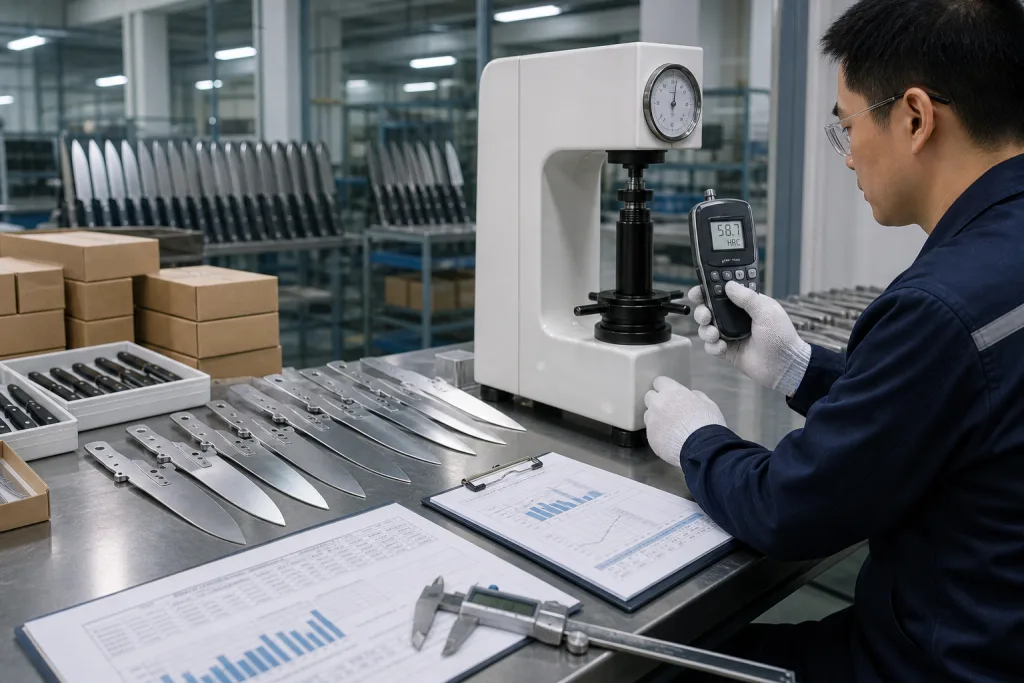
Pocket Knife Supplier Prequalification: Customization, Artwork, and Tolerance Evidence
Pocket knife supplier prequalification should answer one program-specific question: has the candidate shown that it can turn the buyer’s approved design and artwork package into controlled, repeatable production?
A catalog, quotation, equipment list, sample image, or statement that customization is available is not enough. The evidence must relate to the proposed knife, including its components, materials, artwork processes, critical characteristics, sample configuration, and production controls.
Source and Evidence Boundary
The supplied links are included as background sourcing references: Vast State, WholesaleSeeker, and China Knives Wholesale.
These references do not verify a candidate supplier, manufacturing process, quality system, customization capability, or product conformity. Use them to inform sourcing questions, then base each prequalification decision on evidence supplied for the buyer’s program.
When an artifact is missing, record the relevant capability as unverified. Missing evidence does not, by itself, prove that the supplier lacks the capability.
Define the Evidence Target Before Requesting Quotes
Issue the same revision-controlled prequalification brief to every candidate. Separate fixed requirements from items for which the supplier may propose an alternative.
The brief should identify:
- Project identifier and brief revision
- Base model or buyer-controlled design under review
- Intended dimensions, materials, mechanism, finishes, and artwork locations
- Components that must remain standard, may be modified, or require new development
- Buyer-defined critical-to-quality characteristics
- Expected order range and repeat-order pattern
- Required sample stages and the decision supported by each stage
- Qualification documents, measurement records, and approval records to be returned
- Rules for substitutions, deviations, and specification changes
Mark each requirement as fixed, supplier-proposed, or unresolved. Require the supplier to list any proposed change to a material, component, dimension, finish, artwork position, artwork process, tooling approach, or manufacturing method as a visible deviation. A deviation should not become part of the quoted configuration until the buyer has reviewed it.
Use Mandatory Evidence Gates
Apply mandatory gates before comparing prices or assigning weighted scores. These are buyer-defined prequalification controls, not claims about any supplier.
| Decision gate | Evidence requested | Advance condition | Hold condition | |---|---|---|---| | Customization route | Component classification, affected-interface list, tooling needs, and responsibility map | Standard, modified, and newly developed elements are identified | The response states only that customization is available | | Technical review | Marked drawing, specification comments, manufacturability questions, assumptions, and deviation list | Materials, dimensions, interfaces, assumptions, and open decisions are visible | The quotation relies on an image, sample, or incomplete description without a documented review | | Artwork control | Controlled artwork template, process proposal, placement definition, proof, and sample plan | Revision, scale, orientation, datums, substrate, finish, and acceptance method are defined | Approval depends on an uncontrolled mockup or verbal confirmation | | Tolerance control | Completed critical-to-quality register, measurement methods, inspection stages, and record format | Each critical characteristic has a requirement, method, inspection stage, and retained result | Generic tolerance language replaces characteristic-specific controls | | Sample correlation | Sample-stage definition, configuration declaration, deviation list, and inspection results | The submission identifies which production materials, tools, processes, and controls the sample represents | A sample is presented as production evidence without configuration or deviation disclosure | | Repeat-production control | In-process and final inspection plan linked to controlled requirements | Records are traceable to the applicable drawing, artwork, and specification revisions | The plan does not identify what is checked or which revision governs the check | | Change control | Revision identifiers, substitution rules, deviation workflow, and reference-retention plan | Proposed changes require documented review before implementation | Materials, components, finishes, artwork, tooling, or processes may be changed without defined review |
The buyer may accept blank forms, redacted records, anonymized examples, live demonstrations, or completed records generated from the buyer’s own sample. Record the evidence type that was reviewed. Do not treat a general example as proof of performance on the proposed program.
Verify the Customization Route
Require each candidate to classify the proposed work using the same buyer-defined categories:
1. **Stock model with branding:** An existing configuration receives buyer-approved artwork. 2. **Cosmetic modification:** Color, texture, surface finish, scale material, clip finish, or visible hardware changes without a buyer-requested geometry change. 3. **Component modification:** The geometry, material, or interface of one or more parts changes while a base platform is retained. 4. **New development:** The program requires new drawings, prototypes, tooling, fixtures, process development, or buyer-defined validation work.
This classification defines scope; it is not capability evidence on its own. Require a component matrix such as the following:
| Component or interface | Status | Proposed change | Governing requirement | Required evidence | Responsible party | |---|---|---|---|---|---| | Example: handle scale | Standard, modified, or new | Material, geometry, finish, or artwork change | Drawing, specification, or artwork revision | Material declaration, proof, sample, or measurement record | Buyer, supplier, or identified sub-supplier role |
The completed matrix should identify:
- Standard components used without change
- Standard components receiving artwork or finish changes
- Components requiring new materials, geometry, tooling, or fixtures
- Mating interfaces affected by each modification
- Drawings and specifications to be supplied, created, or reviewed
- Responsibility for technical review, sample approval, deviation closure, and production release
Equipment photographs, process descriptions, and sample images may support the review. Score them only for the requirement they address. To support a program-specific capability decision, the evidence should connect the proposed component to its material, geometry, process, acceptance criteria, and recorded result.
For buyer-funded or program-specific tooling, define ownership, identification, approval status, storage, maintenance responsibility, permitted use, replacement responsibility, and disposition. A tooling charge does not define these terms.
Require a Controlled Artwork Package
Treat every artwork application as a controlled product requirement. Create a separate artwork control sheet for each location, such as a handle scale, blade face, clip, insert, package, or accessory.
Each control sheet should include:
- Project and artwork-location identifier
- Master file name, file format, and revision
- Finished artwork dimensions and orientation
- Placement datums or reference edges
- Nominal position and permitted position and rotation variation
- Intended marking, engraving, printing, coating, inlay, or embossing process
- Substrate material, surface preparation, texture, and finish
- Color reference and comparison method when color is controlled
- Requirements for contrast, fill, depth, edge condition, or legibility when applicable
- Restricted zones around pivots, fasteners, mating interfaces, grip features, and contact surfaces
- Proof or physical sample governing each approval characteristic
Require the supplier to return:
- Accepted master-file format and supplier template
- Proposed application process for each artwork location
- Process constraints relevant to feature size, spacing, placement, curvature, texture, coating, or substrate
- A controlled proof showing the artwork revision, scale, orientation, position, and datums
- Requested artwork adjustments recorded as proposed deviations
- Inspection method, inspection stage, sampling basis, and result format
- Identification of the sample stage using the intended substrate, finish, and artwork process
Limit digital-proof approval to the characteristics named in the approval record, such as file revision, composition, scale, orientation, and nominal placement. When approval also covers the physical result on a particular substrate, coating, texture, curvature, or finish, request a physical sample and state exactly which characteristics it is intended to approve.
For appearance decisions that cannot be made consistently from uncontrolled photographs, define the comparison conditions. The approval record may identify a physical reference, viewing distance, lighting arrangement, viewing angle, and use of normal corrected vision or magnification. It should also identify the governing artwork revision and the characteristics approved.
Test Tolerance Control Against Defined Characteristics
Do not accept a general statement that standard tolerances apply as evidence of control. Create a critical-to-quality register for the proposed design and require the supplier to complete its control method.
Buyer-selected review areas may include:
- Blade position relative to the handle when closed
- Pivot and mating-component dimensions
- Mechanism-specific engagement or functional acceptance criteria
- Buyer-defined blade-play limits and operating checks
- Alignment among scales, liners, spacers, and fasteners
- Blade or edge clearance within the handle
- Clip position and fastener seating
- Overall open and closed dimensions
- Artwork position relative to specified datums
- Fit between the knife and a custom insert or package cavity
These are possible review areas, not universal requirements. The technical owner should select characteristics and set acceptance criteria for the proposed design. Do not copy numerical tolerances or functional limits from an unrelated knife.
For each critical characteristic, record:
| Control field | Required definition | |---|---| | Characteristic ID | Unique identifier used on the drawing, control plan, and report | | Characteristic | Dimension, position, interface, appearance feature, or functional result being controlled | | Requirement | Nominal value and limits, maximum or minimum limit, or documented acceptance method | | Unit | Measurement unit used for the requirement and result | | Datum or reference | Defined origin, edge, axis, surface, drawing, specification, artwork file, or approved sample revision | | Method | Gauge, fixture, measurement sequence, comparison method, or functional check | | Equipment identification | Gauge or fixture type and, when required, the specific equipment identifier recorded with the result | | Inspection stage | Incoming, in-process, assembly, first article, pilot, or final inspection | | Sampling basis | Quantity, frequency, or event that triggers the check | | Record | Report field, check sheet, image, data file, or other retained result | | Reaction | Required action when a result is outside the requirement or cannot be verified | | Responsibility | Role performing the check and role reviewing the result or disposition |
Ask candidates to complete the register instead of returning a blanket confirmation. Program-specific evidence may include a marked technical review, first-article measurements, measurement-setup photographs, gauge or fixture identification, actual results, and records showing how nonconforming or indeterminate results were handled.
Replace subjective terms such as centered, smooth, secure, clean, or consistent with one of the following:
- A numerical limit tied to a defined datum and method
- A functional check with a documented sequence and acceptance result
- A controlled visual standard with defined comparison conditions
- An approved reference sample identified by project, revision, date, and approval status
If the requirement, method, or decision rule remains unresolved, keep the characteristic open. Do not record it as controlled.
Correlate Samples With the Intended Production Configuration
Define the required sample stages in the request for quotation. Do not assume that every supplier uses the word sample for the same configuration or decision.
- **Concept or appearance sample:** Supports stated questions about general form, finish direction, artwork scale, or placement. All non-production materials, components, and processes must be identified.
- **Engineering sample:** Supports stated dimensions, interfaces, functional criteria, and proposed materials after technical review.
- **Pre-production sample:** Is intended to represent the released drawings, artwork, materials, finishes, tooling, and production processes, except for listed deviations.
- **Pilot or initial-production inspection:** Uses multiple units and records results against the same controlled requirements, showing the observed results for the submitted quantity.
These labels define the buyer’s requested evidence; they do not make a submitted sample representative by default. Require a configuration declaration with every submission covering:
- Material and component revisions
- Tooling and fixture status
- Surface preparation and finish
- Artwork file, process, and controlled settings
- Assembly method
- Inspection methods and records
- Non-production substitutions or temporary operations
- Open deviations and their proposed closure stage
The sample approval record should identify:
- Supplier, project, and model identifiers
- Sample stage, quantity, and unit identifiers
- Drawing, specification, component-list, and artwork revisions
- Characteristics evaluated and not evaluated
- Measurement and inspection results
- Approved deviations and unresolved items
- Approval status, date, and authorized approver
- Identification and custody of any retained reference sample
Approval applies only to the configuration and characteristics identified in the record. Retain the controlled drawings, specifications, artwork files, configuration declaration, and results even when a physical reference sample is kept.
Grade the Evidence Without Overstating It
Use a buyer-defined evidence scale that separates assertions from program-specific results:
- **0 — Missing:** No response or requested artifact
- **1 — Assertion:** Capability stated without supporting material
- **2 — General supporting evidence:** Relevant process description, blank form, demonstration, or redacted example
- **3 — Program-specific evidence:** Completed technical review, controlled proof, configuration declaration, sample record, or measurement tied to the proposed knife and an identified revision
The score describes the evidence reviewed. It does not certify the supplier or predict future conformity.
An illustrative weighting for this prequalification decision is:
- 35% customization route and technical review
- 30% critical-tolerance and functional-control evidence
- 25% artwork and appearance-control evidence
- 10% sample correlation, revision control, and repeat-production planning
Set weights before scoring candidates and adjust them to the actual program. A stock model receiving artwork may place greater weight on artwork controls. A component modification may place greater weight on interfaces, tooling, first-article measurements, and pilot records.
Regardless of the total score, hold the candidate when:
- The customization route or affected components are unidentified
- The governing product, specification, or artwork revision is unclear
- A critical characteristic lacks an agreed requirement or verification method
- The sample configuration or its deviations are undisclosed
- Substitutions or changes may be implemented without documented review
- Inspection records cannot be connected to approved requirements and revisions
Copy-Ready RFQ Checklist for Capability Evidence
Customization route
- [ ] Classify the project as stock branding, cosmetic modification, component modification, or new development.
- [ ] Identify every standard, modified, and newly developed component.
- [ ] Map each change to affected components and mating interfaces.
- [ ] State proposed materials, finishes, artwork processes, and manufacturing processes.
- [ ] Identify required drawings, tooling, fixtures, and technical reviews.
- [ ] Return open questions, assumptions, and deviations separately from the compliant offer.
- [ ] Assign responsibility for drawing review, tooling approval, sample approval, deviation closure, and production release.
Artwork control
- [ ] Confirm accepted master-file formats and return required templates.
- [ ] Propose an application process for every artwork location.
- [ ] Identify constraints related to the intended material, finish, texture, coating, or geometry.
- [ ] Return a proof showing the project ID, artwork revision, dimensions, orientation, position, and datums.
- [ ] Propose placement limits and an objective appearance-approval method.
- [ ] Record requested artwork adjustments as deviations requiring buyer review.
- [ ] Identify the sample using the intended substrate, finish, and artwork process.
- [ ] Define the inspection method, sampling basis, and retained result.
Tolerance control
- [ ] Review and complete the buyer’s critical-to-quality register.
- [ ] Propose a measurement or objective inspection method for each characteristic.
- [ ] Identify the datum, unit, equipment or fixture, inspection stage, and sampling basis.
- [ ] Provide proposed first-article and production-inspection report formats.
- [ ] Show how gauges, fixtures, and resulting records will be identified.
- [ ] Define how out-of-limit, borderline, or unverified results will be recorded and reviewed.
- [ ] Link inspection records to governing drawing, specification, and artwork revisions.
Sample correlation
- [ ] Quote and define each requested sample stage separately.
- [ ] Submit a configuration declaration with every sample stage.
- [ ] List all non-production materials, components, finishes, tools, fixtures, and processes.
- [ ] Provide the measurements and inspection results relevant to the sample’s stated purpose.
- [ ] Identify which sample is intended to represent the released production configuration.
- [ ] Identify and control any retained reference sample.
- [ ] State how pilot or initial-production units will be checked against the approval package.
Revision and change control
- [ ] Display project, drawing, artwork, specification, and component-list revisions on responses and records.
- [ ] Confirm that proposed material, component, process, finish, artwork, tooling, and relevant sub-supplier changes require documented review.
- [ ] Describe how deviations are numbered, reviewed, approved, incorporated, rejected, or closed.
- [ ] Identify the roles authorized to provide technical responses, approve changes, and release quality records.
Build an Auditable Supplier Shortlist
For each candidate, the shortlist should show what was requested, what was supplied, the revision reviewed, the assigned evidence level, unresolved questions, approved deviations, and the gate decision.
Advance a candidate only when the evidence connects its proposed customization route to controlled artwork, defined critical characteristics, disclosed sample configurations, traceable inspection records, and documented change control. Where evidence remains incomplete, record the capability as unverified for the proposed pocket knife program and identify the artifact or decision needed to close the gap.