Pocket Knife Wholesale: Golden-Sample Approval for Custom Orders
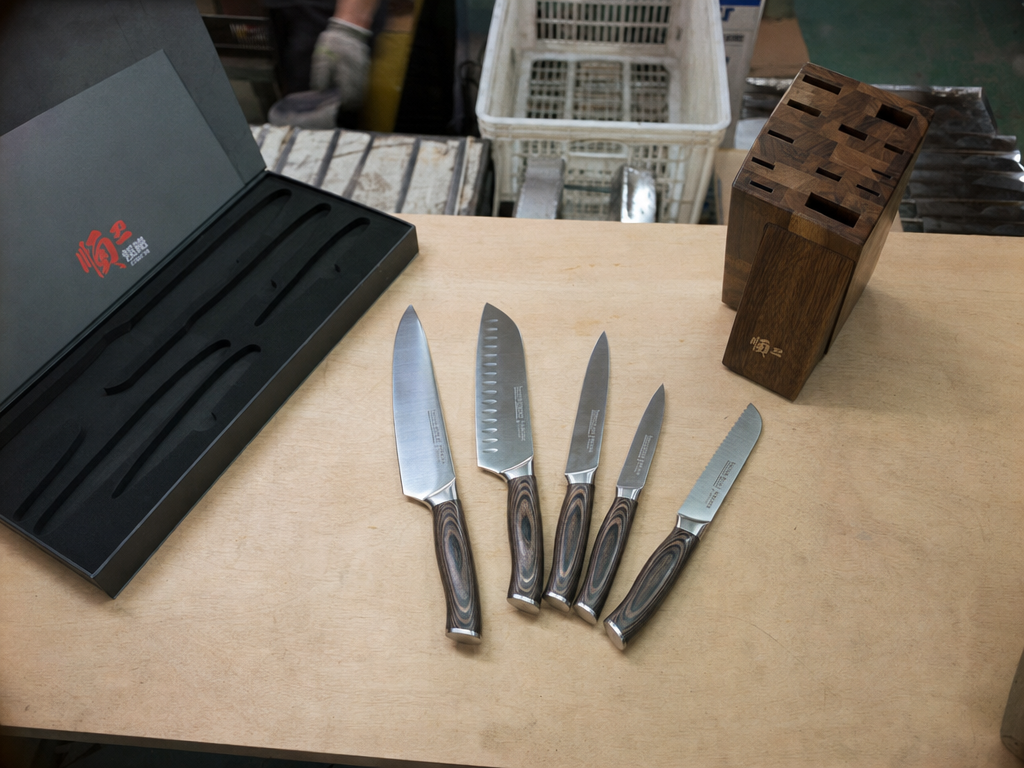
Pocket Knife Wholesale Golden-Sample Approval for Custom Orders
For a custom pocket knife wholesale order, golden-sample approval should identify exactly which artwork, configuration, dimensions, finishes, and packaging details are authorized for production. Approval applies only to the recorded sample, SKU, variant, and document revisions. It should not extend to unspecified characteristics or variants the sample does not represent.
The supplied wholesale knife sourcing guide and knife sourcing articles are retained as general sourcing context. They are not evidence for SKU-specific tolerances, materials, process capabilities, performance results, or supplier claims. Define those requirements in the controlled approval documents for the order.
Define What the Golden Sample Approves
Treat the physical sample as one part of a controlled approval pack. The sample should govern only the visual or tactile characteristics explicitly assigned to it. Controlled drawings, artwork files, tolerance schedules, packaging specifications, and written exceptions should govern their respective requirements.
The approval record should identify:
- Buyer SKU, variant, and project reference
- Unique physical-sample ID
- Product specification or drawing revision
- Artwork-master revision
- Artwork-placement drawing revision
- Finish or visual-reference IDs
- Packaging artwork and structure revisions, when applicable
- Characteristics represented by the sample
- Characteristics excluded from approval
- Disclosed substitutes or deviations
- Approval decision, approver, and date
- Production-release status
Do not infer approval for an attribute that is absent from the record. Approval of one color, artwork position, handle configuration, or packaging version does not release another version unless the record identifies the shared controls and variant-specific differences.
Golden-sample approval also does not establish material composition, durability, regulatory compliance, production consistency, or mechanism performance unless those matters are separately specified and supported by the required records or tests.
Identify Every Sample and Revision
Assign each submission an identity that remains traceable through correction rounds. A practical identifier can combine:
- Buyer SKU
- Product revision
- Artwork revision
- Packaging revision
- Color or finish variant
- Sample round
- Individual unit number
For example: SKU-104 / Product B / Artwork 3 / Pack 2 / Round 2 / Unit A.
The supplier’s submission record should state whether the sample uses the proposed production materials, customized components, hardware, assembly configuration, marking method, finish process, tooling, and packaging.
Record every substitute beside the characteristics it could affect. If a sample uses prototype tooling, temporary handle material, a substitute coating, or a different marking method, identify which decisions remain valid and which require another sample.
Establish Document Precedence
Set the order of control before approving the sample. A workable hierarchy is:
1. Controlled product drawings and specifications govern measurable product requirements. 2. Approved artwork and placement drawings govern graphic content, size, orientation, and location. 3. Identified finish references or limit samples govern the cosmetic characteristics assigned to them. 4. Packaging drawings and packout instructions govern custom packaging. 5. The physical golden sample governs only the listed visual or tactile characteristics not fully defined elsewhere. 6. Written approved exceptions govern only the deviations they identify.
Include the hierarchy in the approval form, specification, purchase order, or production-release record. If the sample conflicts with a controlled document, resolve the conflict in writing before release. An incidental feature of the sample should not become an implied production requirement.
Approve the Artwork Master and Physical Marking Separately
Artwork approval requires two distinct decisions:
1. Approval of the controlled digital artwork master 2. Approval of the artwork as reproduced on the physical sample
A digital proof can confirm content, scale, orientation, and proposed placement without approving the physical marking result. Record this limited scope whenever a marked component or complete sample is still required.
Digital artwork-master controls
Record the following for each product mark:
| Control | Required definition | |---|---| | File identity | File name, format, revision, and controlled-file ID or checksum when used | | Authorized content | Approved logo, text, symbols, and graphic elements | | Artwork size | Final width and height, with limits when size is an acceptance characteristic | | Product view | Defined side and orientation from which placement is dimensioned | | Placement | Horizontal and vertical dimensions from identified product datums | | Rotation | Target orientation and permitted angular variation, when controlled | | Color or contrast | Buyer-defined reference and acceptance boundary, when applicable | | Graphic construction | Required treatment of fonts, outlines, fills, gradients, and transparency | | Process constraints | Supplier-declared reproduction limits relevant to lines, gaps, text, or registration |
Replace instructions such as center the logo or place approximately here with dimensions from stable reference features. If visual centering is intentional and differs from geometric centering, show and dimension the intended position on the placement drawing.
Keep product artwork and packaging artwork under separate filenames, revisions, and approvals. Approval of a knife mark does not release a box graphic, insert, label, or carton mark unless those files are expressly listed.
Physical marking controls
Use the marked sample to approve only the characteristics represented by its submitted process, substrate, finish, and configuration. Depending on the customization, the approval record may address:
- Artwork width and height
- Horizontal and vertical placement from defined datums
- Orientation
- Registration between artwork elements
- Edge definition
- Fill continuity
- Contrast or color boundary
- Interaction with texture, curvature, coating, or nearby hardware
- Unintended visible surface changes outside the artwork boundary
- Marking depth, when specified and measured by an agreed method
Classify each characteristic as measurable or visual. A measurable characteristic needs a target or limit, datum, product condition, and inspection method. A visual characteristic needs an identified reference and stated comparison conditions.
Build a Customization Tolerance Schedule
Do not turn the measurements of one preferred sample into unstated production requirements. Put the intended nominal values and permitted variation into a controlled tolerance schedule, then record the sample results against those limits.
For each acceptance characteristic, specify:
- Characteristic name and unique ID
- Nominal value or target condition
- Lower and upper limits, or another defined acceptance boundary
- Datum or reference feature
- Product state during inspection
- Instrument or comparison method
- Units and reporting precision
- Inspection quantity for the sample submission
- Governing document revision
A customization-focused schedule can use the following structure:
| Characteristic | Definition | Limit format | Inspection record | |---|---|---|---| | Artwork width | Maximum horizontal artwork extent | Target with agreed lower and upper limits | Measured value and method | | Artwork height | Maximum vertical artwork extent | Target with agreed lower and upper limits | Measured value and method | | Horizontal placement | Distance from Datum A to a defined artwork edge or centerline | Target with agreed tolerance | Measured value and datum used | | Vertical placement | Distance from Datum B to a defined artwork edge or centerline | Target with agreed tolerance | Measured value and datum used | | Artwork rotation | Angle from a defined product axis | Target with agreed angular tolerance | Measured or comparison result | | Multi-color registration | Offset between identified artwork elements | Maximum permitted offset | Recorded result and method | | Customized-part alignment | Gap, step, or positional relationship at the specified interface | Drawing limits | Recorded values by location | | Finish boundary | Coverage edge relative to a datum or masked zone | Drawing limit or approved boundary reference | Measurement or visual result | | Packaging fit | Product orientation and clearance defined by the packaging drawing | Drawing limits or fit criteria | Packout result and sample ID | | Label placement | Distance from package edges or panel datums | Target with agreed tolerance | Recorded values |
This schedule does not provide universal tolerance values. Populate only the characteristics relevant to the actual SKU, and agree on the limits and inspection methods before production release.
Define the inspection condition
A recorded tolerance should include the inspection setup when that setup can affect the result. Where relevant, identify:
- Whether the knife is open or closed
- Which face rests against the inspection surface
- Which component or edge establishes each datum
- Whether protective film or removable packaging remains in place
- Where a gap, step, or offset is measured
- The instrument or fixture used
- How repeated readings or multiple locations are reported
For artwork on a curved or irregular surface, state whether placement is measured as a straight-line projection, a surface-following dimension, or a fixture-based comparison. Use the method agreed for that SKU.
Bound Finish and Cosmetic Approval
Avoid undefined approval language such as perfect finish, exact color, or premium appearance. For each controlled cosmetic characteristic, record:
- Applicable surface or cosmetic zone
- Characteristic under review, such as color, gloss, texture, coverage, or visible marking quality
- Approved master, limit-sample ID, or controlled photograph
- Viewing distance and angle, when part of the agreed method
- Lighting condition, when part of the agreed method
- Permitted variation or rejection boundary
- Whether the requirement applies to every unit or an agreed inspection sample
Assign every physical reference a unique ID and state whether it represents the target, an acceptable limit, or a rejection limit. If photographs are used, connect each image to the represented sample, view, lighting condition, and revision.
One photographed angle cannot approve surfaces or conditions it does not show. List the views required for the decision, such as the presentation side, reverse side, spine, customized insert, and packaged orientation.
Use a Golden-Sample Decision Table
Apply the same decision categories to every submission: Accept, Revise and resample, or Reject and resolve.
| Control point | Accept | Revise and resample | Reject and resolve | |---|---|---|---| | Sample identity | SKU, variant, sample ID, and revisions are complete and consistent | A record can be corrected without losing control of the sample | The sample cannot be linked reliably to its records | | Configuration | Submitted configuration matches the stated sample basis | A disclosed substitute leaves specified attributes awaiting approval | Configuration is unknown or includes an undeclared substitution | | Artwork master | Content and revision match the authorized file | A controlled file correction is required | The mark cannot be traced to an authorized file | | Artwork placement | Results meet the placement drawing | Position, scale, or orientation requires correction and new evidence | No agreed datum, limit, or reproducible placement basis exists | | Physical marking | Measurable and visual criteria meet their acceptance boundaries | A correctable marking characteristic requires another submission | The process or surface does not represent the required approval basis | | Custom dimensions | Results meet the agreed limits using the defined method | A correctable characteristic misses a limit | No agreed tolerance, datum, or inspection method exists | | Finish or color | Controlled zones meet the identified reference boundaries | A corrected finish sample is required | No usable reference or comparison boundary exists | | Customized components | Listed fit, alignment, gap, and step requirements are met | Adjustment and new verification are required | The component or configuration differs from the approval basis | | Custom packaging | Structure, graphics, fit, labels, and packout match listed revisions | A corrected mock-up or packout sample is required | The package is for the wrong variant or lacks file traceability | | Approval evidence | Results, images, exceptions, and revisions are complete | Missing evidence can be added while the sample remains controlled | The sample has been altered, lost, or separated from its record |
If conditional approval is permitted, list every open item and state whether production remains blocked. Replace comments such as improve the logo in production with a controlled correction entry containing:
- Characteristic ID
- Observed result
- Required target or boundary
- Revised document, when applicable
- Evidence required for closure
- Responsible buyer or supplier role
- Due point in the approval sequence
- Production status while the item remains open
Make Golden-Sample Approval a Production-Release Gate
Use a sequence that separates artwork review from authorization to manufacture the order:
1. **RFQ definition:** Issue the SKU, variant matrix, customization files, proposed control characteristics, requested sample stages, and packaging scope. 2. **Supplier response:** Request proposed processes, tolerances, inspection methods, reproduction constraints, and known sample substitutions. 3. **Artwork-master decision:** Approve or correct the controlled artwork and placement drawing. State that artwork approval alone does not release production. 4. **Physical-sample submission:** Require the sample ID, configuration statement, governing revisions, disclosed deviations, measurements, and specified photographs. 5. **Buyer evaluation:** Compare each characteristic with its assigned drawing, tolerance, artwork file, finish reference, or packaging requirement. 6. **Correction record:** Consolidate discrepancies by characteristic ID. Revise the controlled requirement when the requirement itself changes. 7. **Golden-sample decision:** Record Accept, Revise and resample, or Reject and resolve for the identified submission. 8. **Production release:** List the approved sample ID, document revisions, represented variants, and approved exceptions. 9. **Production comparison:** Use the same controlled references for the customization characteristics included in the release.
Do not label an early digital proof, unmarked prototype, substitute-material sample, or packaging mock-up as the final golden sample unless the approval record clearly limits its scope.
Record the Production Release
A reusable approval record can contain:
| Approval field | Required entry | |---|---| | Project identity | Buyer SKU, supplier project reference, and variant | | Sample identity | Round, unit ID, and retained-reference location | | Sample basis | Listed processes, tooling status, configuration, and disclosed substitutes | | Controlled documents | Product, artwork, placement, finish, and packaging revisions | | Measured evidence | Characteristic IDs, limits, results, methods, and inspection date | | Visual evidence | Reference IDs, required views, and comparison results | | Exceptions | Approved deviations and characteristics excluded from approval | | Decision | Accept, revise and resample, or reject and resolve | | Production status | Released, held pending listed closure, or blocked | | Authorization | Approver, role, date, and recorded approval method |
A production-release statement can follow this structure:
Production release applies only to [SKU and variant], physical sample [ID], and document revisions [list]. Approved exceptions: [list or none]. Unrepresented variants and unlisted characteristics are excluded. Production status: [released or blocked].
Avoid approval messages such as looks good, approved with minor improvements, or okay to proceed. They do not identify the controlled target, unresolved characteristics, or production status.
Control Retained Samples, Changes, and Reorders
Identify buyer-held and supplier-held reference units separately. Record each unit’s storage location and condition. If a retained sample is damaged, altered, lost, or no longer representative, record that status before using it for a production or reorder decision.
Require review when a proposed change affects an approved characteristic, including:
- Artwork content, size, orientation, or placement
- Marking method
- Customized material or component
- Color or finish process
- Controlled dimension or tolerance
- Packaging structure, artwork, label, or packout
- Product configuration represented by the sample
For a reorder, reference the existing sample ID and document revisions, then state whether they remain the approval basis. Request new evidence for changed or previously unrepresented characteristics.
RFQ Checklist for Golden-Sample Approval
Attach the applicable controls to the custom-order RFQ:
- [ ] Buyer SKU, project reference, and complete variant matrix
- [ ] Base configuration and controlled product drawing
- [ ] Product specification revision
- [ ] Authorized product-artwork files and revision IDs
- [ ] Artwork width, height, orientation, and placement datums
- [ ] Requested marking method or request for a supplier proposal
- [ ] Supplier-declared reproduction constraints
- [ ] Separate product-artwork and packaging-artwork files
- [ ] Customized components, hardware, colors, and finishes
- [ ] Critical customization dimensions and proposed limits
- [ ] Measurement methods and reporting format
- [ ] Cosmetic zones and visual-reference requirements
- [ ] Viewing conditions for visual comparisons
- [ ] Required sample stages: digital proof, marked component, complete sample, or packaging mock-up
- [ ] Sample quantity and destination
- [ ] Statement of processes, tooling, and configuration used for each sample
- [ ] Mandatory disclosure of substitutes and deviations
- [ ] Sample IDs, measurements, photographs, and submission documents
- [ ] Sample cost, freight responsibility, and quoted timing
- [ ] Correction-round scope and charges
- [ ] Buyer role authorized to approve the sample
- [ ] Statement that digital artwork approval does not release production
- [ ] Written production-release requirement
- [ ] Golden-sample identification and retention method
- [ ] Change-review and resampling triggers
- [ ] Production comparison references
- [ ] Reorder conditions requiring renewed approval
Keep the Final Decision Narrow and Traceable
Use one final status for each identified submission:
- **Accept:** The listed sample, represented variant, controlled documents, and approved exceptions are released for production.
- **Revise and resample:** The listed characteristics require correction and new approval evidence before release.
- **Reject and resolve:** The configuration, traceability, process proposal, or approval basis must be resolved before another approval decision.
The golden sample should remain tied to the specific custom-order decision it supports. Its approval record should connect one identified physical unit to the controlled artwork, placement dimensions, tolerance schedule, cosmetic boundaries, packaging files, exceptions, and written production release.