Private Label Pocket Knife Sourcing: MOQ, Pricing Structure, and Landed-Cost Controls
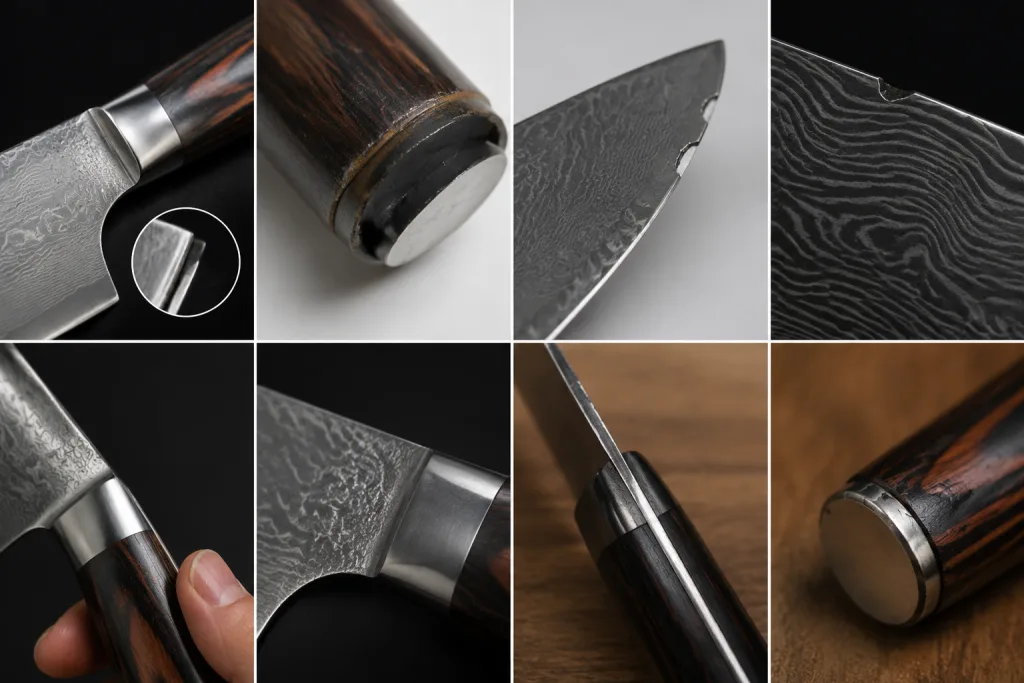
Private Label Pocket Knife Sourcing: MOQ, Pricing Structure, and Landed-Cost Controls
**By Vincent Xi, Editorial Author** https://tangforge.com/authors/vincent-xi/
Private label pocket knife programs often lose margin on incomplete cost models, not only on blade design. Buyers who compare unit FOB prices alone understate true program cost: mold and die amortization, handle and hardware grades, packaging compliance, inspection sampling, duty classification, inland drayage, and inventory risk. This guide organizes MOQ, pricing structure, and landed-cost controls for importers, retailers, and brand owners evaluating OEM/ODM pocket knife production—using China’s manufacturing clusters as market context, not as a substitute for factory-specific quotes.
**Buyer path in this article**
1. Treat production geography as market context only. 2. Decompose MOQ by cost center, not as one number. 3. Map every quote into tooling, unit, packaging, QC, and logistics lines. 4. Convert FOB into first-PO and reorder landed-cost models. 5. Lock BOM, inspection, and packaging rules before supplier comparison. 6. Issue a complete RFQ packet so quotes are comparable.
1) Production geography: market context, not a supplier quote
China is a major volume source in publicly reported knife trade data. In **2024**, China exported **USD 1.66 billion** worth of knives and accounted for **51.5% of global knife exports**, the highest national share worldwide, according to a B2B sourcing overview citing OEC World data (Lee Knives). The same overview reports that total production of knives, scissors, and blades reached **2.9 billion units** in that period, up **8%** year over year, citing IndexBox (**2025**) (Lee Knives).
Within China, Yangjiang, Guangdong is repeatedly described as the dominant knife cluster. The overview states that Yangjiang accounts for approximately **70% of China’s total knife output** and **85% of its knife exports**, and that Yangjiang-made products account for **eight out of every ten knives China exports**. It also reports that the local knife and hardware industry exceeded **55 billion RMB in output value** in **2024**, citing China Daily (**2025**) (Lee Knives).
For private label buyers, that concentration is useful only as supply-chain context: stainless supply, heat treatment, handle fabrication, plating, and export logistics are often co-located in one dense industrial area. Co-location can reduce some transfer friction; it does not replace supplier qualification, process audits, or SKU-level capability checks.
Capacity language in the same guide should be treated as scale range, not a universal quote: it describes manufacturers that may support runs as low as hundreds of private-label pieces in some categories or tens of thousands of budget pocket knives, depending on model complexity and factory loading (Lee Knives). Those figures are industry context only. They are not a guarantee for any one factory, lock type, steel grade, finish stack, or packaging configuration.
2) What MOQ really means on a private label pocket knife program
MOQ is not a single number. On folding pocket knives, suppliers commonly set different floors by cost center. The table below is a **buyer clarification framework**, not observed factory pricing and not a Tangforge offer.
| Cost center | Why a floor may exist | What buyers should clarify in writing | |---|---|---| | Blade blanking / stock removal | Nesting efficiency; steel coil or sheet minimums; heat-treat lot size | Steel grade; blade thickness (mm); blank process (blanking vs stock removal); heat-treat lot size | | Handle scales / inserts | Material yield; color runs; CNC fixture or mold setup | Material (e.g., G10, FRN, aluminum, wood, micarta); color/texture MOQ; shared vs unique cavities | | Hardware & lock components | Screw, pivot, liner, spring, and clip tooling or plating batches | Lock type (liner, frame, lockback, button); finish batch size; shared hardware across SKUs | | Branding | Laser, etching, pad print, or mold-insert changeover | Logo method; depth/contrast; placement tolerance; multi-color print limits | | Packaging | Carton print plates; blister/clamshell tooling; insert cards | Retail vs bulk; barcode/label language; drop-test and carton-marking requirements | | Full program MOQ | Combined setup recovery | Whether MOQ is per SKU, per colorway, per lock/handle platform, or per PO |
**Buyer decision table: MOQ posture vs program risk**
| Buyer situation | MOQ posture to request | Pricing implication | Landed-cost control focus | |---|---|---|---| | First private label SKU, unproven demand | Split MOQ: lower first order + forecasted second release | Higher unit price; lower inventory risk | Sample approval gates; defined AQL plan; air-vs-sea mix for first fill | | Core EDC SKU with stable retail sell-through | Higher consolidated MOQ across colorways | Lower unit price; better amortization | Ocean freight utilization; carton cube; duty classification accuracy | | Multi-channel brand (retail + e-commerce) | Shared blade platform; separate handle/pack MOQs | Tooling shared; packaging variable cost higher | Channel-specific packaging; returns handling; spare-parts policy | | Premium materials / complex lock | Accept higher MOQ or pay setup fees | Steel and machining dominate | Process capability evidence; hardness/edge QC; warranty reserve | | Price-sensitive promotional knife | High volume; simplified BOM | Low unit FOB; thin margin for defects | Incoming inspection; packaging durability; claim-rate tracking |
A practical negotiation method is to separate **tooling recovery** from **production batch efficiency**. If a factory proposes an example floor such as **3,000 units** (illustrative only—verify against the actual quote), ask which driver creates that floor: steel heat-treat lot size, handle color compounding, clip plating, carton printing, or combined setup recovery. Each driver has a different workaround (steel stock sharing, stock colors, shared hardware, generic master cartons with labeled inners).
3) Pricing structure: build a quote map before comparing suppliers
A usable private label pocket knife quote is a cost map, not a single FOB line. Request line items in writing:
1. **NRE / tooling** — blade dies or fixtures, handle molds, clip dies, print plates, packaging molds. 2. **Unit manufacturing** — blade, heat treat, grind/finish, handle, assembly, sharpening, cleaning. 3. **Materials upgrades** — steel grade changes, coatings, pivot bearings, ceramic detents, premium scales. 4. **Branding** — laser logo, custom pivot, serialized marks, color-fill. 5. **Packaging & inserts** — poly bag, gift box, clamshell, manual, UPC, multi-language card. 6. **QC & compliance support** — in-process checks, final inspection against a defined sampling plan, material declarations, test reports if offered for the exact BOM. 7. **Logistics extras** — export cartons, palletization, labeling, booking, local trucking to port.
Example calculation (assumptions only — verify in supplier quote)
The following is an **illustrative calculation**, not a market price and not a Tangforge or factory offer. Units and assumptions must be validated against a current quotation, Incoterms, freight rates, insurance, and destination rules.
- Assumed FOB unit price: **USD 4.80 / piece** (scope: one mid-spec liner-lock EDC SKU; as-of: example model only).
- Assumed order: **5,000 pieces**.
- Assumed one-time tooling/NRE: **USD 1,800** amortized over first PO only.
- Tooling per unit on first PO: 1,800 ÷ 5,000 = **USD 0.36 / piece**.
- Assumed packaging upgrade: **USD 0.45 / piece**.
- Assumed ocean freight + origin charges allocated: **USD 0.55 / piece**.
- Assumed duty/tax placeholder: **USD 0.70 / piece** (destination- and HTS-dependent; verify with a licensed customs broker).
- Assumed destination inland + warehouse inbound: **USD 0.25 / piece**.
- **Example landed unit cost (first PO)**: 4.80 + 0.36 + 0.45 + 0.55 + 0.70 + 0.25 = **USD 7.11 / piece**.
On a reorder without new tooling, the same assumptions yield **USD 6.75 / piece**. The structural point: amortization and destination charges can move economics more than a small FOB discount.
Custom knife manufacturing process maps help explain price drivers without converting them into a private-label price list. One manufacturer-oriented overview separates design; steel preparation/forging or stock removal; heat treatment and tempering; grinding/finishing/assembly; and quality control/testing as distinct stages, and notes OEM/ODM plus small-batch options among professional services (BILIKNIFE). Even when a private label program is higher volume than one-off custom work, those process gates still determine scrap risk, rework cost, and which quote lines must be itemized.
4) Landed-cost controls that change the P&L
Landed cost is the sum of product, commercial, and risk costs through the point the knife is sellable in your warehouse or 3PL. Controls that matter for pocket knives:
Spec control before RFQ
Lock a controlled BOM before supplier comparison. At minimum specify:
- overall length, closed length, and blade length (mm)
- blade thickness (mm) and grind type
- steel grade and hardness target/range (HRC)
- lock type and engagement criteria
- handle material and liner construction
- pivot system (washers vs bearings), clip style, finish stack
- packaging configuration and languages
Unlocked specs produce non-comparable quotes.
Incoterms and quote currency
Compare EXW, FOB, and CIF/CFR only after converting every option to the same landed basis. Currency, payment terms (deposit/balance), validity window, and what is included under each Incoterm should be explicit in the quote.
Packaging cube and damage rate
Pocket knives are dense, but packaging often is not. Oversized retail clamshells reduce container utilization. Damage and returns are landed-cost components; define drop-test expectations, carton outer dimensions/weight, pieces per carton, and marking requirements in the PO—not after arrival.
Inspection gates
Define the sampling plan in the purchase documents (for example, an AQL plan by critical/major/minor defect classes if that is your chosen method). Also define acceptance criteria for pivot smoothness, lock engagement, blade centering, hardness sampling method, logo placement tolerance, edge condition, and rust/finish criteria. A buyer-defined inspection plan is not the same thing as a supplier certification claim.
Compliance and channel rules
Destination restrictions on assisted-opening mechanisms, blade length, marketing claims, and retailer documentation vary by market. Do not assume a factory’s domestic practice equals your market requirement. If a supplier names a standard, distinguish that standard’s requirement from the supplier’s internal practice, and do not treat marketing language as certification without a current document scoped to the exact product and production period.
Ethical and material-trace questions where brand risk is material
Ethical sourcing discussions for custom knives commonly emphasize responsible material choices (including steel and handle materials) and supplier selection discipline (Shokunin USA). For private label programs, convert that into RFQ evidence requests—material declarations, restricted-substance commitments, and labor-policy documentation—rather than slogan-level assurances.
5) Materials and process choices that move MOQ and unit price
Pocket knife cost is sensitive to a short list of decisions. Treat the points below as buyer evaluation prompts, not universal factory rules:
- **Steel platform**: common stainless utility grades vs higher-alloy edge-retention steels change blank cost, grind time, and heat-treat control requirements.
- **Lock and mechanism**: simpler lockback or liner-lock constructions are often easier to scale than complex button or multi-mode mechanisms; request process capability evidence rather than assuming scalability.
- **Handle system**: molded FRN can favor higher MOQ with lower unit cost; G10/micarta CNC scales can reverse that pattern through fixture time and material yield.
- **Finish stack**: stonewash, satin, DLC/PVD, or two-tone finishes add process steps and reject risk.
- **Hardware plating**: clip and screw finish batches can create hidden colorway MOQs.
- **Logo method**: laser marking is often more flexible at moderate volumes than multi-color print or mold-cavity branding; confirm changeover cost and acceptance criteria.
Process literacy helps buyers challenge incomplete answers. Manufacturing overviews commonly sequence heat treatment/tempering before final grind/finish and assembly, then QC (BILIKNIFE). If a quote is unusually low relative to the BOM, ask which of those steps are in-house, outsourced, sampled, or omitted—and request written process ownership for heat treat, grind, assembly, and final inspection.
6) Practical RFQ checklist for private label pocket knives
Use this checklist as the minimum packet before comparing factories:
1. **Company and program context**: target channel, annual volume range, first PO quantity, reorder cadence. 2. **Technical pack**: 2D drawings or controlled reference sample; tolerances for blade centering, lockup, pivot, clip position, and closed/open dimensions (mm). 3. **BOM table**: steel, hardness target/range (HRC), handle, liners, screws, pivot, washers/bearings, clip, stop pin, finish stack. 4. **Variants**: colorways, partially shared components, and whether MOQ is per variant or total. 5. **Branding kit**: logo vector, size, method, placement, depth/contrast acceptance criteria. 6. **Packaging kit**: retail vs bulk, languages, barcodes, warnings, insert content ownership. 7. **QC plan**: in-process checks, final sampling plan, required photos/videos, third-party inspection rights. 8. **Commercial terms**: Incoterms, currency, payment, lead time (sample / mass / reorder), validity, capacity reservation. 9. **Tooling ownership**: who pays, who owns molds/dies, storage, alteration fees, transfer conditions. 10. **Landed-cost inputs**: carton outer dimensions and weight, pieces per carton, palletization, supplier-suggested HS code (still verify with your broker), known restricted markets. 11. **Documentation**: material declarations, plating/coating process notes, any test reports actually available for the exact BOM and production period. 12. **Change control**: engineering change request process and requalification triggers after steel, heat treat, lock, or handle changes. 13. **After-sales mechanics**: spare clip/screw policy, defect claim window, evidence required for claims. 14. **Ethical/compliance questionnaire**: labor, restricted substances, and material origin questions aligned to brand policy (Shokunin USA). 15. **Sample ladder**: fit/function sample → pre-production sample → bulk golden sample retention.
Methodology note: how this article’s evidence was derived
This article synthesizes publicly described industry scale and process context from B2B sourcing and manufacturing explainers, then maps those facts onto a buyer-side cost framework for private label pocket knives. Export value, production volume, and Yangjiang concentration figures are attributed to the Lee Knives sourcing guide and the secondary sources it cites (OEC World; IndexBox, 2025; China Daily, 2025) (Lee Knives). Process-stage language for design through QC and OEM/ODM service categories is drawn from a custom-knife manufacturing overview (BILIKNIFE). Ethical-sourcing considerations for materials and supplier selection are drawn from a custom-knife responsibility article (Shokunin USA). Pricing arithmetic in this piece is labeled as an example calculation with explicit assumptions, not observed transaction data. MOQ and RFQ tables are buyer frameworks for quote comparison, not factory price lists.
Limitations and what buyers should verify
- **No universal MOQ or price list** is implied. Factory floors vary by steel, lock complexity, finish, packaging, and seasonal capacity.
- **Macro export and production statistics** describe national/category scale in **2024** contexts reported by secondary sources; they do not predict a single supplier’s lead time, defect rate, hardness capability, or unit price.
- **Example landed-cost math** must be replaced with supplier quotes, freight forwarder rates, insurance, duty rulings, and destination fees.
- **Standards and certifications** are not claimed here for any manufacturer. If a supplier names a standard, request the current certificate or test report scoped to the exact product and production period.
- **Legal carry/import rules** are jurisdiction-specific and outside the scope of a general sourcing article; confirm mechanism and blade-length constraints with qualified counsel and customs brokers.
- **Author basis**: this article is editorial synthesis for Tangforge’s publication standards; it does not present personal factory audits, client results, production tests, or first-person operational experience.
Closing buyer takeaway
A private label pocket knife program is controllable when MOQ is decomposed, pricing is itemized, and landed cost is managed as a system. Use industry scale data only for market context—China’s **USD 1.66 billion** knife exports and **51.5%** global export share in **2024**, **2.9 billion** units of knives/scissors/blades production with an **8%** year-over-year increase, and Yangjiang’s reported concentration (**~70%** of national output / **85%** of exports; industry output above **55 billion RMB** in **2024**) (Lee Knives). Then force every supplier conversation back to BOM clarity, tooling ownership, inspection gates, carton economics, and reorder assumptions. Buyers who control those variables usually control margin more effectively than buyers who chase the lowest FOB line alone.
**Editorial note:** Written by Vincent Xi, Editorial Author for Tangforge (author profile). Claims in this article are limited to attributed public source context and clearly labeled example calculations; no first-person operational experience is asserted.