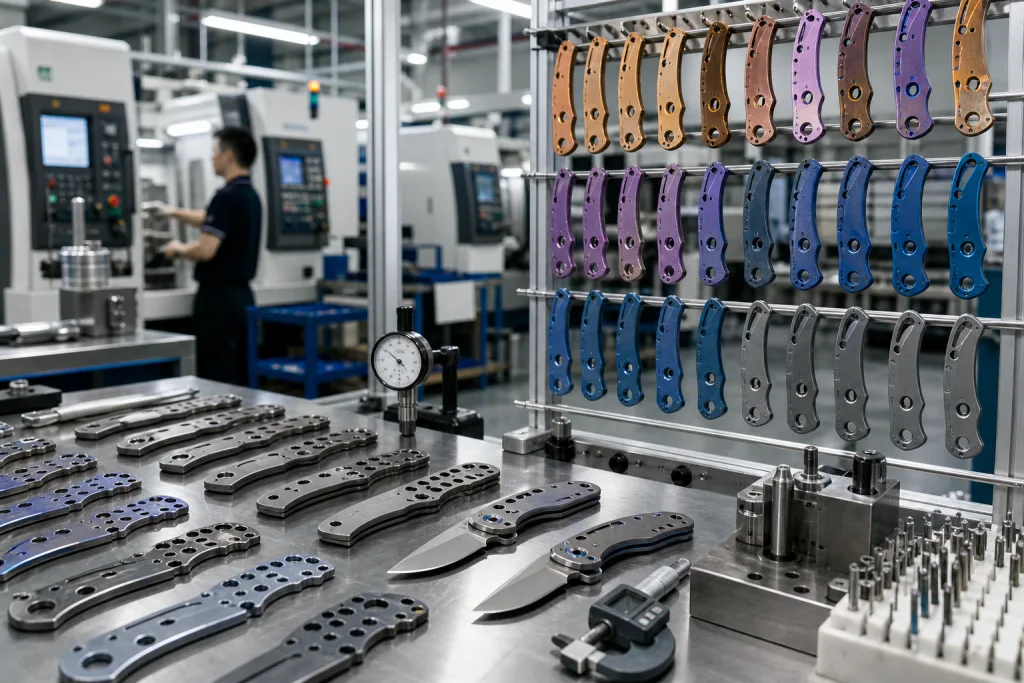
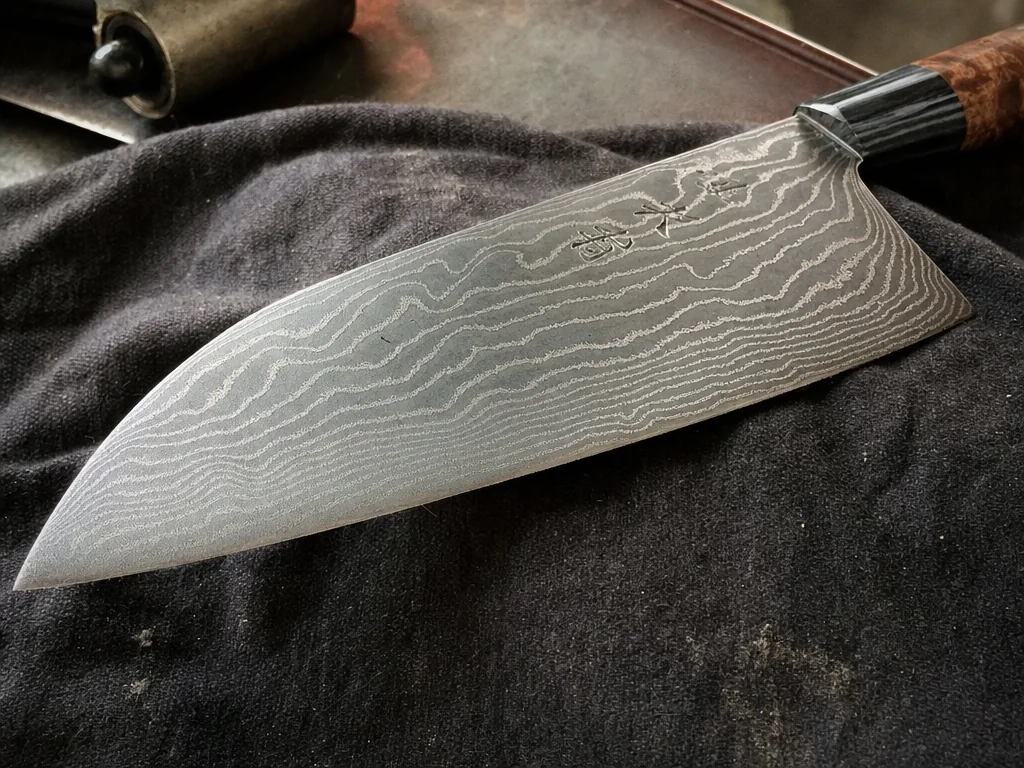
Knife blister packaging looks simple until the first retail shipment leaves the factory. The pack must lock the blade in place, survive carton drop handling, show the edge profile cleanly, and carry Amazon or EU labels without breaking the buyer's landed-cost target.
In Yangjiang, China, we have seen this go sideways when buyers treat a blister card knife pack as a printing order. Wrong question. We run it like a small tooling job: cavity fit, 6-8 mm seal width, hang-hole position, and 350 gsm card stiffness all affect the result, especially with a 90-120 mm knife, 56-60 HRC blade, and pegboard display. QC pulled one sample last month where the card bowed 3 mm after sealing. The knife shifted. Returns start fast when the seal line is weak, sometimes before the first reorder is discussed.
Blister or Clamshell?
Buyers throw these two names around, but the pack structure sets cost, tooling, and failure risk. A blister card knife pack is usually a thermoformed PET or PVC shell heat-sealed to a printed card. A clamshell knife pack is a two-part clear pack that closes around the knife, then gets sealed, folded, or locked. Same retail hook. Different headache. On our packing table, a 0.5 mm PET blister that looks fine in the sample room can warp after sealing if the brass die runs 8-10°C too hot.
For small folding knives and pocket knives, blister card is usually the cheapest route because the card carries artwork, barcode, and hanging load without much plastic. For longer chef knives, hunting knives, or tactical knives with a heavy handle, a full clamshell or tray-plus-sleeve holds the point better and reduces blade shift in carton drop tests. In Yangjiang, China, 7 out of 10 knife factories we meet can thermoform a shell; fewer can keep the pack flat when the insert is 1-2 mm oversized or the handle contour presses against the cavity. We have seen buyers ask for thinner blister to save USD 0.03 per set, then lose the saving when QC pulled 37 bent cards from the first 500 pcs.
Do not choose by appearance alone. That is the wrong question to ask. Choose by product geometry, retail channel, and the beating the pack will take from our China factory to the final shelf. Thin pack photographs well. If the knife rattles inside the cavity, the first return report will tell the truth faster than the sample photo. We run a quick shake test before sealing the golden sample; if the tip clicks against the PET, the pack is not ready.
Tooling Is Where Projects Slip
Packaging tooling is where knife projects lose days. The blister mold, card die-cut, seal fixture, and barcode placement all sit on one drawing, even when the buyer only sees a clear shell on the shelf. Move the blade length by 5 mm or shift the pocket clip by 3 mm, and we often need to re-cut the pocket on the aluminum mold. QC pulled one sample last month where the tip sat 2 mm off the formed lock. It would fail in transit. Use a dimensioned drawing, not a retail photo grabbed from Amazon.
For a simple single-cavity blister, tooling is often USD 800-1,500. If the knife needs a deeper retention pocket, thumb cutout, or formed tip lock, USD 1,800-3,500 is more realistic. Printed card tooling costs less, but the dieline still needs correct bleed and a hang hole that matches the retailer's peg, usually 6 mm or 8 mm. We run this before mold cutting on the sample table with a steel rule die printout. A supplier in Zhejiang or Yangjiang that skips the dieline talk is planning to fix problems with hand trimming. The math doesn't work.
- Confirm knife overall length, blade length, handle width, and point position from the approved spec sheet.
- Lock the artwork before the mold is cut, including barcode size and any PO typo the buyer flagged.
- Ask for a pre-production pack, not only a blade sample from the grinding line.
- Require line testing at full speed, because 20 good samples do not prove a 500-piece run.
If a retail knife packaging project has to stay on schedule, freeze the packaging spec first and treat the knife as the controlled variable. We ship cleaner when the pack is locked before the tool room starts cutting.
Cost Drivers You Should Model
For retail knife packs, we cost the PET first: gram weight, trim waste, and whether the blister sits at 0.35 mm or 0.6 mm. Then we price the printed card, tooling payback, and the seconds our packing line spends closing each pack. Blade FOB is the wrong question to ask. One buyer approved a USD 1.42 utility knife, then the pack added a 0.5 mm PET blister, 350 gsm card, sealing tape, warning label, and a 5-ply inner carton. QC pulled the first packed sample and the blade tip was pressing into the corner. Cheap disappeared fast.
| Item | Typical Range | What Changes It |
|---|---|---|
| Blister tooling | USD 800-2,500 | Cavity depth, knife retention ribs, cavity count on the mold |
| Printed card | USD 0.08-0.35 | Paper gsm, lamination type, spot UV area, CMYK plus Pantone setup |
| PET shell | USD 0.06-0.28 | Thickness 0.35-0.6 mm, trim size, sheet scrap after forming |
| Assembly labor | USD 0.03-0.12 | Knife insert, hang tab fitting, heat-seal time, label position check |
| Master carton pack | USD 0.04-0.18 | Drop-test spec, carton burst strength, partition count |
At a 3,000 pcs MOQ, a solid Chinese supplier should lock the pack cost after the second sample round, after QC pulls the sample and confirms the knife does not shake loose in the cavity. At 10,000 pcs, unit cost drops because the USD 800-2,500 tooling is spread across more pieces. Simple math. Still, a 35-45 day project with 180,000 units/month factory capacity needs a packaging line trial before you freeze the PO. We run it with a stopwatch on the packing table. If the operator needs 18 seconds vs 12 seconds to align the blade, fold the card, and seal the shell, your landed cost moves.
If you need gift-grade print, matte lamination, or Amazon prep, budget another 2-8 cents per unit. On 50,000 units, that is USD 1,000-4,000. We have seen this go sideways when the PO says only "retail pack" and the buyer flags FNSKU placement after mass production starts. One label shifted 6 mm toward the hang hole and failed the buyer's inbound check.
Compliance Comes Before Artwork
Retail and Amazon buyers often start with graphics. Wrong first question. Before artwork, the pack needs a UPC or FNSKU that scans clean on a Datalogic gun, the product name copied exactly from the PO, and a label layout that still reads after 24 inner cartons pass receiving. One typo in "Santoku" on a PO can hold a shipment while the warehouse asks which SKU is real. For US orders, we leave space for suffocation warnings where required, carton marks in 8 mm or larger text, and traceability codes our packing team can print without covering the hang tab.
For the EU, ask your supplier to use REACH-compliant inks, coatings, and adhesives. If you market sustainability, verify FSC paper and tighten the claim language; one buyer flagged a loose "eco" line on a PO two days before shipment. ISO 9001 and BSCI are not packaging standards by themselves, but they show whether the factory controls paperwork and basic social compliance. In knife packaging in China, this matters because a sharp blade line can still sit beside a packing bench with mixed inserts and two versions of the same color card. We've seen this go sideways.
Use AQL 2.5 for cosmetic inspection on cards and shells, then tighten the check on functional points: barcode scan, seal strength, and hang-hole tearing with a 500 g pull. QC pulled the sample for this last month because the blister edge sealed at 3 mm on one side and 6 mm on the other. Small gap, big problem. If you sell kitchen knives, the handle or insert may also need LFGB or food-contact review, depending on the materials and claim set. Do not assume the artwork vendor knows this. Most do not.
A practical test: pack 10 units, ship them through a 1.2 m drop sequence, then open them and inspect for shell cracking and print rub around the corners. We run this before mass packing with the same master carton and tape width used on the line. Finding cracked clamshell corners after 3,000 sets are sealed is where the math stops working.
Design For Shelf And Parcel Abuse
Retail knife packaging has two jobs that pull against each other: show enough steel for the buyer to pick it up, and keep the knife locked after 6 hands, 2 warehouse scans, and a rough carton drop. We run the first sample on the packing table before artwork sign-off, with the same E-flute inner carton the order will use. If the blade tip touches the PET after a 1.2 m drop test, QC sends it back. No debate. Build the pack around clear viewing, tight retention, and a molded plastic stop at the point.
For hanging display, use a reinforced hole and keep at least 12 mm of paperboard above it, or the card tears when the peg carries 8-10 packs. Seen it happen on a 72 pcs trial run. For Amazon FBA, put the barcode on a flat zone with clean white space around it, and skip glossy varnish that reflects into the handheld scanner. A 40 x 25 mm barcode clearance zone is a practical minimum. We had one buyer flag this after the PO artwork looked fine on screen but failed at the warehouse scan desk; the file was approved, but the scanner did not care.
- Keep the blade fixed so it cannot drift more than 1 mm in transit.
- Use 0.45-0.6 mm PET when the knife is long or the point is exposed.
- Choose matte or soft-touch card if fingerprints are a sales problem.
- Keep the seal width at 4-6 mm for stable heat sealing.
- Do not waste graphics area where the clerk needs to cut open the pack.
If the knife is a premium pocket model, a clamshell knife pack gives stronger theft resistance and a cleaner shelf face, especially when the grinding line leaves a polished bevel the buyer wants visible. For a value kitchen knife, a blister card usually runs faster on the heat-seal line and ships with less plastic weight; on a 5,000 pcs order, that freight math matters. The wrong question is “which pack looks nicer.” Ask which pack survives Yangjiang, China to the customer with fewer crushed corners, fewer loose blades, and fewer returns.
How To Qualify The Supplier
A real packaging supplier should send three items before mass production: the dieline showing knife position and hang-hole size, one physical sealed sample, and the pack-out method with carton marks shown exactly as they will ship. Renderings fail retail QC. We have seen this go sideways when the blade is finished in one workshop and blister sealing is sent to another workshop with no blade-retention check. In Yangjiang, China, a knife factory with 240 employees and 180,000 units per month can still lose the retail order if QC pulls a sample and the knife tip shifts 3 mm inside the shell. Same result if the EAN label covers the hang hole.
Ask for a sample plan covering the blade, printed card, blister shell, inner carton, and master carton, then ask who signs off each step. Names matter. A serious supplier will state 100% line checks for barcode and seal, plus carton inspection at AQL 2.5. We run the first 50 packs through the sealing machine, drop one inner carton from 760 mm, and check whether the card bends or the blade cuts the blister. Custom packaging with private label and laser engraving in one workflow can save 5 to 7 days. The math does not work if nobody owns the approved artwork file.
- Check whether the supplier can quote FOB and DDP separately, with blister tooling, card printing, and export carton cost split out.
- Confirm whether the line can handle retail hanging packs and Amazon prep labels without changing the approved carton size.
- Ask for a packing trial with at least 50 units, then review seal width, barcode scan rate, and blade movement after shaking.
- Verify that the final pack matches the approved artwork and barcode file; one PO typo on a SKU can block a full pallet at the buyer warehouse.
To cut risk, choose a supplier that treats knife packaging as production control. Not decoration. The grinding line, laser room, packing bench, and QC desk should work from the same spec sheet before blades move into cartons.
Frequently asked questions
Usually yes, but not always by much. A basic knife blister packaging format can come in 8-15% lower than a full clamshell if the product is small and the card does most of the work. Once you add a deeper cavity, stronger retention, extra print, or a custom hang feature, the gap narrows. For a 90-120 mm pocket knife, I would often expect USD 0.18-0.42 per retail pack in China, depending on PET thickness and card finish. For a longer kitchen knife, the clamshell can be the safer choice because it reduces blade drift and customer damage claims.
For custom retail knife packaging, a practical MOQ is 3,000 pcs per SKU and color set. If you need a new blister mold, a custom printed card, and Amazon labeling, some suppliers will ask for 5,000 pcs to make the math work. At 10,000 pcs, you usually get better pricing because the tooling amortization drops fast. In Yangjiang, China, factories that already run 180,000 units per month can often support mixed SKUs, but do not assume the pack can be swapped freely. Each blade size and handle shape can change the cavity.
Amazon usually cares less about the blade spec than about whether the unit is scannable, sealed correctly, and safe to handle. The pack should carry a valid UPC or FNSKU, the barcode should scan cleanly, and any required suffocation warning should be visible on the outer package. If you use a polybag, the warning and bag thickness rules matter. For many knife launches, I also recommend a 1.2 m drop test on the final pack. If the blister opens, the seller problem is packaging, not steel.
Yes, and that is usually the point. A blister card knife pack gives you a large print panel for product name, steel grade, edge type, handle material, and country-of-origin marking. You can also add matte lamination, spot UV, or a metallic accent if the market supports it. Just keep the barcode area low-gloss and flat. If your design uses more than 4 colors, check the print cost carefully; the difference between a simple 2-color card and a premium 4-color card can be 3-8 cents per unit, which matters at 20,000 pieces.
Send the knife drawing with blade length, overall length, handle width, thickness, point position, and any clip or lock details. Add the target pack size, card size, print artwork in AI or PDF, barcode file, and target channel such as retail, Amazon, or DDP warehouse. If you already know your target price, include it. A good supplier in China or Yangjiang can quote faster when the blade geometry and packaging window are fixed. If the sample knife is available, send that too, because a 2 mm change in handle contour can force a new blister mold.
Get a retail-ready pack quote
Send your knife drawing, target MOQ, and channel spec, and we will price the blister tooling, pack materials, and Amazon-ready packing path.
Request a Quote