For premium blades, buyers choose 154CM and CPM-154 because the steel gives a practical mix: corrosion resistance, edge life, and predictable machining cost. On our grinding line, that matters on a 10,000-piece run. A stable steel is easier to ship than a photo-friendly show knife that eats 8% of your margin after rework. We run the same vitrified wheels, digital calipers, and edge-thickness gauges every shift; when the blade comes off at 0.35 mm behind the edge instead of wandering to 0.50 mm, packing does not stop.
In Yangjiang, most Europe and North America buyers ask for this steel when they need a knife that feels premium, holds an edge in normal kitchen use, and avoids warranty noise. The steel name alone is the wrong question. QC pulled the sample on the Rockwell tester, the buyer flagged a PO typo on the hardness band, and the finished blade still has to land in the 58-61 HRC window you ordered. If chemistry, heat treatment, grind geometry, and inspection drift, you ship a shiny problem. We have seen that go sideways: 12 days vs 18 days after a heat treat chart missed the target by 2 points.
Why buyers choose these steels
For premium blades, buyers choose 154CM and CPM-154 because they behave on the grinding line. We run them every week, and the difference shows up fast: belt wear stays steady, stain resistance holds, and QC can repeat the edge result under AQL 2.5 final inspection. These are not brochure steels. For Europe and North America, that matters more than chasing the biggest hardness claim. We have seen samples at 61 HRC pass the first meeting, then come back with micro-chips after the buyer's distributor tested 20 pcs.
154CM is the older conventional melt. CPM-154 uses powder metallurgy from the same chemistry family, so the carbide distribution is finer and more even under a 200x shop microscope. That makes CPM-154 easier to dial in when we run 3,000 or 10,000 blades and the brand wants every piece to sharpen with the same feel. A 12-day delay on the replacement batch costs more than a 2-point gain in catalog language. The math does not work if the steel saves the sales sheet but drives the claim rate.
You still need to tell us the job of the knife. A slim EDC folder with a 2.8 mm blade does not want the same edge angle as a chef knife at 1.8 mm behind the tip. In Yangjiang, we ask whether the target is clean push-cut performance or better chip resistance, then we set hardness, grind, and belt finish around that answer. The steel name alone is the wrong question to ask. Last month QC pulled a sample where the PO said CPM-154, but the drawing still showed the old 154CM heat-treat note.
154CM versus CPM-154 in practice
On paper, 154CM and CPM-154 look close enough that 7 of 10 buyers in our RFQ inbox tick them as interchangeable. On the grinding line, no. CPM-154 is powder metallurgy steel, so the carbide distribution is cleaner; when we run a 0.35 mm edge before sharpening on a #400 belt, it keeps the line better and throws fewer surprise chips than standard 154CM. That is the selling point we can defend after QC checks, not catalog wording.
For a 154cm cpm154 knife steel manufacturer in China, ask what the mill cert says, not just what is printed on the drawing. We have seen buyers specify CPM-154, then receive blades from another stainless because the supplier wrote “similar performance” on the PI. The buyer flagged it during salt-spray prep, QC pulled the sample, and the math did not work after rework and air freight. For premium brands, the steel callout needs material traceability and lot numbers, with the heat number checked against the incoming sheet tag before blanking.
- 154CM: solid value for premium lines and familiar to most heat-treat shops; we can usually buy sheet or pre-cut blanks faster when MOQ is tight, often 300 pieces instead of a full mill lot.
- CPM-154: finer carbide structure and steadier results on thin edges; QC pulled fewer edge-chip samples when we held the same bevel spec on the grinding line.
- Both: good stain resistance, but not “maintenance free”; moisture in a retail sheath or salt left on a fishing knife still brings buyer complaints.
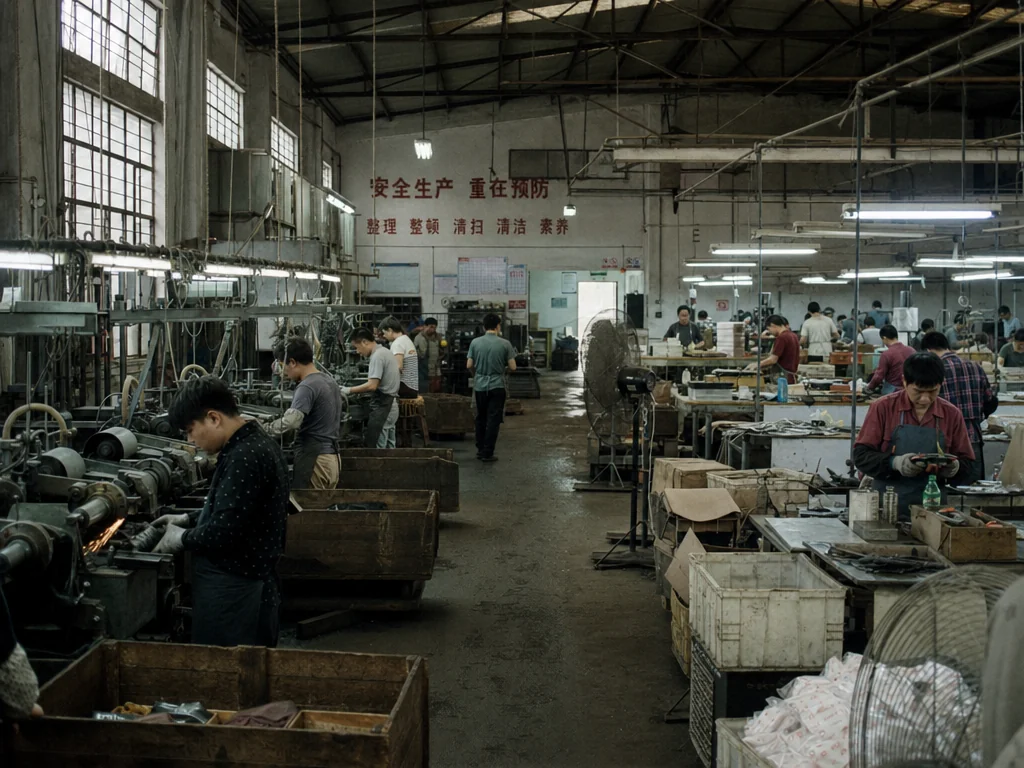
In Yangjiang and across China, a careful OEM factory separates stock, tracks heat numbers, and runs a 100% visual check before grinding. We mark racks by steel grade and heat lot with red hang tags because one mixed bundle can turn into 600 wrong blades. This is the wrong place to trust a box mover.
Heat treatment decides the real performance
Most complaints on 154CM and CPM-154 blades come from heat treat, not the steel grade. On our furnace line, we run a balanced premium knife at 58-60 HRC; for a thin slicer where the buyer wants more bite, 60-61 HRC is still workable. Past that, the grind has to be clean. If the edge shoulder is too heavy or the belt mark is left at the tip, the blade chips on the first carton-cut test. Too soft is no better. The first cut tells you. Last week QC pulled 12 pieces off the grinding line, and 3 showed a weak edge before polishing.
A proper OEM heat treat spec needs the austenitizing range, cryo treatment if used, temper cycle count, and the final hardness window. We usually write it as 59-60 HRC with ±1 HRC tolerance, blade straightness within 0.3 mm, and edge burr control checked under a 20x loupe. On one batch last month, QC pulled the sample and found a PO note with one missing temper cycle; that small typo changed the result. If a supplier cannot explain the furnace recipe in plain words, they are not selling a premium blade. This is the wrong place to save time.
Importers should ask for hardness testing and batch-level retention records. We also check warpage after tempering, because a blade can pass hardness and still twist 1.0 mm, which makes the handle line fight every piece. The math does not work for thin kitchen and chef knives. On a 210 mm chef blade, that alignment miss is enough for the buyer to flag it before packing and stop the carton. We run the Rockwell tester every 2 hours for a reason.
What to specify in your RFQ
For serious 154CM and CPM-154 sourcing, the RFQ has to be tight enough that two mills quote the same blade. “Premium stainless blade” tells us nothing. Put the steel grade, hardness band, blade thickness, surface finish, test method, packaging, and inspection plan on the sheet. The grinding line will not guess. We once stopped a PO because the line item said “CPM154” and the attachment said “154CM”; purchasing caught it before the mill cert check. Same job, different steel, different cost.
Use a simple sourcing sheet with the points below:
| Item | Recommended spec | Why it matters |
|---|---|---|
| Steel grade | 154CM or CPM-154 with mill cert | Stops alloy swaps at receiving |
| Hardness | 58-61 HRC, ±1 HRC | Keeps edge life and chipping under control |
| Blade thickness | 2.0-3.5 mm for folders; 1.8-2.5 mm for kitchen blades | Changes cutting feel and heat-treat risk |
| Inspection | AQL 2.5 major, AQL 4.0 minor | Sets the reject line before shipment |
| Packaging | Individual polybag, insert card, barcode/FNSKU if required | Keeps retail and warehouse receiving clean |
When buying from a 154cm cpm154 knife steel manufacturer, ask for samples cut from the same batch as production, not random showroom pieces. Same lot. Same heat treat. QC pulled the sample from the heat-treated lot, checked it on the Rockwell tester, and that avoided a 12-day delay we have seen turn into 18 days when the sample blade and the mass run blade do not match. If a supplier says “we can make it close enough,” the math does not work.
Edge retention versus corrosion resistance
Premium buyers usually ask for two numbers on the same call: edge life and stain resistance. 154CM and CPM-154 sit in the middle where the numbers make sense. On the grinding line, QC pulled CPM-154 samples from a clean 60-61 HRC heat lot, and they outlast basic 420 series by a wide margin. After a 24-hour humidity cabinet run, they still held off red rust far better than plain carbon steel. We run them on pocket knives and light outdoor blades. If someone wants dive-knife corrosion and slicer-level edge life in the same spec, that is the wrong question to ask. The math does not work.
Do not oversell them. If the end user cuts double-wall cartons for 6 hours a day, or leaves the knife in a salty truck box near the coast, both edge retention and corrosion resistance fall off fast. Surface finish matters. A fine stonewash or bead blast hides pocket wear, but it does not change the steel, and QC pulled bead-blasted samples with tiny brown dots around the thumb stud after 48 hours in a damp carton. One buyer flagged it as a steel issue; it was the carton and the packing oil. For food-contact items, confirm LFGB, FDA, or the local market requirement, plus any REACH-related material declaration for handles, coatings, or packaging inks. We have seen that go sideways on a 300-piece pilot.
We tell Europe buyers the blade steel is only one part of the corrosion story. Handle material and assembly tolerance matter; a 0.15 mm gap beside a liner can hold moisture long enough to stain the tang. Storage matters too. A knife shipped in humid weather from China to a Rotterdam warehouse can show spotting if oiling and inner packing are weak. We saw one PO where the buyer typed "dry bag" instead of VCI bag, and that cost us a week at the packing table. For premium programs, specify anti-rust oil, VCI paper, or desiccant when the route or season calls for it.
Pricing, MOQ, and lead time realities
Buyers often ask what a 154CM or CPM-154 knife steel product should cost. Wrong first question. Blade size, grind, finish, and handle set move the quote faster than the steel name. On our grinding line, a 95 mm blade with a 2.8 mm spine, swedge grind, and stonewash finish eats more belt time than a plain stamped blank. For a premium folding knife blade set made in Yangjiang, the steel upgrade alone might add USD 1.20-4.50 per piece over a basic stainless blade. On a finished knife, the price climbs again after CNC fitting, vacuum heat treat, Rockwell check, and final QC.
Typical China OEM/ODM numbers are plain enough when the drawing is locked. We usually run 500 pcs per SKU for a simple design and 1,000 pcs when the buyer asks for custom color boxes, laser marking, or two blade finishes with separate packing labels. Lead time is usually 30-45 days after sample approval and deposit, then another 7-15 days if packaging is custom printed or SGS-style inspection must happen before shipment. QC pulled the sample on the hardness tester before release; one buyer pushed for a 200-piece trial and 14-day delivery, and the math did not work. Our own Yangjiang factory runs about 240 employees and ships hundreds of thousands of units per month across knife categories, so the pinch point is usually the schedule board, heat-treat slot, or packaging proof, not raw capacity.
If you want DDP, confirm who pays duty, VAT, and local compliance labeling before we print the PI. If you want FOB, make the quote state whether steel certs, packaging inserts, and carton marks are included. Small line, big problem. We've seen this go sideways when a PO typo changes a carton mark from “CPM-154” to “CPM154” or leaves out the insert art file after the color box proof was approved. Ambiguity at quote stage gets expensive later.
How to audit a supplier
At an on-site audit, or on a video call with the QC desk in view, do not ask if the factory can grind one clean blade. Wrong question. Ask whether they can hold the same 154CM or CPM-154 blade across 500 pcs without mixed heat numbers, hardness drift, or warped blanks getting pushed under the bench after tempering. We run this check from incoming steel tags to final packing: heat treat records, Rockwell readings, warpage notes, and AQL 2.5 inspection sheets. On the grinding line, a 0.01 mm feeler gauge and a batch card tell you more than a polished showroom.
Ask these questions directly:
- Do you keep material separated by heat number and production lot, with bin labels at each transfer point?
- What is your hardness test frequency per batch, and who signs off the Rockwell reading?
- Do you record warpage after tempering and before final assembly?
- Can you show AQL 2.5 records for cosmetic and functional checks?
- Do you have ISO 9001 procedures, even if your customer does not request a formal certificate?
In Yangjiang and across China, stronger factories answer with records, not wall posters. They should show incoming material photos, grinding tolerance sheets with mm limits, hardness logs by batch, and carton packing checks. QC pulled one CPM-154 sample for us last year because the blade sat 0.4 mm off the jig after tempering; that note mattered more than the showroom talk. The buyer flagged a typo on the PO, and the same plant still caught it at inbound because the heat number on the tag did not match the carton. If a supplier cannot produce the paperwork in 10 minutes, we might still use them for commodity knives, but the math does not work for premium branding. Your brand rides on the factory’s daily discipline, not the steel brochure.
Frequently asked questions
Not automatically. CPM-154 usually gives finer carbide structure and more consistent performance, especially in thin edges and larger production runs. 154CM is still a strong choice if you want a proven stainless steel at a slightly easier sourcing price. For premium folders, both are commonly specified around 58-60 HRC. The real difference shows up in consistency, not just headline sharpness. If your supplier in China cannot show mill certs and batch hardness records, the grade name matters less than their process control.
A practical target is 58-60 HRC for balanced use, or 60-61 HRC if the blade geometry is supported by a robust grind and the end user expects more slicing performance. For thin kitchen knives or ultra-light folders, staying near 59 HRC often reduces chipping risk. Ask your factory for a tolerance band, such as ±1 HRC, and require batch testing. In Yangjiang, a serious OEM line will document this per lot rather than guessing after production.
For OEM work, a realistic MOQ is often 500 pcs per SKU for a simple knife and 1,000 pcs when you need custom packaging, laser marking, or multiple finishes. If the design includes complex machining or premium handle materials, the MOQ may rise. For imported premium brands, that is normal. A factory in China can usually scale higher quickly, but the setup cost still needs to be amortized across the first run.
Request the mill test certificate, lot traceability, and incoming inspection records. For premium sourcing, you should also ask for random hardness checks, spark comparison is not enough, and if necessary independent lab verification of composition. A factory that handles 154cm cpm154 knife steel sourcing correctly will keep heat numbers separated and match production samples to the approved batch. For Europe and North America, this level of traceability is worth the extra documentation.
Use a clear AQL plan, commonly AQL 2.5 for major defects and AQL 4.0 for minor defects. Include blade sharpness, edge finish, straightness, lockup or fit checks for folders, hardness, coating appearance, and packaging accuracy. If you ship to Amazon or retail distribution, add barcode and carton label checks. For premium products, one bent blade or one wrong insert can cost more than the entire inspection fee, so define the checks before production starts.
Request a steel spec review
Send your drawing, target HRC, and expected MOQ. We will tell you whether 154CM or CPM-154 fits your premium knife program and where the hidden risks are.
Request a Quote