440C gets priced wrong in value lines. Some buyers wear it like a premium badge. Others price it like 3Cr or 420. Both miss the mark. For 440C stainless knife sourcing, the real check is simple: can the steel grade, heat treatment, and blade thickness hit the retail target without rust spots, weak edges, or a tip bent in the blister pack? We have pulled a sample on the bench at 56 HRC after the PO called for 58-60 HRC. The carton looked clean. The edge died after two tomato cuts.
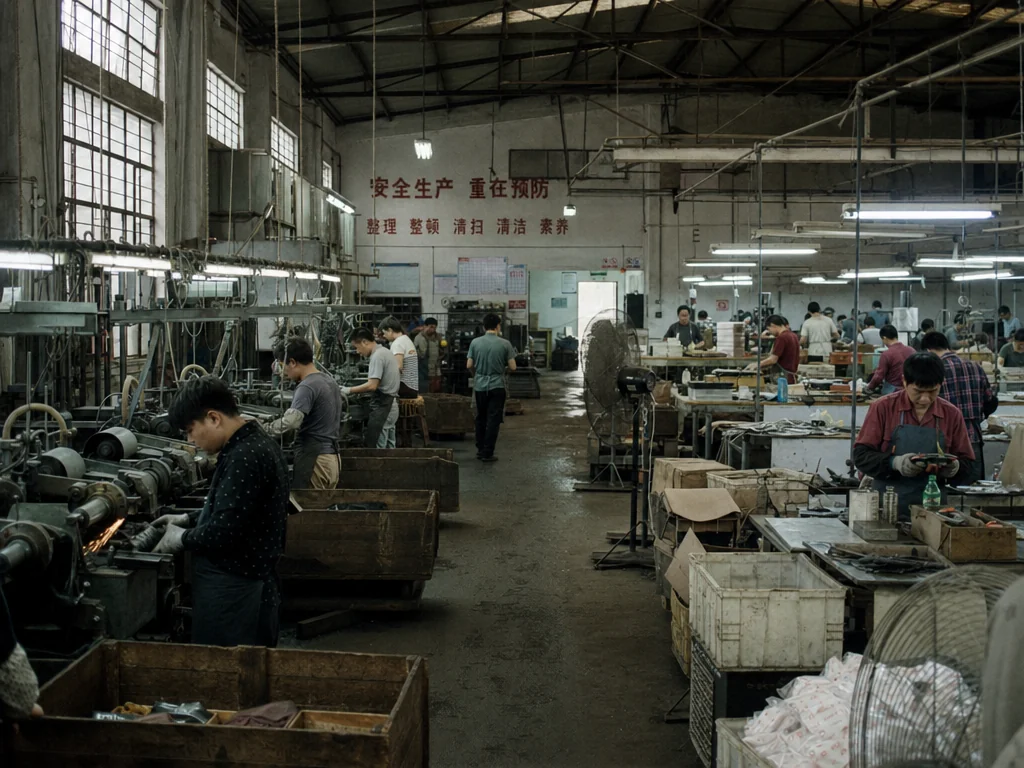
In Yangjiang, China, where kitchen knife factories run mixed OEM programs, the answer is less romantic. 440C works for value lines when the design is locked. A plant with 240 employees and monthly output above 120,000 knives can run it at scale, but the PO has to freeze the HRC band, finish level, and inspection standard. Add spine thickness too. We run 1.8 mm and 2.0 mm blades differently on the grinding line, and a buyer flagged a spec sheet typo when satin finish turned into mirror finish. That is the wrong question to ask if the fields are still open. Leave them loose and you still pay for 440C, then ship a knife that feels soft, stains early, and loses edge bite before the customer trusts the brand.
What 440C Actually Buys You
I’m rewriting the section in place, keeping the HTML structure intact and tightening the prose so it reads like a factory-side sourcing note, not generic web copy.440C is a high-carbon stainless steel. On the grinding line, it gives more wear resistance than 420J2 or 3Cr13, but a bad heat treat will still flatten the edge. For a kitchen buyer, the gain is plain: more prep cuts before touch-up, less staining in a 24-hour salt-spray check, and a cleaner story when the customer compares it with cheap stainless. The knife still lives or dies on grinding, quenching, tempering, and finishing. If a supplier cannot explain furnace set point, oil or air cooling, temper cycle, and final edge angle in plain terms, sourcing gets muddy fast. The wrong question is whether 440C is "good." We have seen a 0.3 mm grind variation erase the steel advantage in one carton.
In practice, 440C fits when you want a knife one step above entry-level stainless without paying for powdered steel. For value lines, HRC 57-59 is the normal target. That range gives decent edge retention and still lets a home user sharpen it on a standard stone or pull-through sharpener. Softer than 57 HRC, the cut falls off after a short board test. Harder than 59 HRC, the blade can chip if the cross-section is thin or the heat treatment drifts. QC pulled the sample at 60 HRC once, and the buyer flagged it after the tip snapped on a board test. The math does not work when the line cannot hold the spec. We run into that problem when a factory chases a harder number and forgets the blade has to survive use.
Do not buy 440C because the mill certificate looks clean. Buy it because your price point can carry a modest steel premium and your customer will pay for slower dulling and a cleaner cut. We had a PO last quarter with one typo on the steel grade, and that small miss cost two days of clarification before we could run the batch. In Yangjiang and the other China knife clusters, the better factories check incoming coil, hardness, edge thickness, and stain marks before packing. The weak ones sell the steel name and hope nobody checks the edge after the first carton. We've seen this go sideways fast, and the fix starts on the inspection table, not in the sales pitch.
Where It Fits In Value Lines
440C fits kitchen knives that need a cleaner face and a tougher edge than 3Cr13 or 420J2, while still staying inside a controlled FOB. We ship this grade on 20 cm chef knives, santoku, utility knives, and small carving knives when the buyer wants one steel story and a blade that can survive daily home use or light hotel prep without rust spots showing up first. Good fit. QC pulled the sample after a 24-hour salt spray check in the cabinet; the satin finish held, and the edge still passed our paper cut after drying.
For value lines, do not put 440C on every SKU. A 20 cm chef knife or 8 inch slicing knife earns the upgrade because the blade length gives real edge-retention value; a 75 mm paring knife usually does not. If the set has 3 or 4 knives, we run 440C on the main blade and step the secondary SKUs down to a lower-cost stainless grade, as long as the merch story stays clean on the back card. The buyer flagged a PO once because the 80 mm paring knife was priced too close to the chef knife. The math did not work.
Packaging matters too. Retailers in Europe and North America care more about stain resistance, clean grind lines, and a stable hardness report than the alloy number on the spec sheet. If the blade comes back at 56-58 HRC and the edge stays clean after 10 wash-and-dry cycles, 440C earns its slot. If the retail ceiling is fixed, thickness, polish level, and handle cost need hard control. We have seen this go sideways when a 1.8 mm spine turned into a 2.2 mm spine on the grinding line; that extra metal killed the margin before carton cost was even added.
Cost, MOQ, And Lead Time
For 440C stainless knife sourcing, the price gap is rarely just the steel bill. It shows up on the heat-treatment rack, the 800-grit polishing line, the reject bin, and the hours we spend locking the process before the first clean run. The wrong question is why one knife is $0.20 higher. In a Yangjiang OEM order, 440C can add a moderate material premium, but the landed cost climbs fast if the buyer wants mirror polish, laser marking, special handle tooling, or each knife packed in its own box. We run these jobs every week, and the grinding line is where the quote usually breaks.
Here is the kind of sourcing snapshot we use when buyers compare China offers:
| Item | Typical Range | Buyer Note |
|---|---|---|
| Steel grade | 440C | Edge retention is better than entry stainless; that is why buyers ask for it |
| Hardness | HRC 57-59 | Good balance for value kitchen knives after the quench and temper run |
| MOQ | 1,000 pcs | Drop below that and unit cost usually moves up |
| Lead time | 35-45 days | Count sample approval separately; QC pulled the sample on day 3 |
| FOB uplift vs 3Cr13 | 15-30% | Finish and pack-out drive it, and the buyer flagged both |
If a quote looks too cheap, check whether the factory is quoting softer hardness, a thinner coating, or a stripped-down inspection plan. We've seen this go sideways when a PO typo changed the carton count and nobody caught it until packing. For one batch, the buyer wrote 480 on the PO and meant 408; the math does not work once cartons hit the warehouse floor. For budget programs, the hidden cost is scrap and rework, not the steel price. A line that keeps losses down and still holds AQL 2.5 is worth more than the lowest bid on paper.
Heat Treatment Drives The Result
With 440C, heat treatment decides the knife. Same strip, same blanking die, two different results: one batch ships as a clean value kitchen knife, another chips at the heel after 20 board cuts because the tempering window moved by 5 C. We see it on OEM orders where the PO only says “440C blade” and leaves hardness blank. Bad start. The buyer flagged it after QC pulled 8 pieces from the first carton. Lock the hardness band, tempering cycle, and sample acceptance rule before the first 1,000 pieces hit the grinding line.
For value lines, we run HRC 57-59 as the safer target. It gives enough edge life for home kitchens and still lets the customer sharpen the knife on a normal rod. HRC 60-61 looks good in the sample room, but the math does not work if the edge is thin and the temper is loose. We have seen a 60 HRC chef knife pass the paper test, then fail when QC pulled the sample for frozen chicken cutting on the bench. Not pretty. A chef knife with a 2.0-2.5 mm spine and a 12-15 degree edge angle per side gives a usable balance between cutting feel and toughness.
Ask how they quench, which furnace they run, and whether cryogenic treatment is in the route. Cryo is not required for every order, especially when the MOQ is 1,200 pieces and the buyer is pushing a tight FOB price, but the factory should be able to explain the choice. If they cannot talk through decarburization, grain refinement, or post-heat-treatment straightening on a press jig, you are not dealing with a process-driven maker. You are dealing with a trader hoping the batch comes out clean. We have seen that go sideways on a 2,000-piece run after one PO typo changed the hardness range.
Compliance For Europe And North America
For kitchenware brands, compliance is where cheap 440C sourcing breaks first. 440C is one line on the spec sheet. Handle resin, blade polish, epoxy, coating, and carton ink still have to match the destination market, or the container waits at the warehouse. It happens. On the packing table, QC pulled 3 samples, checked the warning label against the PO, and caught one carton marked “stainess” before sealing. For Europe, ask for REACH SVHC declarations and LFGB support when any food-contact part is involved. For the United States, ask for FDA-related material declarations and keep lot-by-lot records tied to each shipment.
Put inspection in the purchase order. Not later. AQL 2.5 is standard for major defects, and we tighten blade finish, edge consistency, and logo position when the buyer is building a retail line. “Can we inspect later?” is the wrong question. We ship 440C sets through 28 to 35 days of sea freight and inland trucking, often with humid storage on both ends, so the math does not work. If the knives go out as sets, test carton drop performance and rust protection after transit. We have seen a good blade arrive with spotting because the oiling was light and the VCI bag spec was changed to save 0.03 USD per set.
Traceability has to be clean. Batch records should connect raw material heat numbers to finished cartons through the ERP lot code, including the carton mark and inner box label version. Six months later, when a retailer asks for documents, a clean file can turn an 18-day back-and-forth into a 2-day reply and cut chargebacks. On the grinding line, a 0.2 mm mark near the plunge line can still matter if the buyer flags it during a claim. Good factories in Zhejiang, China and Yangjiang, China already run export orders this way; weak suppliers just hope nobody asks for the file.
How To Evaluate A Supplier
If you are comparing 440C stainless knife offers, ask for process control, not sales polish. We run the hardness report before we talk packaging, then check steel source, tempering temperature, bevel width, and how the inner box is loaded at the packing bench. A serious 440C stainless knife sourcing manufacturer gives you hard numbers: 58-60 HRC, 3,000 pcs/day on a normal chef knife line, and a correction note if the first sample lands 1 HRC low. On our grinding line, QC rejects a blade when the bevel runs out by 0.2 mm. Simple test. The glossy brochure is the wrong question to ask.
Useful RFQ points include blade length, thickness, target HRC, finish type, handle material, logo method, carton spec, test requirements, and target FOB or DDP. For a kitchen series, ask for two trims: standard 2.0 mm blade with PP handle, and premium 2.5 mm blade with pakkawood or G10. Then the cost gap is visible. We had one buyer flag a PO typo on the handle color code, and that saved a 12-day delay. A Yangjiang factory can quote laser engraving, custom packaging, or private label artwork when the launch window is tight, but the packing bench is where the mistake shows first: wrong barcode, mixed master carton, logo film placed on the wrong side.
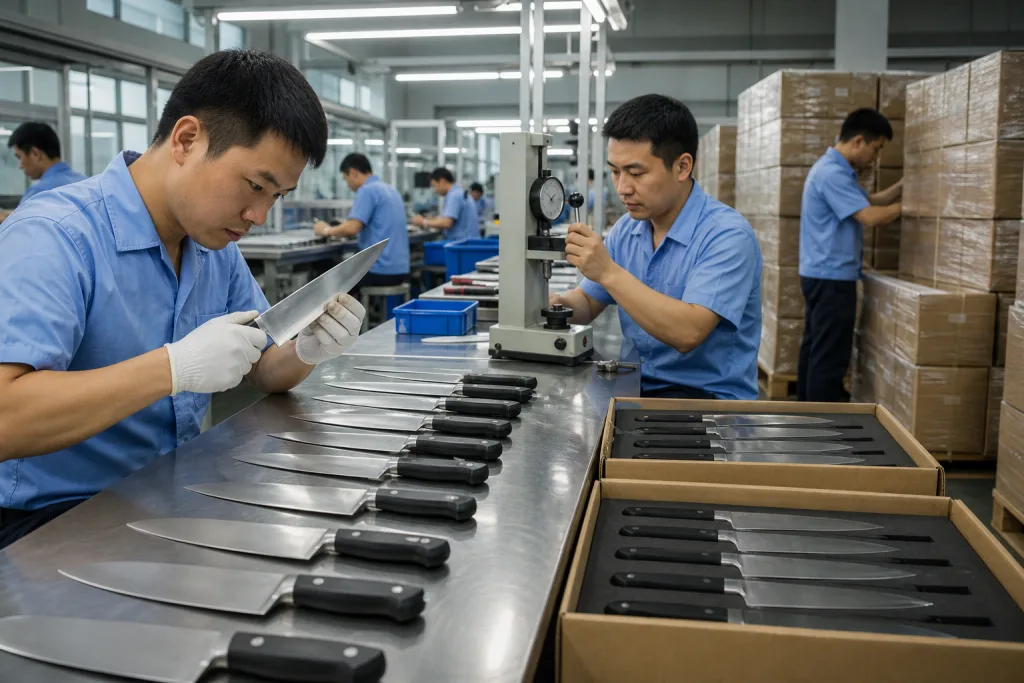
Before you award the order, request a pre-production sample, a first-article inspection, and final inspection photos. If the factory has 240 employees and steady export volume, this should be routine paperwork, not a negotiation. QC pulled the sample from the lot tray, checked it against the gold sample with a caliper and Rockwell tester, then signed off the carton mark. If they push back, the issue is not the steel grade. The issue is the supplier. We have seen this go sideways when a seller promised 18 days and then missed shipment by 9 days because the tempering oven schedule was never locked.
Recommended internal resources: kitchen knife OEM options, OEM manufacturing support, steel grade comparison, and inspection standards.
Frequently asked questions
Not necessarily. In China, 440C usually adds about 15-30% over 3Cr13 on the steel and heat-treatment side, but the real landed gap depends on polish, handle, and packaging. If your retail target can absorb a small FOB increase and you need better edge retention, 440C is reasonable. For a 20 cm chef knife, the upgrade makes more sense than for a short paring knife. The key is to keep the design efficient: HRC 57-59, 2.0-2.5 mm spine, and a finish level that matches the price point. If you chase mirror polish and premium boxes, the steel premium stops being the main cost driver.
For most value kitchen programs, ask for HRC 57-59. That range is usually the best compromise between edge retention, sharpening ease, and chip resistance. Below 56 HRC, the blade can feel soft and lose its selling point quickly. Above 60 HRC, you may get a sharper sample, but the risk of edge chipping rises if the blade geometry is thin or the tempering is inconsistent. For a 20 cm chef knife, pair the hardness target with a 12-15 degree per side edge and a straightness tolerance that your QC team can actually inspect. Always request a hardness test report from the factory, not just a verbal claim.
Yes, if the whole product is documented properly. The steel alone is not enough. For Europe, ask for REACH SVHC declarations and, if the product includes food-contact components or handle materials that need it, LFGB support. For the US, keep material declarations aligned with FDA expectations and retain traceability by lot. A solid supplier will also document surface finish, rust-inhibiting oil, carton packing, and batch numbers. For export shipments from Yangjiang, China, this paperwork is normal for experienced factories. If the seller cannot provide it, the issue is not the alloy. It is the supplier's export discipline.
Compared with common budget stainless grades, 440C usually gives better wear resistance and a more premium user feel, but it requires tighter process control. The benefit is slower dulling and better stain resistance than very basic steels. The trade-off is cost and the need for accurate heat treatment. In a value line, the practical difference shows up in cut retention after repeated home use, not in marketing language. If you can only support a very low retail price, a cheaper steel may be the right business choice. If you can spend a little more and want a stronger quality story, 440C is a sensible step up.
Include blade type, length, thickness, target HRC, surface finish, handle material, logo method, packaging structure, and destination market. Add the quality standard too: for example, AQL 2.5 on major defects, specific rust checks, and a hardness tolerance band. If you want to compare suppliers properly, also request FOB and DDP pricing, sample lead time, production lead time, and carton master pack details. For a kitchen knife series, specify whether the product is for retail singles or sets. Clear RFQs reduce back-and-forth and help a 440C OEM factory quote accurately instead of padding risk into the price.
Request a 440C quote today
Send your blade sizes, target HRC, and pack plan. We will map the steel, process, and inspection level to a realistic China factory cost.
Request a Quote