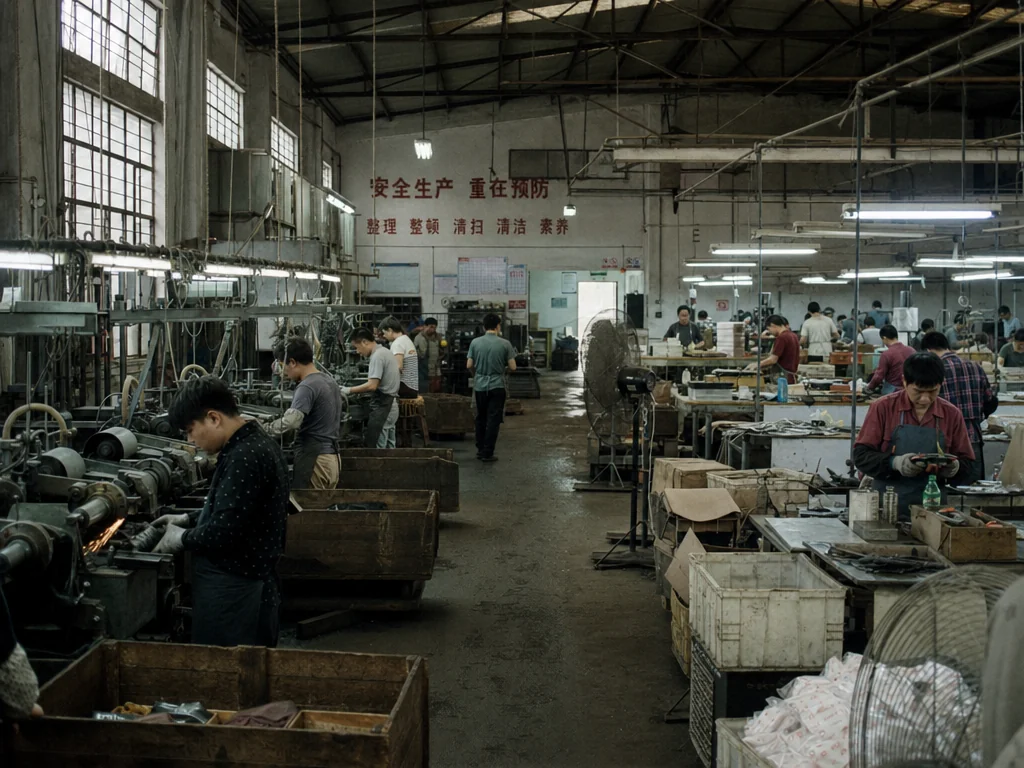
For a value EDC line, 8Cr13MoV makes sense. It keeps OEM cost under control and still gives a clean edge with usable toughness and rust resistance when heat treatment is right. On our line, we check each lot on the Rockwell tester; a stable batch usually sits at 58-60 HRC, while a problem lot shows scatter before grinding is finished. That matters more than paying 20% to 40% extra for a premium steel name that does not improve sell-through.
8Cr13MoV often gets quoted like plain commodity steel. Wrong question. Two blades can both be marked 8Cr13MoV and still cut like different products because HRC, blade stock, edge angle, quench control, and passivation time do the real work. Last week QC pulled a sample at 2.5x magnification and found a rough burr on one edge; the PO also had the blade spec misspelled. We have seen this go sideways. If you are sourcing from Yangjiang, Zhejiang, or another China production base, judge the steel inside the full build, not by the stamp on the blade.
What 8Cr13MoV Actually Is
8Cr13MoV is a Chinese stainless knife steel for value EDC folders, kitchen utility knives, and small outdoor blades. On a value folder PO, we choose it when the target is 3,000 pcs MOQ, blister pack or color box, and a shelf price that cannot carry D2 or 14C28N. Simple chemistry. Enough carbon for workable hardness. Enough chromium for pocket sweat, light rain, and sink moisture after dinner prep. Not magic steel. For a buyer, the practical point is this: it is not powder steel, and it is not mystery scrap if the mill cert matches the coil tag and QC checks the first heat-treat batch on the Rockwell tester.
In an 8cr13mov knife steel guide, chemistry gets you only halfway. Execution sells the knife. 8Cr13MoV takes a fine edge and sharpens without drama, so we run it for first-time EDC programs and retailer private-label orders where return rate matters more than steel-name bragging. It behaves on the floor. In Yangjiang, China, high-volume OEM factories need blade steel that cuts clean on the laser table, grinds steady on the wet belt line, and takes a satin finish without scrap eating the margin. QC pulled one 8Cr13MoV sample last season at 55 HRC after the temper cycle drifted; the buyer flagged weak edge holding after carton samples. A stable 8Cr13MoV folder at 57-59 HRC gives the buyer a product we can ship at a retail price that still leaves room for packaging and freight.
Do not oversell it. This is value steel, not a performance flex. If your brand promise is razor retention for heavy cutting, this is the wrong question to ask. 8Cr13MoV will not beat higher-end tool steels on long edge life. If the brief is daily carry utility, fast sharpening, and a clean retail price, the math works. We have seen this go sideways when a catalog calls it "premium steel" and the first Amazon reviews compare it with $80 knives. The steel is only one part of the build; a poor grind at 0.8 mm behind the edge, checked with a digital caliper after final sharpening, or a loose heat treat can make a better alloy perform worse than 8Cr13MoV done properly.
Why Buyers Choose It For EDC
Most EDC brands choose 8Cr13MoV because it fixes the price problem without creating after-sales noise. The user wants a knife that opens cleanly, cuts cardboard, tape, snack packs, rope, and zip ties, then comes back on a basic pull-through sharpener after 2 minutes at the kitchen counter. This steel does that job. Simple as that. On our side, QC checks blade grind at the ricasso with a 0.02 mm feeler gauge and tests liner lock bite before packing, because rough action brings more complaints than the steel name ever will. Retail buyers catch the point fast: decent edge life and easy care, with lower risk on a low-to-mid price SKU.
From a sourcing angle, 8Cr13MoV leaves budget for the parts shoppers touch first. We can spend on G10 texture, a tighter pocket clip, cleaner stonewash, or a 350 gsm color box instead of pushing the blade into a costlier alloy. That is the smarter commercial call. On a 3,000 to 5,000 piece first order, keeping the blade in this class can leave room for a better T6 clip screw spec and still hold the same FOB target. We run this play a lot in Yangjiang. The buyer wants the knife to look like a USD 29.99 retail item, but the math does not work if the blade spec eats the whole budget.
Buyers should not skip customer expectation. If you sell into enthusiast channels, say plainly that 8Cr13MoV is a value EDC steel. Users should expect easy sharpening and moderate edge retention, not the 18-day wear feel they might expect from a premium high-alloy option after the same warehouse carton-cutting work. We have seen this go sideways when listing copy called it “premium” and the buyer flagged 17 return comments after the first batch shipped. QC pulled the sample again, but the blade was within spec; the problem was the promise. Clear positioning keeps complaints down and helps your 8cr13mov OEM line avoid returns that should never have been written in the first place.
Real Performance Targets
For an EDC knife, lock the performance target before you ask the factory for a sample. No hardness band, no blade thickness, no edge angle? Then you are not buying a knife spec; you are buying whatever the line manager lets through after the grinding line is stacked with 6 export POs that week. On our side, we run a practical target of 57-59 HRC, 2.5-3.0 mm blade stock, and a 17-20 degree per side edge on a general-purpose folder. That spec works. It gives a balanced hand feel without asking budget stainless to act like powdered steel. This is the wrong question to ask after the sample is already in hand.
Edge retention is enough for normal consumer use if the heat treatment stays inside the agreed band. QC pulled 32 pcs from one trial lot last month, and the rejects were not soft blades; they were uneven edges after final sharpening, with one side measuring close to 16 degrees and the other nearer 23 on the angle gauge. Toughness is fine for pocket carry abuse and small pry mistakes, but heavy-duty utility work is the wrong promise to print on the blister card. The math does not work. Corrosion resistance is respectable for a budget stainless steel, though it still needs basic care. In humid storage or coastal distribution, tell buyers to oil the pivot and keep the blade dry. That is not a defect; it is the reality of value stainless in China-produced knives.
If you want a sharper retail spec, adjust it with limits. A 2.2 mm blade cuts cleaner through cartons, but the buyer may flag it as “thin” during the first hand check, especially if their last program used 3.0 mm stock. A higher polish improves shelf presentation and shows pocket scratches faster after 7 days of sample carry, and we have seen a PO typo turn 2.2 mm into 2.0 mm and waste a week. A black oxide or stonewash finish hides wear, but it changes the brand look and adds rework risk if the coating vendor misses color consistency by one shade between batches. Design the knife around the steel. Do not ask 8Cr13MoV to rescue a bad design brief.
Sourcing Specs And Factory Data
For an 8cr13mov knife steel guide supplier check, the steel declaration only opens the file. Ask for the HRC window, batch test method, and heat-treatment record for each lot. On our floor, QC checks 5 blades from every furnace lot on a calibrated Rockwell tester before the grinding line releases the tray. We run it before polishing. Oil can make a soft blade look clean. If a factory cannot explain where it tests HRC on the blade and how often it calibrates the tester, this is the wrong question to treat as paperwork. The heat treat is loose.
A sourcing sheet for 8Cr13MoV should list blade thickness in mm, target HRC, finish type with sample reference, handle material code, packaging artwork version, and inspection standard. For export programs, AQL 2.5 is a sensible baseline for appearance and function. For stricter retail channels, set the critical defect limit lower and add a 500-cycle open-close test or a rope-cut check using 10 mm sisal rope. We have seen this go sideways when a PO said “black handle” but the approved sample was black G10 and production used black PP. The buyer flagged it at pre-shipment after 80 cartons were already sealed. Put it in the PO.
| Item | Practical Range | Buyer Note |
|---|---|---|
| Steel | 8Cr13MoV | Confirm mill source and material certificate before mass cutting |
| Hardness | 57-59 HRC | Run batch checks with a calibrated HRC tester, not verbal confirmation |
| Blade stock | 2.5-3.0 mm | 2.5 mm cuts cleaner on light EDC models; 3.0 mm gives a stronger hand feel |
| MOQ | 5,000 pcs | Common for OEM folders; new molds or color handles can push it to 10,000 |
| Lead time | 30-45 days | Count from sample sign-off and packaging approval, not from first inquiry |
| FOB price | USD 3.20-6.80 | Handle material, lock type, blade finish, and accessory set move the price fast |
This is where a real 8cr13mov knife steel guide sourcing check protects margin. You are buying repeatable output from China, not an alloy name stamped on a blade. If the factory runs stable monthly capacity of 240,000 units and keeps ISO 9001 controls active on heat treat, grinding, assembly, and final QC, your odds improve on consistent hardness and straight blades. Clean assembly matters too. QC pulled one sample last month for a liner burr near the pivot; small defect, big return risk if 5,000 pcs ship that way. We checked it with a 0.05 mm feeler gauge. The math doesn't work if a USD 4 folder comes back for a rough pivot.
How OEM Design Changes Cost
The same 8Cr13MoV can quote at two different levels once the handle, lock, and finish change. A basic liner lock with G10 or FRN-style scales usually lands well below a milled aluminum frame lock that needs two finish passes. Small parts add up. On a 500-piece run, QC pulled the sample at the grinding line and checked a 0.2 mm clip offset with a digital caliper; that one correction changed the quote line. If your target retail sits under USD 40, 8Cr13MoV still leaves room for a knife that feels planned, not stripped down.
The cheapest mistake is copying a premium shape and trying to save the order by cutting blade steel cost. The math does not work. Buyers should match the design to 8Cr13MoV: moderate blade geometry with a stable edge, pivot hardware we can source without drama, and a finish that will not show every pocket scratch. For a value EDC program, clean stonewash or bead blast usually beats a glossy blade because it reduces cosmetic returns after shelf handling. We had a buyer flag a PO typo on blade length, 88 mm on the order and 85 mm on the drawing, and the schedule slipped three days while the tooling card was corrected. Tell the factory the use case early if you are doing private label or ODM. A desk knife and a warehouse cutter are different jobs, even with the same steel.
On a real program, the gap between a FOB price of USD 3.50 and USD 5.80 often comes from clip material, pivot design, blade grind time, and packaging spec. We run the same steel two ways in Zhejiang or Yangjiang when the build spec changes, and the sample on the bench tells the truth faster than any sales sheet. Watch the build time. A 12-day delivery versus an 18-day build can decide whether the order catches the vessel or waits another week. This is the wrong question to ask if the goal is price only; steel is one control point, not the whole quote.
Quality Checks That Matter
For 8Cr13MoV, QC starts with function. We check the knife on the bench, not on a spec sheet. The blade has to open cleanly, close without scraping the liner, lock up correctly, sit near center, and still cut copy paper after a basic carton pass. A dial caliper gives the 0.5 mm visual limit at final inspection. A blade that hits 58 HRC but rubs the liner is still a reject. The sheet needs to show blade play, lock engagement, edge consistency, rust risk from rough polishing, and weak oiling. We run that check at the bench station with a feeler gauge and a Go/No-Go lock test. No drama. If the detent is soft or the centering drifts past the limit, the math does not work.
A factory test set should stay simple enough for the line to run: hardness on each batch, 10 to 20 sample opening cycles, one paper or carton cut test, and a standard-light check for grind marks, belt scratches, and uneven satin lines. QC pulled the sample under a 600 lux bench lamp, not beside the packing table. For export orders, ask for AQL 2.5 on major and minor defects, then mark lock failure, tip damage, and blade misalignment as critical defects. The wrong question is “did the steel pass?” The better question is whether the finished knife works in the buyer’s hand. We have seen this go sideways when a PO typo changed the blade finish callout, and the buyer still blamed steel after the grinding line left a rough shoulder.
If your brand sells through retail or distribution, packaging still matters. Loose foam, dry blades, and weak inserts can damage 30 cartons before the goods leave Yangjiang. We run a carton drop test at 76 cm and check whether the tip punched through the insert. A clean 8Cr13MoV program includes rust prevention for transit, especially for ocean freight into Europe or North America, where 28 to 35 days in a container can expose weak oiling fast. We’ve seen this go sideways: the buyer flagged “bad steel,” but the real finding was a dry blade packed against damp paper. On one shipment, QC found orange spots on 4 blades after a 72-hour salt-spray hold, and the fix was a better VCI bag, not a new steel grade.
When To Pick Another Steel
I’m rewriting the section in place, keeping the HTML structure intact and tightening the language so it reads like a sales engineer wrote it from the shop floor. The main pass is removing the AI-style phrasing, adding concrete sourcing details, and making the tradeoffs sharper.8Cr13MoV fits when the shelf price has no room and the knife is meant to cut boxes, not win a steel debate. We run 20-30 value EDC projects a year on this grade: 56-58 HRC after heat treat, 2.8 mm blade stock on common folders, and MOQ usually easier to manage than VG-10 or D2. Pick a different steel when the brand promise is long edge life, salt-air carry, or a spec-sheet fight. If the buyer wants premium cutting life but prices the order like entry level, the math does not work.
Use it when the order needs stable cost, fast re-sharpening, and a story a first-time EDC buyer can explain at the counter. Simple sells. Do not use it for guys cutting hard cardboard every shift, slicing abrasive rope, or tossing the knife wet into a glove box after camping. Last quarter QC pulled samples from the grinding line after a buyer flagged edge roll in a carton-cutting test; the steel passed, the use case did not. If a customer asks for 12 days vs 18 days of edge retention, this grade is the wrong answer.
For 3-SKU brands, rejecting 8Cr13MoV is the wrong question. Put it in the entry model, then keep D2, VG-10, or 9Cr18MoV for the next price tier where dealers can show a clear step up on the counter. We ship this structure a lot: one 8Cr13MoV SKU for volume, one higher-steel SKU for margin. On a recent PO, the buyer typed D2 in one line and 8Cr13MoV in the blade remark, so we held artwork approval until sales cleaned it up. That kind of typo turns into a warehouse headache fast. It keeps China sourcing clean, cuts slow-moving inventory, and gives the rep a real reason to move the customer up without pretending every knife is built for the same job.
Frequently asked questions
Yes, for most value EDC use cases it is good enough. At 57-59 HRC with a 2.5-3.0 mm blade, it cuts cardboard, tape, packaging, and light rope well, and it sharpens quickly on basic stones. You should not expect premium-level edge retention, but for a retail knife sold around USD 25-50, the steel is commercially sensible. The real issue is consistency: a well-treated 8Cr13MoV blade from a disciplined China factory will outperform a poorly treated higher-grade steel every time.
For most EDC folders, ask for 57-59 HRC. That band is the practical sweet spot for balance between hardness, toughness, and ease of sharpening. Below 56 HRC, edge retention starts to feel weak for frequent users. Above 60 HRC, you may gain wear resistance, but you also raise brittleness risk if the geometry is thin or the heat treat is inconsistent. Put the hardness target in the PO and require batch verification, not just a sample report.
For a standard OEM folding knife, 5,000 pieces is a common starting MOQ. More complex designs, custom packaging, or special finishes can push the MOQ to 10,000 pieces. Some factories in Yangjiang can support smaller pilot runs, but unit cost usually rises fast below 3,000 pieces. If you want a serious quote, include blade steel, handle material, finish, packaging spec, and target market so the factory can price it as a real program.
For a simple 8Cr13MoV EDC folder, a realistic FOB range is about USD 3.20-6.80 depending on handle material, lock type, clip, finish, and packaging. A plain utility build can stay near the low end; a cleaner private-label knife with better machining and presentation moves higher. If you add laser engraving, custom boxes, or upgraded hardware, budget more. The steel itself is not the main cost driver once you are in OEM production.
Ask for material certificates, hardness records by batch, in-process inspection reports, and final AQL 2.5 inspection results. If the supplier claims ISO 9001, ask how that process is applied to blade grinding, assembly, and packing. For export to Europe or North America, you may also need REACH-related material confirmation for handles or coatings, plus packaging data for retailer compliance. A strong 8cr13mov knife steel guide manufacturer should be able to provide this without hesitation.
Build Your 8Cr13MoV EDC Line
If you want a practical OEM spec from China, we can quote steel, heat treat, packaging, and inspection together so you see the real landed cost before you commit.
Request a Quote