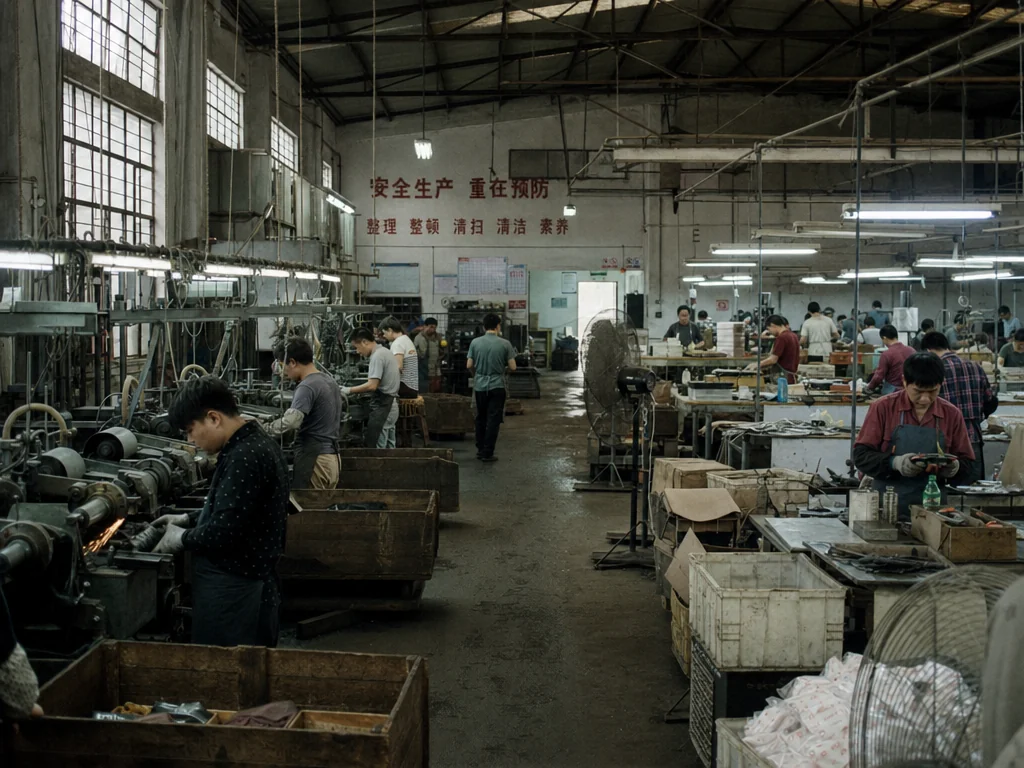
Butter knife set manufacturing looks simple until the spec sheet hits the desk. A flat blade and rounded edge sound easy, but returns often start with a 0.3 mm edge radius error, 5 to 8 g missed on target weight, or a handle that nose-dives when the buyer tapes it to a sample card. We check those points with a radius gauge and a 0.1 g scale before the grinding line signs off. Small misses show fast. For kitchenware brands, mirror finish is usually not the fight. Balance is.
Sourcing from Yangjiang or wider China means keeping the same hand feel across 3,000, 10,000, or 50,000 sets, not approving one clean counter sample and hoping production follows it. At TANGFORGE in Yangjiang, Zhejiang, we run butter knife and spreader programs for global brands with MOQ starting around 1,000 sets, lead times around 30 to 45 days for standard designs, and QC targets built around AQL 2.5. QC pulled a batch last year because the rounded tips looked fine under the bench light but measured uneven after polishing; the buyer flagged it, and the math did not work. Proper butter OEM is boring on purpose: repeatable polishing, safe tips, export cartons that pass a drop test, and fewer complaint photos landing in your inbox.
What makes a butter knife set work
A butter knife set is not judged like a chef knife. No steak test. No razor edge. It needs to spread cold butter, soft cheese, jam, peanut butter, and sandwich filling without scraping the plate, twisting in the hand, or feeling stamped too thin. On our grinding line, QC pulled 10 samples from a 300-piece lot, and the buyer flagged the handle pinch before packing. The target is controlled bluntness with steady balance. Sharpness is the wrong metric.
In butter knife set manufacturing, the blade is usually wider than a standard dinner knife, with a rounded nose and a softened edge so the user can press into a cold block of butter without cutting themselves. For a retail set, that edge radius has to hold through the full run, not just look good on one counter sample. We treat it as a formed safety surface, checked with a radius gauge, not a sharpening job. If the radius moves by even 0.2 mm, one knife slides clean and the next one bites the thumb. We have seen buyers reject that on a PO with a typo like "butter knive" because the spec sheet was already loose. This is the wrong question to ask: sharpness is not the target here.
Balance carries the product. If the blade is too heavy, the knife feels nose-down and awkward. If the handle is too light, the set feels cheap even when the finish passes visual inspection. We run a hand test with a 120 mm sample and a 6 g handle cap weight, because the math does not work if the knife tips forward on a table setting. On the packing bench, a 0.5 mm shift can show up as a crooked tray line. Buyers usually want one clean result: a set that sits neutrally in the hand and still lines up well in gift boxes and on a retail shelf.
- Edge goal: rounded and safe, checked piece to piece
- Feel goal: neutral balance in the hand, no nose-drop feel
- Finish goal: polished enough for retail, without turning every fingerprint into a complaint
Steel choices and hardness targets
For butter knife set manufacturing, steel choice is not a guessing game. Premium high-carbon knife steel is the wrong question to ask here. It adds cost and solves the wrong problem. We need rust resistance, clean stamping, and a mirror or satin finish that still looks acceptable after 30 dishwasher cycles in a buyer lab. On the grinding line, QC pulls the first tray, checks tip burrs under a 10x loupe, and wipes the edge with cotton before mass polishing starts. That is why 430 stainless, 420 stainless, and 3Cr13 are common picks in China for butter knives and spreaders.
430 stainless fits price-driven sets because it controls rust and takes polish without much drama. 420 and 3Cr13 behave differently in the press. We can tune them for more rigidity when the buyer says the blade bends too much in cold butter at the sample review. For OEM work, final hardness sits far below chef knives. A practical band is HRC 50-54, depending on geometry, thickness, and whether the wider spreader needs extra stiffness. We run Rockwell checks on pulled samples after heat treatment; if one lot comes back at HRC 47, the buyer will flag it before they finish page one of the report.
Thickness matters as much as alloy. A 1.5 mm blade can feel weak if the profile is wide and the handle is short. A 2.0 mm profile usually feels better, but the math does not work if stamping burrs and polish loss are ignored. We have seen this go sideways: the sample looked clean, then mass production showed a 0.2 mm burr line near the tip after tumbling. Ugly surprise. If you are sourcing into Europe or North America, ask for REACH, LFGB, and food-contact documentation early, before a PO typo on the item name gets copied onto the lab form. For some programs, buyers also request ASTM-related test references through their lab partner, especially when their vendor file already has compliance paperwork built in.
| Option | Typical use | Practical notes |
|---|---|---|
| 430 stainless | Entry to mid-range sets | Good cost control, steady rust resistance, clean polishing on 1.5-2.0 mm profiles when passivation is not rushed |
| 420 stainless | Mid-range OEM sets | Stable in stamping, firmer hand feel than thin 430 on wider spreader shapes after HRC checks |
| 3Cr13 | Value to mid-tier programs | Common in China, acceptable for tableware when deburring, cotton-wipe checks, and final passivation are controlled |
Rounded edge and safe tip control
Buyers miss the rounded edge all the time. On the photo table, the blade looks fine, but in hand it can fail because of polishing waves, heel burrs, or one sharp corner at the tip. We check by fingertip after the 400 grit belt, then again after tumbling, because the thumb and index finger sit on that area every time someone spreads butter. This is not a cosmetic issue. If it feels unsafe before breakfast service starts, the sample is not ready.
At factory level, we run the blade edge through forming, deburring, tumbling, and final hand inspection. For stamped butter knives, the die has to leave enough edge stock, usually 0.15 to 0.25 mm extra, so rounding does not turn the blade into a wavy line. Polish too much and the edge looks uneven under a 6500K inspection lamp. Polish too little and QC pulls the sample for rough hand feel. We have seen this go sideways: one buyer approved a shiny pre-production sample, then flagged 380 pcs in the mass order because nobody checked the heel burr.
A realistic target for the rounded working edge is often 0.2 to 0.5 mm radius, depending on profile and intended age group. For children's tableware, we hold the safety bar tighter, but adult spreaders still should not scratch a ceramic plate or leave visible drag marks after 20 strokes. CAD is the wrong question to ask here. A drawing does not show how the knife feels in a cold hand during breakfast service, so butter OEM programs need physical samples on the table, not just a PDF with a radius callout.
If your brand wants a branded retail set, ask the factory to keep the same edge radius across all SKUs in the family. We normally write it into the sample approval sheet beside finish, logo position, and carton mark, then QC checks it with a radius gauge and fingertip pass. A 0.3 mm spreader beside a sharper 0.1 mm cheese-style piece feels mismatched in the same gift box. The math does not work if saving 2 cents creates a return claim from a retail buyer.
Balance, weight, and hand feel
Balance is why two butter knives from the same drawing can feel different in the hand. We see it on the sample bench every week: 2.0 mm stock, 170 mm length, same polish, but one piece drops forward when QC pinches it near the bolster. A front-heavy knife bites into cold butter and feels busy. Too much handle weight is no better. Dead handle. The user notices on day one. For a kitchenware brand, hand feel is not decoration. It decides whether the set stays on the breakfast table or gets pushed into the second drawer.
In practice, a table butter knife usually lands around 18 to 28 g, depending on length, thickness, and handle shape. A spreader may need another 2 to 4 g when the blade is wider. On 6 out of 10 OEM runs we handle, the first sample starts near a 60:40 or 65:35 handle-to-blade mass split. That is a starting point, not a rule. We had a buyer reject a 22 g sample because the handle looked clean but the center of gravity sat 8 mm too far back; QC marked it with a red pen on the balance jig report. The wrong question is whether you can make it heavier. The math does not work that way. Ask where the grams sit after polishing, plating, and handle assembly.
Handle geometry matters as much as weight. A flat handle with a 0.8 to 1.2 mm softened edge transition is easier to control than a hard-edged shell, especially at the thumb zone. If you choose ABS, PP, stainless, or wood-look handles, the inside rib, insert weight, and glue cavity have to support the balance target. QC pulled a sample last month because a rivet insert pushed the tail 3 g heavy after the oven test. We have seen that go sideways when the buyer approved the appearance sample, then flagged the mass-production piece for a heavy back end. For full-metal sets, balance comes from blade shape and stock thickness. For mixed-material sets, the rivet pattern and profile can change the feel by several grams.
- Check balance in hand: pinch the sample at the bolster area; do not judge it only by laying it on a table. We run this test before final polish, because a knife can look right and still tip forward.
- Check weight spread: keep sample variation tight, ideally within ±1.5 g on retail sets, and ask QC to record 10 pcs per cavity or fixture. If one cavity drifts 2 g, the line will chase ghosts.
- Check handle comfort: no sharp seam, no raised ridge at the thumb zone, no polishing burr left from the grinding line.
OEM options for kitchenware brands
For butter knife set manufacturing sourcing, the real question is not whether a factory can stamp out a knife. Most can. The harder question is whether we can hold your version across 1,000 sets without the blade width drifting 0.3 mm or the satin finish changing after the first polishing batch. Butter OEM work gets paid here. We run the spec by blade width, edge radius, finish code, handle shape, logo method, and packing format; on the grinding line that means checking the first 20 pcs with a caliper before the operator keeps feeding blanks. The set should land as your brand item, not another open-stock catalog piece.
Common OEM routes are laser logo and etching on the blade, or embossing and printed branding on the handle. For retail sets, packaging needs the same discipline as the knife: kraft sleeve for shelf price, color box for supermarket, window box for visibility, or gift set carton with a formed tray. We have seen buyers spend two weeks arguing over 0.2 mm handle thickness, then approve a weak PET insert that lets the knives rattle during a 76 cm drop test. Bad call. The math does not work. In export programs from China, packaging often carries the margin because the same product can sit in value retail or a premium gift range once the insert, print, and carton construction change.
Typical MOQ for a new butter knife set is around 1,000 sets per SKU, though complex gift sets may need 2,000 sets or higher if the tooling or packaging is custom. For standard finishes, factories in Yangjiang usually turn samples in 7 to 15 days and mass production in 30 to 45 days after approval. For one chain program, QC pulled the sample because the barcode sat 4 mm too close to the carton fold and scanned badly after shrink wrap. Ask about carton pack counts, inner tray layout, and barcode placement early. Packaging mistakes cost more once production starts.
When you issue an RFQ, include blade thickness, target weight, finish level, logo size, carton dimensions, and test requirements. Add the target HRC if the buyer has one, and send the PO artwork file instead of a screenshot from WeChat. We once had a buyer flag a logo because the PO said matte, but the artwork note said mirror; the factory quoted one finish and the buyer expected another. We have seen this go sideways. Clear files get comparable quotes, not four prices for four different guesses.
Quality control that protects your margin
I’m rewriting the section in place, keeping the HTML structure intact and tightening the language so it reads like factory-side QC guidance, not generic copy.Butter knife set manufacturing looks simple until 3,000 retail boxes land with a burr on the spreading edge, a logo 2 mm off center, or a loose paper insert in the tray. Simple product. Easy to miss. We have seen it go sideways: QC pulled 80 pcs from one lot and found 11 pcs with polishing drag marks near the tip, all traced to one worn wheel on the grinding line. A butter knife set in a retail box can create more complaints per carton than a higher-priced chef knife if edge finishing and pack-out are not locked before packing. This is the wrong question to ask. The knife is not the problem. The box is.
At minimum, your QC plan should cover dimensional checks with a digital caliper, visual finish under bench light, logo placement, corrosion resistance, and packaging drop performance. For export orders, AQL 2.5 is a common starting point for major defects, with a tighter internal rule on safety issues such as sharp burrs or exposed edges. If you are selling into Europe, ask for LFGB or REACH documents from the supplier or the testing lab before deposit. For North America, buyers often ask for food-contact compliance evidence and retail barcode accuracy, and Amazon FBA orders need the FNSKU label checked against the PO. One wrong digit is enough for the warehouse to reject the carton. We had a buyer flag 42 cartons because the outer label matched the artwork file, not the final PO.
We run a simple incoming and final inspection checklist:
- Blade edge: no burr, no sharp spot, no polishing cut-through at the tip
- Finish: no rust, no discoloration, no visible scratch under bench light
- Logo: centered within ±1 mm, readable after polishing
- Pack-out: count accurate, insert stable, box seam closed
- Carton: no collapse after standard export handling
If you are working with a butter knife set manufacturing manufacturer in Yangjiang, ask for pre-production samples and golden samples, then keep both signed and dated beside the packing table during mass production. This is not paperwork for show. We have seen a buyer flag a handle color because the approved sample said “mirror polish” but the PO had a typo saying “satin.” The math does not work if you catch that after 500 cartons are packed; by then the packing team has already taped, labeled, and stacked the pallets.
Pricing, lead time, and sourcing realities
For price, the main drivers are finish, packaging, and steel choice, not the raw stainless weight. We quote a basic 4-piece or 6-piece butter knife set from USD 1.20 to 2.20 per set at volume, depending on handle thickness, polish time, and whether the buyer takes a plain white tuck box or a printed gift box with insert. A gift-ready set with custom packaging, laser logo, and tighter edge finishing can move into USD 2.50 to 4.50 or more. QC pulled one sample last month where the buyer asked for mirror polish but the PO only said “silver finish”; that wording gap added one extra buffing pass on the grinding line. Small line, real cost. These are not fixed quotes. They are what happens when two sets look similar in a photo but differ by 0.3 mm steel thickness and 6 minutes of finishing labor.
Lead time depends on how much we are changing. Standard product with existing tooling can ship in 30 to 45 days after deposit and sample approval. Custom handles, custom blades, or new packaging tooling can stretch the schedule to 50 to 60 days. For Europe or North America, add time for lab testing and artwork approval, because a 2-day logo check can become 12 days if the barcode size or warning text is wrong. We run fast when the spec is complete. The wrong question is “how quickly can you ship?” Ask whether the sample, carton mark, inner box, and test standard are locked before production starts.
At TANGFORGE in Yangjiang, Zhejiang, we support mixed knife programs at factory scale, with output around 240 employees and production organized for export packaging control. For buyers, unit price is only one line. Landed cost, defect rate, and lost days from a wrong carton spec decide the real result. We have seen this go sideways: a buyer approved the knife but left the master carton open, then the warehouse flagged a 17 kg carton that should have been under 15 kg for their handling rule. The math does not work when a low quote creates rework.
Use the commercial terms that fit your model. FOB is fine if you control freight. DDP works better when you need cleaner landed planning and do not want your team chasing port charges. Either way, confirm carton master data, HS code assumptions, and pallet height before you approve the order. Our export desk checks length, gross weight, CBM, and carton mark against the PI; one typo on a PO can turn 120 cartons into a relabeling job before loading.
Frequently asked questions
For standard OEM butter knife set manufacturing, MOQ is often 1,000 sets per SKU. If you add custom packaging, special handle tooling, or a new logo process, the practical minimum may move to 2,000 sets. For simple stock designs in China, some factories can quote lower, but the price usually rises. If you want a stable retail program, 1,000 to 3,000 sets is the normal commercial range to start with.
Do not specify it as “not sharp” only. That is too vague. Give the factory a rounded edge requirement, a safe tip profile, and a target radius, usually around 0.2 to 0.5 mm depending on the design. Also state that there must be no burr, no cutting edge, and no rough patch at the heel. In butter knife set manufacturing sourcing, the sample approval should include a hand-feel check, not just visual inspection.
For most butter OEM programs, 430 stainless, 420 stainless, or 3Cr13 are the practical options. 430 is common for cost control and good appearance. 420 and 3Cr13 can offer a slightly firmer feel in formed table knives. The right choice depends on thickness, finish, and your target retail price. For export, also ask for REACH or food-contact compliance support where needed.
If the design is standard and tooling already exists, 30 to 45 days is a realistic production window after sample approval and deposit. If you need custom packaging, new tooling, or extra lab testing, plan for 50 to 60 days. In Yangjiang and wider China, sample making can often be done in 7 to 15 days if the spec is clear. Delays usually come from artwork changes, not the factory floor.
Use a mix of visual, dimensional, and packing checks. AQL 2.5 is a normal starting point for major defects. Inspect for burrs, sharp spots, logo shift, finish defects, and count accuracy. For export orders, also check box strength, barcode placement, and carton drop performance. If your sets go to Amazon, confirm FNSKU labels, carton marks, and inner pack counts before shipment leaves China.
Send your butter knife spec today
If you want balanced, rounded-edge butter knife set manufacturing from Yangjiang, send drawings or a sample. We will quote the real cost, not a fantasy price.
Request a Quote