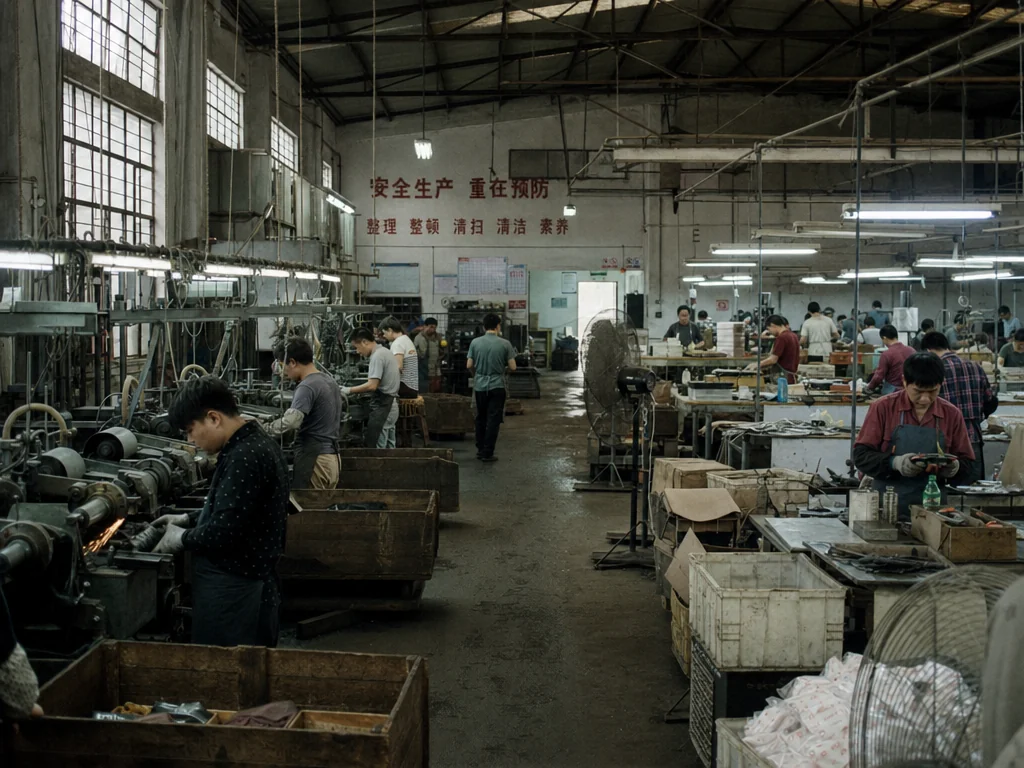
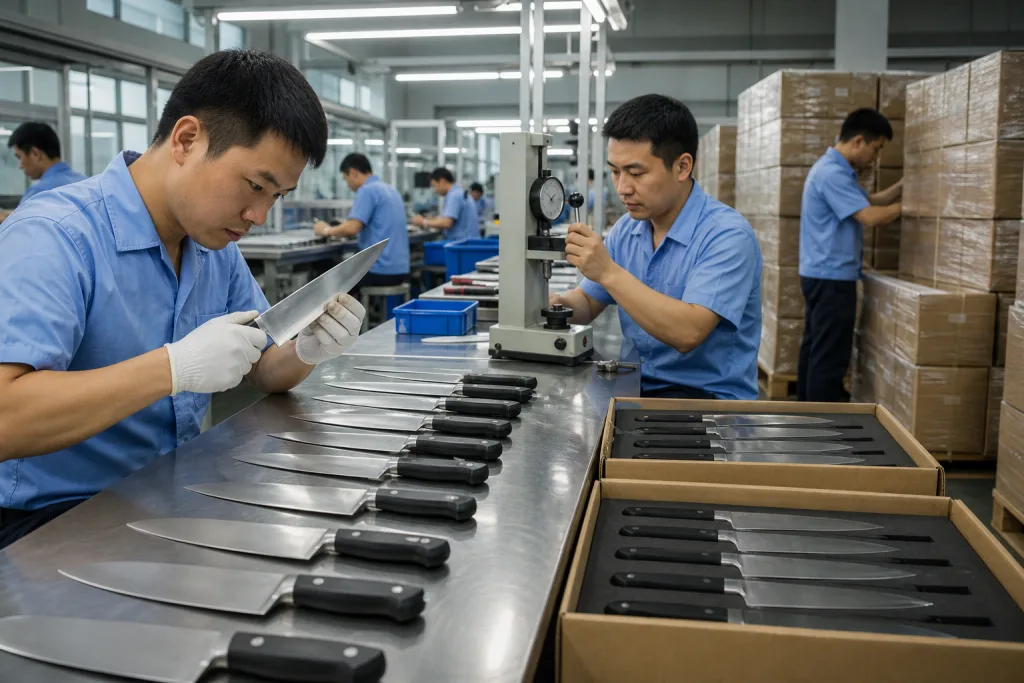
Most buyers treat a cake decorating palette knife as a simple utensil, then wonder why one sample spreads buttercream cleanly while the next one cuts into the sponge. That is the wrong question. The problem is usually offset blade flex, not mirror polish. On our grinding line, a 0.8 mm blade and a 1.0 mm blade can feel like two different tools after the final buffing wheel. We check spring-back by hand before QC measures the offset. A good blade returns without wobble, the handle clears the frosting by about 18-22 mm, and the tip gives enough control for cakes, cupcakes, and plated desserts.
If you handle cake decorating palette knife sourcing for a baking tool brand, a nice render will not save the PO. You need a China supplier that can hold steel thickness, polish grade, offset height, and packaging consistency across 3,000 or 30,000 pcs. We run calipers before packing; last season, QC pulled one batch because the offset height drifted 2 mm after handle riveting, and the buyer flagged a PO typo on carton count before shipment. They were right. A practical cake decorating palette knife manufacturer in Yangjiang, China should talk in numbers: MOQ, lead time, HRC, coating thickness, inner box count, and carton packing. That is what protects your margin and your reviews.
Offset Flex Is the Real Spec
For a cake decorating palette knife, offset blade flex is the spec we lock first before quoting. The offset keeps knuckles out of frosting; the flex decides whether the blade lays buttercream flat or leaves drag marks. Too rigid, and it cuts a trench through soft buttercream. Too soft, and it folds when you lift a rosette or level a 6 mm ganache layer. Bad batch, bad feel. Last month, QC pulled three samples that passed the handle check, but the blade snapped back like a putty knife after a 30 mm bench bend. We do that test on the stainless bench with a ruler and thumb pressure, not by eye.
On our side, a workable buyer spec starts with blade length, width, thickness, offset height, and target flex. For a standard offset spatula, widths of 20 mm, 25 mm, and 30 mm cover most retail sets; 25 mm is the size we see most in supermarket private-label orders. Blade thickness usually sits around 0.6-1.0 mm, depending on size and target feel. We check the taper on the grinding line with a thickness gauge, because good samples fade down gradually instead of showing a hard grind step near the tip. That taper gives controlled spring. The math does not work if the blade is stamped flat and called “premium.”
Do not ask a cake decorating palette knife manufacturer for a kitchen-knife style edge. This is the wrong question to ask. You are not buying cutting performance; you are buying smooth spreading and clean release. A polished surface reduces drag on whipped cream and Swiss meringue buttercream, and we usually reject samples with black polishing compound left near the rivet or heel. QC finds it fast with a white cloth wipe. For decorative work, the tip needs enough control for dots and swirls, but not enough bite to scar the finish. We run the buffing wheel slower on those orders, around 1,200 rpm, and the finish shows it.
- Buttercream work needs softer flex; in our tests, buyers usually prefer the 0.6-0.7 mm feel on small blades, especially for 4 inch and 6 inch decorating knives.
- Ganache and mousse applications need a stiffer blade, often closer to 0.8-1.0 mm so the blade does not buckle under pressure during a straight pull.
- Offset height around 18-28 mm is common for clean hand clearance, and the buyer flagged anything below 18 mm as too close to the cake surface during sample approval.
When you source from China, ask for a physical sample and test it on a chilled cake and a room-temperature frosting batch. We run this check before sealing a golden sample: one pass on cold ganache, one pass on soft buttercream, then a lift test at the tip. Short test. Clear answer. We have seen this go sideways when the PO said 25 mm but the carton label read 20 mm, so we verify the PO, inner box sticker, and master carton mark before we ship.
Steel, Finish, and Taper
Blade material is where cake OEM orders often fail first. We run 420J2, 430, and 3Cr13 because they keep a stable spring, handle kitchen moisture, and still polish clean after three production runs. Harder steel is the wrong question to ask. The math does not work. On the grinding line, one buyer asked us to change a 3Cr13 sample to a “stronger” grade; QC pulled the sample after 30 flexes and found hairline scratch marks near the heel.
A realistic hardness band for a 240 mm offset spatula is 48-52 HRC. We check it on the Rockwell tester in the sample room before the blades move to polishing. That range keeps the blade straight and still gives decorators the flex they expect when spreading buttercream on a 6 inch cake. Too hard, and the edge gets brittle. Too soft, and the blade starts to wave; we have seen retail samples look tired before the first selling season even starts.
Finish sells the tool after the first use. A 320-400 grit satin polish works for mainstream bakery tools; mirror polish fits premium gift sets where the buyer checks shine under showroom lights. The issue is release, not just appearance. Frosting should slide. On one two-hour frosting test, QC pulled the duller sample and found paste sitting inside the grind marks after a single pass.
For Europe and North America, ask the supplier to confirm food-contact compliance for the blade and any coatings. If you use a colored or branded coating, run it through a dishwasher test at 65 C and check the edges for lift or flaking. On the drawing, call out the taper from 1.0 mm spine to 0.6 mm tip, the finish level at 320-400 grit, and a straightness tolerance of 0.3 mm over the blade length. Small miss. Big rework. A PO typo like "mitorr" or a missing tolerance can add 12 days to a sample round we planned for 18 days.
Handle Shape Drives Control
A cake decorating palette knife looks small on a quote sheet, but the handle decides whether the baker gets clean control or fights the tool. On the grinding line, we see a 2 mm swing in grip diameter change the feel fast. For a 40-minute icing run, the buyer should check grip diameter and weight balance, then confirm hand clearance from the offset with an actual sample. Photos lie. A slim handle can still push the wrist into a bad angle, so judging by profile only is the wrong question to ask.
Common handle materials include PP, ABS, TPR overmold, stainless steel, and wood. PP and ABS are the low-cost route for private label because they hold color well and the mold runs clean on the injection machine. TPR gives more grip when the kitchen is warm or the user's hands are wet, and we usually see buyers accept the higher handle cost when the line is for bakery staff, not hobby packs. Wood feels warmer and more premium, but every batch needs closer checking for finish, moisture resistance, and color drift. One buyer flagged a PO that said "matte black" while the approved sample was gloss, and that typo cost 6 days. If you sell into markets that ask hard questions about compliance, check the resin and any coatings against LFGB, FDA, and REACH requirements.
Balance is easy to ignore and painful to fix after tooling. If the handle is too heavy, the tip loses finesse. If the blade carries the weight, the tool feels front-heavy after 20 cakes. QC pulled a sample at 248 mm and still rejected it because the pivot sat 8 mm too far forward. The math doesn't work if the hand lands behind the offset. For retail buyers, a total finished length around 220-280 mm covers most shelf needs, but length is the simple spec; the real spec is where the hand sits against the offset and how fast the user can rotate the blade for smoothing and turning.
From Yangjiang to Zhejiang suppliers and then into final assembly in China, the handle often drives the schedule more than the blade. A laser logo moved 3 mm once, and the first carton got held at packing inspection. Color chips, mold texture, and logo placement can add 4-7 days, so lock those details early. We run faster when the buyer signs off the handle first, because chasing a logo shift on a 10,000-piece order burns time nobody gets back.
What To Lock Before Quoting
I’m rewriting the section in-place, keeping the HTML structure intact and tightening the language so it reads like a factory-side quoting note instead of generic copy.For cake decorating palette knife sourcing, a vague inquiry brings a vague price. Before we quote, lock blade size, steel grade, surface finish, packing, and the shelf your buyer is targeting. If you want an OEM answer, a photo does not cut it. Last month one buyer sent a screenshot, QC pulled the sample, and the caliper read 31 mm while their PO later said 28 mm. Send a drawing, or mark the sample with blade width, offset height, handle shape, logo position, and whether the logo is laser, pad print, or hot stamp. The stamping bench cannot read your mind.
The table below is the starting spec sheet we keep on the line for a standard private label order from a cake decorating palette knife manufacturer in China. If the buyer will not lock blade thickness first, the rest is noise.
| Item | Typical Spec | Why It Matters |
|---|---|---|
| Blade thickness | 0.6-1.0 mm | Controls flex; 0.8 mm feels different from 1.0 mm on buttercream |
| Blade material | 420J2, 430, or 3Cr13 | Sets cost, spring, and rust performance after washing |
| Offset height | 18-28 mm | Keeps knuckles clear of the cake board |
| MOQ | 1,200-3,000 pcs/SKU | Moves with handle color, laser file setup, and carton artwork |
| Lead time | 25-40 days | Counts from sample approval and deposit, not from first email |
| Monthly capacity | About 150,000 pcs | Lets us split a retail launch across 2 or 3 shipments |
Handle color changes or laser marking should not break the schedule. New color boxes or printed inserts can add 7-12 days because the grinding line waits while packing artwork gets approved. We have seen this go sideways when a buyer confirms the ship date first and asks for a new carton dieline 6 days later. The math does not work. Price and time those changes before the PO, not after your buyer has booked promotion space.
QA That Prevents Returns
A clean sample on your desk will not stop returns. For a bakery tool, QA should be plain, measurable, and a little boring. We check blade straightness, offset consistency, satin finish, handle fit, logo position, and carton strength with 150 mm digital calipers, a go/no-go offset gauge, and a 90 cm drop test. If you buy for retail, ask for an inspection plan built on AQL 2.5 for appearance and function, with tighter limits on blade offset and handle gap. Cheap checking gets expensive later.
For an ISO 9001 factory, control starts before mass production. First article approval should lock the drawing, material confirmation, and one signed sample in the file. Then QC checks stamping, polishing, assembly, and final packing; we had one buyer flag a logo shift after the polishing line changed the jig by 0.4 mm. That batch was only 3,000 pcs, but the math still hurt. If the knife is sold in the EU, ask for LFGB and REACH-related paperwork where relevant. If the product goes to the US, keep the material declaration and food-contact statement on hand. If the handle uses paint, ink, or soft-touch coating, run migration and abrasion checks too.
Functional testing does not need fancy equipment. A bakery buyer can ask for hand flex tests, dishwasher simulation, and a simple corrosion check on the blade edge. We run a 50-cycle dishwasher test at 65 C as a baseline for mainstream retail. Premium lines sometimes go to 100 cycles, but asking whether the tool feels fine on day one is the wrong question. The real check is whether the finish, logo, and handle still pass after repeated use. If the tool ships in gift sets, confirm that blade-to-tray fit does not buckle the insert during transit; QC pulled one sample where a 1.2 mm tight tray mark rubbed the mirror finish before the carton was even sealed.
China has plenty of suppliers who can make the shape. Fewer can hold the same standard across three production runs. On the grinding line, one loose fixture is enough to turn a 0.3 mm tolerance into a return problem. We have seen this go sideways after a buyer approved a perfect pre-production sample, then skipped mid-line inspection on the repeat order. That is the difference between a sample factory and a long-term partner.
Private Label And Branding
A cake decorating palette knife logo should be quiet, readable, and hard to scrub off in a busy bakery. On stainless blades, we run laser marking most often; it survives wiping, costs about USD 0.03-0.10 per piece depending on logo size and fixture setup, and the laser room can hold position within about 0.5 mm when the jig is cut right. Pad print on a PP or TPR handle gives color branding, but QC pulled samples after 30 dishwasher cycles and the print edge started to fade near the handle radius. That matters. For premium retail packaging, the logo has to fit the blade shape and the buyer's shelf price. If the retail price is USD 4.99 and the buyer wants a 4-color sleeve plus handle print, the math does not work.
Color catches buyers out. In our last 10 first-time private label inquiries, 6 buyers asked for custom handle color before checking MOQ. Stock white, black, or gray handles stay more stable on the injection line because the resin batch and barrel temperature are already dialed in. Custom Pantone handles can make a baking range stand out on the shelf, but only when the order pays for trial shots, color matching, and rejected chips. We usually need 2 rounds of color chips before mass production, and the first chip is often off by half a shade under the light box. Stock handle tooling supports lower MOQs. A new mold or a special insert shape usually pushes the order into the 3,000-5,000 pcs range.
If you are building a multi-SKU baking tool set, pair the palette knife with matching spatulas or spreaders, then lock the hang card and sleeve layout before sample approval, including barcode size, scan direction, and hole position. Small stuff bites. We have seen a set delayed 12 days because the PO said EAN-13, but the artwork carried a UPC barcode. QC caught it at pre-production, not at packing, so we were lucky. Private label value comes from a clean range that scans, hangs straight on the peg, and looks like one line. One logo on one blade is not a brand program.
In Yangjiang and across the China supply chain, the factory can usually turn around a logo sample fast, often in 3-5 working days if the blade blank is already in stock. The file still has to be usable. Send vector art, Pantone references, and the exact print area in mm; a JPG copied from a website is the wrong file for the grinding line and the laser room. We have seen a 22 mm logo arrive as a blurry 96 dpi screenshot, then the buyer asked why the laser edge looked soft. No mystery there. Guesswork creates rework, and rework eats margin.
Packaging, Freight, and Launch
Packaging is not an afterthought. It is the last technical layer protecting your product and your margin. For a cake decorating palette knife, the pack has to stop blade scuffs, keep the handle from shifting, and survive carton compression. On our packing table, we run a 30-second shake test and check whether a 0.2 mm sleeve still clears the blade without rubbing. Small detail. Big return risk. A basic retail sleeve works for price-sensitive channels, while a window box or hang-card blister fits a premium baking aisle better. If you sell online, the master carton also needs to survive FBA handling and direct-to-consumer drops. Cheap packaging looks harmless until 6 buyers upload photos of scratched blades.
Ask the supplier to confirm inner pack quantity, master carton size, gross weight, and carton drop requirements before production starts. For FOB shipments, clean dimensions are needed for freight booking. For DDP, you need full landed-cost clarity: carton count, label placement, and whether the factory can apply FNSKU labels for Amazon. QC pulled the sample on one order and the barcode failed the first scan, so the buyer flagged the whole lot. The product was fine. The carton was not. We see this go sideways when inserts are loose, barcodes print faint, or a carton grows by 3 cm after the buyer approved a thicker backing card. The math does not work if you find that after the vessel sails.
For bakery brands importing from China, the clean launch path is one sample round, a pilot order of 1,500-3,000 pcs, then a repeat order after sales feedback. That is safer than jumping straight into a full container because you can check flex, finish, and packaging under real selling conditions. On one spring steel run, the grinding line held the edge, but a 120-degree flex test showed a 1.5 mm twist at the tip, and we caught it before packing. Good suppliers in Yangjiang treat packaging as part of the product. The last two workers at the packing bench should not be the ones fixing a bad spec. We ship better when we run it that way.
If your market needs gift packaging, ask early. A retail-ready pack can change carton dimensions, freight class, and the final unit cost by 8%-12%. One 12-piece set moved from 42 x 32 x 28 cm to 46 x 36 x 30 cm once the buyer asked for a rigid insert, and that changed the shipping math immediately. The pack bench saw the difference before the PO was issued. Better then. Worse after warehousing. The wrong question is whether the box looks premium; the real question is whether it still ships at the right cube.
Frequently asked questions
For most retail baking tools, start with 0.6-1.0 mm blade thickness. Around 0.6-0.8 mm feels lighter and gives more flex for buttercream work, while 0.8-1.0 mm feels steadier for ganache and smoothing. If you are making a premium private label line, ask the factory to quote two versions and test both. A good supplier in China should give you a sample set within 10-15 days, then you can compare flex on chilled cake and room-temperature frosting.
For a standard private label program, MOQ often starts at 1,200-3,000 pcs per SKU. Stock handle colors and a simple laser logo sit on the lower end. Custom handle molds, special colors, or gift packaging move the order higher, often to 3,000-5,000 pcs. If the supplier claims very low MOQ, check whether they are using existing tooling and generic packaging. That can work for a launch test, but you should confirm the finish and branding still match your retail position.
For Europe, ask for LFGB-related food-contact support, REACH awareness for handle materials, and clear material declarations for blades, inks, and coatings. For the US, keep food-contact statements, traceability records, and supplier compliance files ready. If the product is made in an ISO 9001 factory, request the inspection record and AQL 2.5 report as well. If you sell on Amazon, add carton labels, FNSKU placement, and packaging dimensions to the document pack so you do not lose time at the warehouse.
Test it the way a decorator uses it. Spread buttercream on a chilled cake, then on room-temperature frosting, and check whether the blade glides without chatter. Try a 20-30 second smoothing pass and see whether the blade keeps its shape or starts to twist. Ask the factory for at least two steel thickness options, such as 0.7 mm and 0.9 mm, so you can compare feel. In a proper sampling round, you should receive physical samples from China before confirming the production spec.
If you already know the shape, dimensions, and packaging you want, private label is usually the faster route. If you want a unique offset, handle geometry, or set composition, OEM is the better fit because it lets the factory build to your drawing. For a cake OEM project, the difference is mostly control and tooling cost. Private label can launch faster at lower MOQ, while OEM gives you a more defensible product if you want a stronger retail story and a more specific user feel.
Request a flex-tested sample today
Send your size, handle style, and packaging target. We can quote cake decorating palette knife OEM options, sample timing, and landed-cost paths from China.
Request a Quote