For wedding and gift lines, a cake knife and server set is not a basic utensil order. It sells on first look. Buyers spot problems fast: engraving 0.2 mm too shallow, mirror polish showing haze under the light box, or a server edge where the stamping line still reads flat. We had one buyer reject the full tray after QC pulled 12 samples at the packing table and found the same weak polish near the handle neck. Treat it like commodity cutlery and the math does not work.
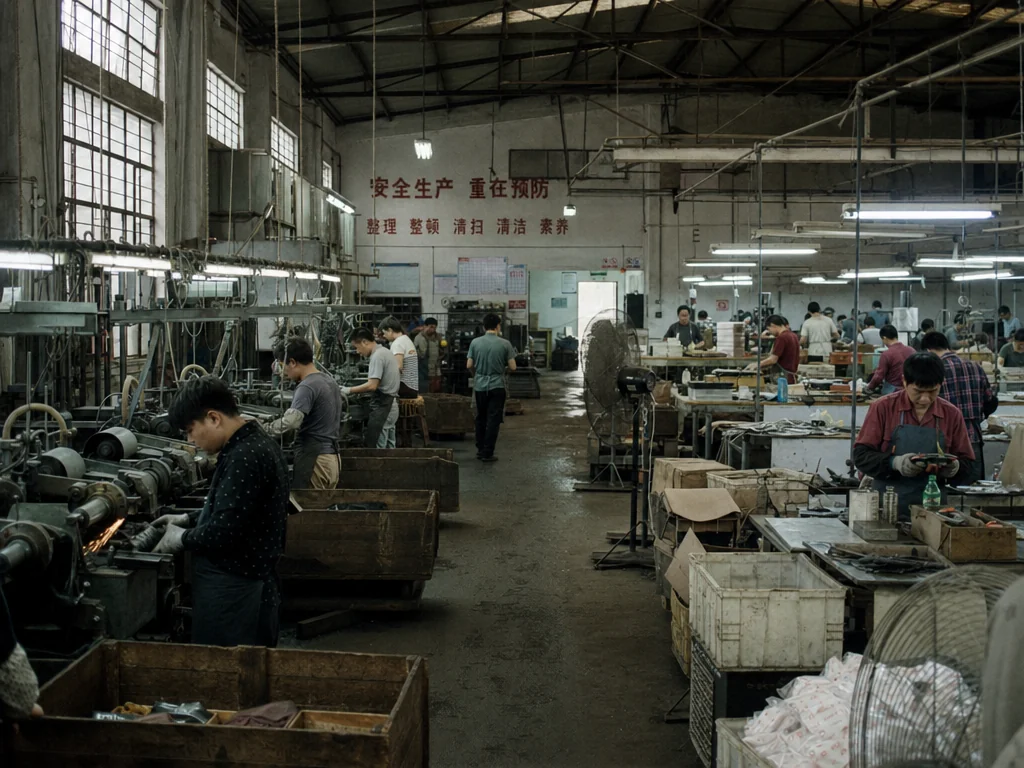
At TANGFORGE in Yangjiang, China, we run these programs as small gift products with a decorative finish, not loose kitchen tools. On the line, we check blade thickness, handle balance, engraving depth, carton protection, and finish consistency lot by lot; the caliper and gloss meter sit right beside the grinding line. Our factory in China handles OEM and private-label work with around 240 employees, and mixed cutlery output is about 28,000 units per month. For gift buyers, the target is simple: ship on time, look premium at FOB port, and pass AQL 2.5 without rework.
What buyers really purchase
For wedding and gift retail, the buyer is not just purchasing a cake knife and server set. They are buying the photo, the unboxing, and the sample that still looks clean after the lid has been opened twice on the packing table. The knife carries the brand through engraving, plating, or the handle profile. The server carries the ceremony shot because it sits under the slice in the photo. We have seen this go sideways: one buyer approved the blade polish and skipped the box insert check; QC pulled the sample after a drop test, and the server had shifted 6 mm inside the tray and marked the knife handle. This is the wrong question to ask if you start with metal only. Start cake knife and server set OEM sourcing from the end user, then work back through metal, packing, and inspection.
For most gift brands, the standard set is 1 knife plus 1 server, packed in a rigid box or window box. Common knife lengths are 240 to 280 mm, and servers are often 220 to 260 mm. Small difference. Big feel. For a premium hand feel, we run handle thickness around 2.5 to 4.0 mm, with the neck transition checked by caliper before polishing. Thin handles save material, but the math doesn't work if the set feels light, bends during packing, or gets flagged in the first carton inspection. In Yangjiang, China, 7 out of 10 first-time buyers ask about blade polish first and handle balance last. We see that mistake a lot on the grinding line. A wedding set needs matched proportions and enough weight in the hand, especially after the grinder takes the sharp edge off the handle shoulder.
- Knife length: 240-280 mm
- Server length: 220-260 mm
- Handle thickness: 2.5-4.0 mm
- Typical set structure: 1 knife + 1 server
Material choices that photograph well
For cake and server sets, the steel does not need to sound fancy on a spec sheet. It needs to polish clean on the grinding line. We run 420J2, 430, and 2Cr13 most often for cake knife and server set OEM because they take a mirror finish without slow rework, hold light rust risk, and keep landed cost inside the target for wedding gift buyers. On a 3,000-set run, 420J2 usually saves more trouble than it creates when the knife has a serrated edge; the saw teeth come out clean, the wheel stays true, and the tooling does not get chewed up. We had one buyer flag a PO typo that asked for a chef-knife edge on a dessert set. Wrong question. For decorative orders, buyers in Europe and North America usually ask for bright mirror finish with 6K to 8K polishing, then laser engraving on the handle or blade base.
Do not over-spec the steel unless the end user needs it. A cake knife is not a chef knife. A server is not a kitchen spatula. The job is to cut sponge, mousse, or layered cakes without dragging crumbs across the plate. A light serration at 0.5 to 1.2 mm tooth pitch is usually enough; QC pulled the sample after 20 cuts when the teeth were too aggressive and left torn sponge on the tray. Too much bite makes the blade look like a bread knife, and the math does not work for a wedding table item. For plating and finish, we ask for salt spray testing only when cartons will sit in humid storage or move through coastal routes; for normal gift-line shipments, passivation plus dry-pack control is the cleaner choice.
| Material | Typical HRC | Finish | Best use | Unit cost impact |
|---|---|---|---|---|
| 420J2 | 48-50 | Mirror / satin | General gift sets | Low |
| 430 | 45-48 | Mirror | Decorative OEM | Lowest |
| 2Cr13 | 50-52 | Mirror / plated | Premium look with stability | Moderate |
Engraving that stays sharp
Engraving is where cake OEM programs often slip. The logo looks clean on a PDF, then polishing thins it out on the handle. We had a 12 mm logo pass at 1x on screen, then come back weak after the buffing wheel hit the edge of the mark. For wedding and gift lines, the mark has to read from 30 to 50 cm away, which is about the distance a buyer uses for shelf checks and product photos. Laser engraving is still the standard choice for a logo, date, initials, or one short wedding line. A depth of 0.2 to 0.4 mm works on stainless handles. On coated or plated handles, we run a test path first. One hot pass can burn the border, leave a yellow halo, or expose base metal near the curve, and QC will hold that carton.
For multi-language orders or batch-changing dates, tell your cake knife and server set OEM manufacturer to lock the engraving area at ±0.5 mm. That keeps the mark centered when QC pulls samples from three cartons and checks them with a vernier caliper. For a stronger gift look, laser engraving can be paired with filled ink or a small brass emblem, but buyers often push back once the quote moves. On a common OEM run in Yangjiang, China, laser branding may add about USD 0.08 to USD 0.25 per set depending on artwork detail and fixture time. The math does not work if you cram the handle with graphics. We have seen this go sideways: tiny names, two dates, a logo, and a floral line all fighting on a 22 mm handle face. One clean brand mark and one occasion line usually sell better.
- Recommended engraving depth: 0.2-0.4 mm
- Placement tolerance: ±0.5 mm
- Typical branding add-on: USD 0.08-0.25 per set
- Best practice: one brand mark, one occasion line
Serrated server and edge details
The serrated knife gets the photo, but the server carries the slice. It has to lift a 70 mm tall piece without twisting, especially when the filling is mousse or there are three cream layers. Put blade thickness on the drawing, not buried in an email thread. We run 1.2 to 1.8 mm stainless for the server blade and 1.0 to 1.5 mm for the knife blade, depending on whether the buyer wants a slim wedding look or a heavier gift-box feel. QC pulled one pre-shipment sample last season where the server tip bent 6 mm after carton pressure. Too thin. On the forming jig, anything much leaner starts to look nice on screen and weak on the table. Go too thick and the math doesn't work either: the set starts reading as kitchenware, not a bridal gift.
The serration pattern should stay shallow and even. For cakes, 8 to 14 teeth across the useful cutting zone usually gives control without tearing sponge or dragging buttercream. The server edge can take a light bevel, but do not sharpen it like a kitchen knife. Wrong tool. It should slide through frosting, not scratch a ceramic plate or catch a guest's finger. When we develop cake knife and server set OEM for event brands, we usually make three edge samples on the grinding line: a smooth knife for clean photos, a fine serrated knife for cutting tests, and a serrated tip with polished body for buyers who want both. Then the buyer can check the reflection under banquet lighting and cut an actual 8 inch cake during a tasting or wedding rehearsal. A deep tooth pattern looks bold in a catalog; on sponge, it tears. We've seen that go sideways more than once.
If your line targets North American bridal gifts, specify a rounded heel and a slightly upswept server tip. Small change. Better handling. On one PO the buyer wrote "round head" and the factory made the whole server nose too blunt, so we now mark the heel radius in mm on the artwork sheet. That geometry supports the slice better and cuts down the crumbs that fall during transfer. We ship fewer complaints that way. This is the wrong question to ask if the drawing only shows a front view.
Packaging for weddings and gifting
Packaging is part of the product, not decoration. A cake knife and server set for a wedding line gets opened at the gift table and then sits in a drawer for years. If the lid caves in after a 76 cm drop test, the buyer blames your brand, not the courier. On the packing line, we keep one sample next to the tape gun and check the lid fit before we lock the spec. For cake knife and server set OEM sourcing, we usually run three box structures: a rigid box with an EVA insert for premium gift sets, a folding gift box with a PET window when the buyer wants shelf display, or a paper sleeve with a molded tray when the promo price is tight. Pick by retail price and freight method. Catalog photos do not ship.
For export programs, the outer carton needs impact resistance, not just thicker board. A 3-layer mailer or master carton with corner protection cuts damage better than loose foam; QC pulled one sample last month and the server handle rubbed through the gold hot stamp after 18 hours in a vibration test. We saw the same thing at the sealing bench, where one bad flap fold turned into a scuffed gift set before the carton left the room. If you sell through Amazon or similar channels, set FNSKU placement and carton labeling before production starts, because a late label change can hold packing for 2 days on the line. Confirm whether packaging claims need REACH, LFGB, or food-contact statements, especially if the server will touch food directly. The box looks small, but packaging tooling can move total landed cost by USD 0.20 to USD 0.80 per set. In Yangjiang and other factory hubs in China, we have seen buyers save USD 0.12 on the unit and lose USD 0.45 in chargebacks. The math does not work.
- Recommended gift box: rigid board 1.5-2.0 mm, with greyboard checked by caliper before mass packing
- Insert: EVA for plated handles or molded pulp when the buyer wants less plastic
- Common export risk: carton crush, scuffing, loose fit after shake test; if the tray rattles, the box is wrong
- Retail requirement: FNSKU or barcode-ready outer pack, confirmed against the PO artwork file before the press run starts
MOQ, pricing, and lead time
For a workable cake knife and server set OEM budget, split the order before you talk decoration. A plain stainless set with laser logo and standard gift box usually starts at 1,000 sets. If the PO moves to 3 handle colors, two engraving artworks, or a shaped EVA insert, MOQ usually shifts to 2,000 or 3,000 sets because the grinding line loses blanks during changeover and the packing table needs separate box labels. We run this every week. Last April a buyer asked us to hold 1,000 sets across 6 SKUs; that is the wrong question because each SKU left only 166 sets for setup loss. Lead time is usually 35 to 50 days after sample confirmation, with 7 to 12 days for sample development and artwork approval. Last month QC held one sample because the bride-and-groom logo sat 0.4 mm off center on the server handle.
Price comes from finish, packaging, and metal thickness, and most gift programs land in the USD 1.60 to USD 4.80 per set FOB China range. Simple 430 mirror sets stay near the low end. Plated or engraved wedding editions climb fast when the buyer wants a heavier server blade or a rigid 2-piece gift box, because we run slower polishing and add a separate bubble-bag check before carton sealing. If you compare quotes from a cake knife and server set OEM manufacturer, check carton count and insert style first, then engraving method and whether LFGB or FDA testing is included. A low unit price with separate box, logo, and testing charges is not low. The math doesn't work. For Europe and North America procurement teams, landed cost and defect rate matter more than the FOB number on page one of the PI, especially when QC pulled the sample and found 3 scratched mirror blades in a 20-set pilot carton.
| Item | Typical value | Buyer note |
|---|---|---|
| MOQ | 1,000-3,000 sets | More variants need higher MOQ |
| Lead time | 35-50 days | After sample approval |
| FOB price | USD 1.60-4.80 | Depends on finish and packaging |
| QC standard | AQL 2.5 | Critical defects at AQL 0 |
Quality checks that prevent returns
For gift and event brands, the eye and the box make the first sale, but the order still needs a written inspection standard. We usually set AQL 2.5 for major and minor appearance defects on a cake knife and server set, with critical defects at zero. Critical means sharp burrs, loose handle parts, broken inserts, rust spots, or an engraving mistake that changes the message. QC pulled one sample last season where “2025.06.18” was engraved as “2025.08.18”; under the bench light the polish looked fine, but the buyer rejected the full inner box. Fair call. For wedding goods, the wrong date is the wrong product.
On our Yangjiang floor, we check polish uniformity, engraving position within 1 mm, box fit, edge smoothness, and carton drop integrity. We run the grinding line first, then packing checks with a 3M tape test on printed boxes and a hand check for burrs along the server edge. Ask for 4 pre-shipment photos at minimum: carton top, carton side, product front, engraving close-up. For EU or North America shipments, ask for REACH and food-contact declaration support; if the handle has coating or decorative plating, confirm the chemistry before mass production. A good OEM partner should show process records. Promises are cheap. If the supplier cannot tell a polishing-paste scratch from a transport mark caused by a loose 5-layer carton, the math does not work for a volume order, and we have seen this go sideways after loading.
- Major defects: AQL 2.5
- Critical defects: AQL 0
- Key checks: engraving position within 1 mm, polish line under bench light, carton fit, rust points, burr feel along the server edge
- Useful evidence: pre-shipment photos, packing records, carton mark photos before loading
Frequently asked questions
For a standard wedding or gift set, MOQ is usually 1,000 sets. If you want multiple logo versions, gold plating, or special packaging, 2,000 to 3,000 sets is more realistic because tooling and setup losses increase. In Yangjiang, China, factories often hold the MOQ low only when the design is close to an existing base model. If you need a completely new handle shape or a special insert, expect a higher commitment. The best way to reduce risk is to start with one core SKU, then add color or engraving variants after the first shipment passes market test.
For most cake sets, a fine partial serration works better than a fully aggressive serrated edge. A clean cutting zone with 8 to 14 small teeth is enough to slice sponge and mousse without tearing. Fully serrated blades can look too much like a bread knife, which is not ideal for wedding presentation. If your brand wants a more formal look, keep the serration subtle and polish the rest of the blade bright. The server should stay smooth or lightly beveled, because its main job is support, not cutting.
Laser engraving is the most practical option for cake knife and server set OEM because it is fast, repeatable, and good for initials, dates, and short brand marks. A depth of 0.2 to 0.4 mm is usually enough for clear visibility without damaging the handle surface. If you need a more premium effect, you can add ink fill or a metal emblem, but that raises cost and lead time. For order planning, keep the engraving area fixed with a ±0.5 mm position tolerance so the artwork stays centered across batches.
For a basic stainless wedding set with standard gift box and laser logo, FOB China pricing often falls between USD 1.60 and USD 4.80 per set. The lower end is usually 430 or simple 420J2 with minimal finishing. The higher end includes thicker metal, mirror polish, plated accents, or rigid packaging. If you are sourcing from Yangjiang, China, make sure the quote includes the same insert, box type, and branding method, because packaging and engraving can shift the real landed cost by USD 0.20 to USD 0.80 per set.
For food-contact related gift sets, buyers commonly ask for REACH support, LFGB-related declarations if applicable, and a food-contact statement for the metal and any coatings. If the set is decorative but still touches cake during use, treat it as a food-contact item until proven otherwise. Many importers also request factory audit references such as ISO 9001 or BSCI, plus inspection records under AQL 2.5. If you sell through retail channels, carton labels, barcode data, and packaging compliance matter just as much as the steel specification.
Build your wedding set with us
Send your artwork, target price, and packaging spec. We can quote a cake knife and server set OEM program with engraving, samples, and export packing for China FOB or DDP.
Request a Quote