A corporate gifting knife OEM order looks simple until you price the whole pack: blade, logo, insert, carton, drop test, and the foam or tray that keeps the box from getting crushed in transit. We have seen buyers chase the knife unit price, then the buyer flagged the insert after the first trial drop. That is the wrong question. If this is a promotion, you are buying a branded object that has to open cleanly, sit straight in the box, and feel intentional in the hand. On the packing table, a 1.2 mm carton board can save the whole presentation, and a sloppy insert will show up fast when QC drops the sample from 76 cm.
That is why the right corporate gifting knife OEM manufacturer in China matters. In Yangjiang, we run these programs on repeatable specs, not guesswork: 5,000-piece MOQ for standard models, 25 to 35 days for first production after approval, and steels or blade assemblies typically held in the 54 to 59 HRC band depending on the design. QC pulled the sample, checked the logo depth, and the box lid stayed flat at 1.2 mm carton board. If the buyer wants to save a few cents by cutting the insert spec, the math doesn't work. For promo buyers, that detail decides whether the piece lands as a premium gift or as a cheap insert with a blade attached.
Start With the Gift Experience
For corporate gifting, the knife is only one piece of the set. The buyer opens the lid first, checks the insert, then looks for the knife and the logo. If the tray shifts, the lid picks up a scuff, or the mark lands 1 mm off center, the whole pack feels cheap in a second. We run that check at the packing bench with a 0.5 mm feeler gauge. That is the part that matters, not a prettier blade finish. A corporate gifting knife OEM needs to think like a packaging shop, not just a blade maker.
Buyers often ask for the lowest build and then wonder why the gift does not land. The math does not work. A basic stainless pocket knife can sit at USD 1.80-3.50 FOB depending on size and finish, but the box and insert lift perceived value more than a small blade upgrade. Last month QC pulled a sample from the line and the blade passed, yet the sleeve print missed the logo by 2 mm; the buyer flagged it on the spot. In Yangjiang, China, plenty of factories can stamp metal. Fewer can keep 5,000 or 10,000 sets aligned from artwork to final pack.
Start with the audience, then build the gift around it. A dealer award can ship in 12 days with a kraft box and a simple insert, while a board-level client pack usually needs 18 days, a rigid box, foam or EVA cut to the knife profile, and a laser logo on the blade or handle plus a printed sleeve. If the set is going to North America or Europe, the box also has to survive mailers and pallet handling, not just a desk opening. We have seen this go sideways when the PO said “gift box” but the buyer meant a presentation box with a 28 mm insert depth, so spell it out before the grinding line starts cutting steel.
Choose Logo Methods That Hold Up
For logo work, laser engraving is the safest choice for most corporate gifting knife OEM projects. We run fiber laser machines on stainless steel blades because the mark stays put, and pad print gets rubbed off fast on a knife that gets handled all day. On coated blades or handles, the operator has to check the depth and heat zone on a scrap piece first, because if the beam bites too hard the finish turns patchy. Last week QC pulled the sample with a 10x loupe, and the buyer flagged the edge haze before we moved forward.
There is a real gap between a logo that looks good in a mockup and one that survives production. A shallow mark can pass a photo check and vanish after a few rounds of abrasion. A deeper mark, usually around 0.05 to 0.20 mm depending on material, holds up better. If you are placing a corporate OEM order, ask for a pre-production sample that shows the actual laser speed, depth, and location. The placement matters too. On a folding knife, the logo must stay clear of the thumb stud, lock bar, and safety label. "Can you put it anywhere?" is the wrong question. We saw that go sideways on a 3,000-piece run when the logo sat 2 mm too close to the pivot.
For premium gifts, a tone-on-tone laser mark on black oxide, stonewash, or bead-blasted finishes looks sharper than cheap color print. If the handle is wood, G10, or aluminum, we test the mark on the grinding line before anyone signs off on mass production. Our export team in Yangjiang usually pushes one logo method per SKU, because mixed processes create more scrap and the math does not work. When the program also needs serial numbers, event names, or FNSKU labels, we plan those as separate steps so the brand mark stays clean. We ship fewer headaches that way.
Build the Box Around the Knife
Gift packaging decides whether a knife order reads as a real corporate gift or a cheap promo piece. We had one buyer flag a 1 mm insert gap after QC pulled the sample off the die-cut table, and that kind of miss kills the pack fast. For a corporate gifting knife OEM order, match the box to the audience and the handoff. Conference giveaway? A compact folding carton works. Executive or VIP set? Use a rigid box with a custom insert. Starting with price alone is the wrong question.
Common structures are paper box, rigid box, drawer box, magnetic flap box, and sleeve box. The insert can be EVA, molded pulp, cardboard, or a velvet-lined tray. On the packing line, we stopped a run because the PO said "black" on the box and "matte black" on the insert; the buyer flagged it before print, which saved a rework. The cost gap is real. A paper box with printed insert may add USD 0.20-0.60 per set, while a rigid magnetic box with foam can add USD 0.80-2.20 per set depending on size, finish, and printing. If your buyer is targeting Europe, FSC paper options and water-based inks are easier to sell. If the gift includes a cloth pouch or safety leaflet, set the internal layout before tooling starts.
| Packaging option | Typical add-on cost | Best use case | Lead time impact |
|---|---|---|---|
| Foldable paper box | USD 0.20-0.60 | Event giveaways | Minimal |
| Rigid magnetic box | USD 0.80-2.20 | Client gifts | 3-7 days |
| Drawer box with insert | USD 0.70-1.80 | Premium kits | 5-10 days |
The box also affects freight. A larger premium pack can raise carton volume by 20-35 percent, and we see that on the carton gauge before the first shipout. That matters on FOB and DDP quotes. A 12-day plan can turn into 18 days if the outer carton spec changes after the box cutter is set. In Yangjiang and the wider China supply chain, packaging is often outsourced, so lock the box specification early; the math does not work if you change it late, and delivery slips.
Specify Steel, Handle, and Safety
If you are buying knives for gifting, you still need real knife specifications. The box does not cut steel. For most corporate gifting knife OEM jobs, we run 3Cr13, 5Cr15MoV, 7Cr17MoV, or 8Cr14MoV because that keeps cost, corrosion resistance, and line stability in balance. On the Rockwell tester, gift runs usually land at 54 to 59 HRC. Go softer and edge retention drops fast. Push harder and the grinding line starts shedding yield on a 5,000-piece order. Saving a few cents here is the wrong question.
Handle material changes the first impression. Zinc alloy feels heavier and reads more formal. Aluminum looks clean and modern. G10 and FRN work for outdoor-style gifts. Wood can look premium, but only if the grain, coating, and logo placement stay under control. On the bench, QC pulled the sample and opened and closed the lock 20 times before release. For food-related gift sets, LFGB or FDA attention may apply to any accessory that touches food, and REACH paperwork is still needed for the EU. If the design includes a lock, test the release and closing action. A stiff lock is not a small defect. We have seen that turn into a buyer complaint on day one.
Here is the specification level you should request in the RFQ:
- Blade steel and hardness range, for example 7Cr17MoV at 56-58 HRC.
- Blade thickness, edge angle, and finish, such as 2.5 mm satin or black oxide.
- Handle material, texture, and logo placement.
- Lock type, opening method, and pocket clip direction when there is one.
- Packing type, insert color, and outer carton mark style.
That level of detail cuts rework. A corporate OEM order stays easier to control when the spec is locked before the sample reaches the grinding line, not after. We have seen the math go sideways when the buyer sends a PO with a typo on hardness or handle finish after sampling.
Plan MOQ, Lead Time, and QC
Corporate gifting runs on a date, not a mood. Trade show, dealer meeting, holiday launch, the ship date does not move. For a repeatable corporate gifting knife OEM job with custom logo and box, 5,000 pieces is a normal MOQ. If the buyer adds new tooling, a matte black finish, or a custom foam insert, we usually land at 10,000 pieces or more. We quote from the blade spec, the logo plate, and the carton insert, then QC checks the sample on the packing table with a vernier caliper. Asking for 2,000 on a custom job is the wrong question.
Lead time changes with every extra part on the order. A logo on an existing model can be ready in 25-35 days after sample approval, while a new handle, printed box, and special insert stretch it to 40-55 days. We run the blade spec first, then logo and packaging in parallel. On the grinding line, a buyer once changed carton artwork after tooling had started, and we lost 6 days cleaning up a PO typo and the revised dieline. One missing 0.5 mm on the insert slot stops a whole pack-out run. If the ship date is fixed, the math has to be fixed first.
Quality control has to be written into the order. Ask for AQL 2.5 for general inspection, then list the checks: blade centering, logo placement, open-close action, box print registration, and carton drop condition. If the set goes to retail or e-commerce, add barcode readability and label position too. QC pulled the sample on one gift order because the logo sat 1.5 mm off center, and the buyer flagged it before packing. A corporate gifting knife OEM factory in China knows a clean box matters as much as the blade. If the unboxing looks cheap, the deal looks cheap.
Work With a Factory in China
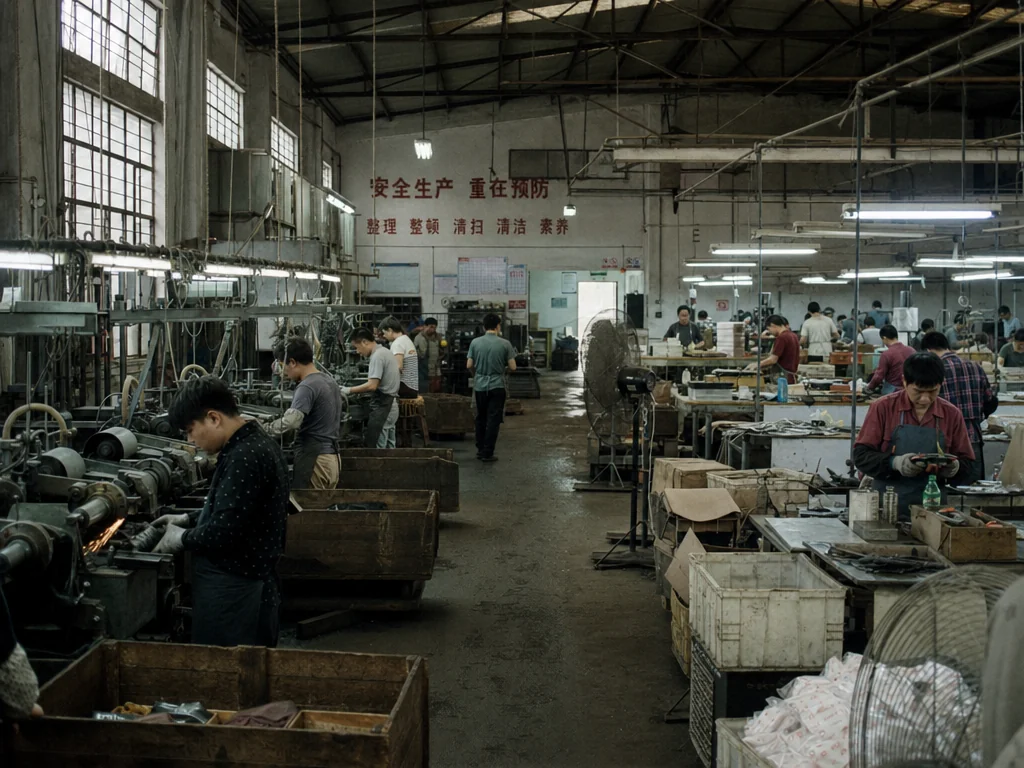
I’m rewriting the section in place, keeping the HTML tags and structure intact while tightening the language so it reads like an export sales engineer wrote it, not a template.Buying from China is about control, not just unit cost. In Yangjiang, we run blade grinding, handle assembly, box printing, and finishing in one base, so a change on the grinding line does not get buried between vendors. That matters when a corporate gifting knife OEM order has to stay the same across 10,000 or 50,000 sets. We have 240 employees and a monthly output that clears 120,000 units, which is the number that matters when the ship date is fixed and the buyer is already asking for carton counts. On Monday, QC pulled the first 10-piece sample at the caliper bench, and that is where problems get found.
Scale alone does not solve sourcing problems. You still need a first-article signoff, a photo approval stage, and a packing checklist. Ask who owns the job if the laser mark shifts by 1 mm, and ask whether packed retail sets can be split by SKU or event code. If your brand sells through more than one channel, carton labels need FNSKU, UPC, or internal lot tracking. This is the wrong question to ask: can they make a knife. The real question is who stops the line when QC pulled the sample and the mark is off by 1 mm. The laser table does not forgive a loose fixture.
The practical advantage of a factory in Yangjiang and the wider China manufacturing network is straightforward: we can tune the build to the buyer profile. A low-cost partner can make the knife. A stronger partner keeps the whole gifting package tight, from print color matching to carton loading. We have seen this go sideways when a logo proof passed on screen but the box color missed by one shade on the press, and the buyer flagged it before loading. The math does not work if you wait until 5,000 cartons are sealed to fix a shade issue. That is the part worth paying for.
Frequently asked questions
For a standard model with custom laser logo and gift box, 5,000 pcs is the most common MOQ. If you need a new mold, special handle material, or premium rigid packaging, 8,000-10,000 pcs is more realistic. Small trial runs are possible, but the unit cost rises fast because packaging and setup are spread over fewer pieces. In China, especially in Yangjiang, the cost gap between 3,000 and 5,000 units can be significant, so plan your event volume before you ask for samples.
For knives, yes, in most gift programs. Laser engraving is more durable because the mark is part of the surface, not sitting on top of it. On stainless steel, a fiber laser mark usually survives handling and transit better than print. Pad printing is acceptable for low-cost giveaways, but it can wear or chip, especially on curved handles or coated surfaces. If the gift is meant to represent your brand to executives or distributors, laser is the safer default. A sample should confirm the exact depth and placement before mass production.
A rigid box with EVA or molded pulp insert is the most common premium choice. It typically adds USD 0.80-2.20 per set, depending on box size, paper finish, and insert shape. If you want a cleaner, lighter option, a drawer box can work well and still feel high-end. For events or conference giveaways, a printed folding carton may be enough. The right choice depends on whether the knife will be handed out on-site or shipped individually to customers in Europe or North America.
For many corporate gifting projects, 3Cr13, 5Cr15MoV, 7Cr17MoV, or 8Cr14MoV are practical choices. The common hardness band is 54-59 HRC, depending on the blade geometry and target price. That range is stable for mass production and gives a reasonable balance between edge retention and corrosion resistance. If you push hardness too high without changing the rest of the build, you can create consistency problems and increase rejects. A supplier in Yangjiang, China should be able to explain why they recommend a specific steel, not just name one.
Write the inspection points into the purchase order. Ask for AQL 2.5 on appearance and function, plus checks for logo position, blade centering, open-close action, box print, and carton condition. If the order has retail labels, add barcode readability and SKU matching. For EU-bound gifts, request REACH-related material declarations where relevant. A good factory will also share pre-shipment photos and carton count records. That level of control is standard corporate OEM practice, not an extra favor.
Specify your gift knife program now
Send your logo, target box style, and quantity. We will turn it into a practical OEM spec with pricing, packaging options, and a realistic lead time.
Request a Quote