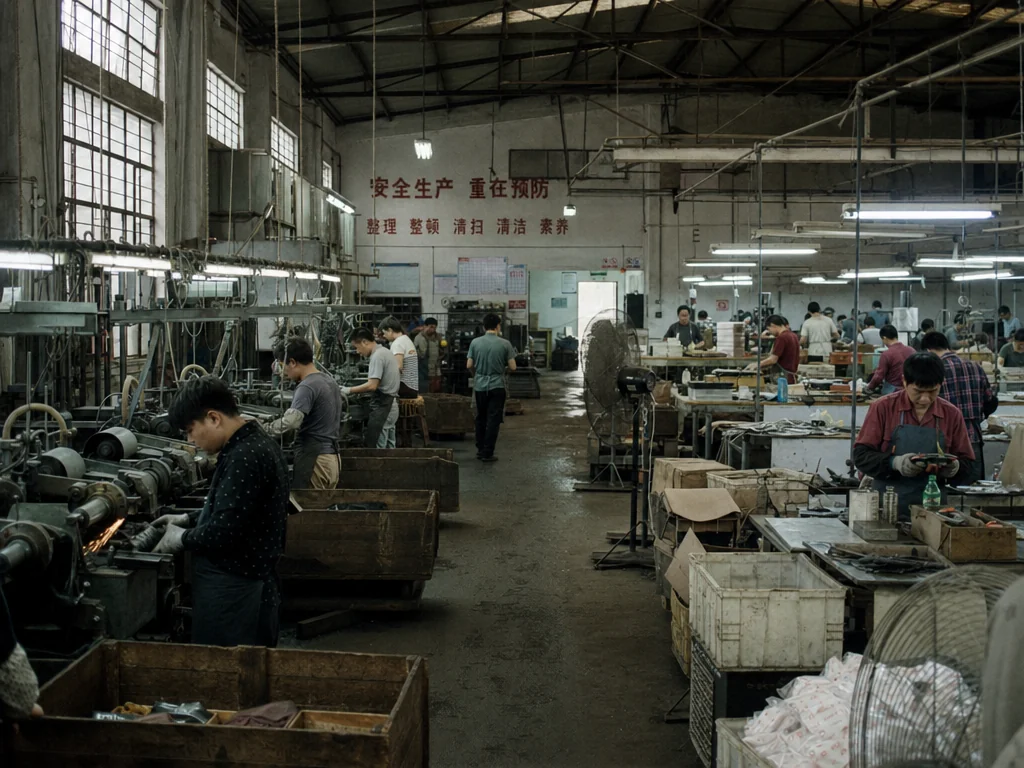
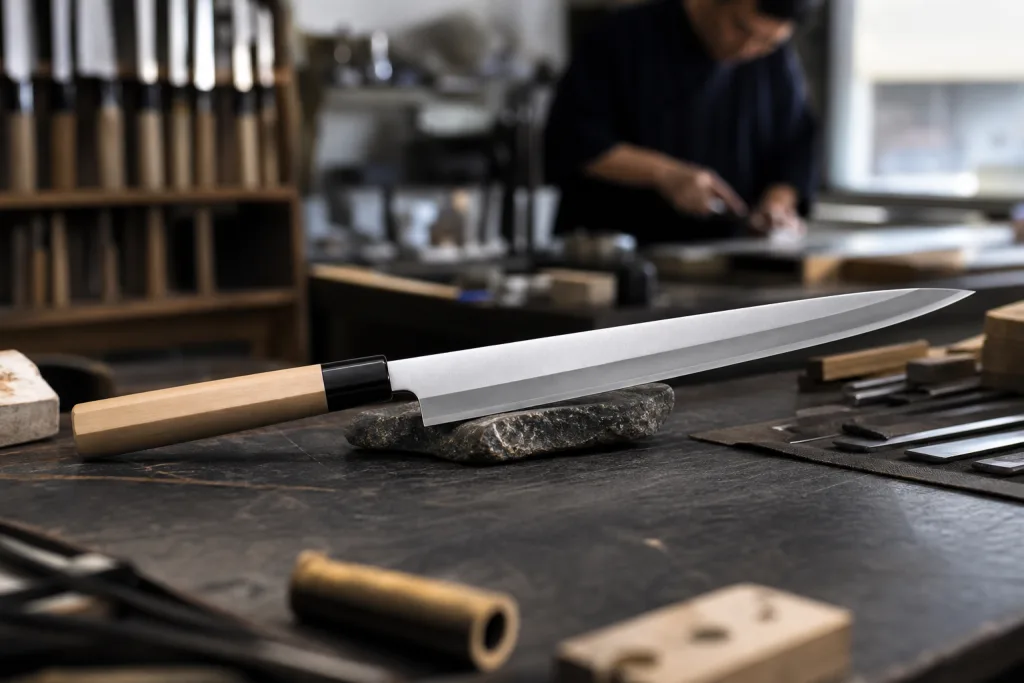
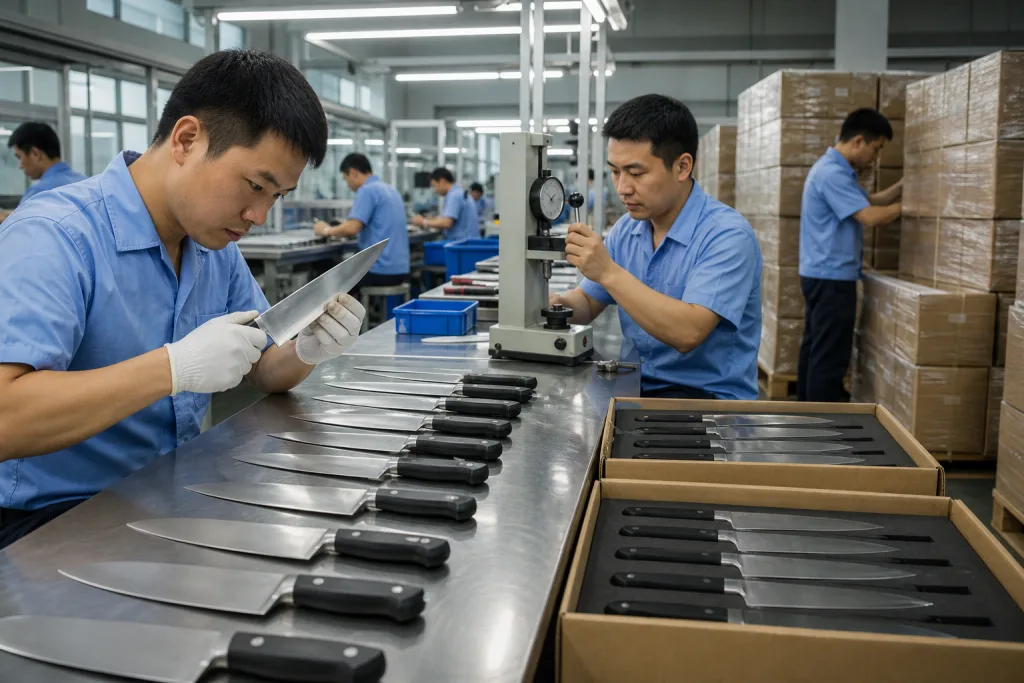
CPM-3V is not the steel we quote for easy mirror polish or low rust complaints. We quote it when the buyer needs a blade that can take batoning, keep cutting after a bad strike, and avoid the edge chips we see on harder steels. Outdoor and tactical brands usually need that spec to pass a U.S. customer, a German distributor, and an Asia OEM, so vague wording will not survive the first sample review. On the grinding line, 4 mm stock with a 22-degree per side edge feels heavy under the belt compared with a thin slicer. QC pulled the sample after a drop test and checked the edge under a 10x loupe for roll and chipping.
The common mistake is treating CPM-3V like a simple line item. Wrong question. In Yangjiang, we see jobs go sideways when the PO leaves HRC, grind thickness, and test method open, so the factory fills in the blanks and the math does not work. Put the steel certificate, heat treat window, and inspection plan on the PO before the first bar hits the saw. We ran a 12-day lot that became an 18-day rework cycle after the buyer flagged one typo in the grade callout. Small typo. Big bill. If you want a real CPM 3V knife steel sourcing result, lock those details early. That is the difference between a knife that looks fine in photos and one that survives field use.
Why CPM-3V behaves differently
CPM-3V is a powder metallurgy tool steel built for toughness first. That is the point. We run it on the grinding line for hard-use blades with 3.2 mm to 5.0 mm stock, and QC pulled the sample after a 20 kg impact check because the edge stayed intact where a harder stainless chip would have opened up. If the knife has to pry, split, or take repeated shock in wet field use, CPM-3V gives a better result than a steel chosen only for edge retention. That is the trade.
It is not the right answer for every program. CPM-3V is not stainless, so corrosion control has to be in the spec on day one. We ship to Europe and North America, and the buyer flagged a PO once because the note said "store dry" but left out oil and coating instructions. That typo cost a week. If the knife will sit in salty air, sweat, or a sheath for weeks, give it a black oxide, a protective finish, or move to another steel family. For a cpm OEM project, be direct about the use case. A tactical fixed blade, a survival knife, or a camp chopper justifies CPM-3V. A low-maintenance EDC knife does not. We have seen this go sideways when the brief starts with marketing copy. Start with the abuse profile, then choose the steel.
Specify the steel, not just the name
Buyers ask for CPM-3V knife steel sourcing, then send a PO with one line: CPM-3V. That is the first trap. Before the blanking saw touches the stock, we need the heat number, mill certificate, lot traceability, confirmed bar thickness, and supplier source. Last month QC pulled a 4.8 mm bar bundle from the incoming rack. The label photo was clear, but the heat number on the packing list had one digit typed wrong. Small typo. Big problem. If the factory in China cannot show these details, you do not have controlled supply. You have a guess.
For a serious cpm 3v knife steel sourcing manufacturer, the incoming material file should show chemistry range, heat lot, bar or plate form, and storage record. Ask whether the material was vacuum melted and how the stock sat before cutting. Oily paper and dry rack are one condition; mixed bundle or open floor storage is another. We run this check because weak traceability creates batch-to-batch variation, and variation kills repeat orders faster than a late shipment. On one export run, the buyer flagged a 12 mm thickness mismatch before we started slicing. Good catch. We keep one retained sample from each heat and at least 3 photos of the lot label before cutting. Cheap insurance. If you are buying through Yangjiang, China, this control is normal on stronger OEM programs, but it is still missing from 6 out of 10 low-price quotes we review. If the PO only says the steel name and nothing else, this is the wrong question to ask.
- Heat number matched against the mill certificate
- Chemistry confirmation from the same lot, not a sample from last season
- Thickness and stock form checked before cutting
- Retained sample and lot photo filed with the incoming inspection record
Set the right hardness window
Hard-use buyers often ask for the highest HRC on the quote sheet. Wrong question. For CPM-3V, we run 58-60 HRC on most fixed-blade outdoor and tactical knives, then check it on the Rockwell tester after heat treat and again when QC pulled the impact-test sample from the rack. That window keeps the toughness you are paying for when the blade sees a pry cut, a twisted tip, or one ugly baton hit through wet hardwood. Go past 60 HRC and wear resistance moves up a little. Chips show up faster.
Geometry carries the rest of the load. A 3.5-4.8 mm spine with a flat or saber grind makes sense, and an 18-22 DPS edge leaves enough shoulder behind the apex; a kitchen-style slicer grind does not belong on this build. We had one buyer flag a PO that called the knife "hard-use" while the drawing showed a thin grind and a 2.8 mm stock note. The math does not work. Put blade length, stock thickness, grind type, and target HRC on the same spec sheet before mass production starts. Split those items across 5 emails and the factory can hit 59 HRC, pass AQL 2.5, and still ship a knife that feels wrong in the field.
Control heat treat and grinding
CPM-3V is easy to buy and easy to ruin. We run the austenitizing cycle tight, quench clean, then temper to the hardness target. No shortcuts. On one line the oven chart drifted 7 degree, QC pulled the sample, and the heel came back soft on the Rockwell tester. Cryo only earns its place when the heat treat log shows repeatable soak time, quench temp, and hardness checks. A steel certificate alone is the wrong question.
Grinding is where the quote starts moving. CPM-3V eats belts faster than simple carbon steel, so stock removal takes more belt changes and more operator time; on a 4.8 mm tactical blank, we have seen cycle time land 12 days against 10 for an easier steel. The grinding line feels it. A buyer once flagged a PO typo on edge angle, and we had to reset the wheels from the 220 grit setup, so the math does not work if the supplier prices it like 420HC. The table below is the sourcing sheet we use to keep the job honest.
| Item | Recommended spec | Procurement note |
|---|---|---|
| Hardness | 58-60 HRC | Best balance for impact resistance |
| Blade thickness | 3.5-4.8 mm | Supports baton and pry abuse |
| Edge angle | 18-22 DPS | Do not over-thin the bevel |
| Inspection | AQL 2.5 plus critical checks | 100 percent HRC on pilot lots |
Price, MOQ, and lead time
Some buyers put a CPM-3V quote beside an 8Cr13MoV or 440A stainless quote and say the factory added margin. That is the wrong question to ask. CPM-3V bar stock costs more, the grinding line eats 80-grit ceramic belts faster, and heat treat control decides whether the edge takes abuse or chips after the first field test. We run CPM-3V fixed blades at a practical MOQ of 300-500 pcs per SKU in Yangjiang, China; sheath type, coating, and handle material all move the final price. Under 300 pcs, the math doesn't work. CNC setup, waterjet nesting, vacuum heat-treat batching, and belt wear still happen whether the order is 120 pcs or 500 pcs, so the unit price climbs fast. QC pulled one 3.8 mm sample last month after the buyer asked to cut the order to 120 pcs. The quote went up because the process cost stayed almost the same, not because anyone on our side got greedy.
For sampling, allow 20-30 days when the drawing is clean and CPM-3V sheet is already on our rack. For production, 45-60 days is a fair planning window for a hard-use knife with a custom handle and sheath; special color box printing, laser engraving, or a revised logo file can push it to 65-75 days. Lock the geometry early in a CPM OEM program. We have seen this go sideways: a buyer changed blade thickness from 4.5 mm to 5.0 mm after the first sample, then asked why the sheath mold and balance point both changed. Every late change to blade thickness, finish, or locking hardware adds cost and calendar days. Send one spec sheet for FOB and DDP pricing, with steel grade, target HRC, handle material, sheath material, packing method, and inspection level written in the same file. Last week we caught a PO typo that listed 58-60 HRC while the drawing said 60-62 HRC. A cheap quote with no heat-treat detail is not a real quote.
Test the knife, not the brochure
For hard-use knives, the inspection plan has to prove the blade survives shop abuse, not just that the handle looks clean under the light box. We run cosmetic checks on one sheet and functional checks on another. Small scratches and logo position can sit under AQL 2.5, but hardness, folder blade centering, sheath retention, edge straightness, and lock-up need a tighter gate with named limits. No shortcut here. On pilot batches, 100 percent hardness testing is worth the cost; QC pulled 50 blades last month and found 2 pieces sitting 1 HRC below spec near the ricasso, after the Rockwell tester was checked with a 60 HRC master block. Cheap lesson. On repeat orders, lot sampling is fine only after the heat-treat chart, Rockwell readings, and grinding line output stay stable for 3 shipments in a row.
Impact testing matters because buyers pay for CPM-3V toughness, not nice wording. “Does the brochure say hard-use?” is the wrong question. Ask whether the sample keeps its tip, edge, and handle fit after repeatable abuse checks. We use simple fixtures: tip flex into pine at the same angle, edge roll check after 30 chops into dry hardwood, and controlled strikes on a mild-steel rod with photos before and after. The math does not work if a 60-62 HRC blade passes paper slicing but chips on the first rod strike. For export documents, keep the QC file clean with lot photos, test records, and signed inspection sheets. If you ship to Europe, keep packaging and sheath material records ready for REACH questions, especially coated parts and printed inserts; we have seen a buyer flag black coating on a sheath rivet after the PO was already approved. If the buyer asks where the value is, the answer is plain: the blade passed the abuse the brochure promised.
When CPM-3V is the right choice
CPM-3V fits when the buyer is paying for impact toughness, not stainless behavior, and the edge has to survive rough hands. We run it for survival knives, camp knives, breaching-style utility tools, and tactical fixed blades that get batoned through 80 mm wood, twisted in crates, then touched up on a USD 3 field sharpener. Tough job. Bad storage kills the spec. If the end user leaves the knife in a wet nylon sheath for 3 days, CPM-3V alone is the wrong answer; spec a coated blade, add 2 drain holes to the sheath, pack with VCI bags, or move the project to a steel with better corrosion resistance.
A China factory that pushes CPM-3V into every catalog slot is selling steel, not solving the use case. Match the blade, handle, sheath, and finish to the abuse first. We have seen this go sideways in Yangjiang: the PO said "outdoor knife", the buyer expected pry-bar use, and QC pulled the sample after the tip rolled during a 6 mm lateral pry test in the bench vise. For sample builds, ask for one version at 58 HRC and one at 60 HRC, then field-test both with the same grind and edge angle from the grinding line. That tells you more than any steel brochure.
Frequently asked questions
For a real OEM run in China, 300-500 pcs per SKU is a practical starting point for a fixed-blade CPM-3V knife. Below that, the unit cost usually rises because the steel cut, heat-treat setup, grinding wear, and inspection time are spread over too few pieces. If the design uses a custom sheath, special coating, or premium handle material, the MOQ may need to move higher. For sample work, 1-3 prototype sets are normal, but do not judge production pricing from samples. Ask for a quote at 300 pcs, 500 pcs, and 1,000 pcs so you can see where the cost curve actually settles.
For hard-use outdoor and tactical knives, 58-60 HRC is usually the right window. That range keeps the steel tough enough to handle impact, twisting, and baton use without turning the edge too brittle. If you go higher, you may gain some wear resistance, but you also raise the risk of micro-chipping or edge damage under abuse. If the blade is thick and intended for chopping or prying, lean toward the lower side. If it is a slimmer utility blade with controlled use, 60 HRC can work well. Always tie the HRC target to the edge geometry and blade thickness, not just the steel name.
Start with the mill certificate and heat number, then match that to the incoming material label and retained sample. For higher-value orders, use a portable spectrometer or third-party OES check on the first lot. You are looking for consistent chemistry and traceability, not just a verbal claim from the supplier. Ask the factory to keep photos of the bar stock, cut blanks, and the heat label with the batch record. In China, better factories can provide that without friction. If the supplier cannot produce traceable paperwork, the risk is not theoretical. A blade that looks correct can still come from the wrong material source.
It can be, but you need to be honest about the maintenance load. CPM-3V is not stainless, so it will patina and can corrode if it is left wet, stored dirty, or carried in a damp sheath. For wet-use programs, add a corrosion-resistant finish, clear user care instructions, and packaging that does not trap moisture. If the knife will live near salt water or be carried daily without maintenance, a stainless steel may be a better fit. CPM-3V makes sense when toughness is the priority and the user accepts some maintenance. That tradeoff should be explicit in the catalog and the buyer spec.
For a straightforward CPM-3V sample, 20-30 days is a normal planning window if the steel and handle materials are available. For production, 45-60 days is a practical estimate for one fixed-blade SKU with custom sheath and finish. If the design adds laser engraving, special packaging, or multiple handle colors, plan for 60-75 days. The main variables are steel availability, heat-treat queue, grinding capacity, and inspection time. If you are quoting a new program from China, give yourself margin for first-article approval. A clean schedule is better than promising 30 days and missing the ship date by two weeks.
Source CPM-3V with a tighter spec
Send your blade drawing, target HRC, and annual volume. We will quote the steel, heat treat, and QC plan as one OEM package from Yangjiang, China.
Request a Quote