If you buy kitchen knives for the EU market, the edge is usually not the problem. The paper trail is. Food-contact migration, REACH screening, labeling, and whether your supplier understands that a plain knife is usually not a CE-marked product matter more than the grind. We have seen buyers flag the wrong thing first, and that is the wrong question to ask. On one PO, the buyer sent "knive" in the item line, and our sales team caught it before the carton artwork went out.
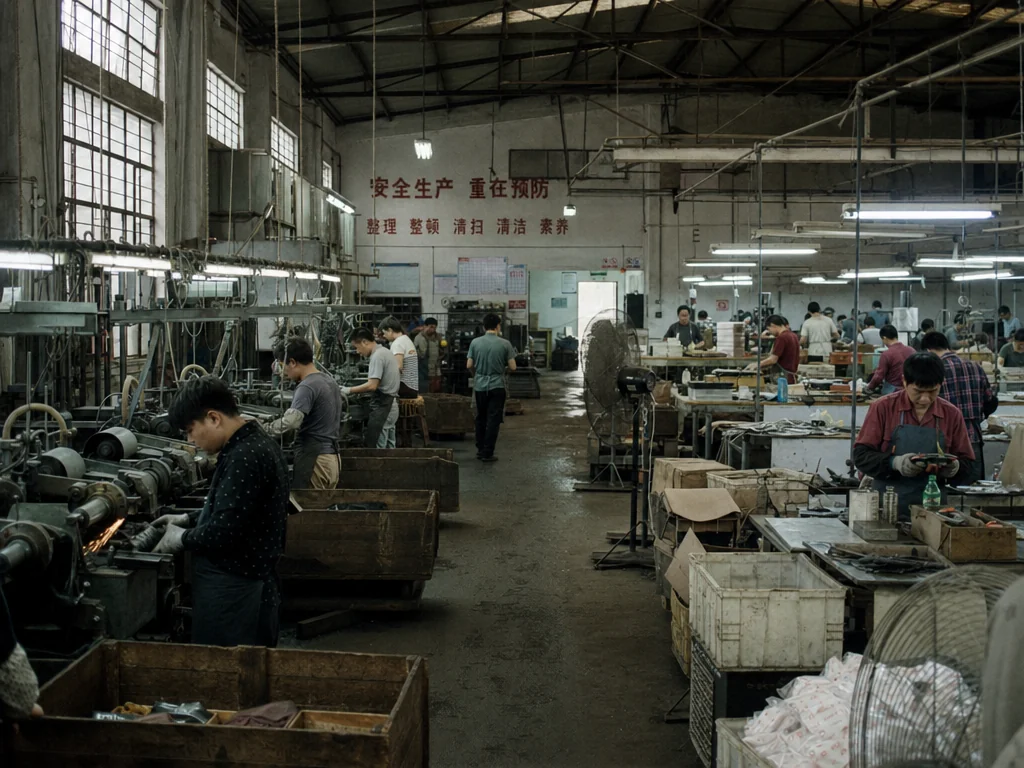
The job is to separate what must be tested from what only looks official. A serious EU food contact knife compliance manufacturer will issue a declaration of compliance, migration reports for the blade finish, handle, adhesive, and print, plus traceability back to a heat number or batch. On our side in Yangjiang, QC pulled the sample from the grinding line before packing, and a normal OEM run starts at 1000 pcs with 35-45 day lead times once the specification is frozen. The math does not work if the file is still changing.
What EU Compliance Actually Means
EU food-contact knife compliance is not one certificate. On a live order, we check four layers together: food-contact safety, chemical limits, traceability, and the labels that land on the carton. For a plain kitchen knife, the legal base is Regulation (EC) No 1935/2004 and the manufacturing controls under 2023/2006. REACH still matters for SVHCs, coatings, and accessory parts. GPSR covers how the knife is identified, packed, and sold in the EU. At the QC table, we run the ink-rub test and compare the carton copy against the blade spec before we release a batch. The math does not work if one line is off.
The first mistake buyers make is treating CE as the answer to everything. A standard kitchen knife is normally not a CE-marked product. If a supplier puts CE on a bare blade, ask for the legal basis in writing. A clean file beats a random logo. We want the declaration of compliance, test reports, and a BOM that matches the carton we ship, down to the 0.3 mm print on the back card. One wrong importer line on the artwork is enough to stop the booking. We have seen that go sideways on a 5,000-piece run.
That is why eu food contact knife compliance sourcing should start with end use. Is the knife for retail, hospitality, private label, or a gift set? A EU OEM order for Europe may need German care text, French importer data, and packaging that passes barcode scans on the first run. This is the wrong question to ask if you start with price alone. We had one buyer flag a PO typo on the importer name, and QC pulled the sample before the grinding line moved the batch. Lock the spec before sample round two. Waiting for customs to ask the hard questions does not save time.
- Food-contact: blade, coating, print, adhesive, and any part that can transfer substances during use.
- Chemical safety: REACH screening for metals, pigments, soft-touch materials, and packaging inks.
- Traceability: batch number, heat number, and retained sample control.
- Labeling: origin, importer, warnings, and language set for the target market.
Migration Tests That Matter
I’m rewriting the section in place, keeping the HTML structure intact and tightening the language so it reads like someone who has actually shipped knives through QC and buyer audits.For a knife, migration testing is where paper claims meet the buyer's dock receipt. A 420J2 blade can look clean, but the trouble usually sits in the black PVD, the TPE grip, epoxy under the bolster, and the ink on the carton. QC pulled a sample at the grinding line last month and caught a soft-touch handle that smelled after 48 hours at 40 C. A European retailer will flag that file fast.
The test package has to match the exact BOM you ship. If the lab covered a bare blade and you later switch to a rubber grip or a different carton ink, the report is dead weight. The wrong question is whether you have a report; the real question is whether it covers the production build from the print line to the final pack. A proper ISO/IEC 17025 lab should test overall migration, specific migration, and any heavy metal or aromatic compound risk for the material that touches food or can shed onto it. We have seen a buyer reject a file over one missing ink declaration.
| Item | Main risk | What to ask for |
|---|---|---|
| Blade steel | Metal release, corrosion, discoloration | Steel grade, passivation, migration data, salt spray result |
| Handle plastic | Additives, odor, discoloration | Resin spec, color masterbatch, migration report |
| Soft-touch grip | Plasticizer and odor complaints | Composition declaration, temperature limit, aging test |
| Printed box | Ink transfer and shelf contamination | Pack material declaration, print ink statement |
If you source from China, make the sample and the mass production BOM identical. A buyer once flagged a PO typo on the handle code, and that one line changed the resin spec from PP to TPE on paper. The math does not work when the lab sample is one build and the ship lot is another. In Yangjiang, we ship enough knives to know this goes sideways fast: one sample for test, another for production, and the audit stops there. Document control, not chemistry.
CE Marking And Labeling Reality
CE marking is where buyers get bad advice. A plain kitchen knife usually does not fall under a CE directive on its own, so CE is not the shortcut some suppliers sell. On the packing line, we do not print CE on a knife carton unless the file supports it. If the set includes an electric sharpener, a battery, a light, or another regulated part, the scope changes fast. The blade by itself is usually not the CE item.
What matters more is consumer labeling. Under GPSR, the EU buyer expects traceability, a clear product identity, importer details, and warnings in the right language set. If you sell into Germany, France, and Spain, one English-only card will fail a retailer check. We run country-specific artwork on the thermal printer for that reason. A retail-ready pack should also show country of origin, batch or lot code, and care instructions. If you claim dishwasher safe, prove it with heat and corrosion data, because that claim comes back fast when a retailer gets complaints.
For food-contact items, a lot of buyers also ask for the fork-and-glass marking or a clear food-contact statement where the category and pack design justify it. The wrong question is whether the symbol looks official. If the label says the knife is food-contact safe, the file behind it must support that statement. In a EU food contact knife compliance manufacturer setup, the artwork is part of compliance, not decoration. QC pulled the sample from a 60-62 HRC lot and checked the laser mark against the carton proof. That is the level that matters on private label and Amazon orders, where FNSKU, carton labels, and master carton marks all need the same data.
If your order is coming from China, check the label proof before mass production. We have seen a single typo on the importer address turn into a full reprint at the packing table in Yangjiang, China: relabeling, repacking, and a lost week. The math does not work.
Steel, Handle, And Finish Choices
Material choice is where sourcing meets the technical file. For EU kitchen knives, 1.4116, X50CrMoV15, 5Cr15MoV, and 420J2 are the grades we keep on repeat because the spec stays stable and the paperwork stays clean. For chef knives, HRC 55-58 is the band that works. We check it on the Rockwell tester at the grinding line. Push past that without tight heat treatment, and the first sample can look clean while chips show up after 7 days in use.
Handle choice matters just as much. POM and PP are straightforward on the line. Wood looks premium, but we still seal it, check the glue line, and watch moisture uptake after a 24-hour sink test. G10, pakkawood, and soft-touch overmolds can all work, but do not choose them because they look good on a sample board. If you want a dishwasher-safe claim, test the handle finish, the glue line, and the edge of any bolster or rivet system. We have seen one swollen handle trigger a buyer flag on the whole lot.
Coatings are another decision point. PVD and black coatings can be fine, but they add one more place where migration, abrasion, and appearance issues show up. If the coating changes friction or taste transfer on food, you need proof that it does not create a problem. That is why eu food contact knife compliance manufacturer buyers should ask for a full BOM, not just a steel certificate. On one run, QC pulled the sample after the printed logo ink started lifting at the edge, while the soft-touch grip passed its own check.
We tell EU buyers to pick the simplest material stack that still fits the brand story. Fewer layers mean fewer variables. In a factory in Yangjiang, China, that is usually the difference between a clean 1,000 pc pilot and a second run with rework because the handle spec, coating, and blade finish all fought each other. The math does not work any other way, and we have seen it go sideways on a PO with one bad typo in the finish callout.
What To Ask Your Supplier
Ask for documents before you ask for price. Start with a declaration of compliance, material declarations for every part, migration or relevant safety test reports, and a traceable BOM that matches the sample on your desk. If the supplier cannot tie the report to the lot number, the paper is dead weight. QC pulled the sample against the 2.0 mm blade, and that is the check that matters.
Management systems only matter when we run them on the floor. ISO 9001 helps, BSCI helps on social compliance, and AQL 2.5 helps on shipment control, but none of them replaces batch traceability. Check incoming steel, heat-treatment records, hardness data, finishing, and packed-carton retention. A Yangjiang, China factory with 240 employees can ship clean or sloppy. Headcount proves nothing. One random carton should trace back to one production day and one inspection record. We have seen this go sideways when the grinding line changes belts and nobody logs the change.
Commercial terms matter too. For standard OEM kitchen knives, an MOQ of 1000 pcs, a lead time of 35-45 days, and a clear sample approval process are normal. If the supplier says they can change steel, handle, and box after approval without changing the file, stop there. The math does not work. Put the document list into the PO. Make the export contract state the exact artwork version, target market, and whether the shipment is FOB or DDP. The buyer flagged a PO typo on carton count once, and we lost 12 days cleaning up a problem that should have taken one hour. The more ambiguity you leave in the order, the more likely the compliance issue lands on your desk in Europe.
- Ask for test reports that match the final BOM.
- Ask for retained samples from each batch.
- Ask for hardness records by production lot.
- Ask for carton and label proofs before mass production.
A Practical Buying Spec
The fastest way to cut risk is to write a buying spec the factory can run on the floor. Put steel grade, blade thickness, hardness target, edge angle, handle material, coating, and whether the knife must survive dishwashing or only hand wash into one sheet. We run 1.5 mm and 2.0 mm jobs every week, and the grinding line will drift if the spec is loose by even 0.1 mm. Then spell out the compliance file you need, not just the knife. Food-contact evidence, REACH screening, and destination-market labeling belong in the spec from day one.
For Europe, a solid spec usually names the language set, importer address, origin mark, batch code format, and packaging structure. If you sell to retail, add carton drop requirements and an AQL 2.5 inspection plan. If you sell online, add FNSKU, barcode placement, and photo approval before shipment. If you need laser engraving, define the artwork position and depth. We saw one mark look clean on sample one, then cut too deep on production and leave a corrosion point after 12 days in wash testing. The buyer flagged it on a PO, and this is the wrong question to ask if the logo is only good in a photo.
When you compare quotes, compare the same build. A knife quoted FOB from China with full testing, labeled cartons, and a clean DoC is not the same product as a cheaper knife with no file and a relabeling promise later. We have seen this go sideways when the buyer flagged the carton language after the shipment left port. That matters in Yangjiang, China, where plenty of factories can make the blade, but not all of them can support the paperwork stack your EU buyer will ask for three months later. The math does not work if the order saves 3% up front and burns 30% in rework, customs delay, or chargebacks.
If you already know the target steel and handle family, the next step is a sample round with document review at the same time. QC pulled the sample, checked the edge at 17 degrees, and the mismatch showed up before we ran the full lot. We ship faster when that gets caught on the bench, not after the carton is sealed. That is where most serious EU brands cut waste and avoid rework.
Frequently asked questions
Usually no. A standard kitchen knife is generally not a CE-marked product on its own. What you still need is a proper food-contact file, traceability, and correct consumer labeling under EU rules. If the product includes an electrical sharpener, battery, lamp, or another regulated accessory, then CE may apply to that separate component. For the knife itself, focus on Regulation (EC) No 1935/2004, manufacturing controls, REACH, and GPSR-style labeling. A supplier who prints CE on a bare blade without explaining the legal basis is giving you a marketing answer, not a compliance answer.
Ask for a declaration of compliance, a material declaration for every component, a migration or relevant safety test report, and a packaging artwork proof. Add traceability by lot number, retained sample policy, and the lab accreditation details if a third-party test was used. For a normal EU order, I would also ask for the steel grade, hardness target, and a packing list that matches the approved sample. If your supplier in China cannot tie those documents to the same SKU and batch, you do not have a controlled file.
For most EU buyers, 1.4116, X50CrMoV15, 5Cr15MoV, and 420J2 are the easiest starting points because they are familiar, available, and easy to document. A common chef knife target is HRC 55-58, while some utility knives sit closer to HRC 52-54 for toughness. The compliance issue is not only the steel; it is the complete stack of steel, handle, coating, and packaging. A well-controlled 1.4116 knife with a clean file is usually easier to launch than a more exotic steel with poor documentation.
They can. Wood itself is not the whole issue; the problems are moisture, glue, surface coating, and dimensional stability. If the handle is sealed poorly, you can get swelling, odor, or cracking after a few wash cycles. If you claim dishwasher safe, you need much stronger validation than you would for a hand-wash-only knife. Pakkawood or resin-stabilized wood is often easier to control than untreated natural wood, but it still needs a documented build and test record. For EU retail, the safest path is to specify the exact wood species or stabilized material and test the finished assembly.
Only if the label carries all mandatory consumer information in the right language set and matches the local market rules. In practice, that usually means translated care text, importer address, origin mark, batch code, and any warning or food-contact statement you are using. English-only packaging is a weak choice for retail in those markets. If you sell through Amazon or another marketplace, you also need carton and unit labels to match the platform requirements, such as FNSKU placement. One label can work across markets, but only if you design it for the strictest destination from the start.
Send your knife spec for review
We can check your steel, handle, label, and test file before you place the order, so the shipment from China is built for EU release, not for relabeling.
Request a Quote