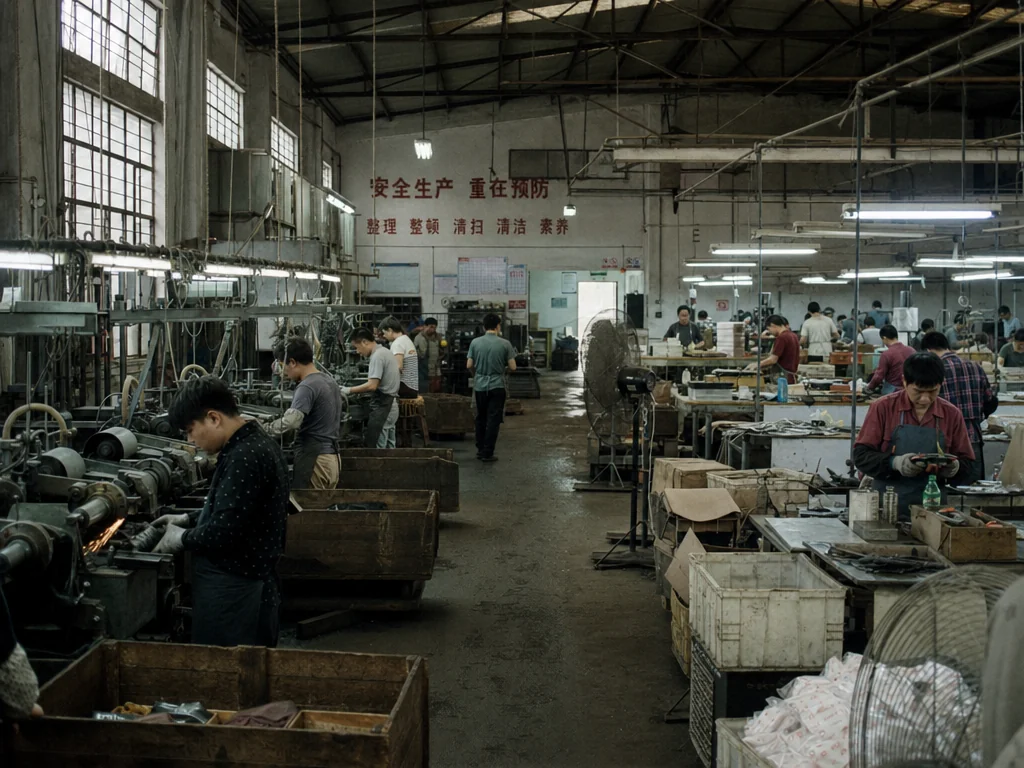
If you sell seafood tools, a fish scaler knife looks simple until returns hit the inbox. The real test is plain: does it strip scales from wet fish skin without skidding, sit steady in one hand, and come out of salt water, ice tubs, and dishwasher cycles without rust marks or loose rivets? We see it on the grinding line. A 0.5 mm change in tooth spacing can turn a clean scaler into a complaint after 40 fish.
Fish scaler knife sourcing should be handled as a spec job, not a race to the lowest FOB price. In Yangjiang and Zhejiang, we check lookalike samples every week, and the tooth profile, handle grip, and finish usually decide whether the buyer reorders or sends a claim form. QC pulled a sample last month: the handle matched the drawing, but after 300 cycles on the test jig the grip felt slick, and the buyer flagged it right away. Chasing the cheapest unit price is the wrong question to ask. If you are buying for retail or foodservice, lock the repeatable 60-62 HRC band, confirm a 3,000 pcs MOQ, and write the QC standard before the first carton leaves China.
What This Tool Must Do
A fish scaler knife gets approved at the wet bench, not under catalog lights. We run the first 20 fish and watch the basics: scales lift clean, skin does not tear, and QC finds no scale packed around the handle joint. For seafood brands, the tool has to strip salmon skin without ragged cuts and reach sea bass scales tight near the collar. Tilapia and mackerel are our wet-glove control test. Simple test. The scaler face needs bite, and the neck balance cannot drag the hand forward after 30 seconds. Decorative lines do nothing.
If you are buying from a fish scaler knife sourcing manufacturer in China, ask us to run samples on 2 fish sizes, not one clean demo fish chosen by the sales office. A useful spec sheet should show fish size range, handle length, overall weight, blade thickness, and cleaning method. For most retail programs, 180-220 mm overall length and 120-160 g finished weight work well. Under 110 g, buyers often call it toy-like; over 170 g, the math doesn't work because control drops once the fish and handle are wet. We check thickness on the grinding line with a 0.01 mm caliper, then run a tap-water rinse test before the sample goes back in the tray.
- Stainless blade or scaler head with no burrs after polishing
- Non-slip handle with a clear thumb stop for wet-glove grip
- Rounded transitions where food residue can collect near the neck
- Fast cleanup under running water after 30 seconds of scaling
In China, in Yangjiang and Zhejiang supply chains, we see about 6 out of 10 scaler tools built on a kitchen-knife blank. That works only when the head geometry is changed for scraping. Slicing geometry is the wrong question to ask here. QC pulled one sample last season because the teeth were polished too flat, so scales slid across the face instead of lifting; the buyer flagged it after 12 trial fish, not after a lab report. If the geometry is wrong, the end user will not care that the unit price was 8 cents lower.
Scaler Teeth and Wet Grip
The scaler teeth do the work. Open the pitch too far and scales skate through; make the bite too sharp and the head digs skin, so the retail tray looks rough. For most private-label runs, 1.8-3.0 mm is the right start, with rounded tips and shallow depth so the head lifts scale instead of cutting flesh. We run first samples on tilapia or sea bass at the bench sink, wet skin, caliper in hand. Dry-board demos miss the complaint we hear most: it works, but the wrist is cooked after 20 fish.
Handle grip carries the other half of the result. A wet fish scaler knife has to stay planted when the operator twists at the wrist. I push buyers to a PP core with TPE overmold, or textured PP when the target price is tight and the MOQ is 3,000 pcs. For premium channels, a two-shot handle with a soft-touch insert gives better control, but only if the mold line is clean and the seam stays free of residue after washing. QC pulled one sample last season and found 0.4 mm flash by the thumb rest; the buyer flagged it before carton drop testing.
What to check in sampling
- Thumb rest and index stop hold when tested with wet gloves for 30 strokes on the sink rack
- Handle width stays comfortable at 24-32 mm, with no hard corner under the palm on the grind line test piece
- Grip texture stays usable after detergent wash and towel wipe on the packing table; the buyer will catch a slick surface fast
- No sharp flash on the scaler head or mold parting line
This is where 6 out of 10 new fish-tool programs go weak. A fish OEM buyer sees the unit price; the operator feels torque, slip, and fatigue. Splitting tooth face and grip into separate issues is the wrong question. The math does not work if a 12-cent handle saving turns into returns because the tool twists in wet hands during the grinding line sample check. We've seen that go sideways.
Steel and Handle Materials
For a fish scaler knife, chasing exotic steel is the wrong question. We run 420J2 and 3Cr13 on scaler heads because the sheet stamps cleanly at 1.2-1.5 mm, the teeth polish fast, and the parts hold up at wet seafood counters when the heat-treatment report lands at 52-55 HRC. Last month QC pulled 32 pcs from the grinding line and checked the tooth burrs under a 10x loupe; the failure was not edge wear, it was rough teeth grabbing fish skin. That is the real issue. If the same item is sold as a light utility knife, 5Cr15MoV is fine. Do not pay VG-style money for performance a scaler will never use.
Corrosion resistance matters more than edge retention here. The tool sits in brine, ice water, and dish trays, then gets rinsed again before packing. Ask the factory how they passivate, which polishing wheel they run, and whether welds or rivets trap salt near the handle joint. We have seen this go sideways when a buyer approved a brushed finish from photos, then flagged rust dots after a 24-hour salt-water wipe test. PP keeps the price down and stays stable, while TPE gives better wet grip at the sink. ABS looks cleaner on retail hooks; POM feels hard and neat in the hand. Pick it by channel: entry retail SKU or private-label item where returns cost more than the handle upgrade.
Write compliance into the spec before the sample room cuts tooling. For Europe, check REACH and, if there is food-contact packaging or a direct-contact accessory, LFGB expectations. For North America, make sure your product file references FDA-relevant materials where applicable. If the handle uses colorants, pigments, or soft-touch compounds, ask for the material declaration before mass production; waiting until the first container ships from China is how small problems become debit notes. We once had a PO typo listing black TPE as “TPR,” and the buyer flagged it during document review, not at delivery. Catch that at sample approval.
MOQ, Lead Time, and Pricing
Ask a fish scaler knife sourcing manufacturer for a quote, and do not start with the unit price. Start with MOQ, then check if the factory can hold your spec without borrowing handles or tooth plates from another buyer's order. On our fish OEM line in China, a stock-style scaler is usually 1,000-3,000 pcs MOQ. Samples take 7-10 days. Mass production runs 35-50 days after sample approval. Add custom blister, printed carton, or laser logo, and the schedule moves from 35 days to about 42 days. QC pulled one scaler sample last month because the buyer's PO said silver handle, but the artwork file showed white. Small typo. Big delay.
| Item | Typical target | Why it matters |
|---|---|---|
| MOQ | 1,000-3,000 pcs | Keeps tooling and packing cost workable for private label orders |
| Sample lead time | 7-10 days | Gives us time to adjust grip feel, tooth spacing in mm, and logo position before the buyer signs the sample |
| Mass production | 35-50 days | Fits most seasonal seafood promotions if carton artwork is locked before we run packing material |
| Unit price | USD 0.45-1.20 FOB | Changes with steel thickness, handle material, and whether the order uses blister or carton packing |
| Inspection standard | AQL 2.5 | Catches mixed lots, burrs on the scaler teeth, and rough handle edges before shipment |
If the factory in Yangjiang, China claims 500,000 pcs/month for everything it makes, ask how many pieces run on the fish scaler line itself and how often they change molds. "Can you make 500,000?" is the wrong question to ask. Ask this instead: "Can you ship my 120,000 pcs in two batches without changing handle color mid-run?" A 240-person factory in China can usually support 100,000-200,000 units/month across mixed SKUs, but the grinding line and injection molds need a stable schedule. Change handle color every week and the math doesn't work. We've seen this go sideways when a buyer approved black on Monday, then flagged the same PO for blue on Thursday.
Quality Checks That Catch Problems
Fish scaler knife QC has to stop the sink-side complaints before they reach the buyer. We look for uneven teeth, burrs that cut gloves, loose handles, warped heads, and grooves that trap slime after a 45 C wash. On a 500-piece run, QC pulled 10 samples from the grinding line and found 0.2 mm tooth drift on 2 heads with a vernier caliper. We run incoming steel checks, in-process tooth gauges, and final inspection to AQL 2.5 for major defects, then hold a tighter line on scratches, logo burn, and handle flash. That is the floor. If the tool ships in a retail box, we drop-test the carton too; one cracked blister pack turns into a claim when the buyer opens the photo set.
For corrosion, 24-48 hours of neutral salt spray is a practical screen for coated parts and plated screws. It does not prove a five-year life. It tells us whether the finish cracks before the cartons leave Yangjiang. I want handle pull and twist checks on every first article lot, with a 0.5 mm seam limit and a 5 kg pull on the jig. Wet hands are the real test. The handle must stay fixed, and the joint line should feel smooth after a 60 C wash. If the scaler head is stamped, we inspect the edge burr under 10x magnification; a 0.1 mm burr looks harmless on the bench and feels ugly in a kitchen sink. We've seen this go sideways when a buyer signed off the photo, then rejected the first 300 units after QC found the bite mark on the thumb side.
- Tooth symmetry stays within 0.3 mm across the batch, checked on the first 20 pcs and again after a tool change at 2,000 strokes
- Handle texture survives detergent and 60 C hot-water wash without whitening, peeling, or a sticky feel after 30 cycles
- Laser mark or logo stays readable on the first pass without burning through the finish or leaving a raised edge
- Packaging barcode scans cleanly for FNSKU or retail tracking before cartons are sealed, and we reject any carton with a misprint or smudge
For Europe-bound shipments from China, keep the test file short and complete. A signed material declaration, REACH paperwork, and batch photos move faster than a long email thread, but the file still has to match the carton. We also check the PO for simple mistakes, like a wrong barcode suffix or a missing carton count; last season one buyer typed 48 pcs/carton while the artwork said 36 pcs/carton. That typo pushed a 12-day ship date behind an 18-day reprint. The math does not work when paperwork lands late.
Packaging and Private Label Fit
I’m rewriting the section in place, keeping the HTML structure intact and tightening the language so it reads like a factory-side sales engineer, not a generic article.Packaging gets shortchanged. We have seen a fish scaler knife pass the pull test and edge check, then look cheap on the shelf because the tray pocket was 2 mm loose and the handle rattled after a drop-carton test. QC pulled the sample, shook it twice, and the problem was obvious. For foodservice buyers, a hang card or recycled paperboard sleeve often beats glossy blister packaging; the store team hangs 200 pieces fast, and the buyer does not have to explain extra plastic. For Amazon or marketplace sellers, the box has a different job: survive the shipping chain, keep the barcode flat, and scan on the first pass after it leaves the master carton. The wrong question is glossy or plain. The real one is whether the pack survives the lane.
Private label runs cleaner when branding is written into the production order, not treated as a print-room favor after packing starts. Laser engraving is the low-risk choice for simple logos and adds little cost. Pad print works on textured handles, but QC needs to wipe the surface first and run a tape adhesion check before packing. If you need UPC for retail, FNSKU for Amazon, carton marks for the warehouse, and language labels for Europe and North America, freeze the files before mass production. We had one PO where the buyer flagged a 1-digit FNSKU typo after 3,000 units were already packed in China; the math does not work. Reprints burn time, cartons, and patience.
Seafood brands usually need a tight finish range, but plain is not the same as generic. A blue or black handle, matte texture, or a thumb stop visible from 1 meter tells the buyer what the tool does before they read the back card. This is where some buyers ask for a lower packing cost and miss the cost of a slow scan or a messy shelf. We have seen that go sideways. If you are working with a 240-employee plant in Yangjiang, China, approve the artwork, carton layout, and label position before the grinding line starts feeding packed goods to final QC. Freeze it early. That is how we ship a repeatable private-label program instead of one good-looking sample that later fails on the line.
Frequently asked questions
For a standard private-label fish scaler knife, 1,000-3,000 pcs is a realistic MOQ in China. If you only change the logo and packaging, some factories will go lower, but once you ask for a new handle mold or a special tooth pattern, 3,000-5,000 pcs is more honest. Sample lead time is usually 7-10 days, and mass production runs 35-50 days after sample approval. If the supplier quotes far below that, check whether they are actually holding your exact handle color, steel grade, and packaging spec.
For a fish scaler knife, 420J2 and 3Cr13 are the practical choices. They are cheap enough for retail, easy to form, and adequate when heat treated around 52-55 HRC. If you need a slightly better finish for premium private label, 5Cr15MoV can work, but do not pay for a higher-grade steel unless you have a clear reason. The bigger risk on seafood tools is corrosion from salt, ice, and rinse water, so finish quality and passivation matter more than chasing a harder number on paper.
Aggressive is usually the wrong word. A good scaler should lift scales, not cut skin. For most seafood brands, a tooth pitch around 1.8-3.0 mm with rounded tips is a solid starting point. If the teeth are too wide, you will need more pressure and the tool feels weak. If they are too sharp, the fish gets damaged and the product looks poor on the counter. Always test on wet fish, because dry testing hides the slip and grip problems that show up in real use.
Ask for incoming material verification, in-process checks, and final inspection using AQL 2.5 for major defects. Then add a simple functional test: tooth symmetry, handle twist resistance, logo legibility, and packaging barcode scan. For corrosion-sensitive models, a 24-48 hour neutral salt spray screen is a useful check, even though it is not a full-life test. If your product ships into Europe, make sure REACH documents and material declarations are ready before the container closes.
Yes, if the factory has a real OEM workflow. You want a supplier that can manage logo application, carton text, FNSKU or retail barcodes, and material paperwork without improvising at the last minute. In practice, that means a stable line, a clear approval sample, and a production file that covers packaging, steel, handle compound, and inspection criteria. If the plant can also show ISO 9001, BSCI, and a clean export history from China, that lowers your risk. The right setup is less about a low quote and more about repeatable delivery.
Lock Your Scaler Spec Before Quoting
Send the tooth profile, handle requirement, and packaging target first. That is how you get a cleaner quote from China and avoid rework after sampling.
Request a Quote