If you are buying a guided sharpening system OEM program for retail, the stone set is not the main product. Repeatable edge geometry is. A first-time user should hit it in under five minutes, and a fixed-angle clamp is what makes that happen. It removes one variable and gives us a spec we can hold on the line, from the clamp jaws to the angle rod. On our side, we check jaw bite with a 0.02 mm gauge before the clamp goes into packing.
In Yangjiang, accessory brands win when they treat the kit as one system: clamp, angle rod, abrasives, base, instructions, and packaging all have to match. QC pulled a sample last week with 2 mm of base flex, and the buyer flagged it before the carton test even started. The first question is usually grit count. That is the wrong question to ask. If the sample looks clean but wobbles in use, the math does not work, and we have seen that go sideways fast on Amazon and in distributor orders.
Why fixed-angle clamps sell
A fixed-angle clamp sells because the customer gets it in 30 seconds. Lock the blade. Set the rod. Sharpen. That is the whole pitch. It also packs cleanly in a retail box and gives after-sales fewer loose explanations to clean up later. Most end users are not knife technicians; they want the same bevel this month as last month without learning wrist control on a whetstone. The clamp is the anchor point. On our line, we check spine grip with 2.0 mm and 3.0 mm blade samples before sign-off. If the jaws bite evenly and the blade line stays still, sharpening becomes a repeatable mechanical step, not a guessing job.
For retail, that simple setup cuts support emails and one-star reviews. Put it bluntly on the product page: controlled angle, repeatable setup, less user error. We have seen this go sideways when a buyer asks for a “universal” sharpener with no real clamping reference. The math doesn’t work. For accessory brands or importers, a guided sharpening system OEM program with a stable clamp can handle kitchen knives and chef knives in the common spine range, then accept selected pocket knives if the jaw opening and blade height are checked during sampling. One tooling platform beats three separate launches. In our Yangjiang, China manufacturing setup, QC pulled the sample after trial assembly and checked the angle path against the fixture, because the fixture should define the stroke, not the customer’s hand.
Cost matters too. A clamp-based guided OEM product often lands in a better retail bracket because the value is visible at first touch: metal frame, abrasive rods, proper case. No long pitch needed. The buyer can feel why the set costs more than a handheld ceramic stick, especially when the hinge has no side play and the rods do not rattle in the EVA tray. This supports a wholesale price in the USD 12-28 range and a workable DDP margin after freight, duties, and packaging. We ask for MOQ confirmation early, because a 1,000-piece run and a 5,000-piece run do not carry the same case tooling cost. Last month the buyer flagged a 4 mm tray gap on the pre-production sample, and fixing that after mass packing would have burned 12 days.
Specify the use case first
Before you ask for samples, lock the knife profile. Say what you are sharpening: western kitchen knives at 20 degrees per side, Japanese-style knives near 15 degrees, or a mixed retail set with an adjustable window. On our line, the first check is clamp jaw angle against a 3.2 mm spine sample with the angle gauge. If that is left open, we run a generic clamp, the buyer flags the jaw angle on the first sample, and you pay for a second tooling round on rod length and base clearance. That is the wrong question to skip.
Next is blade thickness. A retail clamp built for 2-4 mm spines will not hold a heavier outdoor blade or a full-tang chef knife without chatter at the grinding line. If you want wider coverage, specify a clamp opening and jaw geometry that accepts around 1.5-7 mm spine thickness, with pad compliance that keeps the scales clean. Then define the abrasives. Most brands need three grit stages: coarse for repair, medium for profile maintenance, and fine for edge refinement. For a premium bundle, add a leather or ceramic finish. Do not pack the box with extras just to make the kit look larger. The math does not work at MOQ 2,000.
Set the commercial targets at the same time. Tell the factory your carton size, target retail price, whether you need FNSKU labeling, and whether the box must pass Amazon drop testing. We have seen a PO typo on the carton code turn into a relabel job and a late ship date. QC pulled the sample, checked the insert, and the 78 cm drop test cracked the tray, so we changed the base rib to 1.8 mm. A serious guided sharpening system OEM manufacturer builds to those numbers, not after the fact.
Clamp geometry and user control
Clamp geometry decides whether the sharpener feels solid or flimsy. On the assembly bench, a 0.3 mm shift on the centerline shows up as bevel drift, and the buyer will flag it the first time they sharpen a chef knife with a thin spine. We check jaw profile, pad hardness, hinge stiffness, and lever throw with a dial indicator; on the line, we also watch the screw head torque at 0.8 N·m so the clamp does not walk after five open-close cycles. A one-degree error at the clamp turns into a visible mismatch on the edge. If the clamp feels loose in hand, it ships loose.
For guided sharpening, the rod path needs to stay clean from the first stroke to the last. If the fixture pushes the rod too high or too low, angle drift starts, and the customer blames the stones when the real problem sits in the clamp, pivot points, and rod guides. This is the wrong question to ask. On an OEM project, ask for a setup drawing that shows the stroke geometry at 15, 20, and 25 degrees, then compare the arc against the actual pivot stack on the shop floor. We run that check with a go/no-go gauge and a 400 mm reference blade before we sign off.
Use materials that hold calibration. Anodized aluminum arms, stainless fasteners, and reinforced contact pads are standard for this category, and QC pulled the sample after 2,000 cycles to see whether the clamp still locked within spec. If the parts are thin stampings with soft pivots, wobble shows up fast, usually before the first retail batch is gone. We have seen this go sideways on a 500-unit run: the buyer flagged play at 1.2 mm, returns started, and the unboxing videos did the rest. For a retail sharpening kit, that slop costs money, so the better factories test cycle life and angle stability before we quote a mold change or fixture update.
Materials that protect margins
Do not compare guided sharpening system OEM quotes by sample price alone. That is the wrong question. Check what the clamp body, rods, screws, and handles are made of. On our line, QC pulls the sample at the dial gauge station, and a 0.1 mm miss shows up as angle drift before approval. For a retail kit, anodized aluminum, stainless steel fasteners, ABS or PP handles, and abrasives matched to the end user keep the cost curve in line. If the kit includes a base or case, lock down stiffness, drop resistance, and print adhesion too. The cheapest sample usually turns into the most expensive headache.
| Component | Good target | Buyer note |
|---|---|---|
| Clamp body | 6061 aluminum or reinforced alloy | Keeps the clamp light, anodizes cleanly on the grinding line, and holds the setup steady |
| Fasteners | Stainless steel 304 | Handles humid warehouse stock and kitchen use without rust spots |
| Rod guides | Machined or molded with tight tolerance | Keeps angle drift down and feels solid in the hand |
| Abrasives | 240/600/1000 grit plus finisher | 240 for repair, 600 for maintenance, 1000 and finisher for final polish in one retail box |
| Packaging | Retail box with insert tray | Helps shelf appeal and leaves room for e-commerce FNSKU labels |
We price material and packaging in the same meeting, because a cheap part turns into a carton claim fast. On one run, a 2 mm tray insert kept the set from rattling, and the buyer stopped pushing after the drop test came back clean. Zhejiang suppliers still make sense for inserts and printed cartons, but the dieline has to fit your retail target. If you need REACH-compliant components for Europe or a cleaner material declaration for North America, ask before sample approval. The math does not work if the quote hides packaging cost in a vague note.
Testing that stops returns
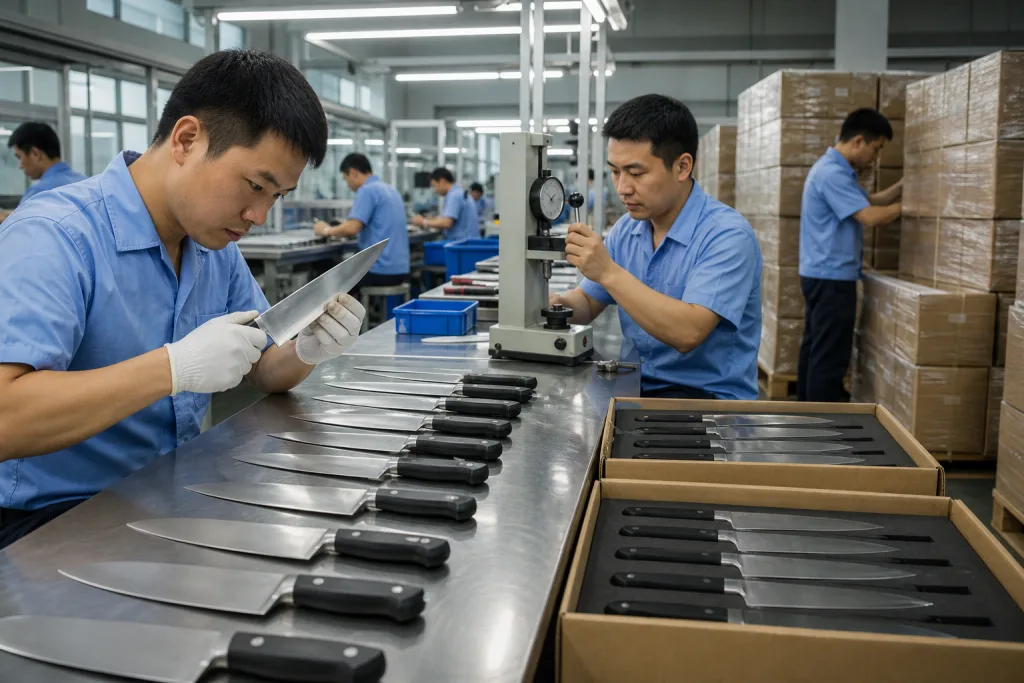
QC for a guided sharpening system is not just checking whether the kit arrives complete. We check the clamp angle on a gauge block, spin the rods by hand, and watch whether the abrasive holder walks after load. Incoming inspection covers metal parts, inline checks cover critical dimensions, and final sampling still runs under AQL 2.5 for appearance and function. For retail cartons, we run drop testing from 1.2 m and clamp cycle testing before we ship. Skip those steps, and returns show up fast.
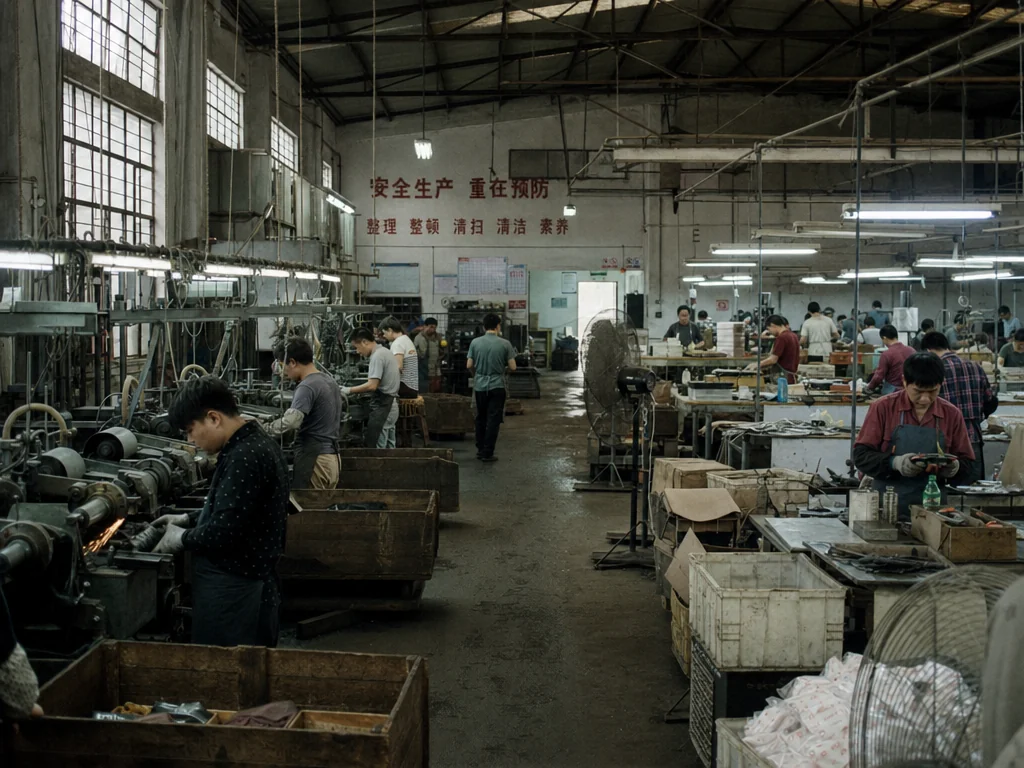
At our Yangjiang, China operation, with about 240 employees and capacity around 20,000 kits per month, the control points are plain: clamp close force, rod travel, insert fit, printed instruction accuracy, and finish consistency on anodized parts. The grinding line has seen parts pass visual inspection and still fail after 200 clamp cycles because the pivot hole opened up by 0.15 mm or the contact pad compressed too far. QC pulled the sample, the buyer flagged it, and that one detail would have turned into returns.
Ask for a simple validation plan: 50 open-close cycles for first article, 500 cycles for pilot, and a documented angle repeatability check on a test blade. If your supplier cannot say how they measure the angle, what fixture they use, and where the data is recorded, they are selling a box, not a system. We have seen that go sideways on retail launches. The math does not work for a brand.
Packaging and shelf readiness
Retail packaging does more than hold the parts. It has to explain the kit fast, keep the clamp alive in transit, and fit the channel you sell into. On the packing bench, QC pulled the sample after a 76 cm corner drop and checked that the clamp had not shifted 2 mm. For e-commerce, the carton has to pass that drop test without the insert cracking. For distributor sales, the box needs barcode placement, product naming, and a clean spec panel so buyers can put it on the shelf without rewriting the offer sheet. Fancy print is dead weight.
If you are building a private-label guided sharpening system OEM product, plan the packaging layout before you lock the tool. That means insert shape, accessory positioning, warning text, and whether the manual is folded or saddle-stitched. We run a foam mockup before the first carton run, because a 1.5 mm slot error will scuff the rods and the buyer will flag it on sight. On one job, the sample tray looked fine on paper, then the grinding line found the rods touching the frame after shipment shake testing. A clean insert tray keeps the rods off the body, and it also makes assembly faster because every part has one place. Guessing the tray after the tool is frozen is how jobs slip.
You should also think about compliance printing early. If you need UPC, FNSKU, CE-style wording for the box, or multilingual instructions for Europe and North America, the dieline has to leave room for it. A 3 mm shift on the back panel can hurt scan accuracy, and we have seen that go sideways at receiving when the PO had one digit off and the carton label no longer matched the SKU. The math does not work if the dieline is an afterthought. A strong custom packaging for retail sharpening kits plan is part of the product, not a decoration step. The same is true for private label sharpening kit branding when you want a clean shelf presence without making the carton harder to pack.
MOQ, lead time, launch plan
For most accessory brands, the first question is plain: what is the opening order, and how fast can we ship it? For a guided sharpening system OEM run, MOQ usually starts at 500 kits, with 30-45 days after sample approval and deposit. If the buyer asks for new tooling, we add mold work and one more sample round. Standard aluminum parts and off-the-shelf abrasive sizes keep the line moving; once we switch the drill jig, the schedule shifts by 7 days. On our bench, the 6 mm locating pin is usually the part that decides whether we ship on time.
Price follows the build, not the brochure. A basic fixed-angle clamp set with three abrasives and standard box packaging usually sits in the USD 7-12 EXW range at volume. A retail set with better surface finish, a hard case, spare parts, and printed inserts will land higher. FOB and DDP are a different math problem once freight, duty, and carton spec are on the table, and we have seen buyers compare quotes on the wrong basis. On the grinding line, a 0.3 mm finish gap or a typo on the packing list can move the cost more than people expect. That is the wrong question to ask if the PO still says 1,000 pcs but the carton count is built for 960.
If you want a clean launch, start with one hero SKU and one spare-parts pack, not three nearly identical kits. A focused line is easier to merchandize and easier to forecast. A guided sharpening system OEM manufacturing project should start with the one angle range and one customer segment you can support well, then expand after sell-through proves the demand. QC pulled the sample twice on one program because the buyer flagged the clamp angle at 17 degrees instead of 15 degrees. We ship faster when the brief is tight, and we have seen this go sideways when a launch tries to cover every knife type on day one.
Frequently asked questions
For most accessory brands, a practical range is 15 to 30 degrees per side. If you sell mostly kitchen products, 15, 20, and 25 degrees cover most buyer expectations. If you want broader use, add 30 degrees for heavier utility blades. The important part is not just the range, but how repeatable it is. Ask for a measured tolerance of +/-0.5 degrees at the rod path, and make sure the clamp does not shift when the user changes blades. A fixed-angle clamp design works best when the angle stops are clearly documented and the manual matches the hardware.
Yes, but only if you design for it from the start. A mixed-use kit needs enough jaw opening and pad compliance for thin folding knives as well as 2-4 mm kitchen spines. In practice, that means a clamp opening around 1.5-7 mm and adjustable contact pressure. If you push one universal design too far, the setup becomes awkward and you lose repeatability. Many brands solve this by making one primary SKU for kitchen knives and a second SKU with a slightly narrower clamp profile for pocket knives. That keeps the product easier to explain and protects the retail experience.
A normal MOQ for a new retail sharpening kit is 500 units, sometimes 300 if the supplier has existing parts and simple packaging. For a more complex guided OEM build with new tooling, 1,000 units is common. The real issue is not only MOQ; it is whether the supplier can maintain the same angle behavior across the whole batch. Ask for AQL 2.5 on appearance and function, plus a pilot run if you are changing clamp geometry. In Yangjiang, China, the better factories will quote sample cost, tooling cost, and carton cost separately so you can see where the money is going.
Focus on three things: clear setup instructions, stable clamp geometry, and honest grit selection. Most returns happen because the customer expects a quick result and gets inconsistent angle control instead. Your manual should use photos, not vague text, and the box should show the knife types the product is meant to handle. A 3-stage abrasive set, such as 240/600/1000 grit, is usually easier to understand than a long accessory list. Also ask the factory to run clamp-cycle testing and packed-carton drop tests before shipment. That is cheaper than absorbing avoidable returns later.
Yes, and you should ask for it early. A proper retail program should support UPC, FNSKU, carton markings, multilingual insert cards, and a dieline that leaves room for warnings and product claims. If you are selling on Amazon or through a distributor, the packaging spec should be part of the quotation, not added at the last minute. You should also decide whether you need a standalone gift box, an inner tray, or a hard case. For North America and Europe, the cleaner your packaging files are, the fewer delays you will have when the first shipment leaves China.
Build your next sharpening kit correctly
Send your angle target, blade range, and packaging needs. We will turn it into a guided sharpening system OEM spec that is ready for quotes and sampling.
Request a Quote