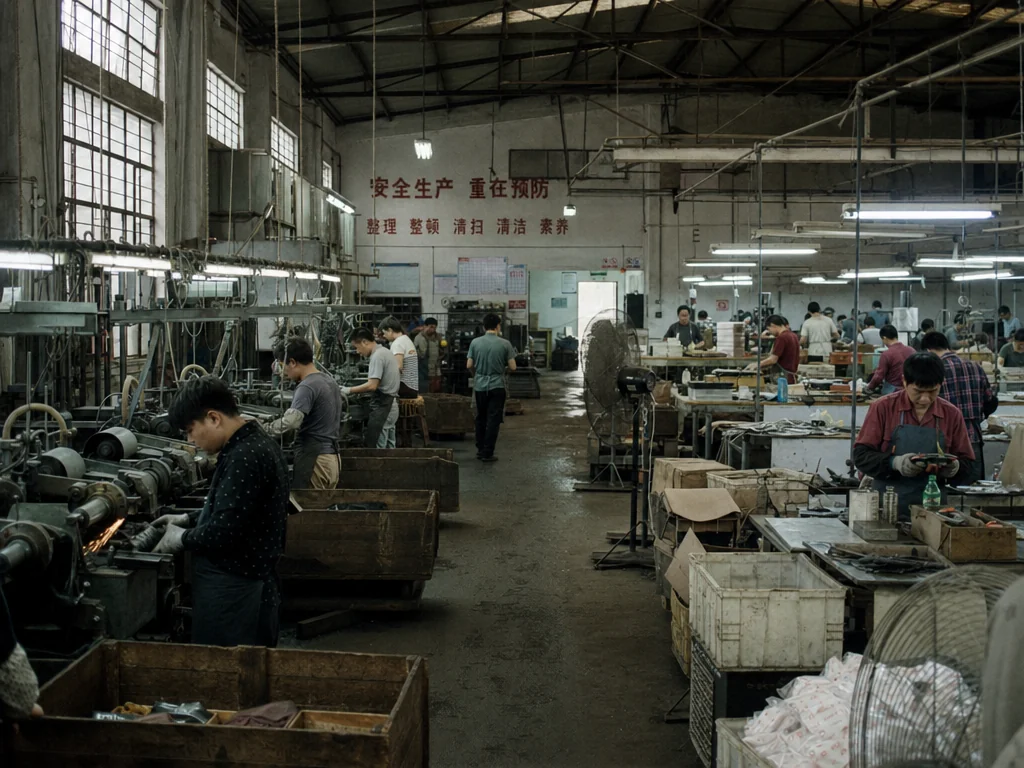
Hotel hospitality knife program sourcing is not retail buying. We run it against staff turnover, guest damage, carton scuffs in the warehouse, and repeat replenishment, so one spec has to hold in guest rooms, banquets, and back-of-house prep without splitting stock. At the packing table, we use one BOM, carton labels that match the PO, and a simple drop test: if the knife fails a 1.2 m drop or looks rough after towel-wipe handling, it is the wrong knife for a hotel program.
When you evaluate a hotel hospitality knife program manufacturer in Yangjiang, Zhejiang, China, ask for numbers first: monthly output, MOQ, hardness band, carton counts, and reorder time after sample approval. If the supplier cannot give those numbers, the math does not work. On a 240-employee hotel OEM line, we have seen 45-60 day lead time keep one spec stable for 3-5 years, while a buyer who chased a nicer finish ended up with mixed replacements and extra freight. QC pulled the sample at the grinding line, checked the blade at 60-62 HRC, and that is the detail that tells you whether the factory can ship the same set twice, not just once. The buyer flagged the wrong question. Ask about control first, then looks.
Define the program before the knife
The first mistake in hotel hospitality knife program sourcing is starting with blade design before the operating use is fixed. A hotel does not need a random pile of kitchen SKUs. It needs a repeatable program: guest-facing sets, room-service support, back-of-house prep knives, and a spare pool for breakage and loss. On a 300-room property with a 6% annual loss rate, that is not 18 extra knives in a carton; it is a controlled replacement stream that keeps the same model on property for years. QC pulled the sample on the packing line, then the buyer still pushed for a prettier handle. Wrong question.
Start with the use case. A room-service tray may need a paring knife, a utility knife, and a small chef knife. Back-of-house usually wants 200 mm chef knives, 150 mm santoku or utility blades, and a few slicers for prep volume. Do not overbuild the line. On the grinding line, a new handle profile means another jig, another setup check, and another chance for the buyer to flag a mismatch on the second PO. We run cleaner programs with 3 to 5 core SKUs and one backup finish than with 12 decorative variants that cannot be reordered cleanly. If housekeeping replaces items every 12 to 18 months, write the buying model around that cycle, not a launch order that looks neat on paper and breaks on replenishment. The math does not work.
Choose steel for daily abuse
Steel choice for hotel and hospitality knives should be dull in the right way: predictable sharpening, steady corrosion resistance, and enough toughness to take room-service abuse and back-of-house hands. For budget replenishment, 3Cr13 or 420J2 works when the blade is simple and the buyer accepts a 12-month replacement cycle instead of 18 months. For a standard program, 5Cr15MoV at 54-56 HRC is the clean middle. If the knives need better edge retention for light prep, 7Cr17MoV can step up, but only when heat treatment stays tight. On the grinding line, we see trouble when a batch looks fine on paper and the edge lands 0.2 mm too thin. This is the wrong question to ask if someone wants one steel that fixes a weak process.
Do not buy HRC by itself. A thin 60 HRC edge can fail faster in hotel use than a 55 HRC blade with a stable grind and a slightly thicker spine, and QC pulled the sample on that exact issue more than once. If your team sharpens in-house once per quarter, a 15-17 degree edge angle per side is practical. If maintenance is outsourced, a wider angle and a satin finish usually cut down on buyer complaints and ugly PO notes about rust spots. We ship enough replacement lots to see the pattern: the buyer flags the steel name, but the real problem is heat treatment drift and a sloppy edge profile, not the label on the cert. Use steel as the first sourcing filter and price as the second. The same named steel from two factories can leave the line with different heat treatment and grinding control, and the math does not work any other way.
Design handles people will actually use
A hotel knife spends more time in guest hands, steward carts, and dish pits than in a chef's grip, so the handle matters as much as the steel. The grip has to stay secure when wet, wipe clean fast, and avoid a hot spot at the heel or spine. On the injection mold, we run molded PP, ABS, and POM handles for most hospitality sets because they take repeated wash cycles and keep the landed cost under control. If the buyer wants a warmer look, pakkawood works for guest-facing sets, but it is a higher-care option, and we check moisture swelling before we quote volume. Warm look is fine. A weak handle is not.
Pay attention to balance and profile. A 200 mm chef knife with a 110-120 mm handle and a controlled bolster feels steady, and the math changes fast when the handle is off by 5 mm. The wrong question is whether every program needs full tang; if the lockup is tight and the rivet finish is clean, a lighter build can still ship well. For safety, a subtle finger guard and a rounded spine do more than a decorative shape. QC pulled the sample on one hotel order because the spine edge was left too sharp after polishing on the grinding line. If the knives will go through commercial dishwashers, skip exposed wood and confirm the handle resin, adhesive, and print survive repeated heat cycles. In Europe, ask for REACH declarations where relevant; for food-contact and cleaning claims, we pair them with wash testing, not brochure copy. The buyer flagged a PO typo on handle color once, and that kind of mistake turns into a week of back-and-forth fast.
Lock the spec sheet and compliance
The spec sheet is where hotel OEM programs stay repeatable or slide into revision loops. Lock blade length, thickness, finish, handle material, logo method, packaging format, and carton count before the first sample. On the grinding line, we check a 200 mm chef knife with calipers against the drawing before the second tool is touched. A standard set usually covers a 200 mm chef knife, 90 mm paring knife, and 120-135 mm utility knife for most hotel work. If this is a premium guest-use program, lock the box layout and insert card copy in the same round. Waiting for sample approval to sort carton art is the wrong question to ask; we had a buyer flag a typo on the PO and the whole carton run had to be redone.
Treat compliance as part of the spec, not a separate file. If your vendor onboarding asks for ISO 9001 and BSCI, get them up front. For materials and contact surfaces, REACH, LFGB, and FDA paperwork matter by market and by claim. QC pulled the sample, checked blade play with a feeler gauge, and caught a 0.3 mm handle gap before mass production. Visual inspection alone misses too much. Set AQL 2.5 for major defects, name the critical points like blade play, handle gaps, print alignment, and edge damage, and require the golden sample sign-off before we ship. We've seen this go sideways when compliance lives in a separate folder. A small sourcing table keeps the program tight:
| Item | Typical spec | Buyer note |
|---|---|---|
| Chef knife | 200 mm blade, 54-56 HRC | Main prep tool, highest wear on the line |
| Paring knife | 90 mm blade, molded PP handle | Low replacement cost, MOQ stays clean when the handle color stays fixed |
| Utility knife | 120-135 mm blade, satin finish | Useful for room service and light prep, and the buyer often asks for satin because it hides scuffs |
| Santoku or slicer | 170 mm blade, 1.8 mm spine | Good for lighter Asian-style use, check spine thickness with calipers |
Plan volume, MOQ, and reorders
Hotel knife sourcing gets expensive when the launch order is priced right and the reorder plan is sloppy. A factory in Yangjiang, Zhejiang, China with 240 employees and a monthly output around 120,000 pieces can run a standard hotel program with an MOQ of 1,000 sets, sometimes less on existing tooling and more when the box structure changes. On the grinding line, we have seen a buyer flag a 1 mm blade-length typo on the PO and stop the run for two days. That is normal. The first order is not the hard part; the hard part is shipping the same spec cleanly six months later when the next property opens and the buyer wants no surprises.
Build your volumes around usage, not aspiration. If a 500-room chain consumes 1,500 sets across guest-facing and back-of-house use, a 10% safety stock means 150 sets on hand before the next replenishment cycle. That buffer is cheaper than emergency air freight, and the math does not work if you blur product cost with freight. If you buy FOB, keep freight and destination handling separate so the product price stays honest. If you need DDP, put the carton count, outer carton dimensions, and destination duties on the table from day one. For distribution programs, ask for GS1, UPC, or FNSKU labeling at the master carton or retail box stage. Custom packaging is usually the bottleneck. QC pulled the sample, the artwork missed a barcode by 3 mm, and the whole shipment sat while we fixed it at the label printer. Approve the art before the blade order is released.
Build QC around replacement cycles
The right QC model for a hotel program is not premium retail QC. We run repeat orders, so consistency beats shelf appeal. If the first shipment is 3,000 sets and the reorder lands 11 months later, the knives still need to match the first lot. Start with a pre-production sample, lock one golden sample, then run a 200-500 set pilot when the program is new. QC pulled the sample at the packing table, checked blade hardness with a Rockwell tester, finish consistency, handle fit, logo position, and edge condition on arrival. On mainstream hospitality, plus or minus 1 HRC is workable when heat treatment stays tight. If the furnace drifts 3 HRC and nobody catches it, the buyer flags it on the next round. The grinding line sees that fast.
For export buyers, the inspection list should cover blade alignment, tip integrity, rivet finish, staining after 24-48 hours of humidity exposure, carton compression, and barcode readability. If the property sits in a humid coastal market, add a corrosion check on representative samples. We ship to hotels that reject a clean-looking box the moment a blade spots after one wet week, so the carton is not the main issue. Write the replacement cycle into the supply plan too. For guest-facing sets, 12 to 18 months is common. For back-of-house knives used every day, 6 to 12 months is more realistic. Once that cadence is fixed, the program stops drifting and the buyer gets repeatable reorder performance across every property.
Frequently asked questions
For a standard 3-piece or 5-piece hotel set, 1,000 sets is a realistic MOQ from a serious China factory. If you mix blade types, print methods, and custom boxes, the packaging can push the real MOQ higher than the steel parts. A pilot order of 200-500 sets is still worth doing when the program is new, because it exposes handle feel, carton damage, and logo placement before you commit to a larger run. For repeat orders, the factory can often keep the same tooling and cut lead time to 30-45 days if the spec does not change.
For most hospitality use, 5Cr15MoV at 54-56 HRC is the practical center point. It balances edge retention, corrosion resistance, and sharpening speed. 3Cr13 is cheaper and acceptable for high-loss programs, but it dulls sooner. 7Cr17MoV can give you more cutting life, but it needs tighter heat treatment control to stay consistent across batches. If the knives are sharpened in-house only once per quarter, do not over-spec hardness. A stable grind and a sensible edge angle usually matter more than chasing a headline HRC number.
They can be, but you should qualify that carefully. Polished stainless steel, a corrosion-resistant handle resin, and a clean edge geometry help a lot, while wood and soft decorative coatings create risk. Even if the knife survives the dishwasher, the edge will usually wear faster under high heat, detergent, and basket vibration. For guest-facing sets, many buyers still specify hand-wash care on the insert card and then test 20-30 wash cycles before approving the final version. If the property uses commercial dishwashers daily, ask for a corrosion and handle-fit test before production release.
Start with the actual usage pattern, not the launch order. For guest-facing sets, 12-18 months is a normal replacement window if the properties are well managed. For back-of-house knives that see daily prep, 6-12 months is more realistic. A 500-room chain may need 120-180 spare units in buffer stock depending on loss rate and service model. If your properties are in coastal or high-humidity markets, increase the spare ratio slightly and verify carton integrity at receiving. The key is to build reorder points from consumption data, not from a one-time forecast.
Yes, and you should treat branding as part of the spec, not an afterthought. Laser logo, printed hangtag, insert card, barcode label, and master carton artwork should all be approved before mass production. If you are selling through a distributor or a centralized warehouse, ask for carton labels that match your receiving system. For a hotel OEM program, custom packaging often needs 2,000-5,000 boxes depending on print method and size. The more you standardize the insert and outer carton, the easier it is to reorder the same item across multiple properties.
Lock the spec, then place the pilot
Send your target volume, steel preference, and packaging requirements. We will turn it into a hotel OEM spec with MOQ, lead time, and replenishment logic that your team can reorder.
Request a Quote