If you are building an Amazon knife compliance listing, ASIN setup is not the hard part. The hard part is making the product, the copy, and the paperwork describe the same knife. Amazon flags sharp goods fast. A 90 mm folding knife, a chef knife, and a hunting blade do not take the same review path, and the buyer usually learns that after the first rejection.
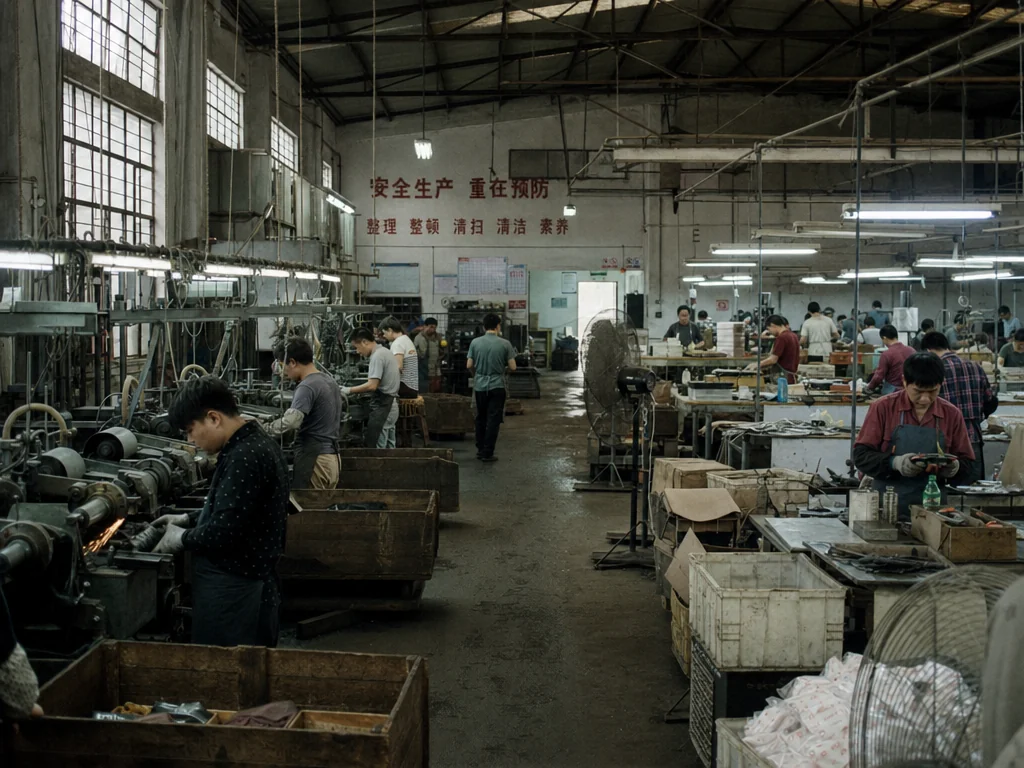
When we support sellers from China, we check the gate before the artwork. On the grinding line, QC pulled the sample, checked the blade length with a caliper, and matched the carton label against the invoice line by line. A knife OEM in Yangjiang, China should tell you whether the SKU fits restricted-category review, which test report Amazon will accept, and whether the box, FNSKU, and invoice can pass scrutiny. If the PO says "stainless steel kitchen knife" and the label says "utility knife," the math does not work. Fix it on day one. Relaunching after a denial costs more, and we have seen that go sideways.
Where Amazon Draws the Line
Amazon does not care about a supplier sales sheet. It looks at risk signals. Knife listings get gated when the title, images, or backend fields hint at self-defense, tactical carry, or a hidden blade. A kitchen knife clears faster when the file says food-prep tool and shows the blade length in mm, while a folding pocket knife or hunting model gets a stricter review. We have seen a 200 mm chef knife pass on one account and a 90 mm paring knife get flagged on another because the main image showed a black sheath from the packing room. QC pulled that shot in 30 seconds on the lightbox table, and the buyer still had to reshoot the listing. This is the wrong thing to argue about.
The mistake is treating compliance like paperwork after the sample is approved. If the listing says one thing and the invoice or carton says another, Amazon sees a mismatch and stops there. On knife SKUs, the appeal queue can take 18 days while a normal kitchen item clears in 12, so waiting is the wrong question to ask. Build the file before you open the ASIN. If you are sourcing from a knife Amazon compliance listing manufacturer in Yangjiang, China, ask for the exact steel grade, handle material, and packing format before QC pulls the sample. We run into buyers who skip that step, then the PO typo shows up as "stainless chefknipe" on the carton, and the math does not work.
- Use plain product language: chef knife, paring knife, utility knife, carving knife.
- Avoid words that suggest self-defense, covert carry, or combat use.
- Match blade length, unit count, and brand name across title, image, invoice, and carton.
Build the Approval File First
For Amazon knife listing compliance, the approval file matters more than the first sample photo. QC pulled 3 pieces from a 500-piece lot last week, and the buyer still asked for the material declaration, REACH report, and packaging photos before sign-off. Amazon only asks for part of the file, but your importer, customs broker, or marketplace compliance team usually wants the whole set. If the supplier cannot state the steel grade, coating, handle resin, and food-contact position in plain language, you are not buying a compliant knife. You are buying a delay.
| Document | Who provides it | Why it matters |
|---|---|---|
| Material declaration | Factory or test lab | Shows blade steel, handle material, and any coating |
| REACH report | Third-party lab | Useful for EU sales and importer due diligence |
| LFGB or FDA support | Lab or supplier file | Helps with kitchen knife food-contact claims |
| Commercial invoice | Supplier | Must match brand, quantity, and shipment dates |
| Packaging photos | Factory | Shows retail unit, carton, and FNSKU placement |
ISO 9001 and BSCI are not approvals. That is the wrong question to ask if you think a certificate replaces product data. They tell you the factory has process discipline, which matters when the grinding line runs 12-hour shifts and the buyer flags a 0.2 mm handle gap or a carton count error. For private label, repeatability is the real test: batch one and batch four must land in the same HRC band, same finish, and same pack count, or the math does not work.
Write the Listing for Review
Your title should name the product, not the kitchen style. Amazon reviewers and buyers look for blade type, length, steel, handle, and pack count in the first line. A clean format looks like: 8-Inch Chef Knife, 203 mm German Stainless Steel, Pakkawood Handle, 1 Pack. That tells the reviewer what it is and gives your PDP enough technical detail to pass a sourcing check. On the line, QC pulled the sample with a 0.2 mm caliper, and if the carton says one thing and the title says another, the listing gets bounced fast.
Do not bury variation logic. If one parent ASIN contains 8-inch chef knives and 5-inch utility knives, keep the images and bullets separate. Use the right browse node, keep backend attributes exact, and make sure the FNSKU on the carton matches the invoice line. If you are using GTIN exemptions, confirm them before you print packaging. A buyer once flagged a PO typo on the size code, and the listing sat on hold for 12 days before the sample left the warehouse. This is the wrong place to save two minutes.
Bullet points should stay functional: hardness, edge angle, balance point, dishwasher caution if true, and where the knife is intended to be used. If you say 56-58 HRC, your test report or supplier certificate should support it. If you say food contact safe, the handle resin, coating, and ink system need to match LFGB or FDA, not just the blade. We run this on OEM jobs with 500 pcs MOQ all the time, and the math does not work when the claim is stronger than the paperwork. QC will catch it, and the buyer will too.
Package for Amazon, Not the Factory
FBA damage starts at the pack, not the steel. A bare edge will punch through a thin tuck box fast; we saw one carton fail a 300 mm drop and the receiving desk logged crushed corners, missing barcodes, and a safety complaint. On the packing table, we run a blade guard or sheath, lock the handle in place with 48 mm tape, and keep the barcode flat so the scanner reads clean on the first pass.
If you use polybags, follow Amazon size and warning rules. Once the opening hits 5 inches or more, the suffocation warning has to stay visible, no debate. For a multi-piece set, print the count on the outer carton and the insert so the buyer does not have to guess. QC pulled the sample on a 24-piece order last week after the buyer flagged a loose label edge, and saving 2 cents there was the wrong call. When a knife Amazon compliance listing manufacturer prints the FNSKU at source in China, you cut one relabeling step and avoid winter peel-off on the cold dock. If you ship FOB, your team owns the prep detail. If you ship DDP, write down who handles labeling and carton quality before the first box leaves the line.
- Edge guard or sheath for every sharp blade. The grinding line knows why.
- FNSKU on the retail unit and master carton if required. One missed scan turns into a rework ticket.
- Carton drops tested at 60 cm to 76 cm for transit confidence. We use the drop tester, not guesswork.
- Keep finish oils, silica gel, and inserts from touching the blade edge. A smear on the bevel brings a QC pull.
Choose the Right OEM Partner
A good knife OEM in Yangjiang should show process control, not just a clean sample board. On a 240-person line that ships about 180,000 units a month, we still check blade grind, handle color, carton print, and whether QC pulled the sample from the last hour or the first carton. We run edge-angle gauges on the grinding line for a reason. If the factory cannot put MOQ, lead time, and inspection standard on paper, Amazon work gets messy fast.
| Check | Good answer | Red flag |
|---|---|---|
| MOQ | 1,000 pcs per SKU | Flexible only after sample approval and paid tooling |
| Lead time | 35-45 days after sample approval | No firm date for production or packing |
| Hardness | 56-58 HRC for kitchen, 58-60 HRC for outdoor | Only says premium steel |
| Inspection | AQL 2.5 for major defects | Visual check only, no records |
Ask for photos of edge finishing, label placement, and carton loading. We have seen buyers skip that step and then flag the PO because the sticker sat 8 mm off-center or the inner box count was typed wrong. The math does not work if the supplier cannot show records. A supplier that knows Amazon should give you factory records, not marketing copy, and should explain how the grinding line keeps the same bevel from the first sample to the 5,000th piece.
Fix Rejections Before They Stall Sales
Most rejections come from paperwork slips, and the reviewer can catch them in 2 minutes. The title says chef knife, the main image shows a black-coated tactical blade, and the invoice has the brand name off by one letter. On the light table, QC pulled the sample, checked the 203 mm blade card, and found the test report covered steel only while the handle coating was left out. Fix the small stuff first. A clean resend usually gets through: corrected images, a matching invoice, a new carton label sheet, and one short appeal note.
- Image mismatch: if the blade length shown is 203 mm, the title should not point to a different size unless both are stated correctly. This fails on first review because the main image and the spec sheet tell different stories, and the buyer flags it fast.
- Missing proof: for EU sales, REACH is expected; for food-contact claims, LFGB or FDA support is safer than a generic letter. The lab report has to match the actual handle material, or the reviewer will kick it back, and we have seen that go sideways on a simple nylon handle.
- Bad set logic: a 6-piece set sold as 1 pack with no count on the carton looks like a mismatch. We saw a buyer reject this after they counted the tray inserts and found only 5 slots, which is the sort of thing that kills trust in one pass.
- Weak documentation: the supplier name on the invoice must match the entity that actually made the goods. If the PO says one company and the carton code points to another, the math does not work, and a 10-minute check at the packing bench would have caught it.
- Policy wording: avoid self-defense, combat, survival, or concealed-carry language on anything that could be read as a weapon. One wrong phrase in the listing text is enough to trigger a manual review, and we have seen a typo on a PO turn into a bigger fight than the product itself.
If your knife OEM in Yangjiang, China can issue a revised packing list and batch photo set within 24 hours, you can often recover the listing without changing the product. We run this on the packing bench all the time, and the grinding line already knows how to pull a fresh lot photo before lunch. This is the wrong question to ask when someone says the listing is dead. The real split is simple: a factory that can turn out a clean resend by next shift, or a middleman who needs 3 days just to find the right carton photo.
Frequently asked questions
The exact request varies by marketplace and by blade type, but the usual stack is invoice, product photos, packaging photos, and a material or test document when the listing makes a compliance claim. For kitchen knives sold into Europe, REACH is often relevant, and LFGB support is useful when you mention food contact. In the US, FDA-aligned food-contact documentation helps if the handle, coating, or ink touches the user or food. Keep the supplier name, brand, quantities, and dates aligned across the invoice and the listing. If the paperwork says one thing and the box says another, Amazon will usually reject it.
Usually yes. A chef knife or paring knife is easier to frame as a kitchen tool, while a folding pocket knife, hunting knife, or tactical blade tends to trigger more scrutiny because Amazon reads those as higher-risk items. The difference is not just category name. Images, title wording, and bullet points matter. A 203 mm chef knife with a plain prep-use description is much easier to defend than a knife with self-defense language, a blacked-out tactical look, or concealed-carry phrasing. That said, kitchen knives still need clean documentation, a matching invoice, and a packaging format that protects the edge.
Yes, if it is the real manufacturing or selling entity and the invoice matches the product exactly. Amazon looks for brand name, product name, quantity, and dates that line up with the ASIN and the photos. A trading company invoice can work in some cases, but it is weaker than a manufacturer invoice from the actual knife OEM. If you buy from Yangjiang, China, ask for the invoice format before production starts. Also make sure the carton labels, FNSKU, and pack count match the invoice. One spelling mistake or mismatched model code can slow the case down for days.
Ask for five things first: steel grade, hardness band, MOQ, lead time, and packing format. For kitchen knives, a realistic target might be 56-58 HRC, 1,000 pcs MOQ per SKU, and 35-45 days after sample approval. Then ask whether they can print FNSKU at source, provide REACH or LFGB support if needed, and document AQL 2.5 final inspection. If you are selling in the EU or North America, confirm whether they can support custom packaging and a clean carton list. A real OEM will answer in numbers, not adjectives.
Treat packaging as part of compliance. Each sharp blade should have an edge guard or sheath, the unit box should not let the knife move, and the barcode must stay flat and scannable. If you use polybags, remember the visible suffocation warning when the opening is 5 inches or more. For carton strength, many sellers ask for a 60 cm to 76 cm drop test before shipping. Multi-piece sets should show the exact count on the retail box and master carton. When the packaging survives transit, you avoid label loss, edge damage, and unnecessary return claims.
Need a compliant knife source from China today?
Send your target ASIN, blade type, MOQ, and market. We can map the document set, packaging, and OEM spec before you spend on samples or FBA prep.
Request a Quote