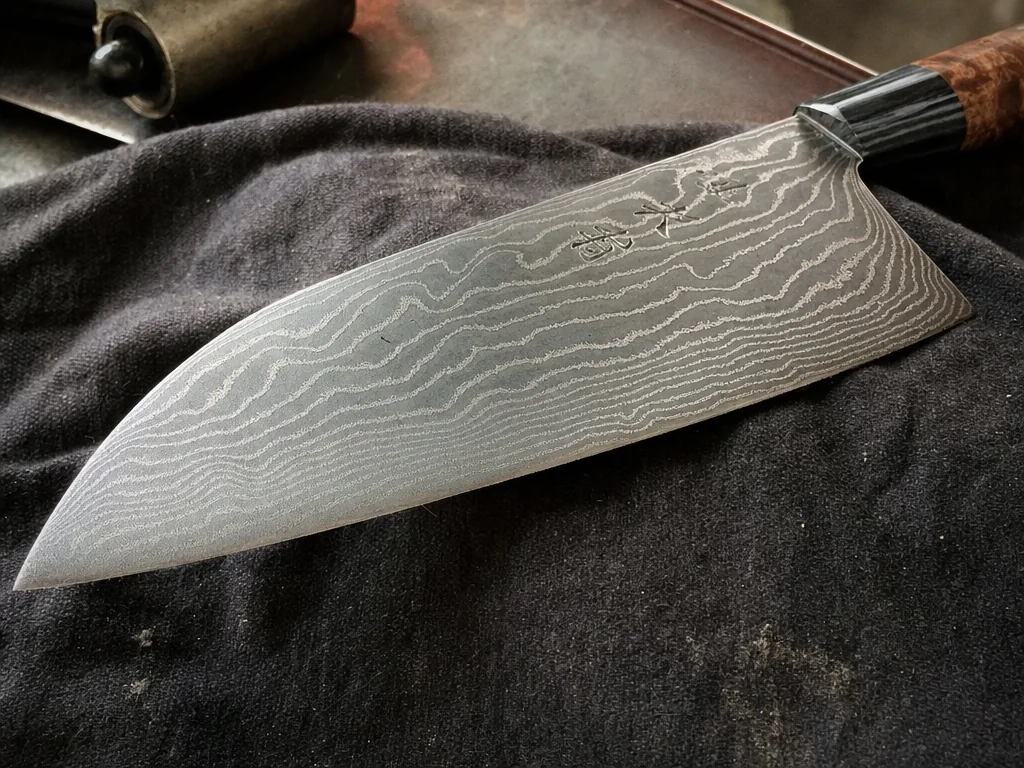
Knife counter display sourcing looks simple in Excel. On the shelf, it shows the problem fast. The stand must hold 6-8 kg without wobble, keep the blade edge away from fingers, print the logo without ink bleed, and still leave retail margin. We have seen this go sideways: QC pulled one sample after a 10-cycle refill test with a spring scale because the base was 12 mm too narrow, and the shelf looked untidy by the first weekend. A nice photo is the wrong question. Ask if store staff can refill 8 knives in 20 seconds without fighting the fixture.
Treat the display as part of the knife OEM program, not a loose accessory added after the carton is designed. A factory in Yangjiang, Zhejiang, China that already builds knives, packaging, and POS units usually controls fit and packing tighter than a display-only vendor, because we run the knife line and the display packing line against the same PO, same approved sample, same carton drop notes. For a mid-size program, a 240-person factory often runs 180,000 knives and 12,000 display units per month, with MOQ around 300-500 sets and lead times of 35-45 days after sample approval. Splitting this across two suppliers looks cheaper on paper. The math does not work. We caught small but expensive mistakes on the packing bench: a 1.5 mm slot mismatch between the handle card and the stand, and one PO typo that changed matte black to bright silver before mass production.
Pick the right display format
The first mistake is treating every counter display like the same SKU holder. They are not. A flat tabletop stand works for a tight knife set with 3-5 SKUs, where the shopper can read the range in one glance. We run rotating displays when the counter is narrow but the buyer still wants 8 facings on a 240 mm footprint. For boxed knives, a gravity-feed tray or slotted tray makes more sense; on our sample bench, the caliper comes out first, and we check 32 mm and 38 mm slot widths before sign-off. Premium lines need a stepped layout more often, because the blade profile and handle shape must be visible without staff explaining each piece. Price alone is the wrong question to ask.
Watch store behavior. Not factory convenience. Behind the counter in a specialty shop, the stand can run taller and carry heavier branding because staff control the handoff. In mass retail, we keep the height lower and the base wider so it will not tip when staff pull a knife; one buyer flagged a top-heavy sample after a 6-cycle pull test on the counter edge. In Yangjiang, Zhejiang, China, we see most countertop knife displays land at a 220-280 mm wide base, which stays stable without eating too much POS space. For knife OEM programs, ask the supplier for a full range planogram mockup before tooling approval. The grinding line cannot fix a bad display assumption, and this is where the mistake shows before we cut steel or acrylic.
Do not overbuild the first launch. Pick one hero format and one secondary format. Staff should understand the refill logic in 10 seconds. If the display needs screws or locks, decide it before artwork goes to print. If you want tool-free inserts, freeze that before we run the first CNC sheet. We have seen this go sideways: the PO showed a 25 mm slot, then QC pulled the sample at 28 mm after the cards were already packed out. The math does not work on the retail floor. By then, changing the blade angle or slot width means repacking, new inserts, and a delay the buyer will remember.
Use materials that hold up
Material choice sets the shelf look, the freight bill, and whether the stand still sits square after 90 days in store. Acrylic sells well because 3 mm clear sheet gives a clean front, keeps carton weight down, and takes UV print or laser engraving without a fight. Powder-coated steel fits a heavier chef line or any display shoppers keep grabbing; once the base plate drops below 1.2 mm, wobble complaints start coming back from the grinding line samples. Wood or MDF works for a warmer premium feel, but sealed edges are not optional. We have seen a raw edge swell by 1.5 mm inside the carton. That is a bad day. If the unit uses magnetic knife retention, ask for magnet grade, magnet spacing, and pull force in kg. Asking whether the magnets look neat is the wrong question.
For knife counter display sourcing, I want a spec sheet that splits the frame from the inserts, graphics from the hardware, and screw specs from the loose accessory bag. List the M4 screws if they matter. A solid knife counter display sourcing manufacturer should quote each part, not bury everything under one lump price. In China, this matters because the UV print shop may handle the graphics while another workshop cuts the acrylic, and defects show up at the handoff. QC pulled the sample once because the PO listed a left insert at 220 mm and the drawing showed 202 mm. One typo. Three days gone.
| Material | Best use | Typical MOQ | Lead time | Notes |
|---|---|---|---|---|
| Acrylic | Light retail, clean branding | 300 sets | 25-35 days | Good for 1-3 kg loads per bay; watch edge polish and UV print alignment |
| Powder-coated steel | Heavier knives, high traffic | 500 sets | 30-45 days | Check scratch resistance, rust protection, and base thickness before approval |
| MDF or wood | Premium display, gift sets | 300 sets | 35-50 days | Needs sealed edges and drop testing; raw edges fail fast in humid cartons |
If you want a display to survive chain retail, ask for a 1 m drop test on packed cartons and a 5 kg static load test on the assembled unit. That is basic work, not overkill. We ship plenty of counter units, and the buyer flags failures fast when the top panel cracks at the corner or the base twists after one drop. Last month, QC found a hairline crack beside a laser-cut slot after the second carton drop. The math does not work if you save USD 0.18 on packing and lose the whole store rollout at receiving.
Match the stand to the knife line
The knife line should set the stand. Not the other way around. A chef knife program needs one counter setup. A pocket knife rack needs another. An outdoor assortment is different again. For kitchen knives, we run a stepped layout with open blade visibility and size marks in mm, so the shopper reads 130 mm, 180 mm, or 210 mm without touching every sample. Slot pitch matters. If the gap is too tight, a 210 mm chef knife hides the 130 mm utility beside it. Pocket knives usually sell better in a compact display with 1 locked sample and boxed stock below, because store staff push back hard on loose handling. Outdoor and tactical lines can take a rougher finish, but the surface still has to wipe clean. On the grinding line, dust and oil pack into deep textures fast, and retail counters collect the same dirt.
Blade length and handle weight trip up buyers more than they expect. In our sample room, a 200 mm chef knife loads a slot nothing like a 95 mm utility knife, and a resin handle does not balance like pakkawood or G10. If the stand is built for one knife family, match the slot depth to that blade profile, set the display angle for that viewing height, and place the retention point where that handle family locks cleanly. We check it with a digital caliper, then run a 15-degree shake test before sample approval. One stand for every SKU? That is the wrong question. In a knife OEM program, develop the stand with the knife carton. If you do not, the retail team ends up trimming inserts by 2 mm and reworking labels because a PO typo dropped the handle code.
One merchandising rule gets ignored all the time: if a shopper cannot read the hierarchy in 5 seconds, the display is too busy. Start with 1 hero SKU. Then build a good-better-best price story with real differences: blade steel, a step-up handle material, or a larger set count. Print clear size marks. On one header-card revision, the buyer flagged 14 callouts in a 320 mm space. QC pulled the sample. We stripped the extra tabs, and the layout read better right away. The math does not work if you keep adding clips and wobblers to fix a message problem.
If you sell across multiple channels, run 2 versions of the same display. Keep one compact version for specialty retail. Build a wider face for club and department-store placements, including countertop endcaps, often on a 600 mm base if the planogram allows it. Tooling the second base costs less than redesigning the full range after launch. On one 1,000-set program, the buyer pushed for a single stand, then came back after line review because the club pack carton overhung the shelf by 18 mm. We've seen this go sideways.
Lock branding and compliance early
Retail brands often leave artwork until the last week. Bad move. The counter display sells the knife before the shopper touches it, so logo size, Pantone target, barcode position, and country-of-origin mark should be frozen before sample sign-off. We ask for print proofs on the actual PET, acrylic, or coated steel, then QC checks them in the light box at 6500K. A screen PDF is not enough. Black, metallic, and deep red can shift under store lighting, and we have had a buyer reject a sample over a 1.5 mm logo offset on the front lip.
For a knife counter display sourcing manufacturer, the question is not “can you print our logo?” That is the wrong question to ask. The real test is whether the factory can hold the same finish across 300 units or 3,000 units without drift. The math does not work if the line cannot repeat color, edge polish, and ink density from the first tray to the last tray. On our side, the grinding line and display assembly table both affect final appearance, so ISO 9001 process control, incoming material checks, and final inspection matter. If the program touches retail compliance, ask for REACH declarations for inks, coatings, and plastics. If the display ships with knives for export, the outer carton, retail tray, and labeling must match the destination market rules. BSCI audit status still helps when the buyer flags it in the spec file.
Do not skip the boring details. They bite. A clear SKU label, a hangtag zone, and a fixed place for the EAN or UPC save time on the warehouse floor. If you need serialized packs, FNSKU labels, or channel-specific cartons, define that before the first batch hits the packing table. We have seen one PO typo on an EAN slow down 480 cartons because QC pulled the sample after the carton print was already dry. Nobody wants to fix that at 9 p.m. beside the tape machine. The better factories ask for this early because late changes usually turn into scrap.
Control samples, MOQ, and cost
Unit price alone is how knife counter display projects go bad. A USD 2.40 stand that starts twisting on the shelf by week 3 costs more than a USD 4.10 unit that lands straight and stays there through the season. This is the wrong question to ask. Build the landed-cost sheet line by line: stand price, sample charges, tooling, carton spec, hand packing on the line, freight, duty, and any kitting fee at destination. For a simple private label stand, we usually see FOB in the USD 3-8 range; the gap comes from board grade, print coverage, and whether the insert is die-cut EVA, folded card, or molded pulp. Freight can flip the quote. We shipped one run where changing from E-flute to B-flute added 0.6 kg per master carton; the floor scale caught it, and the cheaper stand lost its saving before the container even left Yangjiang.
Ask for the sample timeline and the production checkpoint plan in writing. The normal sequence is 2D drawing approval, physical sample, pre-production sample, and final packing sample. No shortcuts. If the supplier cannot hold dimensions within +/-1.5 mm on critical slots or insert points, the stand drifts during assembly and the knives sit uneven. QC pulled one sample last month, put digital calipers on it, found a 1.8 mm slot shift, and the acrylic header would not seat flat. That gets worse when one stand has to carry 4 or 6 SKUs across a retail assortment, because every handle angle makes the defect easier to see.
Use this sourcing check:
- MOQ: 300-500 sets for most countertop programs; if the quote starts at 100 sets, ask where the tooling cost is hiding, because it is still somewhere in the PO
- Sample rounds: 2 maximum before you freeze tooling; after that, the math does not work and the die-cut charge starts eating the margin
- Inspection target: AQL 2.5 for appearance, dimensions, and assembly; we run calipers on slot width and check print shift against the cutter line before QC closes the lot
- Carton test: run drop, vibration, then corner crush for export lanes; a 62 cm carton that fails the first corner drop on the test pad will not survive retail replenishment
- Lead time: 35-45 days after sample approval; if the grinding line is already full, ask what actually gets booked first, because the display pack-out and the knife run do not always move together
If the supplier pushes you to skip samples, move on. Same answer if they cannot explain how they inspect print alignment or how they set hardware torque with a torque driver. We have seen this go sideways over one loose M4 screw and one PO typo on finish color; the buyer flagged both at carton open. A serious China factory should quote the display and the knife range together, then show where the margin sits instead of burying it in the knife price.
Launch, replenish, and measure sell-through
The launch phase is where the supplier earns the reorder or gets blamed by week two. We run the first drop in 10-20 stores with mixed traffic, then stand at the counter and watch the boring stuff: whether staff refill from the back room before 11 a.m., how many shoppers lift the sample, and whether the low-margin steak knife SKU gets hidden behind the hero knife set. Looks matter. Fit matters more. A display can look clean on a render and still fail when the slots are 2 mm too tight, the PET cover scratches during carton drop testing, or the label line sits too low for a cashier to read across a 900 mm counter.
Track more than sales. Days on hand, refill count, damaged-unit rate, and the share of stores keeping the front edge faced up tell the truth faster than a tidy weekly report. On one run, QC pulled the sample at 14 days and sell-through was 12% better than the loose shelf pack; on another, the unit looked neat and did nothing for conversion. Compliments do not pay freight. Check return freight too. A stand that saves 20% on inbound freight but takes twice the labor to flatten and restack is a bad trade, and we have seen warehouse teams reject that setup after one pallet trial because the tabs tore after two folds.
This is where a Yangjiang factory in Zhejiang, China earns its place. A knife OEM already running the carton line, EVA insert cutting, and printed outer pack can tie the display, knife set, and shipper into one job, with fewer handoffs and fewer late surprises. We have seen buyers flag a PO because the die-line changed by 3 mm after approval. That drift causes trouble. Lock one revision code, freeze the spec, and do not let store-by-store edits creep in unless the buyer signed off in writing.
Frequently asked questions
For most countertop knife displays, 300-500 sets is a realistic MOQ if the unit is acrylic, MDF, or a simple steel frame. Complex mixed-material units with print, magnets, and custom inserts often start at 500-1,000 sets. If the factory is also packing knives, the MOQ may be tied to the knife SKU count, carton size, and tooling amortization. A serious China supplier should show where the cost moves when you change thickness, print method, or hardware.
A basic private label countertop display often lands in the USD 3-8 FOB range, depending on material, finish, and assembly time. Acrylic is usually lower, while coated steel or wood with printed graphics costs more. If the display includes magnets, lockable features, or multi-piece inserts, the price can move above that range. Always compare FOB plus freight, because a lighter unit can still cost more landed if the carton volume is poor.
For retail POS units, AQL 2.5 is a sensible baseline for appearance, dimensions, and assembly. If the unit has logo printing, clear plastic parts, or visible metal edges, add a tighter check on cosmetic defects and sharp points. Ask for pre-production approval, in-line checks, and a final carton inspection. If the factory can only offer a visual check, that is not enough for a branded retail program.
If you want fewer handoff problems, yes, it helps. A factory that handles knife OEM work and the display together can control fit, packaging, and brand alignment better than separate vendors. In Yangjiang, Zhejiang, China, this is common for retail programs because the knife set, insert tray, and counter stand often need to match one planogram. You still need separate approvals for the knife, the display, and the outer carton, but one accountable factory reduces rework risk.
A normal program takes 35-45 days after sample approval for a simple stand, and 45-60 days if you add custom print, wood finishing, magnets, or complex packaging. The first round usually takes another 7-14 days for drawings and sample feedback. If you are launching with a new knife range, leave room for at least 2 sample cycles so the display fits the product without forcing last-minute changes.
Build a display that sells knives
Send your knife range, target price, and retail channel. We can spec the stand, pack the set, and keep the first run practical for store teams.
Request a Quote