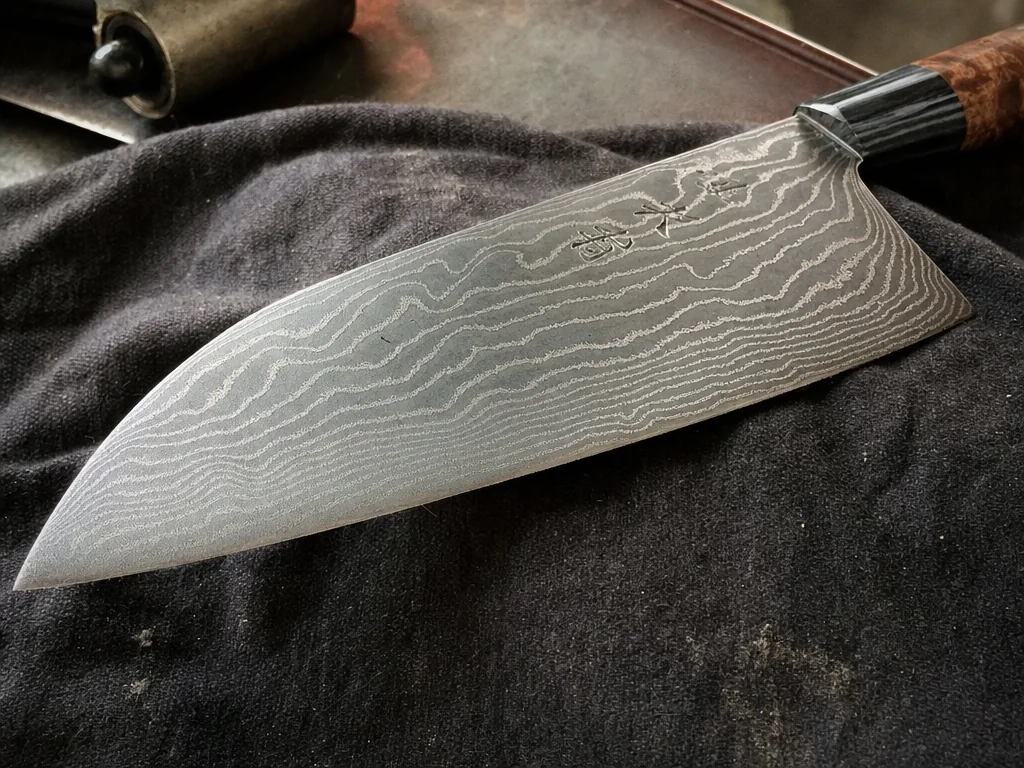
Ship knives with weak edge protection and the carton joins the defect chain. On one drop-test run, we opened 38 cartons and found a loose 8-inch chef knife had cut through its paper sleeve, hit the next handle, and chipped the tip by 1.2 mm. QC checked the chip with a digital caliper. One carton. One claim. For a knife OEM, the guard is a shipping control point we sign off before mass packing, not a cheap extra.
Knife edge guard sheath sourcing should start with the transit route, not blade size alone. Sea freight hits one way. Courier cartons hit another. If you buy from Yangjiang, Zhejiang, China or work with a knife edge guard sheath sourcing manufacturer in China, the blade fit and the inner-pack method have to survive both, then still look right for retail display and stay inside your return limit. Last year QC pulled one buyer sample because the sheath looked fine on the blade but came off after 6 shakes in the inner box; the buyer flagged it before booking. The cheapest guard is the wrong question. We have seen this go sideways. Bad reviews follow fast, and once you pay replacements plus repack labor at the grinding line on a 3,000-piece run, the math does not work.
Why transit safety changes sourcing
Edge guards are shipment engineering, not shelf styling. If the knife shifts in the pack, the edge hits the weakest point first: the sleeve seam, the carton corner, or EPE foam that folds after two drops. Start with the shipping lane. Parcel freight beats cartons harder than pallet freight. We ship DDP into Europe and North America every week, and those cartons usually see 8 to 12 handling touches before delivery. On our drop bench, a 0.8 mm SBS tuck box often fails at the tip end before buyers expect it, especially when the blade has 1.5 mm of free play. Pretty photos do not pass transit tests.
Think in failure modes. A chef knife that slides 4 mm inside a paper tray will wear through a carton flap after vibration. A pocket knife with a soft sheath mouth can open slightly under top-load compression and show edge. A hunting knife in a loose thermoform tray can punch through and mark the finish. QC pulled the sample on one run after 30 minutes on the vibration table and found the tray wall already whitening at the tip contact point. One damaged unit in a 200-piece shipment is enough to trigger inspection delay, repacking labor, or a replacement send-out. We have seen this go sideways over one carton.
For brands, shelf appearance is the wrong first question. Ask whether the guard keeps the blade fixed through handling, stacking, humidity swings, and last-mile delivery. If the retail pack must open without tools, the guard also needs controlled pull force. Too tight, and the customer slices the insert. Too loose, and the knife rattles in transit. On the grinding line and packing table, we run a force gauge check and a 10-cycle pull test, because guessing during sampling burns 3 to 5 days. Put the target on the spec sheet: pull force, blade movement in mm, and carton test result. The math does not work any other way.
Guard or sheath: choose by knife class
One cover spec for every knife fails fast. On our packing bench, an 8-inch chef knife with a 52 mm heel drops into a U-shaped edge guard cleanly and still comes out fast in the hand. Outdoor and hunting knives are different, and about 6 out of 10 pocket knife SKUs we ship also need a full blade sheath because the tip, edge, and often the lock side need cover. Gift sets follow a different logic. Match the guard style to the way the box opens and the shipping route, or the buyer will flag it. We have seen a clean box presentation rejected after the buyer flagged a scratched bolster from parcel transit.
Straight blades are simple. A guard with a positive friction lock is enough, and we run a 20-cycle insert-and-pull check on the line before mass pack. Curved or pointed blades give you less margin. The sheath needs a deeper pocket and a tip stop so the point cannot walk 3 mm and punch the end wall. In knife sets, 7 out of 10 brands we ship use a mixed system: PP or PET guards on the cutting edge, then a molded tray or paperboard divider to keep each piece off the next one. Wrapping every item in foam is the wrong fix. The math doesn't work. It adds cost and waste, and QC pulled a sample with rub marks on the satin finish anyway.
Channel matters more than unit cost. Amazon-style parcel distribution punishes loose blade movement fast; a 76 cm drop test will show it in one afternoon, usually by the third corner drop. Wholesale cartons sent to a distributor can run a simpler insert if the outer carton is stronger, such as 5-ply board instead of 3-ply. Do not start from the cheapest cover. This is the wrong question to ask. A knife OEM should set the guard by use case: retail shelf display, gift box, master carton, or direct-to-consumer fulfillment. If the same SKU goes through all four channels, choose the sheath for the worst one, not the easy one. We've seen this go sideways after the first parcel claim.
- Kitchen and chef knives: edge guard with 1.0-1.5 mm wall thickness and a snug heel grip that does not rattle on the line
- Pocket knives: full sheath or locking cover with tip protection and room for the clip side so the cover seats flat
- Outdoor and hunting knives: rigid sheath with retention that holds through bounce and compression in drop tests
- Gift sets: coordinated insert plus blade separator to stop carton abrasion on plated bolsters and handles
Materials and fit that actually work
Material choice is where 6 out of 10 cost-down projects start cutting in the wrong place. PP is common because it is tough and light; we run it for basic blade guards when the carton will take normal courier drops. PET gives a cleaner retail face, with less haze on a hanging card, but our drop-test jig cracked 0.35 mm PET walls at the tip after the corner hit. EVA and molded foam look better and protect the edge, but the carton cube jumps fast; on one 24 cm chef knife set, the buyer gained almost 18% CBM before anyone checked freight. Paperboard and molded pulp suit eco briefs, but the fit tolerance is tighter, and moisture control needs real work. Cheap guards are not always cheap after rejects.
For most knife edge guard sheath sourcing projects, the key spec is fit, not resin name. This is the wrong question to ask. A good guard should hold the blade with roughly 0.8-1.5 mm of controlled clearance, depending on blade thickness and finish. Too much gap lets the blade rattle in the guard during trucking. Too little gap scratches coatings and slows packing on the assembly table; packers start pushing harder, then tips get marked. It happens fast. If the knife has a coated blade or Damascus finish, the contact surface must be smooth enough to avoid scuffing; QC pulled one black-coated sample last month with rub marks after only 20 insertions. Ask the supplier for a sample set with blade thickness measured in mm by caliper, not a general photo and a promise.
Temperature and humidity matter too. A sheath that fits in Yangjiang at 28 C can warp in a hot container or stiffen in cold warehousing. Ask for a simple stress check at -10 C to 50 C if your routes move through seasonal extremes; 12 hours at each end catches more problems than a quick hand check. We have seen PP guards pass on Monday, then open at the mouth after 3 days in a 45 C oven room. The math does not work if the first complaint lands after the goods reach Hamburg. If the guard includes printed graphics, confirm ink adhesion and odor with a tape pull and a sealed-bag smell check. For European programs, buyers often ask for REACH declarations; for food-adjacent kitchen programs, LFGB or FDA questions come up around handle and packaging materials even when the blade itself is not the issue.
Cost, MOQ, and sourcing paths
Buyers ask for a price before they send the blade drawing. Wrong question. A USD 0.03 stock PP cover looks fine on a quote sheet, then QC pulls the sample and finds 1.5 mm tip clearance on a 203 mm chef knife. That is where rework and transit claims begin. A custom mold raises the first order cost, but after the fit is locked, the piece price is easier to hold across repeat POs. In Yangjiang, Zhejiang, China, a knife OEM should quote guard programs in FOB terms with tooling shown apart from the recurring piece price. We run it this way because the buyer can see the real cost. One blended number usually hides mold amortization, and the buyer only notices when the second PO is 4,800 pcs instead of 10,000 pcs.
Use these numbers as a sourcing baseline, not a fixed rule. Small custom runs start at 1,000 pcs. Cleaner OEM programs work better at 3,000-5,000 pcs because the injection line is not stopping every half shift to change color masterbatch or trim short shots with a hand knife. Typical unit cost for a basic PP guard is USD 0.03-0.08 at volume. A more complex sheath can reach USD 0.10-0.25 depending on wall thickness, logo pad size, and retention geometry around the spine. Tooling for a simple mold may sit in the USD 300-1,200 range. The mold quote is not the trap. The wrong fit is. We have seen a buyer approve a sheath from photos, then flag rattling after drop test because the spine channel was 0.8 mm too wide.
| Sourcing path | Best use | MOQ | Indicative unit cost | Lead time |
|---|---|---|---|---|
| Standard PP guard | Chef knives and santoku blades with common profiles; fastest choice when the drawing matches stock slot width | 1,000 pcs | USD 0.03-0.08 | 20-30 days |
| Custom PET or rigid sheath | Retail-ready blades needing tighter tip hold, a fixed logo pad, and a cleaner shelf face | 3,000 pcs | USD 0.06-0.15 | 25-35 days |
| Molded EVA or premium insert | Gift sets and premium SKUs where the buyer checks tray fit before carton drop test | 3,000-5,000 pcs | USD 0.10-0.25 | 30-45 days |
If the supplier cannot separate tooling, sample cost, and production unit cost on the PI, keep looking. The math gets messy on repeat orders, especially when a PO has one typo in the blade length and the packing team has already booked inner cartons. We have seen this go sideways. We ship guard programs best when the knife edge guard sheath sourcing manufacturer gives a clean line-item quote, while the broader knife OEM controls cartons and inserts with final assembly under the same AQL check.
How to qualify the right supplier
A reliable supplier has to prove more than a clean sample photo. Ask for first-article approval with the actual knife, not a dummy blade, and have the packing-table team install 20 pcs while QC watches the edge contact point. No shortcuts. If the supplier says the fit is good but cannot check blade thickness with a vernier caliper, spine width in mm, and tip clearance at the point, the program is not ready. For a knife edge guard sheath sourcing manufacturer, repeatability beats one pretty sample. We’ve seen this go sideways when a 2.3 mm spine was forced into a 2.0 mm guard and the cutting edge shaved plastic during packing.
At qualification stage, request the same documents we run on any export program: ISO 9001 if available, BSCI if your customer audits social compliance, and a material declaration for REACH or other buyer-specific requirements. If the knife will sell in North America, review packaging labels and carton marks for FNSKU or barcode legibility as part of the packing checklist; last month a buyer flagged one blurred FNSKU after the inkjet head was not cleaned. Small miss, big email chain. If you are shipping mixed sets, confirm that each piece can be counted and packed in a fixed sequence, such as chef knife first and santoku second, with the paring knife checked against its own guard before sealing the inner box. We usually make the line leader sign the packing order sheet because one typo on a PO can turn a 3-piece set into a rework job.
Use AQL 2.5 for general visual defects and tighten it where the fit is critical. A guard that looks fine but cracks at the locking tab is a production defect. A guard that fits the wrong model is a systems defect. Both should be caught before the shipment leaves Yangjiang, Zhejiang, China. A 240-employee factory should be able to run a 200 pcs pilot lot, let QC pull the sample, record tip exposure and tab fit on the inspection sheet, then scale only after the buyer signs off on the sample carton and master carton configuration. The math doesn’t work if you find the mismatch after container loading; by then the grinding line is clean, the cartons are taped, and nobody wants to reopen 186 master cartons for a guard that should have been checked on day one.
Test packaging before you ship
A packaging drawing proves nothing. We run a 1.2 m drop test on six faces beside the packing table, using a taped master carton and a vernier caliper. No guessing. After each drop, check the edge guard first. Then measure whether the blade has walked forward 2 mm. Look at the carton corner near the staple line for splits. If the freight moves by parcel or mixed consolidation, put the packed unit on the bench shaker for a short vibration check. Five minutes is enough. If the knife works loose inside the pack, the guard failed.
Humidity is where the quiet claims start. Paper inserts and some board structures lose stiffness in damp transit. Cheap plastic guards snap in cold storage; last winter QC pulled a sample that cracked at the guard mouth after one bend at 6 C. If your route goes through summer Asia freight, winter inland trucking, or sits 21 days in a warehouse, test temperature and compression in the same cycle. Buyers still ask for a heavier outer carton. That is the wrong fix. A strong outer carton does not stabilize a loose inner pack; it hides the movement until the consignee opens the box. First lock the blade with the guard. Then seat the guard tight in the tray slot so the tray cannot shift inside the carton.
To cut returns, sample the full packed unit, not the blade alone or the guard alone. Open 10 cartons from the first production lot. Check the guard lip for burrs; on one run QC pulled a 0.3 mm burr from a worn mold edge. Check whether the tip shows through. Count missing parts and carton scuffing, then record the result against AQL 2.5. We mark the same corner on each carton with a red pen during teardown. If damage repeats at one corner, or the tip keeps landing in the same weak spot, change the insert geometry before the next run. The math does not work if you pay outbound freight, ship one replacement, and still absorb the claim on the same knife.
Frequently asked questions
Usually yes. The retail box protects presentation, but it does not always stop blade movement inside the pack. If the knife can shift 3-5 mm, the edge can cut the tray or damage the tip during parcel handling. For kitchen and chef knives, a simple PP or PET guard typically adds only USD 0.03-0.12 per piece at volume, which is far cheaper than a return or a replacement send-out. For a DDP program into Europe or North America, I would treat the guard as a mandatory line item, not an optional accessory.
For most OEM knife programs, PP is the default because it is low cost, tough, and easy to source in China. PET works when you want a cleaner retail look and better clarity, but it can crack if the wall is too thin. EVA or molded foam is better for premium sets where cushioning matters more than absolute unit cost. The right answer depends on blade thickness, route conditions, and packaging style. If the blade has a coated surface or Damascus finish, ask for smooth contact faces and a fit test with the real knife, not a generic sample.
For a custom program, 1,000 pcs is a practical starting point for simple guards, but 3,000-5,000 pcs is more realistic if you want stable pricing and a cleaner mold setup. If you are ordering from a knife OEM in Yangjiang, Zhejiang, China, the supplier may separate tooling, samples, and production cost, which is the correct way to handle custom work. Lead time is usually 20-35 days after sample approval, and 30-45 days if the sheath is more complex or if carton integration is included.
Use the actual knife and test the full packed unit. The guard should hold the blade with controlled clearance, usually around 0.8-1.5 mm depending on blade thickness and profile. Then run a simple drop test from 1.2 m on six faces and inspect for blade exposure, cracked tabs, or movement inside the box. If the knife shifts, the guard is too loose. If the edge rubs the inner surface or the user has to force removal, the guard is too tight. Ask your supplier to document the fit with measurements, not only photos.
Yes, especially for direct-to-consumer and marketplace shipping where parcels see more handling than pallet freight. A weak insert can turn a small movement into visible damage, which often becomes a return or a customer complaint with photos. In practice, if you cut damaged arrivals by even 30%, the packaging cost usually pays back quickly. For Amazon-style fulfillment, also check barcode placement, FNSKU readability, and whether the guard can be installed fast enough at line speed. The best result is a guard that protects the blade and still keeps packing labor under control.
Lock the blade before it leaves
Send your knife model, blade profile, and target market, and we will map the right guard, sheath, and carton structure for safer FOB or DDP shipments.
Request a Quote