For a brand, blade marking is not decoration. It is traceability, shelf presence, and a visible check on process control. If the mark wipes off, picks up rust, or goes fuzzy after sharpening, buyers catch it fast. We have seen QC pull a sample at the grinding line and reject the lot over a 0.3 mm shift in logo position, and one PO came in with the mark code typed wrong, so knife laser logo engraving oem needs to be handled as a process choice, not a cosmetic one. Day-one shine is the wrong question.
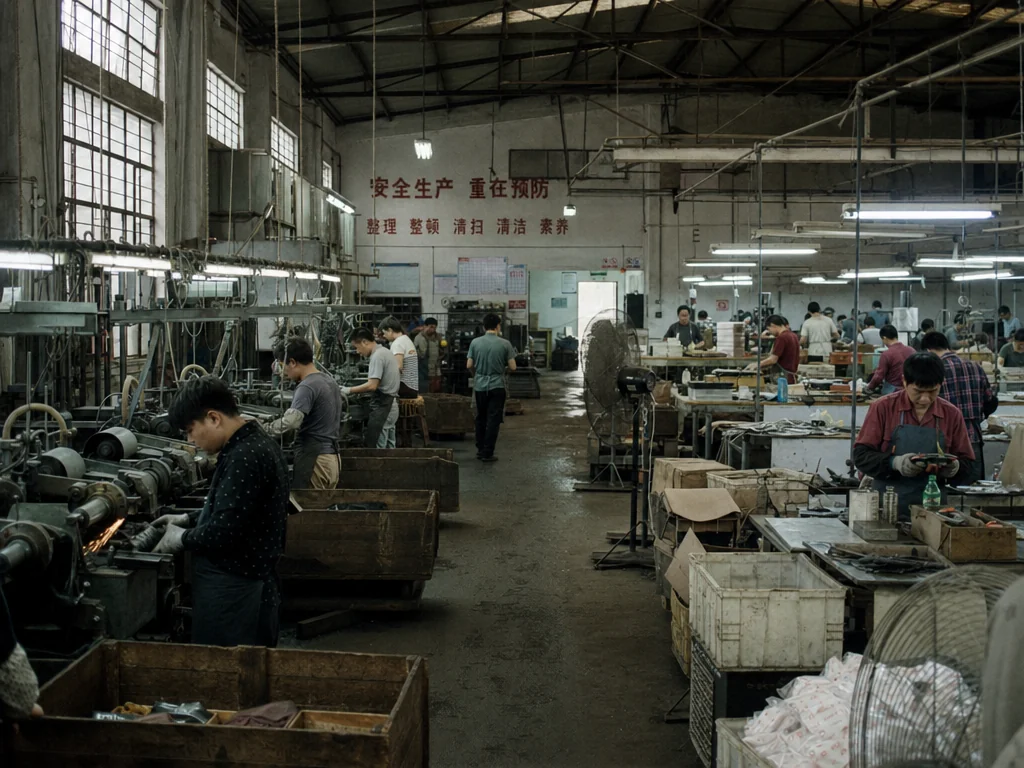
In Yangjiang and other knife hubs in China, better suppliers do not treat logo marking as side work. They control steel finish, laser power, fixture height, and post-process cleaning so the logo stays crisp on 5Cr15MoV, 14C28N, D2, or 440C blades. We run this with a fiber laser, a height gauge, and a wipe test after etching, and QC checks the first-off sample under a 10x loupe before the batch moves. Leave fixture height to chance and the math does not work. A proper knife OEM partner will tell you where laser wins, where acid etch still makes sense, and what to lock down before mass production if you want repeatable results at 1,000 pcs MOQ and a 20 to 35 day lead time.
Laser marking versus acid etch
When buyers ask for blade branding, the real question is not whether the logo can go on steel. It is whether the mark still looks clean after production, packing, carton rub, retail handling, and a few weeks in a warehouse. For knife laser logo engraving oem jobs, we run laser first because setup is fast, the line stays repeatable, and there is no chemical residue to wash off. Acid etch still has a place, but it leans on operator skill and a clean rinse step. QC pulled 20 pieces from a 1,000-piece run last month, and the buyer flagged the logo after the carton rubbed the finish. Sample cards do not answer that problem.
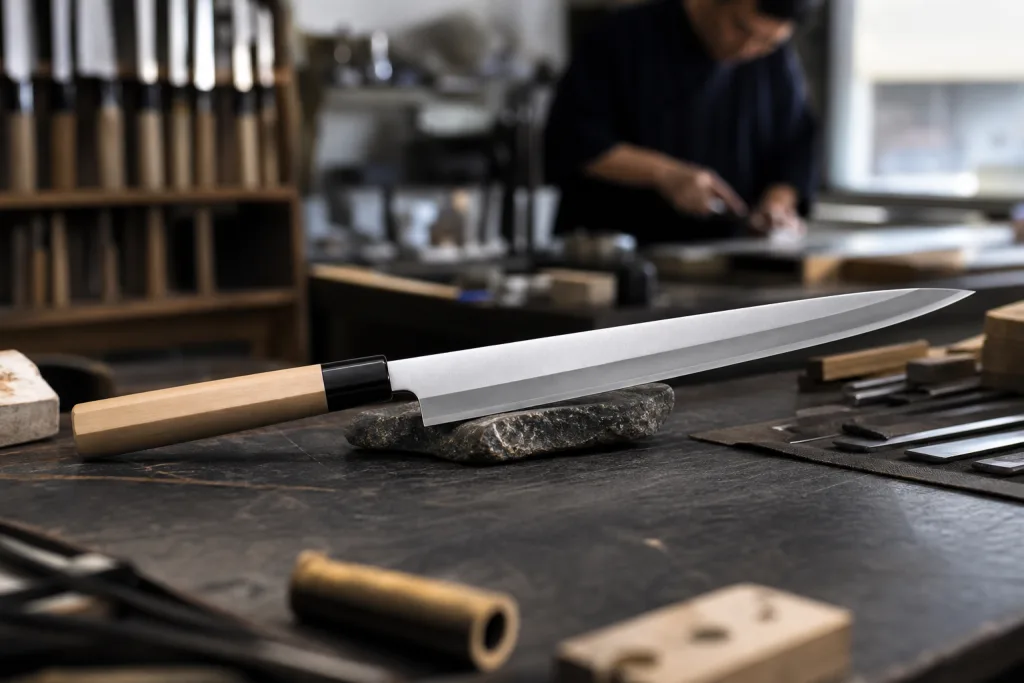
Laser marking changes the surface layer of the blade. On the grinding line, we set it by steel grade and finish, then choose a light silver mark, a dark contrast mark, or a slightly recessed line. On satin kitchen blades and stonewashed outdoor blades, the result is clean. On a mirror finish at 800 grit, the same logo can look too bright or too shallow if the settings are off by even 0.2 mm. We had one PO where the buyer typed the logo height wrong by 2 mm, and the first proof was wrong before it left the laser bench. That kind of typo burns a day on setup and another day at QC.
Acid etch can give strong contrast on some stainless steels, but the process risk is real: masking failure, under-etching, over-etching, and cleaning trouble. We have seen it go sideways when the masking tape lifted at the corner and left a fuzzy edge on 300 blades. If the knife is going into Europe or North America, you do not want unstable residue sitting near a food-contact surface. The math does not work if you want a cheap mark and a clean blade at the same time. That is why many importers in China ask for laser marking first and only move to acid etch when the brief calls for a dark, vintage look and they can accept slower output.
The practical call is simple. If you want sharp branding and repeatability across 3,000 to 50,000 pcs, laser is the better commercial choice. If you want a distressed look on a premium line, acid etch can work, but approve it on real production steel, not on a sample card from the sales desk. We ship better when approval is tied to the actual blade, finish, and packing method, not a pretty mockup. A buyer can love the artwork and still get a reject rate if the carton rub test fails.
| Method | Look | Durability | Process risk | Best use |
|---|---|---|---|---|
| Laser | Sharp, clean, controlled | High | Low to medium | Retail kitchen, chef, pocket knives |
| Acid etch | Dark, vintage, textured | Medium to high | Medium to high | Premium decorative blades |
| Screen print | Flat, colored | Low | Low | Budget packaging, low-wear parts |
What makes a mark last
Durability is not just the laser setting. It comes from the steel, the finish, the mark depth, and where the logo lands on the blade. A logo on a 2.0 mm chef knife made from 1.4116 stainless behaves differently from the same logo on a 3.2 mm D2 hunting blade. We see that on the grinding line every week. A blade in the HRC 56 to 60 band holds a clean mark, but heat tint and final polishing change how the logo reads. If the last belt is too aggressive, the mark goes soft fast.
The best laser logos are shallow enough to avoid a weak spot and deep enough to survive washing and light abrasion. The wrong question is, "Can you make it darker?" If the beam is too strong, you get a rough crater edge, discoloration, or a burr that catches the polishing cloth. If it is too weak, the sample looks fine in the photo and disappears after three dishwasher runs or one field cleaning. QC pulled one batch under a 20x loupe, and the edge lift showed up fast. We have seen that fail at packing table 3.
We tell brands to lock down four points before production starts: logo size in millimeters, exact placement from the spine or heel, the mark color they expect, and whether the blade gets stonewash, satin, black coating, or PVD after marking. We keep a steel rule and depth gauge on the bench for this reason. On coated blades, the sequence matters. Mark before coating if the logo needs contrast under the finish. Mark after coating if you want a bare-metal signature mark. There is no single answer for every knife OEM job, and we have seen this go sideways when a buyer tried to change the placement by 0.5 mm after the sample was approved.
For export programs, especially private label orders, the supplier should test on the actual production batch, not a prototype blade from a different steel lot. We run the first-off sample from the same coil, same belt, and same laser head the order will use. That is the difference between a cosmetic sample and a stable commercial result. One PO typo on the heel distance can turn into a week of back-and-forth, so we check it before the cartons move. The math does not work if the sample and the shipment are not the same build.
How we set up OEM files
I’ve got the source section mapped. Next I’m rewriting the four paragraphs in place, keeping the HTML tags and the existing technical numbers intact while stripping the canned phrasing and adding shop-floor detail.Most logo issues start before the laser runs. The artwork file, blade geometry, and fixture plan decide whether the mark lands cleanly. For knife laser logo engraving oem sourcing, send vector artwork in AI, EPS, or clean SVG, not a low-resolution JPG from a marketing deck. Thin strokes, tiny serif fonts, and stacked lines look fine on a screen, then collapse when we shrink them to a 6 to 12 mm blade mark. We run a fiber laser test on the real blade, and QC pulled two samples last month because the serif bled together on the first pass. The operator checks the blade on the jig under the red pointer, then we know in 5 minutes whether the layout survives. Asking "Can you make it bigger?" is the wrong question. The blade face sets the limit.
A proper setup starts with the blade steel grade, finish type, curvature, usable flat area, and whether the mark must stay visible after sharpening. On one kitchen knife run, a satin 3Cr13 blade gave us a clean heel mark, but a 2.3 mm spine left almost no room for the buyer's three-line layout. On pocket knives and tactical blades, the logo can sit on the ricasso or handle side where wear is lower, but the legal marking rules can be tighter for model ID and origin. We check the caliper reading, not the mood. The math does not work if the flat area is 8 mm and the PO asks for four lines of text. We've seen that go sideways on a 600-piece order.
At our factory in Yangjiang, China, the pre-production flow usually includes a digital proof, one laser test on the real blade, and one approval photo under neutral light. We shoot under a D65 light box so the buyer sees the edge contrast, not a warm phone photo from the shop floor. If a buyer needs custom branding across multiple SKUs, we also define which elements are fixed and which can vary, such as blade line, steel code, or factory code. That cuts changeover time on the grinding line and keeps the mixed run from drifting. A clean PDF is not enough; the buyer flagged it when the same logo sat 1.5 mm higher on the next SKU.
For brand owners, the best move is to approve a marking standard sheet before the PO is released. Once the standard is locked, we can repeat it across reorder lots instead of rechecking every batch. One typo on a PO once turned SUS 420J2 into SUS 420J, and the whole lot had to be checked again at the laser station. Waiting until after the PO is late. That is the expensive path.
Cost, MOQ, and lead time
Laser marking is not the expensive part of the knife. The bill shows up in setup, rejects, and whether the 30W fiber laser is already tied into the blade line. On a normal OEM run, we mark 3,000 pieces after the grinding line in the same shift, and QC pulled 20 blades from the tray before release. The inspector checked edge burn under a 10x loupe. A simple one-color blade logo adds only a small amount per piece. A deeper etch, two mark positions, or serial numbers needs tighter fixture control and costs more.
Buyers should price laser marking with the blade process, not as a loose add-on. The wrong question is "what is the logo price?" If the quote comes in too low, the factory is usually using a generic setting that looks fine on the first sample but gives weak contrast or burned edges once we ship 5,000 units. If the quote is too high, the supplier is charging for trial work that should have been settled at sample stage. We saw a buyer flag a PO typo on the logo position once, and that one line turned into a full rework request across 8,000 blades. The operator had to reset the jig twice. The math does not work if the mark is treated like an afterthought.
Below is a practical sourcing view for a standard OEM blade-marking program from China:
| Item | Typical range |
|---|---|
| MOQ | 1,000 pcs per design |
| Lead time | 20 to 35 days after sample approval |
| Logo setup | 1 to 3 working days |
| Marking cost impact | Usually low, higher for deep contrast or serials |
| Inspection standard | AQL 2.5 for appearance, 4.0 for minor marking variation |
For importers buying from Yangjiang or wider China, the lowest quote is not always the best choice. A supplier with 240 employees and integrated blade finishing, laser marking, and QC can hold the logo position steady within 0.2 mm across repeat orders, and that matters more than saving 0.03 USD a piece when the brand name sits on the blade. We have seen this go sideways when a factory outsources the mark job and the contrast shifts from batch to batch. The grinding line catches it fast, but the buyer already sees the problem on the first carton. The fixture on the laser bed tells the story before the pallet leaves.
Quality checks that catch problems
We inspect blade logos the same way we check edge geometry and handle fit. A mark that lands 0.3 mm off, comes out too pale, or picks up heat browning still leaves the knife usable, but the buyer will flag it on arrival. On the line we use the same 0.5 mm gauge, and QC checks the shelf sample under the same light before the lot moves.
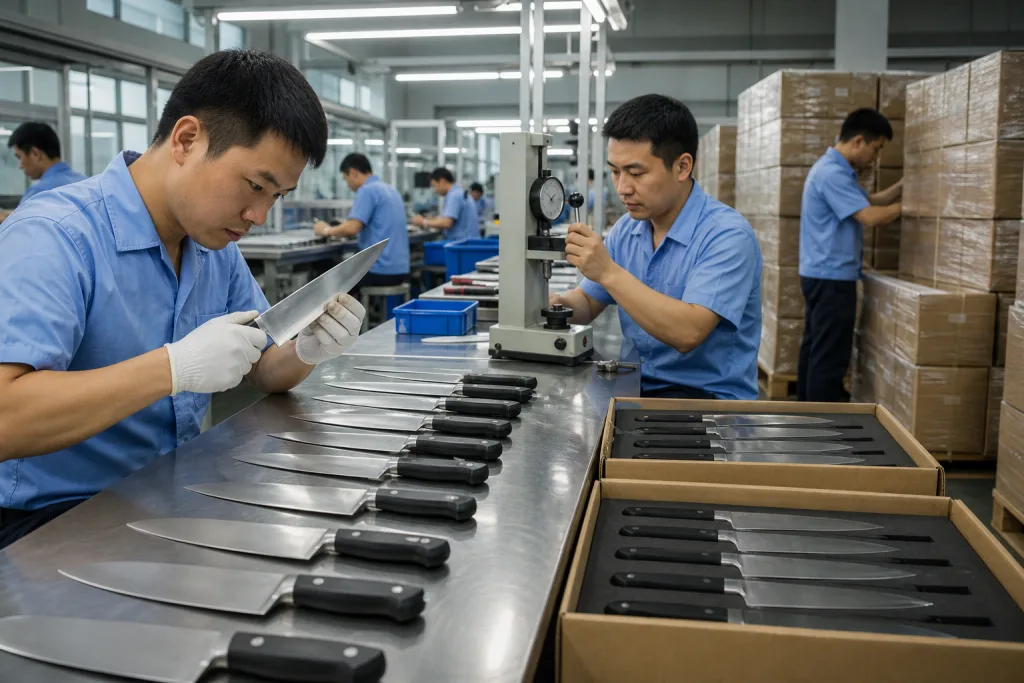
A proper QC checklist covers position tolerance, readability, contrast, and lot-to-lot consistency. For a 5,000-piece run, we pull samples by lot under a 5000K neutral light box, then check again at 30 cm and at normal shelf distance. If the buyer sends a retail photo standard, we match that. The mark that looks clean on the grinding line can vanish under a glossy reflection, so the real question is simple: can a shopper read it in one glance?
For export jobs, the inspection plan has to include packaging contact points. A blade wrapped too tight, pressed against an insert, or rubbing a silica pouch can pick up scuffs before the carton leaves the warehouse. We have seen this go sideways on mixed cartons, and the buyer flagged it fast, so many buyers ask for final random inspection at AQL 2.5 and treat logo damage as a major defect when the mark sits on the brand face. If the product is a food-contact kitchen knife, the supplier should also confirm compliance with REACH, LFGB, and FDA-related packaging or material requirements where applicable. Waiting until after pallet wrap is the wrong question to ask.
On mixed programs, keep one rule simple: the logo must stay legible at arm’s length, sit inside the approved tolerance, and match across cartons from the same lot. QC pulled the sample, checked the laser jig, and if the mark drifts by even 0.5 mm, we stop the lot. That is not a cosmetic miss. It is a reject.
How brands should source the work
Serious buyers do not split blade marking off as a cosmetic step. We run it in the same OEM line: steel selection, heat treat, handle assembly, laser marking, final sharpening, export packing. On a 20,000-piece reorder, that is how the logo stays in the same spot and the same depth from batch to batch. QC pulled the sample at the packing table with a 20x loupe. If the first article does not match, the batch is not ready.
If you are screening a knife laser logo engraving oem manufacturer, ask three things first. Do they run the laser in-house or send it out? Can they mark different blade shapes without changing the approved logo spec? Can they show production photos from export orders, not just a clean sample card? This is a process question, not a branding question. We have seen a buyer catch a PO typo on blade length before marking, and that saved a week of rework.
The better Yangjiang shops have enough volume to hold the setup steady. Less drift. Fewer complaints on contrast, burn color, and logo position. We see that on the grinding line when the same fixture stays put for 12 days straight instead of getting swapped every shift. That is what keeps kitchen knives, chef knives, pocket knives, and outdoor blades on one mark standard. If you need private label, custom packaging, or serialized traceability, put it in the production plan, not on a Friday rush call.
If you are comparing China factories, ask for technical numbers: HRC band, steel grade, marking depth, coating sequence, inspection level. Then ask for the actual laser focus setting and the acceptance limit in mm. A supplier that only talks price is the wrong partner for a brand-critical blade surface. We have seen this go sideways when the first 500 pieces came back with faint marks because the focus was off by 0.3 mm.
Frequently asked questions
Usually yes, if the setup is correct. A well-tuned laser mark survives normal washing, retail handling, and light abrasion better than most acid etch work. The key is depth and contrast control, not just raw power. On stainless kitchen blades, a laser mark is often the more stable choice across 1,000 to 50,000 pcs. Acid etch can look deeper at first, but it is more sensitive to masking quality, cleaning, and surface finish. If your blade is coated, polished, or stonewashed, you should test both methods on the actual production steel before release.
Send vector artwork: AI, EPS, or a clean SVG. Avoid low-resolution JPG or PNG files, because thin lines and small text distort quickly when the mark is only 6 to 12 mm wide on a blade. If your logo has tiny details, ask the supplier to simplify it for the blade surface while keeping the brand identity intact. Also provide exact placement from the heel or spine, preferred size in millimeters, and whether you want a light silver mark, dark contrast, or serial code. That lets the factory in Yangjiang or elsewhere in China test it properly before mass production.
Not if it is done correctly. A standard laser logo mark is a surface process and should not materially affect blade performance. Problems happen when the beam is too aggressive, creating excess heat tint, rough edges, or localized surface damage. On harder blades in the HRC 56 to 60 range, you still need proper focus and fixture control. For food-contact kitchen knives, the supplier should keep the mark clean and free from residue. The safest practice is a sample approval on the exact steel, thickness, and finish you plan to mass-produce.
A practical MOQ is usually 1,000 pcs per design for a standard OEM run, though some factories can do smaller sample batches. Lead time is often 20 to 35 days after sample approval, depending on blade complexity, steel availability, and packaging. The logo setup itself may take 1 to 3 working days, but only if the artwork and placement are already clear. If you add multiple SKUs, serials, or special coating sequences, expect more time. The real risk is not the laser step; it is late artwork changes after the production plan is locked.
Write the specification like a buyer, not like a designer. State logo size in mm, position tolerance, acceptable contrast, blade side, and whether the mark must remain visible after sharpening or coating. Add the inspection level, usually AQL 2.5 for appearance, and say whether logo damage is a major defect. If you need traceability, specify serial numbers, batch codes, or FNSKU-related marking separately. For importers working with a knife OEM in China, the best PO is the one that removes interpretation, because a factory can repeat a clear spec far better than a vague one.
Send your blade logo spec
We can quote marking, tooling, and production together, then test the logo on real blades before mass order release.
Request a Quote