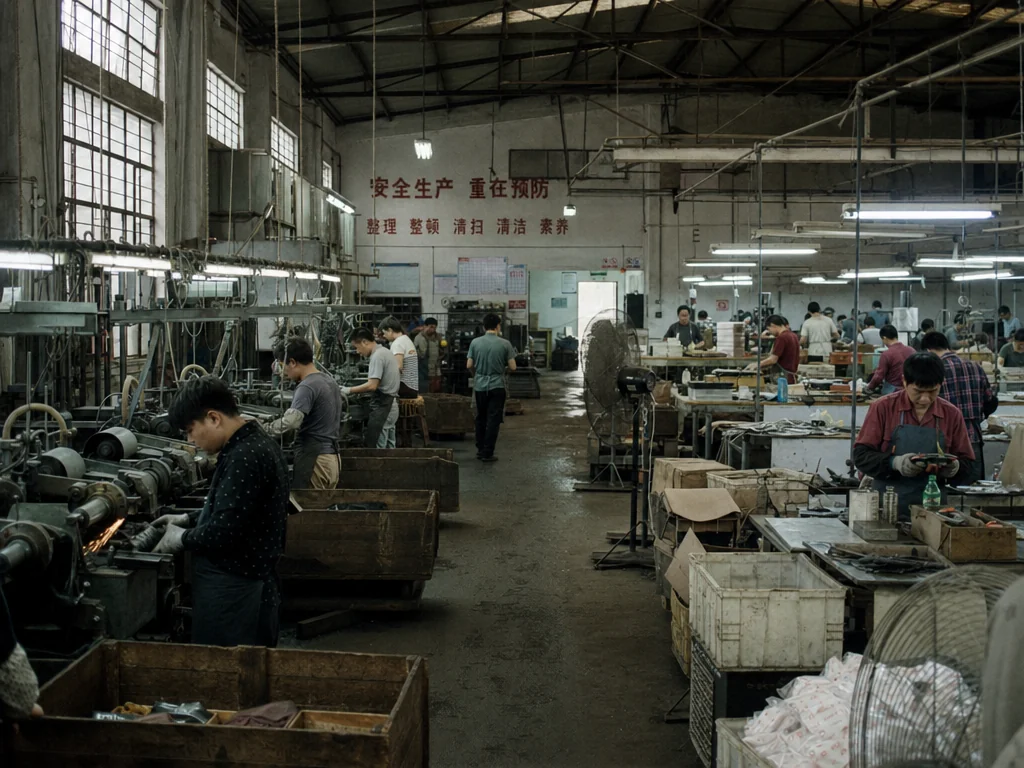
The wrong question is not "what is the cheapest private label first order?" We see the real cost on the grinding line when a buyer changes a 105 mm handle color, the edge angle, or the carton art after samples are approved. Last week QC pulled a sample back because the print shifted 1.5 mm, and that turns a clean PO into rework. A Yangjiang OEM can run 240,000 units a month and still lose the order on one PO typo or one late tweak.
Treat the first PO as a controlled build, not a design sprint. Lock the SKU, steel, HRC band, MOQ, and target landed cost before you ask for samples. We run it this way because the math does not work once the art file is printed and the packing room is waiting on a revised dieline. The buyer flagged it on a carton proof, and that is where first orders go sideways. For a private label brand sourcing from China, the real risk is delay, mismatch, and compliance drift, and this is the wrong question to ask if you want the first shipment to land cleanly.
Start With The Retail Math
Before you ask about steel or handle material, start with shelf price. At $29.99 retail, a startup knife brand usually cannot carry a landed cost above $7.50 to $9.00 unless the box, print, and channel mix pay their own way. On our side, the grinding line can make a blade shave clean and still lose the order when the margin misses by $0.40. QC checked one sample under a 10x loupe, the edge passed, but the buyer still walked because the spreadsheet was red. Private-label first-order sourcing starts with retail math, not product photos. This is the wrong question to ask.
Write down four numbers: target retail, target gross margin, expected freight, and your max landed cost. Then ask the manufacturer for three quotes. On one RFQ, QC pulled the sample after the buyer flagged a PO typo on the handle color, and the caliper showed a 2.2 mm spine where the buyer had asked for 2.0 mm. Quote 3Cr13 at a lower MOQ, 7Cr17MoV at a mid-range cost, and a higher-spec stainless option if your brand position needs it. If you sell on Amazon or DTC, decide early whether the pack must take an FNSKU label, hangtag, or gift box insert. The math does not work if the pack size changes later.
One rule we keep from China sourcing: do not open five SKUs on day one unless you already have demand. One SKU, one clean spec, one edge profile, one packaging standard. We run first orders at 500 to 1,000 pcs so cash does not get trapped in dead variants. Add the next knife after the first reorder clears, not before. We saw this go sideways when a buyer pushed three blade lengths and the carton drop test failed at 12 drops.
Pick The Right OEM Model
Not every knife OEM fits a first order. On our grinding line, we run kitchen knives, pocket knives, and gift sets through different fixtures, QC gates, and packing crews, because a 120 mm chef knife is not handled like a folding blade. Ask the direct question: do they build to your spec, or do they just relabel stock?
The gap is real. A true OEM will change blade length, grind, finish, logo method, sheath, box structure, and carton markings without stopping the line. A relabel-only supplier looks fast on paper, but you lose fit control and you lose room to stand out. The math does not work for a startup that still needs margin after launch. We saw a buyer push back on a sample because the laser mark sat 3 mm too low, and the factory that only sold stock could not fix it.
Use a hard filter. If the factory cannot show prior work in your category, cannot explain its QC checkpoints, or cannot put MOQ and lead time in writing, move on. We have seen this go sideways when a buyer accepted a verbal quote, then the PO had a typo on carton count and the sample still needed a second run. A serious shop in Yangjiang or Zhejiang should map the first-order path cleanly, with the sampling bay, grinding line, and packing room aligned. If they stay vague on OEM, ODM, or private label, your cost shows up later. QC pulled the sample at the 10x bench and found the issue in two minutes. That is the detail that saves a launch.
- OEM: best when you need control over spec and tooling, including blade length, handle scale, and packaging layout.
- ODM: useful when you want faster market entry and only 1 or 2 design changes, not a full custom build.
- Private label: efficient for branding, but you still need to control the bill of materials, or QC will flag the weak points at the 10x bench.
Sample Like A Buyer
Sampling is where most first orders go sideways. We see founders approve a knife off a clean render, then QC pulls the sample and the handle feels wrong in hand, the blade sits 1.5 mm off in the sheath, or the edge angle misses the actual use case. A proper sample-to-bulk timeline starts with a written spec sheet: blade length in mm, steel grade, HRC range, handle material, logo method, packaging, and tolerance limits. If that sheet is fuzzy, the buyer flagged it for a reason, and we end up reopening work on the grinding line by day three.
Keep the sample loop tight. Round one checks geometry, balance, and finish on the grinding line with the same fixture we use for the pilot run. Round two checks final logo placement, packaging fit, and compliance labels before we ship a carton. If a factory sends you a sample in 7 to 14 days, that is normal for an existing platform. If the order needs new tooling or a custom handle mold, expect 18 to 30 days. The math does not work any other way. A knife OEM in China moves faster when you send one approval pack instead of scattered comments across email and chat. We have seen this go sideways when the buyer asks for one more tweak after the mold is already booked.
Do not approve from screenshots. Ask for physical samples, edge consistency photos, and a measurement report with calipers, not guesses. A good source will also mark the sample with the revision number so nobody mixes it up with an earlier version; we have seen a PO typo turn `rev 02` into `rev 20` and waste a week. That is not a small detail. On a first PO, it decides whether the launch stays controlled or turns into a warehouse problem. This is the wrong question to ask if you are trying to save time. Ask for the sample in hand, then check the blade with calipers and a loupe before you sign off.
Lock Materials And Compliance
I’m checking the section against the style constraints now, then I’ll rewrite the HTML in place with the same tag structure and the same technical numbers/certifications.Steel, handle, and compliance are where a low quote turns into a reorder problem. On the grinding line, we catch it fast: a blade that reads 58 HRC can chip in QC if heat treat drifts 3 degrees. For kitchen and chef knives, 56-60 is the right first-order band because it gives real edge life and still sharpens cleanly for most buyers. Outdoor and tactical specs can move, but lock the use case first. Asking for price before steel is the wrong question.
Ask for a written bill of materials that names the steel standard, handle resin or wood species, fasteners, coating, and packaging parts. QC pulled the sample last month and found a handle resin that did not match the PO, so a catalog sheet is not enough. For the EU, your supplier should know REACH and LFGB where they apply. For the U.S., FDA contact requirements and food-contact suitability matter. ISO 9001 and BSCI help on the audit side, but they do not replace a product file or a material declaration. We have seen this go sideways on a 2,000-piece trial because one line item was left vague, and the math did not work.
| Item | Typical first-order check | Why it matters |
|---|---|---|
| Steel | HRC 56-60 on a Rockwell tester | Edge retention and sharpening feel |
| Logo | Laser or etch proof on 300+ pcs | Brand consistency across 300+ pcs |
| Packaging | Carton drop and fit test with sample knife | Stops transit damage before bulk ship |
| Inspection | AQL 2.5 major defects at pre-ship | Controls first-batch quality |
If you are buying from China, ask for test reports or material declarations before the bulk deposit. We ship faster when the file is clean, and we avoid the back-and-forth that burns 12 days on a 30-day order. One buyer flagged a PO typo on the coating spec, and the factory file still carried the old finish. That is the kind of miss that comes back when a distributor asks for paperwork you thought was standard.
Use A Real Timeline
The cleanest first-order roadmap usually runs slower than a founder expects. That is normal. A wrong grind line on a printed carton costs more than a week in sampling. For a private-label knife order, we usually see 7 to 14 days for samples, 3 to 7 days for review, 10 to 20 days for revisions if needed, and 30 to 45 days for bulk production after final approval. We run that clock on a whiteboard in Yangjiang, and the grinding line stays parked until the buyer signs off.
Set the gate before the next step. If QC pulled the sample and the blade profile is off by 0.5 mm, reject it there. We check with a caliper on the bench before anyone opens a second run. Do not reopen the steel spec because a sleeve has a typo. If the handle is fine but the box art needs work, split the jobs. The buyer flagged the art? Fix it and move on. We've seen that go sideways before.
The table below keeps a first order from drifting. One bad PO line, like “matt black” instead of “matte black,” can hold print approval for 2 days, and we have watched a barcode proof sit on the desk while a buyer argues over one letter. The handoff has to be clean.
| Stage | Owner | Typical Time | Approval Gate |
|---|---|---|---|
| Spec sheet | Buyer | 1-3 days | Geometry, steel, price band |
| Prototype | Factory | 7-14 days | Physical sample accepted |
| Packaging proof | Buyer and factory | 3-7 days | Artwork, barcode, warnings |
| Bulk run | Factory | 30-45 days | Pre-shipment inspection pass |
If the supplier cannot commit to dates, the order is not ready. The math does not work. We have seen it go sideways when a buyer waits for promises instead of a signed schedule, and the packing line can sit idle while the carton count is already locked at 5,000 pcs. Ask for a date line, not a smile.
Protect Margin At Bulk
Bulk is where founders lose margin when small changes stack up. We see it on the grinding line: swap the handle color, make the carton 5 mm thicker, add one more ink pass on the insert card, and the landed cost jumps 6% to 12% before freight. Freeze the spec on day one and force every exception through a written change order. If the buyer flags the handle shade after PP sample sign-off, the margin was already gone.
Before production starts, lock the inspection plan. For a first order, pre-shipment check at AQL 2.5 for major defects is the baseline, with QC pulling samples for blade straightness, scratch marks, logo placement, and carton crush at the corner. We had a run last quarter where a 0.4 mm logo shift passed on one sample and failed on the next box. If you ship to Amazon, make the factory print FNSKU and carton marks correctly, or you pay relabeling fees on arrival. There is no shortcut here.
FOB works when you already control freight. DDP looks clean on paper, but it hides the cost stack and blurs responsibility when customs or label issues hit. We saw that go sideways on a 12-day pickup delay. For a startup brand, a clean quote beats a neat one. A factory in Zhejiang or Yangjiang should quote both, but compare the landed total, not the sticker price. If the supplier cannot break out carton, inland truck, and export docs, push back. The math does not work otherwise.
The first order should show how the supplier runs. If the knife, packing, and paperwork all match the approved sample, you have a base for reorder pricing. If the carton count is off by 2 units or the PO has one typo in the blade finish, the issue was process, not the knife. QC pulled the sample, checked the 60-62 HRC mark, and the label printer was the real problem. That is the wrong question to ask. Fix the process, then talk margin.
Frequently asked questions
For a real first-order project, a common MOQ is 300 to 500 pcs per SKU for a simple kitchen knife, and 500 to 1,000 pcs if you want custom packaging or a special finish. Pocket knives and gift sets can start lower or higher depending on parts count and tooling. If a supplier quotes 50 pcs at a factory price, they are usually selling stock, not a proper OEM program. In China, the MOQ is tied to setup cost, packaging, and inspection time. A good supplier in Yangjiang or Zhejiang should explain whether the MOQ changes if you accept a standard handle, standard box, or mixed carton pack. Ask for the price at 300, 500, and 1,000 pcs so you can see the curve clearly.
Two rounds is normal for a disciplined knife OEM program. Round one checks geometry, balance, finish, and basic fit. Round two confirms logo placement, packaging, and any adjustments after your comments. If the factory is changing blade shape, handle mold, or sheath structure, a third round may be necessary. For a first order, the key is to avoid endless sample churn. If the sample keeps changing after you have already approved the core spec, your timeline will slip fast. In practice, a clean sample-to-bulk path is often 7 to 14 days for the first sample, then 10 to 20 days for revisions if needed. More than that usually means the spec was not locked early enough.
Ask for a material declaration, packing list, commercial invoice, and any available test reports tied to your market. If the knife is for food contact, check whether the factory can support LFGB, FDA-relevant material suitability, or a migration test through a third-party lab. For the EU, REACH awareness matters for coatings, handles, and packaging components. If you sell on Amazon or through retailers, also ask for barcode readiness, carton markings, and label placement. A professional supplier should be able to show ISO 9001 or similar quality management documentation, and sometimes BSCI if the factory is audit-driven. The point is not to collect paper for its own sake. It is to reduce the chance that your first shipment gets delayed by compliance questions you could have handled earlier.
Compare steel by use case, not by marketing language. For everyday kitchen knives, a stainless steel in the 56-60 HRC range is a practical starting point because it balances edge retention and ease of sharpening. For a value-driven line, 3Cr13 or a similar budget stainless may work if you are honest about performance. For a better mid-range product, 7Cr17MoV or a comparable stainless often gives a more credible user experience. The right answer depends on target retail, sharpening expectations, and how often the knife will be used. Ask the factory for the steel grade, hardness target, and whether the heat-treatment process is stable. Without that, you are buying a label, not a blade.
Limit the number of moving parts. One SKU, one blade size, one handle color, one box spec. That is the safest way to launch a knife private label first order. Keep the first shipment to a number you can actually sell, usually 300 to 1,000 pcs depending on channel confidence. Use a pre-shipment inspection, ask for sample photos with measurements, and confirm carton labeling before bulk packing starts. If you sell on Amazon, prepare FNSKU labels and case pack rules before the goods leave China. Most first-order problems come from late changes, not from the factory itself. A clear spec and a single approval chain save more money than trying to optimize every detail before market proof exists.
Plan Your First Order Properly
Send a clear spec, target price, and channel plan. We can turn that into a sample-to-bulk roadmap with MOQ, lead time, and compliance checkpoints.
Request a Quote