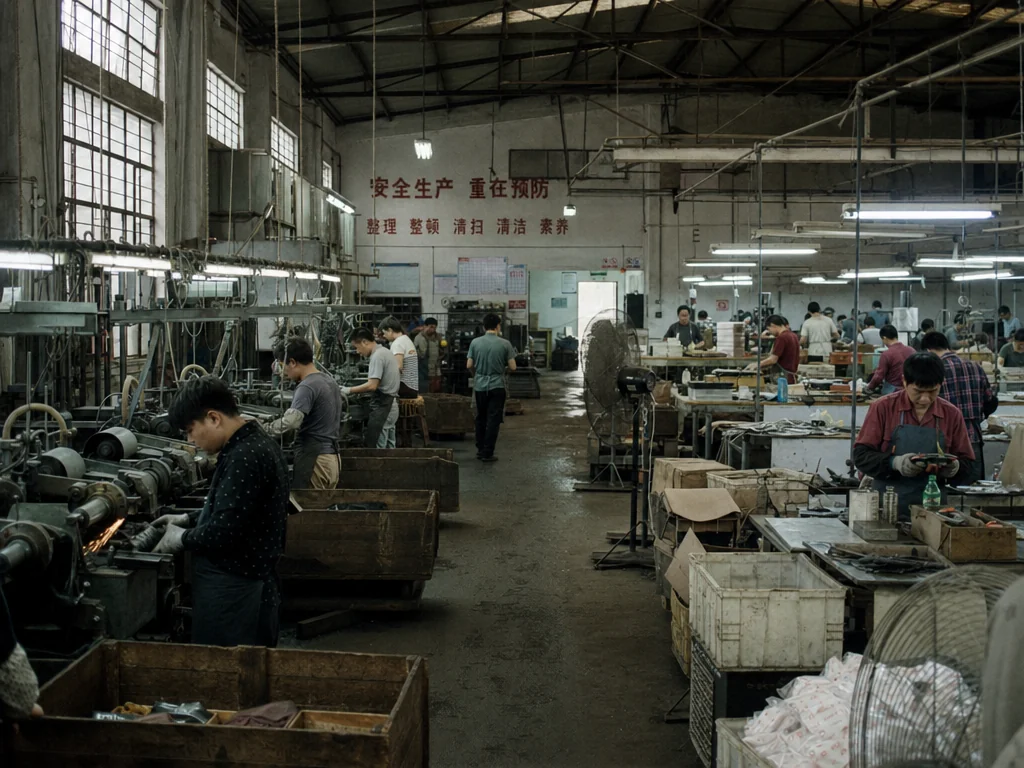
A blade leaving the line in Yangjiang, Zhejiang, or any China export factory is already fighting the pack room, not the buyer. We run at 38% RH, then the container swings through hot and cold zones and condensation shows up inside the carton. One fingerprint, wet kraft, or a loose poly bag is enough. QC pulled the sample after a 30-day sea lane, and the first orange spot said enough. The heat sealer on the packing table has to hold.
Brands like to talk about steel grade, grind, and edge retention, then lose margin at the packing station. That is the wrong question to ask. The math does not work unless the pack is repeatable: VCI paper wrapped tight around the blade, the right desiccant load for the carton size, a clean seal from the heat sealer, and a sequence the operator can run on every shift. We have seen a 3 g sachet fail in an overstuffed carton, so if a factory in Yangjiang or Zhejiang ships 240,000 units a month, it needs a documented method, not a guess.
Why blades rust in transit
I’m rewriting the section now with the original tag structure preserved, while tightening the language so it reads like a factory-side sales engineer rather than generic copy.Rust does not start in the container. It starts after polishing and before sealing. On the grinding line, QC pulled a mirror-finish blade after 14 minutes on the packing table and found moisture on the spine from warm hands alone. Put that blade against a 5 C container wall at night and condensation shows up fast. We run the pack room at 22 C, 50% RH for a reason. Knife rust prevention packaging has to match dwell time, temperature swing, and the real route. A carton spec by itself does not hold up.
In Yangjiang, we still see blades left open for 20 minutes at 75% relative humidity. The math does not work if anyone calls that harmless. Even with good steel, surface moisture builds fast, and a hollow grind or deep etching gives water a place to sit. Carbon steel shows it first, but stainless can still come back with tea staining after a long humid run. QC pulled one carton and found a 4 mm seal gap at the corner. We had a buyer flag the bag spec after the PO was signed, and rust showed up at destination.
For brand buyers, the right question is not "will it rust?" This is the wrong question to ask. The real question is "where is the first weak point in the chain?" Is it the machine table, the 12-minute wait before packing, a weak carton seal, or storage at the destination DC? We trace that path before we quote VCI, because the wrong pack means extra claims later. Once the route is mapped, the buying decision gets easier to audit. We have seen this go sideways on a 28-day sea run and a 2-day inland transfer, and the fix is never the same.
VCI paper and desiccant
I’m rewriting the section now and keeping the tag structure unchanged. I’m stripping the brochure phrasing, keeping the technical numbers, and making each paragraph sound like it came off the packing floor.VCI paper is the cleanest direct-contact layer for most shipped blades. On the packing table, QC pulled a sample after a 48-hour humidity check, and the sheet came back clean, with no oil film on the edge. We run it before the blade goes into the insert, then it releases corrosion inhibitors inside a closed pack. The steel stays protected. The leather sheath stays clean. Buyers do not want to wipe preservative off before first use.
Desiccant does a different job. It does not protect the metal surface directly; it pulls free moisture out of the carton or polybag. We had a buyer flag a 50-piece master carton because someone dropped in one small pouch and called it done. That math does not work. A 5 g pouch may fit a single boxed pocket knife, but a 50-piece outer carton shipped by sea needs a calculated load. On our line, we run 1-3 g of desiccant per liter of sealed space as the starting point, then we adjust after transit testing. This is the wrong question to ask if you only count pouches.
The best result is both. VCI paper handles the blade surface. Desiccant handles the air in the pack. On the grinding line, we saw a 420J2 sample show orange specks after 12 days in a leaky polybag, and the heat-seal bar had left a 2 mm wrinkle near the corner. That is not theory. If you are sourcing from a knife rust prevention packaging manufacturer, ask for the VCI grade, the desiccant absorption curve, and the shelf life at 25 C / 60% RH, not a sales claim. QC will catch the weak setup fast.
Practical rule: for long ocean freight, use VCI on every finished blade and a desiccant pack inside every sealed retail box or polybag if the journey exceeds 21 days or crosses monsoon humidity zones. We ship that way when the container plan shows 12 days at port plus 18 days on water, because once the carton sits in warm air, the moisture load climbs fast. A 1 mm gap in the flap seal is enough to ruin the test. No shortcut beats that on a wet season booking.
Pack-out specs that actually work
Good packaging is a process spec, not a loose note on the PO. If the same blade leaves day shift in VCI paper and night shift in a poly bag, protection drifts fast. We run the same sequence every time: final inspection, glove handling, VCI wrap, insert placement, primary seal, desiccant insertion, carton closure. Lock the blade finish, wrapping material, carton size, desiccant gram weight, and seal method. QC pulled the sample at the bench with a moisture card, and that is where the weak pack-out shows up.
For export programs, I push a written pack-out sheet with blade SKU, steel type, finish, VCI paper gram weight, desiccant type, carton dimensions, humidity target, and seal tape width. The buyer flagged a PO that just said "rust proof bag"; that line causes trouble at the packing table. If the blade has black oxide or stonewash, the sheet should say whether the VCI paper can touch the finish directly or needs a thin barrier sleeve. We had one carton spec call for 48 mm tape on a 52 mm flap, and that kind of mismatch slows the line. That is the wrong question to leave open.
Humidity control matters before sealing. Above 60% RH, you are packing moisture into the system. We run final pack-out in a dry room, watch the hygrometer on the sealing bench, and close cartons within 10 minutes. On one 2,000-unit lot, the dry room bought us 12 days versus 18 before the first stain. The dehumidifier filter on the line cabinet was loaded after 3 days. In Yangjiang, Zhejiang or anywhere else in China, the shops that skip the dehumidifier pay for corrosion returns, and the math does not work.
Keep the packaging spec tied to your quality plan. A knife rust prevention packaging sourcing file should sit next to the steel and finishing spec, not in a separate, ignored folder. We keep it in the same ERP lot card as the grind spec and the finish record, because the buyer will call the same week the first carton shows a stain mark. Separate files slow the grinding line down and hide the real problem. We had a PO typo on the carton mark once, one extra space that changed the ship label, and QC caught it before the pallet left.
Choosing the right materials
VCI paper and desiccant bags do not behave the same on the line. We have seen 60 gsm paper split on a 2 kg master carton, and a low-grade desiccant bag go flat after 7 days in the warehouse. Buy on price alone and the math does not work. The failure shows up at the buyer's bench or in the retailer's returns bin, not at your packing table.
The table below is a plain sourcing guide for anyone comparing options from a knife rust prevention packaging manufacturer. QC pulled the sample, measured seal width with a caliper at 3.0 mm, and the weak packs showed up in under 24 hours.
| Item | Typical Use | Good For | Watch Out For |
|---|---|---|---|
| VCI paper 60-80 gsm | Direct blade wrap | Retail knives, chef knives, pocket knives | Weak protection if package is left open too long |
| Silica gel desiccant 1-3 g/L | Carton humidity control | Sea freight, monsoon routes, long storage | Undersized packs in large outers |
| Clay desiccant | Lower-cost moisture control | Shorter transit lanes | Less efficient than silica gel in tight packs |
| VCI poly bag | Sealed retail sleeve | Bulk packed blades, sheathed knives | Seal integrity is critical |
If you are shipping premium knives, add anti-scratch film or a microfiber separator so the edge does not mark the presentation layer. We run that on Damascus and polished chef blades because one rub mark can trigger a buyer complaint. The wrong question is whether the sleeve looks clean; the real check is whether the blade still looks clean after 12 days in transit and a rough warehouse unpack.
For compliance, check whether the paper ink, coatings, and bag additives match your market. European buyers often ask for REACH-related documentation, while U.S. programs may want materials aligned with FDA contact expectations for kitchen products where applicable. On one PO, the buyer flagged a typo in the carton spec, with 12 pcs/box typed as 21 pcs/box, and that kind of slip is enough to slow customs paperwork if the insert material touches food-contact packaging.
Testing before you ship
Test the pack the same way you test blade finish or hardness band. If a factory claims ISO 9001, it should show pack-out trials, humidity chamber logs, and inspection sheets from the sealing line. The logo means nothing. We run a 48-hour hold at 40 C and 75% RH, a shaker-table vibration run, and a sea-freight route sim before sign-off.
The fastest test is still the one that catches the real failure. Pack the knives exactly as production will, put sample cartons at 75% RH for 72 hours, then check for discoloration, spotting, and paper staining under a bright inspection lamp. Use the same carton, the same tape, and the same desiccant gram weight for carbon steel or semi-stainless blades. We have seen a buyer flag a switch from 10 g packs to 8 g packs, and that tiny change broke the result. Do not validate one pack and ship another.
For incoming and outgoing checks, use an AQL 2.5 sampling plan on finished packed goods if the program is retail-facing. It does not replace engineering testing, but it gives you a clean release point at the dock. Track the minutes from polishing to final seal, because a 4-hour delay at the sealing station will explain more rust claims than the steel grade. QC pulled a sample last month and found the PO had the wrong desiccant count by one line item. That is the wrong question to ask if someone says the pack is "close enough."
If the blade ships in a sheath or gift box, test the full assembled pack, not the blade alone. Sheaths trap moisture, and EVA foam inserts can hold it for 12 days on a truck, a warehouse shelf, and a humid port. The math does not work if you only pass the bare blade. We run the whole pack, because that is what the buyer opens.
How to brief your factory
I’m rewriting the section to sound like a factory-side sales engineer, keeping the HTML structure intact and tightening the language around real pack-out details, numbers, and buyer failure modes.I have the rewrite mapped. Next I’m updating only the prose inside the existing `` tags, with no structural changes to the HTML.
Do not ask a knife OEM for “better rust protection” and hope the factory reads your mind. Give a hard brief. Name the steel grade, finish, shipping lane, destination humidity, transit time, and whether the knife ships in a retail box, blister, pouch, or gift set. Say what you are trying to stop: red rust, tea staining, edge spotting, or packaging odor. One typo on the PO can wreck the lot. We have seen a buyer write “pouch” on Friday and then ask why the pack-out team loaded the wrong insert on Monday. The wrong carton code does the same damage.
A strong packaging brief should include product family, monthly volume, MOQ, lead time, required test level, and pack-out material list. If your factory runs 240,000 units per month, set a pilot lot of 500-1,000 units and lock the pack-out on that SKU before release. For custom programs, 30-45 days is normal after the materials are approved. Skip the material list and the math does not work. The same blade may need a 5 g desiccant, a VCI bag, or both, depending on carton size and lane. We have seen that split fail on the line when the buyer assumed one bag spec fit every box.
On our lines in Yangjiang and Zhejiang, we treat packaging as part of the OEM file, beside blade hardness, handle fit, and edge geometry. Ask for photos of the pack-out line, the desiccant storage rack, and the carton sealing step. We run this every day. If the tape overlap misses 50 mm or the bag seal shows a wrinkle, QC pulled the sample. That is not a small defect; it tells you whether the supplier knows export risk or just boxes product. I would push back on any brief that skips those checks.
Costs, tradeoffs, and buyer choices
VCI paper and a desiccant pouch cost less than a rust claim, but they are not free. On our packing bench, one VCI sheet plus a 5 g sachet adds about USD 0.18 to 0.35 per set. The sealing gun matters here. That looks small until QC pulls the sample after 72 hours at 85% RH and finds orange freckles on the blade heel. One rejected 20-foot container can wipe out the margin on the order. We have seen that go sideways.
For branded buyers, we quote three pack levels: VCI paper for short domestic moves or air freight, VCI paper plus desiccant for ocean freight, or a sealed VCI bag for high-risk carbon steel SKUs. The heat sealer on the line slows down if you overpack, and the buyer complains about plastic wrap. If you underpack, the buyer flags rust on arrival and the claim lands on your desk. We run a 40°C, 90% RH cabinet test on one carbon steel line, and the sealed bag was the only setup that stayed clean after 14 days. Saving two cents is the wrong question.
Ask the supplier to quote the same knife in three packaging levels: base, export, and high-humidity export. Then compare the extra cents with claim risk and lane time, like 12 days by air versus 18 days by sea. On one PO, the buyer typed "24 pcs" as "240 pcs," and the pack list caught it before the grinding line started. Procurement will push back on pennies. The math does not work if one rust claim can eat the shipment. This is easier to defend when quality wants a test report with numbers, not a promise.
Frequently asked questions
For most export knife programs, yes. VCI paper protects the blade surface directly, while desiccant reduces moisture in the carton or bag. If you ship by sea for 21-45 days, or your route crosses humid zones, the combined system is usually safer than either material alone. A common starting point is 1-3 g of desiccant per liter of sealed space, then adjust after transit testing. For short domestic or air shipments, some SKUs can run on VCI paper alone, but you should validate that with the actual blade finish, carton size, and storage time.
Carbon steel is the highest risk, but it is not the only one. High-carbon stainless, stonewashed blades, black oxide finishes, and polished edges can all show spotting if the pack-out is weak. Damascus knives also need careful handling because the pattern layers and finish can make surface defects more visible to the buyer. If the knife ships with a leather sheath, the risk rises again because leather can hold moisture. For these SKUs, I would treat VCI paper as mandatory and add desiccant inside each retail box or master carton.
Ask for a written pack-out spec, not a sales deck. A serious supplier should show the VCI paper grade, desiccant type, gram weight, sealing method, and a validation record from humidity or transit testing. If the factory is an ISO 9001 site, it should also have an incoming inspection plan and an AQL 2.5 release process for packed goods. You should expect to see sample photos, line-side SOPs, and a clear answer on how long the blade can sit between finishing and sealing. If they cannot answer that, they are guessing.
You can, but it is usually a weaker choice for branded retail knives. Oil protects well in some industrial settings, but it creates handling problems, stains inserts, and often triggers end-customer complaints. It also adds cleaning work at the destination warehouse. VCI paper is cleaner for consumer-facing products, especially if the knife is sold in a gift box or with printed materials. For export knife OEM programs, VCI plus desiccant is usually easier to control and easier to present to the buyer as a repeatable process.
Ask for a real production pack, not a hand-built demo. The sample should use the final blade finish, final carton, final tape, and final desiccant loading. Then run a humidity hold, ideally 72 hours at 75% RH, plus a carton handling test. Record the time from blade polishing to final seal, because that is a common failure point. If the route is especially risky, add a longer sea-freight simulation. The goal is to prove the packaging works before you book the full PO.
Build a rust-safe pack-out spec
Send your SKU list, steel grades, and shipping lane. We can map the right VCI paper, desiccant load, and carton format for your knife program in China.
Request a Quote