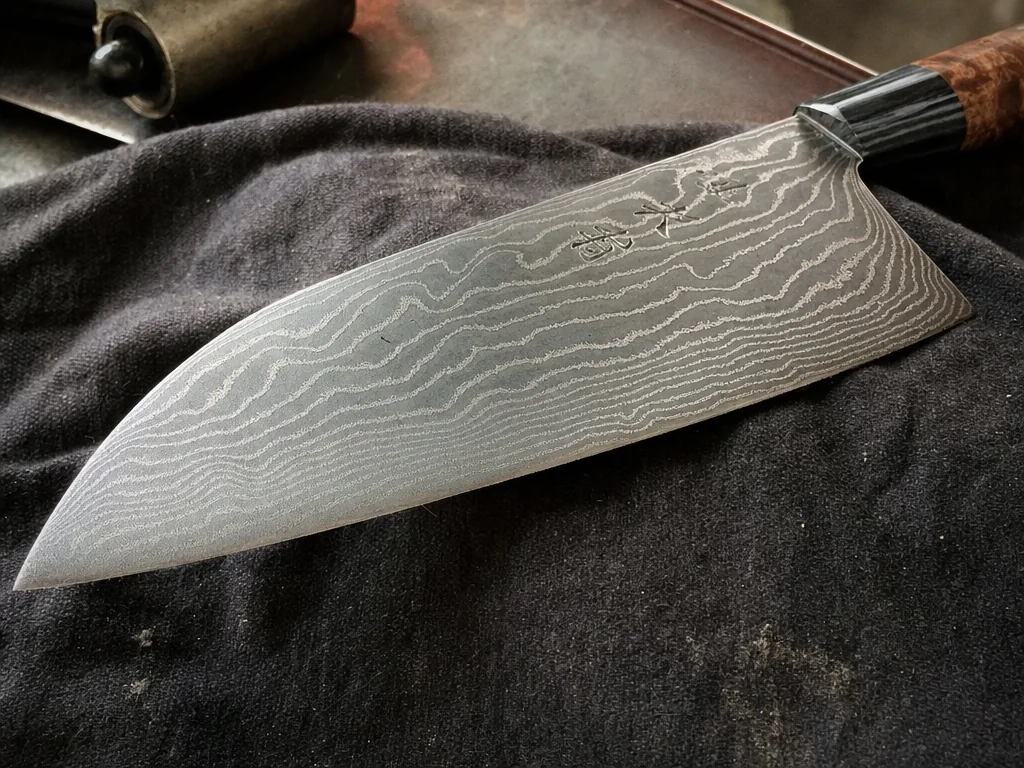
Knife sample lead time planning starts before a carton leaves Yangjiang, China. We wait on steel arrival. We set blade grind on the 2x72 belt, check handle fit in the fixture, lock the pad-print logo position, clear color box artwork, run FDA or LFGB checks if needed, and book the DHL pickup before any production order is placed. Last month QC pulled a chef knife sample for a 0.3 mm gap at the bolster, and it went straight back to the grinding line. Treat the sample round like a casual request, and a 12-day plan becomes 18 days.
For a first-time importer, sample loop scheduling is the job: decide what gets checked in round one, name the person who signs off the knife and packaging, and send marked feedback before the next bench sample starts. No vague comments. If the buyer flagged the handle, we need a note like "2 mm slimmer at the belly," not "make it nicer." At TANGFORGE, a 240-employee factory in Yangjiang, China, we plan samples around repeatable production limits, not wishful dates. Buyers ask for a perfect sample in five days. The math does not work if we still need handle CNC setup, logo film, and carton dieline confirmation. You want a knife sample lead time planning manufacturer that ships a usable golden sample, then repeats it at MOQ without changing the spec.
What Sample Lead Time Really Covers
A sample lead time quote is not just blade blanking and handle assembly. We count drawing review, steel reservation, stamping or CNC machining, vacuum heat treatment, belt polishing on the 400# line, edge grinding, laser logo, ultrasonic cleaning, inner box packing, and DHL pickup. One 0.3 mm change on blade thickness can push the grinding line back 1 day. Change one step and the ship date moves.
For a simple kitchen knife in stock steel, we usually run the first sample in 7-10 working days. For a custom chef knife with a new bolster, a different grind, or a special handle color, plan 10-15 working days. New tooling or custom molds push the first loop to 15-25 working days; coating trials and Damascus pattern matching often need a second check under shop light before we ship. We see this every week in Yangjiang: 6 of our 10 sample requests mix catalog blades with OEM changes. Last month QC pulled one black POM handle sample because the buyer asked for matte finish, but the PO said “glossy.” The clock restarted.
The point is simple. Sample lead time is a chain, not one factory action. If your inquiry does not lock in steel grade, HRC target, blade thickness, edge angle, and packaging type, the factory starts guessing from the drawing and old quotation photos. That is where rework starts. We have seen this go sideways: a buyer approved 2.0 mm on the drawing, then flagged the finished sample at 2.5 mm after sharpening when QC checked it with a digital caliper. In knife sample lead time planning, “how fast can you send it?” is the wrong question. Ask whether the spec is clear enough for the line to run.
Build A Sample Loop Calendar
First-time importers usually lose 12-18 days because they plan Round 1 only, then wait for the next issue to show up. Round 1 is not enough. Count backward from your launch date. If stock must sit in your warehouse 45 days before a trade show or Amazon shipment, close the sample loop at least 14 days before mass production starts, because the grinding line needs the locked profile, the logo pad needs final artwork placement, and the carton print needs approved copy before we open the bulk order. Once the bevel fixture is set, late changes cost days. No locked spec, no clean order.
This is the working calendar we use on the sample bench:
| Round | Purpose | Typical Time | Your Action |
|---|---|---|---|
| Round 1 | Geometry and build check | 7-10 working days | Measure size in mm, then check handle feel and where the balance point lands |
| Round 2 | Finish and detail approval | 5-7 working days | Confirm finish target, logo position, barcode text, plus packaging copy |
| Golden sample | Production reference | 3-5 working days | Sign off, archive it, then ask QC to seal one sample for the line |
Add 2-3 business days for your own review and 4-7 days for express courier transit from China to the US or EU. If you need a knife OEM to move fast, send one consolidated note: blade tip too high by 1.5 mm, handle edge needs one more polishing pass on the buffing wheel, logo on the PO says satin but the artwork says mirror. We have seen this go sideways. Five people reply across five days, QC pulled the sample twice, and the last email changed the barcode text. One clean response saves more time than a rush request with missing decisions.
For knife sample lead time planning, calendar discipline beats optimism. The wrong question is, "How fast can you make the first sample?" Ask how many approval rounds are realistic before deposit, steel purchase, and packaging print. We run into this with 300-piece trial orders and 3,000-piece repeat orders. The math doesn't work if the buyer approves the handle today but waits until next Friday to check the carton copy, because the carton supplier will not cut the print plate without the final file. Buyers who schedule the sample loop properly usually buy the same amount of product, but they waste fewer weeks getting there.
Approve The Right Details Early
Do not score round-one samples against every detail. That is the wrong question to ask. We run the first check on hard points. QC measures blade length in mm with a caliper, checks spine thickness at the heel and tip, records finished weight, confirms the balance point from the bolster, then puts the handle through 30 wet cuts and a quick test on tomato skin or carton. If the knife is supposed to run at 58-60 HRC, put that target on the sample sheet before the polishing room makes it look showroom-ready. Last month QC pulled a sample that looked clean, then the Rockwell tester read 56 HRC. Pretty sample. Bad approval.
Round two is for finish, marking, and repeatability after the geometry is locked. Confirm laser logo depth in the 0.02-0.04 mm range if that is your spec, print placement from the choil or handle end, surface texture under the same light box, packaging fit, and whether the knife goes back into the sheath or blister and sits in the gift box without forcing it. Small changes show up fast. We ship chef knives where a 2 mm belly change near the front third makes the buyer say the rocking cut feels off. For pocket knives or outdoor knives, lock the lock-up first, then the opening tension and pivot feel. One buyer flagged a batch because the pivot torque felt fine on the gold sample but went stiff after black oxide coating.
Do not ask the factory to fix ten things in one sample round. The math does not work. A clean approval path is geometry first, appearance second, then packaging after the insert, sheath, or color box dieline is confirmed. We have seen this go sideways when a buyer approved the gift box, then the handle thickness changed by 1.5 mm and the knife started rubbing the EVA tray on the packing table. Two rounds can stay at 12 days. Mixed comments often turn into 18 days because the grinding line, laser room, and packing desk are all waiting on different answers. If you are vetting a knife sample lead time planning manufacturer, ask whether they already run approvals in this order.
Avoid The Delays That Repeat
Most sample delays are not technical. They start with loose input sheets. On our side, the grinding line cannot make a sample from “better quality.” QC wants a drawing, one reference photo, a target price, and a steel spec that matches mass production. Give us “9Cr18MoV, 58-60 HRC, 2.2 mm spine, satin finish, black POM handle,” and the sample room can pull the steel, set the 400# belt, and check the first blade with a 0.01 mm caliper. That works. “Better quality” is the wrong question to ask.
The other repeat delay is the brief changing after the first sample is already moving. If you switch from a molded ABS handle to G10 halfway through, we run the loop again: the handle fit changes, the 3.0 mm rivet seat gets checked again, and the balance point on the bench usually moves. The math does not work any other way. Add REACH, LFGB, or FDA packaging requirements after artwork is printed, and 5 working days can become 12. Barcode rules bite too. Put the FNSKU label, carton markings, retail hang tag copy, warning text, and the exact PO spelling in the first packet. We once had a buyer flag a carton because “stainless” was typed as “stainles.”
For knife sample lead time planning, use one rule: every new variable adds time. New steel and a new finish already add checks; we run a hardness test and put three blades under the light box for scratch review. Add a new handle or a new compliance path, and the first round slows down fast. We have seen this go sideways on orders under 500 pcs MOQ when the buyer wanted retail packaging revised after the sample passed. Keep the first loop narrow. First prove the design can be made consistently in China. Then talk cost. Then adjust finish and retail pack.
Ask For A Real Factory Quote
A real knife sample quote needs more than a finish date. Ask for the sample fee, exact working days, which processes sit inside the price, which costs stay outside it, and whether the fee deducts from the mass-production order. For a standard kitchen knife or chef knife, sample fees are often USD 25-80 per piece. For custom work, especially Damascus, multi-part construction, or premium gift packaging, USD 80-200 is common. We ship enough of these to know the trap: the buyer sees “7 days,” then finds the 3 mm EVA insert, the color box, and courier out of Yangjiang were never in that number.
Ask the steel stock question first. Is the handle a stock item or a new mold? Will the logo be laser, etch, or print? Is the quoted time for the factory finish only, or does it include courier out of Yangjiang, China? If the reply stays loose, that is your answer. Ask whether the sample is made on the same grinding line as production or in a sample room. That gap is real. A sample room can finish in 6 days while the production line needs 12 days because the 2.5 mm blade blank has to wait, the heat treatment slot is booked, and the handle riveting fixture is already running another PO.
If you are comparing suppliers, keep the quote format tight. Put each supplier’s fee, working days, tooling charge, logo method, packaging, and freight terms in the same table so the math is clean. The fastest date on paper is the wrong question to ask. We have seen this go sideways when QC pulled the sample off the bench and found the PO said satin finish, but the supplier quoted mirror polish.
Freeze The Golden Sample Before POs
The golden sample is the control knife for mass production, not the clean desk sample used for photos. Sign it. Date it. Store it with the exact spec sheet: steel grade, HRC band, blade length in mm, handle material, surface finish, logo method, and packaging structure. We run three references on sample rack 2: one for the factory, one for your QC team, and one sealed in a PE bag after a vernier caliper check, because scratched handles and mixed samples still show up during line setup.
This is where the launch is won or lost. For a 5,000 to 20,000 unit order, the math does not work if the grinding line is working from an old photo or a buyer's WhatsApp note. Put the physical knife and the written spec together. At a 240-employee knife factory in Yangjiang, China, that is what keeps the sample room, handle assembly bench, and carton packing table working from the same reference. QC pulled the sample last month and found the logo depth 0.18 mm off because the PO said "same as sample" and nobody had frozen the sample. Bad shortcut. Inspection is easier to defend this way too. If you already know your major defect limits, apply AQL 2.5 for major defects and set clear critical defect rules before the first carton ships.
Once the golden sample is locked, stop reopening the design unless QC finds a real problem. Small change, big delay. A new handle texture, a 2 mm blade length correction, or a carton copy fix after tooling sign-off can turn 12 days into 18 days because the sample has to pass back through grinding, polishing, logo, and packing review. We have seen this go sideways over one typo on a color box PO, and the buyer flagged it after the print file was already released. The fastest buyers are not the buyers with fewer questions. They ask the hard questions before approval, then they stop moving the target.
Frequently asked questions
For a standard knife with stock steel and a normal handle, 7-10 working days is realistic. If you need a new handle mold, special finish, or custom packaging, plan 10-15 working days. Add 4-7 days for express courier from Yangjiang, China to Europe or North America. If the supplier says 3 days for a fully custom knife OEM sample, they are usually excluding something important, such as heat treatment, marking, or packaging revision.
Most first-time importers need 2-3 sample rounds. Round one should prove the geometry, feel, and steel response. Round two usually locks the finish, logo, and packaging fit. A third round is common if you change the handle material, move from satin to stonewash, or request compliance labeling such as REACH, LFGB, or retail barcodes. If you try to approve a complex knife in one round, the risk is usually hidden defects or late changes in production.
Lock the blade length in mm, steel grade, HRC band, edge angle, handle material, logo method, and target packing format. For example: 200 mm blade, 58-60 HRC, 2.2 mm spine, POM handle, laser logo, color box, and master carton spec. If those details are still open, the factory has to improvise. That is where delays and quote changes come from. Good knife sample lead time planning starts with a complete spec sheet, not a short email.
No. It gives you a reference, not a guarantee. Production quality still depends on process control, incoming material checks, and final inspection. For a real order, ask the factory to keep one signed golden sample and run production against the same spec sheet. Then define your inspection level, often AQL 2.5 for major defects, and confirm whether critical defects are zero tolerance. If your sample passes but the factory changes steel hardness, grind angle, or handle fit in production, the sample approval is not enough.
Yes, if you reduce uncertainty instead of pushing harder. Send one consolidated feedback file, use a reference sample, confirm the target price, and avoid changing the spec after the first build starts. If the steel and handle are already in stock, you can sometimes cut the first sample from 15 days to 7-10 working days. Paying an extra rush fee may help, but it is usually less effective than clean inputs. In China, clarity saves more time than pressure.
Plan Your Sample Loop With Fewer Delays
Send a complete spec sheet, a target budget, and your approval date. We will map the sample rounds, flag risk points, and keep the timeline realistic.
Request a Quote