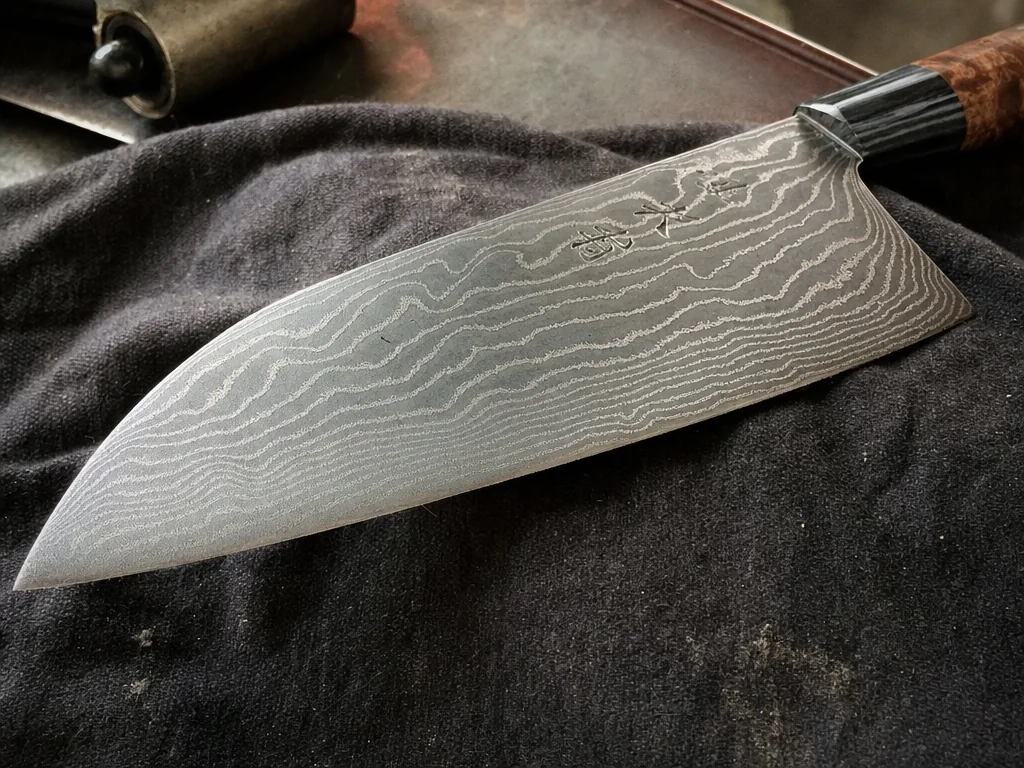
A blade can pass sharpness and hardness checks and still feel unfinished if the spine and choil leave the grinding line too square. Buyers catch it fast. The edge cuts. The first pinch grip tells the truth when a 2.0 mm spine starts biting the thumb after 30 seconds on a prep board, even if the blade looks clean under the QC lamp. On our grinding line, one extra pass on the Scotch-Brite wheel often decides whether the knife feels right or cheap. For a chef knife or santoku above entry level, knife spine and choil finishing is part of the hand feel you sell, not a last-minute touch-up.
If you source from Yangjiang, China, or work with a knife spine and choil finishing manufacturer in Zhejiang or elsewhere in China, asking whether the factory can polish a blade is the wrong question. Most shops can make 20 pieces look good. The real test is holding the same touch across 1,000 or 10,000 pieces without thinning the profile or washing out the satin line. QC pulled samples for us where the choil felt smooth, but the radius drifted from about 0.4 mm to 0.9 mm between batches, and the buyer flagged it against the approval sample after a 10x loupe check. A good knife OEM breaks the sharp edge and holds the radius you approved, while keeping the satin finish intact and still meeting your MOQ and lead time without blowing the target FOB price.
Why Spine And Choil Feel Matter
Premium kitchen buyers ask about steel grade and hardness first, then they pinch the knife and decide in 2 seconds. The hand is faster than the spec sheet. On the grinding line, the spine and choil are the first two contact points. If belt grinding leaves them square, the knife feels cheaper than the spec sheet says. If the Scotch-Brite wheel runs too long, the shoulder line goes soft and the blade looks tired before QC clears it. Small area. Big signal. We usually hold a broken edge of 0.3-0.5 mm here, so the blade stays crisp and the finger does not dig in.
This shows up fastest on chef knives and petty knives used through a full prep shift. A 210 mm chef knife with a sharp choil can leave a hot spot after 6-8 minutes of repeated chopping; QC pulled that exact sample last month after the buyer flagged the pinch area during video inspection. A clean spine cuts pressure on the index finger. A finished choil keeps the hand planted instead of sliding forward. This is not a luxury add-on. It is part of the product promise. Miss it, and the cost comes back later in returns; then the reviews drag and repeat orders get harder.
In Yangjiang, China, a good line will run 800 blades before lunch. Holding the same feel from approval sample to a 3,000 pcs lot is the hard part, and a loose note like "make it comfortable" is where production starts to drift. We have seen this go sideways when a PO says only "round spine" and the shipping lot comes back with three different feels from three operators at the sanding station. The math does not work. Put the target radius in the QC sheet. Add the polish level and the inspection method, or the buyer will flag it the first time they pinch the knife.
Hand Finish Versus Machine Finish
Hand finish and machine finish solve different problems. "Which one is better" is the wrong question. On volume SKUs, we run machine finishing because a fixed-angle wheel holds the spine break at 0.15-0.2 mm on straight profiles and keeps the grinding line moving. Hand finishing is where the operator saves the last 0.1 mm, especially on satin lines or mirror polish, because one loose 400-grit belt pass will wash out the cosmetic finish in seconds. It happens fast. For premium kitchen knives, the usual setup is hybrid: machine deburr first, then a worker softens the spine and choil by hand with a fine stone or gray abrasive pad.
Use machine finishing on simple profiles and high-volume runs. On a 5,000-piece OEM order, the math does not work for full hand touch unless the selling price already carries it. Use hand finishing when the brand sells feel, or when a slim handle leaves the choil exposed under the index finger. If the choil cutout is open, a worker with a ceramic slip stone will catch more than photos will. Last month the buyer flagged a sharp shoulder on a 2.0 mm choil sample even though the blade looked clean in photos. Photos lie here. A good factory in China does not force one method onto every SKU; it matches the process to the blade shape and surface finish, then checks whether the target price still holds after 40 seconds of extra bench time.
| Method | Best for | Typical result | Risk |
|---|---|---|---|
| Machine deburr | Large batches, straight spines | Fast, consistent 0.15-0.2 mm break on 10,000 pcs | Cold, sharp feel if the wheel leaves a shoulder |
| Hand stone or abrasive pad | Premium chef knives | Better fingertip control at the choil | Worker skill varies shift to shift |
| Hybrid finish | Most OEM kitchen lines | Balanced cost and hand feel | Needs clear SOPs and a sealed sample |
If you are comparing suppliers, ask two direct questions first: how they remove burr after grinding, and which tool touches the blade at the last station. Then ask the QC standard: do they check the finish under 5x magnification, or just wipe and pack? We give the exact tool, like a ceramic stone on the spine or a 3M pad in the choil, because "hand polished" on a quote sheet tells you almost nothing. QC pulled the sample off the grinding line. Fingertip check first. Then they looked for leftover wire burr under 5x magnification at the heel. The buyer may never see that burr, but the index finger will find it on day one. That is the gap between a knife spine and choil finishing manufacturer and a general grinder.
What Good Specifications Look Like
We see "feel smooth" on 3 or 4 POs a month. That is the wrong way to spec it. Production needs the exact area and the finish length, plus a thumb-check standard QC can verify at line side. On the grinding line, we mark the spine from the heel to the first 80 mm on a gyuto with a silver paint pen, or we run the full length on a Western chef knife. The choil can stay at deburr-only, or we hand-polish it to match a brushed or satin blade surface. We ship both. The buyer needs to call it out.
The drawing can stay short. Across 7 premium programs we run, the callout is a visible edge break of 0.2-0.4 mm, not a sharp corner. That takes out the hot spot and keeps the blade from looking fat at the spine. For a kitchen line, the target is an even, controlled feel, not a heavy roundover. Last month QC pulled a sample with a hanging burr after the 400-grit belt and a brown heat mark near the plunge; the buyer flagged both in 20 minutes. Buyers catch this fast. Keep the choil edge clean. No burr. No scratch jump. On stainless, no heat tint from overheating, because that is where corrosion claims start.
Approve the sample against a short written sheet. Put the radius range in mm. State the polish direction. Set the scratch limit and define the transition where the spine meets the tip. If the knife uses 14C28N or 440C, the same rule applies to powdered steel: the finishing method still has to hold the final HRC target, usually in the 56-62 band for premium kitchen work. We run low-pressure passes here so the steel stays in spec, and we check random pieces with a portable hardness tester after the buffing step. Good knife OEM sourcing starts here. We have seen this go sideways when the PO only says "make it smoother." Once 1,200 pieces are already on the line, the math does not work.
How OEM Factories Finish Blades
On a proper knife OEM line, spine and choil finishing sits after the main grind and before final QC. The blade comes off the 2,400 mm wet belt with a burr on the spine or choil, enough to catch skin, and we strip it off without rolling the shoulder or touching the cutting angle. We run rough deburr on an abrasive belt first, then switch to ceramic stone or Scotch-Brite style media when the SKU needs a softer pinch feel. For higher-end kitchen knives, we split deburr and tactile polish into two stations, usually with a 600 grit pad after the first belt pass. One lazy pass leaves a bright smear where the buyer approved a clean satin line.
The target is not shine. It is controlled pinch points. A good Yangjiang line will ship 240,000 knives a month across chef programs and smaller steak-knife or utility runs, but the math doesn't work if the finishing standard is still loose when mass production starts. For premium SKUs, we want written work instructions at the station, a sample board showing the approved edge radius, and first-piece approval signed before the lot moves past grinding. QC pulled one 8-inch chef sample last year because the choil felt fine on bare skin but snagged a 5 mil nitrile glove. Small miss, big carton claim.
A mature factory keeps the same hand feel across different blade shapes, but the pass count has to change. A tall-spine santoku needs extra work near the pinch grip, while a thin slicer gets a lighter pass on the grinding line so the spine does not look washed out. A heavy chef knife is different again, especially after laser engraving, when the buyer wants a rounded choil and still expects crisp visual lines. One recipe for every blade is the wrong question to ask. We have seen this go sideways when artwork sign-off and packing deadlines squeeze the schedule, then nobody catches that the polishing pad changed from 600 grit to 400 grit before shipment.
Costs, MOQ, And Lead Time
Spine and choil finishing looks like a small cost line until the knife moves from entry-level shelf stock into a premium program. Then it bites. On a basic order, we often bury one light edge-break pass inside the blade price. Premium is different. Hand breaking, a second polish, and tighter visual limits add 25 to 40 seconds per piece on the grinding line, usually with a 400-grit belt before buffing. Last month QC pulled a 3.0 mm spine sample because the choil still caught the thumb after buffing. Most buyers see USD 0.20 to USD 0.80 per piece added. Blade shape, choil depth, and one extra polishing pass after grinding decide where the quote lands.
For premium kitchen brands sourcing from China, the finish is only half the job. A normal MOQ is 1,000 pcs per SKU, with sample lead time of 10-15 days and mass production in 35-45 days after approval. Custom packaging with barcodes and FNSKU labels usually adds 3-5 days because we check the carton mark against the PO, match the color box art to the dieline, and scan the label file before packing starts. We had one PO where "satin spine" was typed as "sand spine." The buyer flagged it only after the pre-production sample. FOB terms are common for export. DDP only makes sense when the launch date is fixed and the freight math still works.
Ask for a clear split between base knife cost and finishing surcharge. Short sentence, big effect. It lets you compare Yangjiang or Zhejiang suppliers on the same basis instead of guessing what is buried inside the blade price. Chasing the lowest blade number is the wrong question. A low quote gets approved, then the final lot arrives with machine-ground spines and no manual choil touch-up because the line only ran the standard belt pass. We've seen this go sideways. For premium sourcing, this line item should sit in the quote, not disappear into "standard finish."
If your target market needs compliance documents, ask early for REACH, LFGB, FDA, or ISO 9001 support where the full product set needs it. Finishing is one checkpoint. We ship against the approved BOM, and the export pack has to match the actual SKU: handle material spec, coating declaration, glue lot code, and carton labeling file. The test reports have to match too. One missing report can hold a shipment for 7 days at the buyer's warehouse.
Inspection Standards That Protect Feel
Feel is subjective. The inspection call is not. A workable QC plan for knife spine and choil finishing must name the touch points, the radius or burr limit, and the reject decision. On our line, QC uses a 10x loupe, a fingertip pass, and a 0.2 mm feel reference for the spine break. We run 12-piece spot checks after polishing. The repeat failures are boring but expensive: burr left at the choil, rough heel transition, uneven spine radius, tray scratches after polish. Small marks. Big claims.
For export orders, AQL 2.5 is the usual base for visual and tactile checks, but we hold the first article and pre-shipment sample tighter. We run the check under a fixed LED bench light at 5000K. Then the inspector drags a thumb from tip side to heel side along the spine and choil. If skin catches, it fails. Blunt rule. Finish control must protect grip comfort and blade symmetry; one side polished too hard can make a 2.5 mm spine feel twisted in hand. If the blade is coated, check the coating edge after finishing. QC pulled one black-coated sample last month because the choil polish chipped a 1 mm spot near the heel.
Test the knife in hand, not by photo and not by eye alone. One sample should go through a pinch-grip check with at least 3 hand sizes. Add a glove test if that market uses cut gloves. We have seen this go sideways: a buyer approved a clean photo, then flagged 600 pcs after a chef used the knife for 20 minutes and found a hot spot at the heel. Asking whether the finish "looks fine" is the wrong question. The target is plain: no hot spot, no scratch, no burr, and no overworked line where the belt sat too long. That is the QC a premium buyer expects from a China factory selling specialist work, not overflow subcontracting.
For buyers who want tighter control, tie the finishing spec to the inspection sheet and keep the approved master sample on file. We store ours in a PE bag with the PO number, date, and inspector chop, because one PO typo last year flipped the satin direction note and forced a recheck on 480 pcs. Put the feel into the file too: spine radius, choil touch point, polish direction, plus any buyer comment from the sample stage. Once that feel is locked, we ship repeat batches without guessing.
Frequently asked questions
For most premium kitchen knives, the added cost is modest but real. A simple deburr may add only a few cents, while manual spine and choil polishing can add roughly USD 0.20 to USD 0.80 per piece depending on blade shape, polish level, and labor rate in China. A straight chef knife is cheaper to finish than a curved or full-tang blade with a visible choil. If you need both a refined tactile feel and a clean cosmetic result, ask the factory to separate the base blade cost from the finishing surcharge. That makes quoting easier and helps you compare suppliers on the same scope.
Yes, but the supplier has to run a controlled hybrid process. At MOQ 1,000 pcs, a good knife OEM can machine-deburr the spine and choil, then do a manual final pass for feel and visual cleanup. That is usually the sweet spot for premium kitchen brands because it keeps cost under control while avoiding the cold, sharp feel of a purely machine-finished blade. Expect sample approval to take 10-15 days and mass production to land around 35-45 days after approval if the factory is already making your handle and blade specs. You should still define the acceptable radius and polish level in the spec.
If it is done correctly, no. Spine and choil finishing should change feel, not edge geometry. The work is at the contact points where the user grips the knife, not at the cutting edge. The risk comes when a factory removes too much material or overheats the area during polishing. That can affect blade appearance, balance, or in extreme cases the heat treatment at the shoulder. For kitchen knives with HRC 56-62, the finishing process should be light, controlled, and followed by inspection. Ask for first-piece approval and a tactile check before the lot moves forward.
Ask for three things: a visual sample, a tactile sample, and a written spec. The visual sample should show the actual polish level, scratch limit, and transition quality. The tactile sample should let you feel the spine and choil under real grip pressure, not just in the hand. The written spec should state where the finishing starts and stops, what radius or edge break is allowed, and what inspection standard is used, such as AQL 2.5 for lot control. If the factory is in Yangjiang or Zhejiang, also ask whether the sample matches mass production tooling, not a one-off hand polish that cannot be repeated.
Sometimes, but not by itself. Machine finishing is good for speed and consistency, especially on large runs, but it often leaves a more mechanical feel at the spine and choil. For premium kitchen knives, buyers usually want the repeatability of machine work plus a final manual touch to remove hot spots and clean the contact area. The better question is not machine versus hand; it is whether the factory can combine both without changing the blade profile. If the answer is yes, you get a consistent finish that still feels refined in the hand.
Specify the feel before mass production
Send your blade sketch, target price, and finish standard. We can match the spine and choil feel to your kitchen line before you lock the sample.
Request a Quote