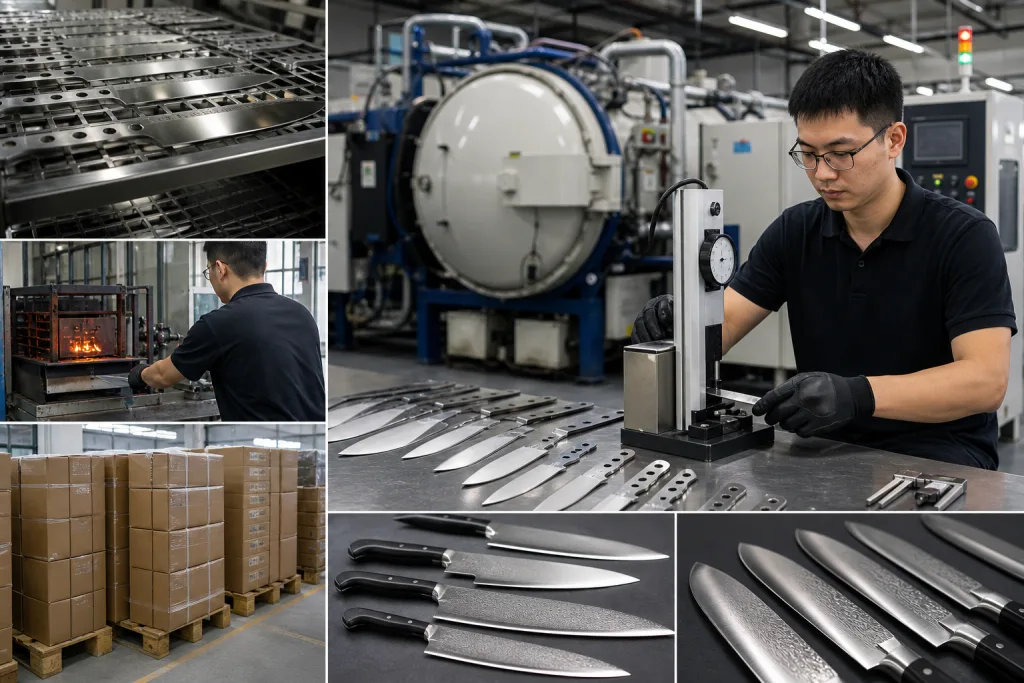
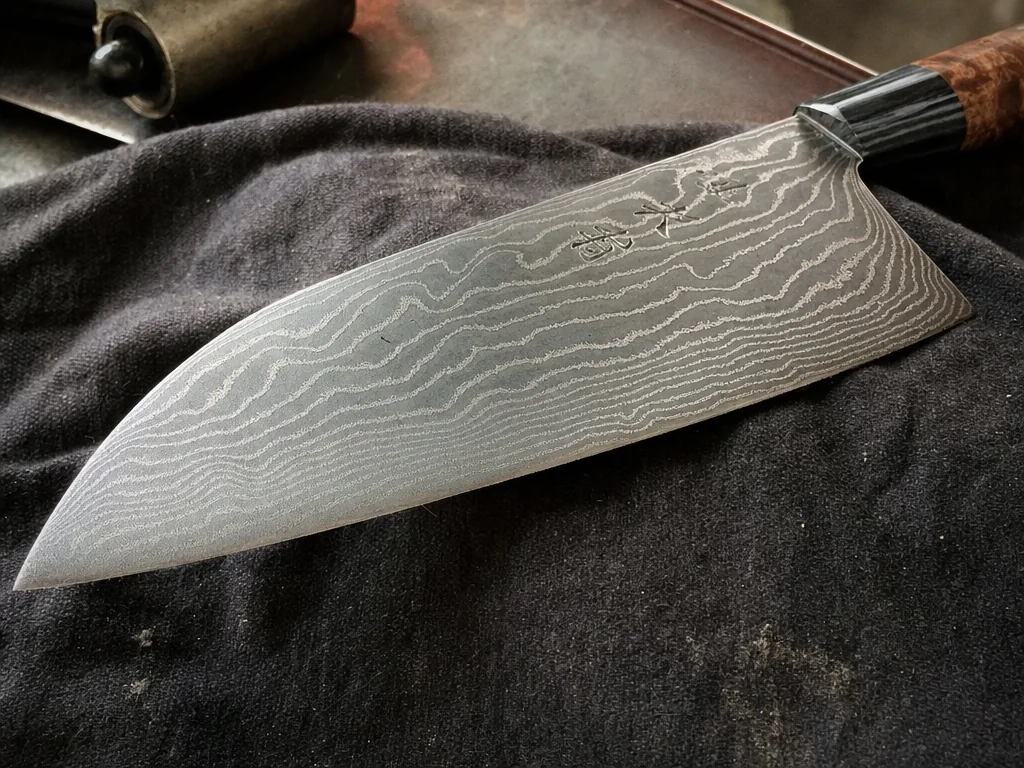
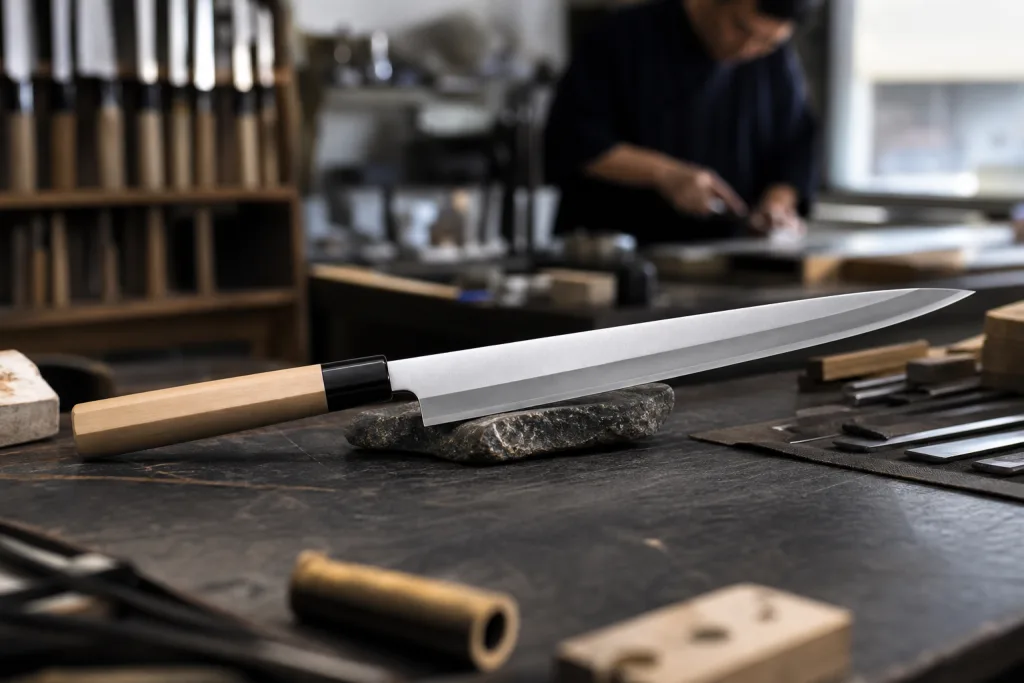
MagnaCut gets attention because it cuts like a premium stainless, supports a thin edge, and does not give up edge life after a few cartons of rope tests. Stock is the choke point. You are not buying generic sheet from a trader’s rack; you are reserving heat-lot-controlled steel under capped allocation, with cert packs tied to the coil, bar, or plate lot. OEM licensing checks need to be cleared before the PO is signed, not after the buyer approves artwork. We run into this on the floor. If the booking says 3.0 mm and incoming inspection reads 3.2 mm on the Mitutoyo micrometer, the grinding line feels it before sales does, and a 12-day blade schedule can turn into 18 days fast.
If you are a premium brand or importer working with a knife factory in China, price is the wrong first question. Ask who controls the steel trail. The bigger failure is a blade sold as MagnaCut with no clean traceability, or the correct steel on paper but missing the documents your market will ask for: REACH file, LFGB food-contact report, or a private-label trademark claim your distributor can defend. We have seen this go sideways. QC pulled the sample, checked the heat number, and found the cert trail stopped at the trader instead of the mill. A serious factory in Yangjiang, Zhejiang, or elsewhere in China should show the heat number, incoming inspection record, and a lead time they will ship against before you commit.
Why MagnaCut Supply Is Tight
MagnaCut sourcing is tight for one plain reason: mills and agents do not stock it like 420 sheet. 440C bar and PM stainless coils move through regular export programs. MagnaCut does not. Price is the wrong first question. Ask, "Can you lock heat-lot traceable material for my 6-week build window?" We check the bundle stencil and mill cert before we book stock, and last month 3 suppliers quoted price, but only 1 could show the heat number before deposit.
On the factory side, allocation is the choke point. Authorized channels release small batches, and most lots are spoken for before a new PO lands. We need visibility early. For a real production run, we reserve material before the laser table is loaded and before wire cutting starts. A China factory that actually runs MagnaCut should start with your exact section thickness, whether that is 2.5 mm or 3.2 mm. Then it should tell you if the blade will run flat ground or hollow ground, and if the HRC target fits the edge geometry. Buyers send a thin slicer edge and a hard target in the same email. The math doesn't work unless heat treat and grinding allowance are planned together.
Do not ignore yield loss. A thin tactical folder nests one way; a 240 mm chef blade burns width fast. MagnaCut costs enough that scrap shows up on the cost sheet in one shift. QC pulled one chef sample with a 0.35 mm edge before sharpening, and that one reading changed grinding time on the 120-belt line and cut the usable blank count. If the factory is in Yangjiang or another export-oriented knife base in China, capacity alone is the wrong question. Ask how steel flows from receiving to blanking. Then ask who owns the grinding line and who signs the QC release for a controlled premium run. A 240-person factory may reach 30,000-50,000 units per month across all knife types, but your MagnaCut batch is usually a small scheduled lot, not something we squeeze between two 420J2 orders.
What OEM Licensing Means
OEM licensing is where 7 out of 10 buyer briefs get messy. MagnaCut is a branded steel name, not just a chemistry line on a spec sheet. If you want that name laser-marked on the blade, etched on the ricasso, or printed on the color box, you need permission to use it. We ask for written approval through the authorized supply chain, with the brand agreement spelling out blade mark, sales copy, origin wording, carton label, and online listing language. QC pulled one 2024 sample where the steel cert matched the heat number, but the box artwork still used the name wrong. Small error. Big headache.
For MagnaCut OEM work, the factory should split the job into separate files instead of burying it in one email thread. Steel sourcing needs the heat number, supplier invoice, mill test report, and purchase route. Production needs proof that the grinding line can hold the approved blade thickness, bevel angle, heat treat target, surface finish, and packing spec; on one folder we checked, the bevel callout was 0.2 mm tighter than the line could hold without slowing output. Trademark use needs a clear answer on where the name can appear: blade, carton label, Amazon page, distributor catalog, or nowhere at all. Same steel does not mean same naming rights. The wrong question is: "Can your factory make MagnaCut?" A China factory may process the bar stock cleanly, hold the grind within 0.2 mm, and still put unsafe wording on the packaging artwork or product page. Skip this check and the math does not work for customs clearance or marketplace review.
Ask your supplier for the full paper trail: heat number, mill test report, purchase route, and a written statement on permitted trademark use. Short list. No drama. If the seller writes "same as MagnaCut" or "MagnaCut type" on a PI, treat it as a red flag unless they can show the invoice trail and approved wording. We have seen this go sideways over one typo on a PO: the invoice said one steel name, the blade marking said another, and QC had already sealed 600 pieces in export cartons. Premium brands do not want to explain that mismatch to a retailer after the buyer flagged the carton photos during final inspection.
HRC, Geometry, and Real Performance
MagnaCut works only when hardness, grind, and job match. We run premium builds at 61-64 HRC, often 0.35 mm behind the edge before final sharpening, and the grinding line feels it on the first tray. Drop it too low and the bite is gone by the 80-carton check. Push it too high and you trade impact margin for edge life, especially on thin folder tips in 2.5 mm stock or outdoor blades that get twisted in wood. "What HRC do you run?" is the wrong question. Ask the blade pattern and the edge thickness first.
Buyers still start from the wrong end. They lock hardness and leave the use case blank. We still see POs marked "63 HRC +/-1" with no note saying whether the blade is a 210 mm chef knife or a pocket folder. A field knife needs another setup. Last month one PO repeated the hardness twice and misspelled the grind callout. The math doesn't work. For chef knives, we often sample a thinner cross-section and step down 1 HRC because cooks care about smooth cutting and quick touch-up on a 1000-grit stone, not one extra point on the Rockwell sheet. For a tactical folder, QC pulled the sample after the buyer flagged a weak tip, so we changed the bevel setup and put edge stability ahead of chasing the last point of hardness. Build samples in the stock thickness and bevel setup you plan to ship. Run the same finish before mass production starts.
If you are comparing suppliers in Yangjiang or elsewhere in China, ask how they run heat treat. Get the quench and temper record. Ask what Rockwell tester they use and whether they log hardness on each heat lot; on our side, the operator tags every tray before it goes back to the rack. Then ask how they keep the edge cool on the grinder. If QC sees blue burn after a water-cooled 120-grit pass, that blade is already suspect. A 62 HRC blade ground too hot will cut worse than a 60 HRC blade processed cleanly. These are shop-floor questions, not brochure questions. On premium programs, one missed step can turn a clean shipment into 12 days on a return claim. We've seen this go sideways over one hot pass.
Pricing, MOQ, and Lead Time
For MagnaCut, price comes from four cost buckets: steel allocation, yield loss, CNC/grinding hours, and the paperwork your channel asks for. A 300 pcs trial order with custom laser logo, stonewash finish, retail box, and air shipment is a rush job. It is not a normal OEM run. We run it, but the quote has to carry the real cost. On the grinding line, one 3.2 mm blade blank often loses more stock after profiling and bevel grinding than a standard 5Cr15MoV kitchen blade, and QC still checks shoulder thickness with a caliper before heat-treat release. In China, pricing gets cleaner if you combine SKUs under one handle construction and freeze the finish after sample approval. Asking for three finishes on 300 pcs is the wrong question.
Use the numbers below as a working frame for premium OEM talks. On our sample bench, the first cost card gets signed only after the laser jig is set and purchasing confirms the MagnaCut allocation.
| Item | Typical Range | Notes |
|---|---|---|
| MOQ | 300-500 pcs/SKU | Sample runs can go lower; bulk steel allocation starts to make sense at 300 pcs/SKU |
| Lead time | 45-75 days | Count from steel allocation and artwork approval, not from the first email |
| Hardness | 61-64 HRC | Set by knife type; heat-treat target and grind geometry decide the final window |
| Factory sample cost | USD 60-180/unit | Complex folders and extra CNC time push it up fast; gift-box packaging adds the rest |
| Mass-production FOB | Varies widely | Steel source and licensing move the number first; handle material and finish process follow |
That table is not a quote. It is a sanity check. A premium buyer should budget for packaging edits and barcode/carton artwork changes if the goods go through FNSKU or retail channels. Last year QC pulled one sample because the PO said satin finish but the approved sample was bead blast; the buyer flagged it, and that typo added 12 days before we could close the file. If a vendor offers fast delivery and a bargain price together, ask for the steel route first. We have seen this go sideways. Usually the first gap shows up in the mill certificate. The next one is the heat-treat batch record or the scrap-rate sheet. Once those papers hit the desk, the math stops working.
Quality Control And Documentation
For MagnaCut programs, QC starts before sharpening. Sharpness is easy. Paperwork is where orders get hurt. The spec sheet must name the steel grade and heat lot; the customs file must match the export claim; the retail box cannot promise MagnaCut if the mill cert says something else. A quote-worthy OEM should run incoming material inspection, in-process checks, final inspection, and packaging verification, with names and dates on the records. On our floor, QC pulls 1 bar sample, checks the heat-lot tag against the mill cert, and puts a 0.01 mm digital caliper on the stock before the grinding line starts. For Europe or North America, add REACH or LFGB declarations, plus FDA-related material paperwork where it applies to handles, coatings, adhesives, and food-contact surfaces. One missing adhesive declaration held 200 cartons at the port for 12 days.
At minimum, ask for heat-lot traceability, hardness test records, and AQL 2.5 final inspection on appearance and function. For premium buyers, I push for a one-page acceptance sheet with real checkpoints: blade thickness in mm, folder centering, edge angle, lock-up percentage, fit and finish notes, and logo position from the handle datum. A Rockwell sheet that only says "pass" is the wrong standard. Write the reading down. QC pulled the sample at 60-62 HRC spec once and found 58.5 HRC on the third blade; the math does not work after that. The buyer flagged a 0.2 mm logo drift on one order, and that alone triggered rework. You are not selling raw steel. You are shipping a finished knife that has to survive retail returns and distributor scrutiny.
Factories in Yangjiang and China's main export knife clusters need controlled inspection without choking the line. We run first-piece approval at line start, hourly in-line pulls, plus packed-carton checks, and the grinding line keeps moving. The wrong question is whether QC slows production. Ask whether the knife approved in the sample room is the same knife that ships in carton 37. If a supplier cannot show the sample reference and the production reference, you are buying hope. We have seen this go sideways over a one-letter PO typo and a swapped G10 handle color. Premium brands should not accept that.
Which Buyers Should Use MagnaCut
MagnaCut is not for every program. On an entry-level line or a 20,000 pcs promotional knife run, the steel buy, the licensing check, and the MOQ pressure eat the margin before we tape the first master carton. Asking for MagnaCut on a promo knife is the wrong question. We see the same quote sheet every week: the mill asks for a 300 kg booking, the buyer wants promo pricing, and the math stops right there. If the buyer needs stable supply, lower MOQ, and repeat orders that land on time, use a simpler stainless grade. We run this math every week. MagnaCut fits brands selling measured performance, not a standard profile with a better steel name laser-marked on the blade at the marking station.
The best fit is a premium buyer that can sell the steel story to the end user. Chef knives with a 60-62 HRC claim fit. A serious outdoor label selling edge retention to hunters fits too. We ship more of it on modern pocket-knife lines and limited-edition tactical SKUs, where people read the spec sheet before they ask about handle color. If the retail price cannot carry the higher steel cost, custom packaging, and a lead time closer to 18 days vs 12 days on common stainless, the math does not work. Last quarter QC pulled one sample off the Rockwell tester, and the buyer still flagged the carton price by USD 0.18. We have seen that go sideways. A good manufacturer should say it early. Over-specifying a knife burns money just as fast as under-specifying it creates complaints.
When you choose between suppliers, ask for operating facts: a true FOB quote with tooling included, a clear licensing position, a heat-treatment plan, steel traceability, private-label artwork control, and clean China export paperwork. Then get specific. Ask who keeps the mill cert, what HRC window they will write on the PI, whether the grinding line has run this steel before on 60-grit ceramic belts, and who catches a PO typo before it hits production. If they answer straight, place a small sample order, maybe 50 pcs before the full PO. We ship this way for a reason. If the reply is only “no problem, friend,” keep the program smaller until the supply chain is proven.
Frequently asked questions
No. Real MagnaCut supply depends on authorized steel allocation, not just machining ability. A factory in China may be able to make the knife, but that does not mean it can source the steel legally or consistently. For a premium OEM program, ask for heat numbers, mill test reports, and a written sourcing route before you approve samples. In practice, you should expect limited MOQ, often 300-500 pcs per SKU, and lead time around 45-75 days after material allocation. If a supplier offers "MagnaCut" with no paperwork, treat it as unverified until they prove the route.
Most premium MagnaCut builds land in the 61-64 HRC range. For pocket knives and outdoor knives, 62-64 HRC is common when the geometry supports it. For thinner chef knives or blades that may see lateral stress, 61-62 HRC can be the better commercial choice. Hardness alone is not enough, though. You should also specify blade thickness, edge angle, and grind style, because those affect toughness and cutting performance as much as the final HRC number. Ask the factory to test each heat lot and record the result on the QC sheet.
Usually yes, or at least clear written confirmation from the authorized supply chain. MagnaCut is a branded steel designation, so using the name in etching, packaging, web copy, or catalogs is not the same as simply buying and processing the steel. For OEM and private-label work, keep the product description, carton artwork, and blade marking aligned with the approved claim. If you skip this, you create risk with customs, marketplaces, and distributors. Before mass production, get the wording approved and keep a copy in your PO file.
You are paying for a premium powder metallurgy steel with limited availability, tighter traceability, and more processing discipline. The cost is not only the material price. It includes yield loss, grinding wear, heat treatment control, documentation, and the fact that the steel is often allocated in batches. For a knife factory in China, a small premium run can cost noticeably more per unit than a standard stainless program because setup time and waste are spread over fewer pieces. That is why a low MOQ request usually raises the unit price faster than the material spec alone.
Ask for five things: steel source proof, heat-lot traceability, hardness test records, sample photos with actual measurements, and a written quality plan. If the product will be sold in Europe or North America, also ask for REACH, LFGB, FDA, or coating declarations as relevant to the build. On the commercial side, ask for MOQ, FOB terms, lead time, and packaging readiness. A supplier that can answer those questions clearly is usually ready for a real premium program; a supplier that only talks about price is not.
Start a controlled MagnaCut program
Send your target HRC, blade type, MOQ, and artwork file. We will confirm steel availability, licensing route, and a realistic production window before sampling.
Request a Quote