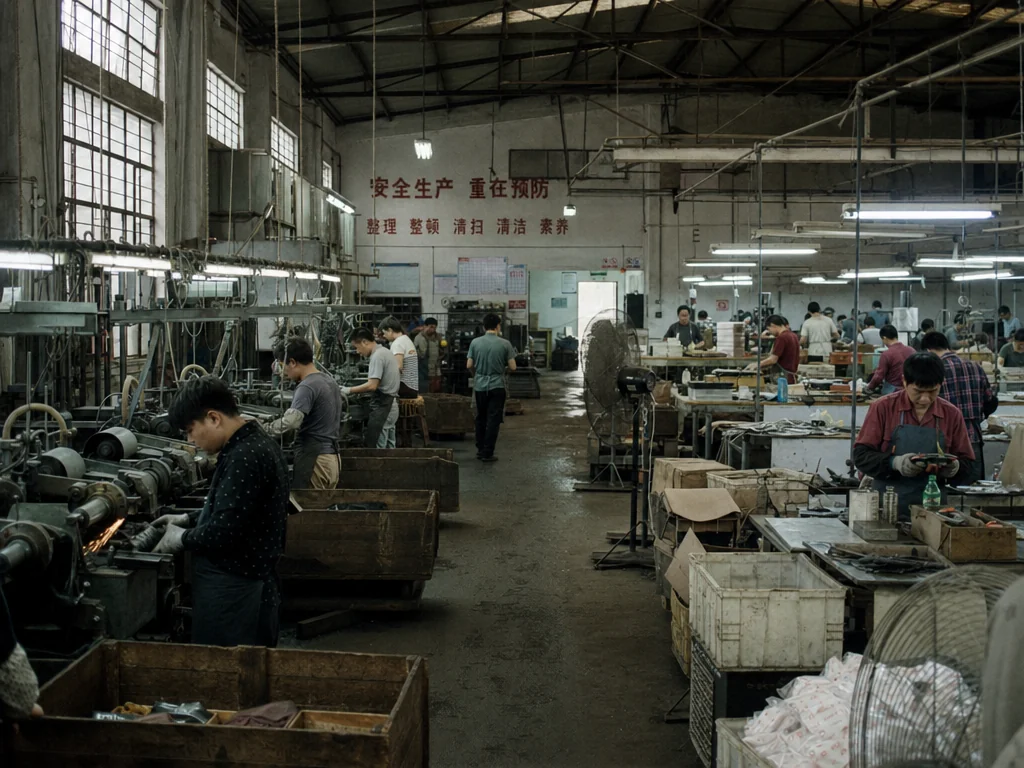
For kitchenware brands, magnetic knife strip sourcing looks simple until the first samples hit the bench. One unit feels solid. The next lets a chef knife tip out at an angle, and the wall anchors miss the market you sell into. QC pulled the sample, hung a 240 mm blade, and the strip slipped on the third pull. We checked it with the pull gauge on the grinding line, and the number told us where the margin goes. This is the wrong question to ask at the start: a good strip is not just wood or stainless steel with magnets inside. It is a load spec, a mounting spec, and a retail-claims problem.
If you are buying from a magnetic knife strip sourcing manufacturer in China, especially in Yangjiang or Zhejiang, set holding force, magnet layout, surface finish, and hardware before you talk price. We run 30,000 to 60,000 kitchen storage units a month in a Yangjiang plant, and the line only hits a 500 pcs MOQ and a 25 to 35 day lead time when the spec is tight. On one order, the buyer flagged a screw-size typo on the PO, and that one line held packing for 2 days. The torque driver at station 4 was ready; the cartons were not. Loose specs make loose product, and loose product comes back as returns.
What buyers really mean by strength
When a buyer says the strip needs to be strong, we ask which failure they are trying to stop. On the floor, that splits into three checks: the magnet has to hold the knife, the pull has to stay even across the full 300 mm, and the user has to lift the blade off without fighting the strip. We have seen a sample pass the showroom demo, then fail after 7 days in a real kitchen because the middle section was 18% weaker than the ends. QC pulled the sample, put it on the pull gauge, and the reading made the issue clear.
For most kitchen storage lines, define strength in plain numbers. A 300 mm strip should hold a 200 to 250 mm chef knife, a utility knife, and a paring knife while mounted vertically, with no slide when the blade lands off-center. Ask for a minimum holding force per section, not just a magnet grade on paper. Rare-earth magnets give stronger pull in a smaller body, but they push cost up and can create a hard snap if the spacing is wrong. Ferrite is cheaper and the price stays steadier, but the body usually needs 2 to 3 mm more thickness to do the same job. We have shipped both, and the buyer who says "same strength" is usually skipping the part that drives returns.
The better spec is a performance spec: blade size range, max load per 100 mm, and the target user setting. A premium retail line can carry a stronger magnet pack and a cleaner face finish; an entry-price or hotel line needs enough pull for daily use without breaking the FOB. This is the wrong question to ask: not "how strong is the magnet," but "what load curve do you guarantee at 20 mm knife contact distance". On a Yangjiang run, we check that on the grinding line before packing, because that is where a loose spec turns into a buyer complaint. One PO even came in with "250mm" typed as "250 mmn"; the buyer flagged it after sample approval, and the line had to stop for a re-check.
Choose the mounting system first
Most strip failures start at the wall, not in the magnet pack. We have seen a 300 mm bar hold on the bench and fail on a bad drywall anchor after 40 knife pulls. If the installer bites into weak plaster, the strip tips, the glue line opens, or the whole unit tears loose. Set the mounting system first. Then lock the finish.
For export, screw mount is the safest default, with visible or concealed fixing points and hardware matched to the target market. North American buyers usually want wall anchors in the box; European buyers often expect screws and plugs that fit local brick or plaster. On the line, we print hole spacing on the carton and the install sheet, because a 10 mm error is enough to send a good unit back. Torque matters too. We run a torque screwdriver on sample builds so the screws do not strip in soft board.
Adhesive-only mounting looks clean, but the math does not work unless you control wall finish, room temperature, and cure time. Painted drywall and humid tile walls are where we see it go sideways. If you want adhesive, treat it as a backup method, not the only one. QC pulled the sample after a 24-hour pull test once the buyer flagged weak tape, and that stopped a claim before it spread. The wrong question is whether the tape looks strong in hand. The real question is whether the mount survives bad installation and daily knife removal.
For premium lines, concealed keyhole brackets or metal hanger rails clean up the look, but they add steps at assembly and more QC checkpoints. For value lines, standard countersunk screws usually win on cost and reliability. We run those on the same line with a 5 mm pilot drill, and that keeps the install stable without padding the BOM. A clean mount beats a fancy one that comes back from the field.
Material and finish tradeoffs
Magnetic knife strips usually come in wood, bamboo, stainless steel, aluminum, or ABS composite bodies. The right pick comes down to target price, brand position, and where the strip will hang. Wood and bamboo give a warmer kitchen look, which sells better for brands that want less metal and more shelf appeal. Stainless steel reads cleaner and holds up better in damp kitchens. ABS is the low-cost route, but if the grain texture and gloss are off, it looks cheap on a retail wall. On our line, the buyer usually asks for a 12-day sample turn before they talk color, and that is a fair request.
Surface finish is where deals get won or lost, because the strip sits in plain sight. On bamboo and wood, ask for moisture content, lacquer or oil finish, and batch-to-batch color match. We check moisture with a meter before the sanding station; if the board comes in too wet, the finish will move later. On stainless, confirm whether it is 201, 304, or 430. For kitchen storage, 430 stainless is the practical middle ground because the cost, corrosion resistance, and magnet pull line up. If you want a laser logo or etching, lock the placement tolerance early. A logo drifting 3 mm on the face looks sloppy in catalog shots, and the buyer will flag it.
The finish also has to survive cleaning. Kitchen products get oily hands, detergent wipes, and rough handling in transit. So we look at edge sealing, deburring, and corner break. No sharp edges. If the line is for premium retail, ask for a face finish spec, gloss range, and color tolerance, not a vague promise. We run a caliper check on the edge radius and reject parts that feel rough at the hand test. For private label, the factory should keep the same body structure and switch the exterior color, logo, and packaging. That is the clean way to build 3 SKUs from one core tool set. This is not the place to overcomplicate it.
In Yangjiang and Zhejiang, a lot of factories can switch between bamboo, wood, and stainless housings, but finish consistency is where some of them fall apart. QC pulled the sample, and the buyer flagged the color drift on the third carton before we even talked about carton art. Ask for batch photos before mass production, not just a hero sample. If the supplier will not show you real production shots, we have seen that go sideways fast. The math does not work when the first clean photo is the only good unit in the lot.
Build a test plan, not a guess
QC on a knife strip starts with numbers, not guesses. If the spec is loose, the first sample gets tuned on the packing table and the line drifts by carton 50. We run four checks with a spring scale, tape measure, and a simple drop rig: pull force, wall mounting pull-out, surface defects, and carton drop performance. No lab room needed. Put the method in the purchase spec.
For incoming and in-line checks, ask for AQL 2.5 on critical appearance and assembly points. That covers scratches, loose end caps, crooked printing, and missing hardware in the pack. For magnetic performance, sample every lot by length: 10 pcs from the first 1000 units and at least 5 pcs from later cartons. QC pulled one 600 mm sample last month that held in the middle and failed at both ends, which pointed to spacing, not a random miss. Average pull is the wrong number to chase.
Test the packaging too. A knife strip usually ships with screws, anchors, instructions, and sometimes a paper template from the packing table. If those parts shift in the box, the face scratches. For e-commerce, the product has to survive a 1 m drop test on edges and corners. For retail, carton compression matters more. If you source through a magnetic OEM partner in China, ask for photos and lot numbers with the test record. One buyer flagged a PO where the screw size was typed as 3.5x20 instead of 3.5x16, and the pack-out failed on the first trial.
| Test point | Practical target | Why it matters |
|---|---|---|
| Holding force | 1.5 to 2.5 kg per 300 mm | Keeps knives from sliding and stops weak claims |
| Mount pull-out | Above expected wall load with safety margin | Reduces installation failures |
| Appearance | AQL 2.5 | Controls retail-visible defects |
| Packaging | 1 m drop test | Protects accessories and finish |
If the factory cannot explain its test method in plain language, keep looking. We have seen this go sideways when a supplier says “passed” but cannot show the pull gauge record or the last 20 samples. Good sourcing is reproducible, not a promise. The math does not work any other way.
What pricing should include
Magnetic knife strip pricing gets quoted too loosely. A buyer sees one unit price and thinks the whole deal is covered, then hardware, carton, and barcode label show up later. That is where quotes go sideways. Compare the same build first: body material, magnet type, mounting hardware, printed carton, manual, and retail barcode label. A 600 mm strip with a brushed face is not the same part as a 300 mm bamboo bar with basic screws. On the line, we check the magnet gap with a steel ruler; 2 mm changes the pull.
For a standard export line from China, FOB pricing moves fast with length and finish. A simple bamboo strip sits near the low end, while a stainless face with concealed mounting and premium box packing adds cost piece by piece. On the packing bench, a better carton can move the number more than a buyer expects. The cheap quote usually leaves out stronger anchors, thicker cartons, or a clean logo process. The invoice is not the real cost. Landed cost is freight, duty, local compliance work, and warranty risk after the goods hit your warehouse. We run a 1.2 m drop test on the carton, and the math does not work if you skip it.
If you sell in the US or EU, ask whether the product and packaging can support REACH, RoHS where relevant, and clean contact-safe material declarations. If the item is sold as a kitchen accessory, some channels still ask for food-contact related statements even though the strip itself does not touch food like a utensil does. QC pulled the sample on our end before packing, and that is where traceability either holds or falls apart. A batch code on the inner tray and a matching carton label save a lot of back-and-forth when the buyer flags a PO typo. In Yangjiang, China, a solid supplier should already have template test reports and shipping documents ready for private label work. This is the wrong question to ask only after the PO is signed.
You also need a realistic MOQ. For custom color or logo, 500 pcs is a common starting point for many factories. If you need a new extrusion profile or a new mold for the housing, the MOQ can rise. We have seen buyers push back on that, then discover the math does not work for the shop floor. Our grinding line does not stop for a 100-piece run, and that is the part people miss. What matters is whether the supplier explains the cost structure before you commit, including the tooling line item and the sample lead time.
How to brief your supplier
A tight brief cuts 2 sample rounds and usually saves 5 to 7 days at the start. A loose brief turns into redraws, missing hardware, and arguments over what the buyer actually asked for. For magnetic knife strip sourcing, put the length, body material, magnet grade, target holding force, mounting method, included hardware, retail pack, and target market in the first RFQ. Leave out the wall type, and the factory may ship anchors that work in drywall but fail on tile or hollow block. QC pulled a 400 mm bar on the pull tester last month, and the buyer flagged it before carton 1 left the packing line. That kind of miss burns a week fast.
Use a simple structure in the brief:
- Length: 300 mm, 400 mm, or 500 mm
- Body: bamboo, 430 stainless, or ABS
- Mounting: screw only, adhesive backup, or concealed bracket
- Hardware: screws, plugs, template, manual
- Packaging: color box, brown box, or gift-ready
- Target market: EU, US, or both
Ask the supplier what they run in-house and what they buy outside. On the lines we ship from Yangjiang and Zhejiang, magnet insertion, assembly, and packing stay inside the factory, while raw sheet and hardware often come from outside vendors. That split is fine if the route card is written down. It goes sideways when nobody owns magnet orientation or the screw spec. On the grinding line, one flipped magnet pole can kill the whole bar. This is the wrong question to ask if you are comparing a magnetic knife strip sourcing manufacturer with a trading company: ask who fixes a crushed carton or a pull-force drop after 60 days. A $0.18 price gap does not cover that.
For private label programs, start with one stable base model, then add logo and packaging first. Run the laser mark and the color box in the same pilot lot. That keeps the launch on a 12-day track instead of 18 days and gives you real sell-through data before you pay for a new profile. We have seen buyers push the artwork first, then the PO lands with one typo in the box copy and the whole carton label has to be rerun. The math does not work that way. Start with the base bar, confirm the mark, then lock the box.
Frequently asked questions
For most kitchen storage SKUs, define performance instead of a raw magnet grade. A 300 mm strip should usually hold about 1.5 to 2.5 kg of mixed knife load, depending on face material and blade contact. Ask the factory to test at the actual contact distance, not only in direct pull. If you sell premium or professional-looking lines, use a stronger layout with even pull across the full length. If the product is for value retail, avoid overbuilding it because too much pull feels harsh and can raise your cost by 10 to 20 percent.
Yes, for most export programs. Screw mounting is more predictable across drywall, tile, and masonry, while adhesive depends on surface prep, humidity, and cure time. A screw-fixed strip with proper anchors is usually the safer choice for retail returns and long-term use. If you want adhesive as an option, treat it as a backup method only. For North America, include wall anchors. For Europe, include plugs suited to local wall construction. That lowers installation complaints and keeps your instructions simpler.
For a standard custom magnetic knife strip with logo or packaging changes, 500 pcs is a common MOQ from a capable factory in Yangjiang or Zhejiang. If you want a new mold, a custom profile, or special finish work, the MOQ may rise. Lead time is often 25 to 35 days after sample approval, depending on material stock and packaging complexity. If a supplier promises much less without asking for spec details, check whether they are holding inventory rather than making to order.
There is no single best material. Bamboo and wood give you a warmer retail look and fit lifestyle kitchen brands. 430 stainless is practical when you want a cleaner technical image and better moisture resistance. ABS is cheaper but needs better finishing to look credible. For most mid-market launches, bamboo with concealed magnets or 430 stainless with visible fasteners are the most commercially balanced options. Choose the one that matches your price band, not the one that looks best in a sample photo.
Ask for a pre-shipment inspection report with AQL 2.5, carton photos, pull-force sampling results, and a packing list that matches the retail SKU. If your market is the EU or US, also ask for material declarations and any applicable compliance statements for coatings, plastics, or packaging. A proper supplier in China should be able to provide lot traceability, especially if you are buying private label or OEM. If they cannot document the production lot, it is hard to manage a claim later.
Send your strip spec for review
We can check your magnet layout, mounting plan, and packaging before you send an RFQ to suppliers in China.
Request a Quote