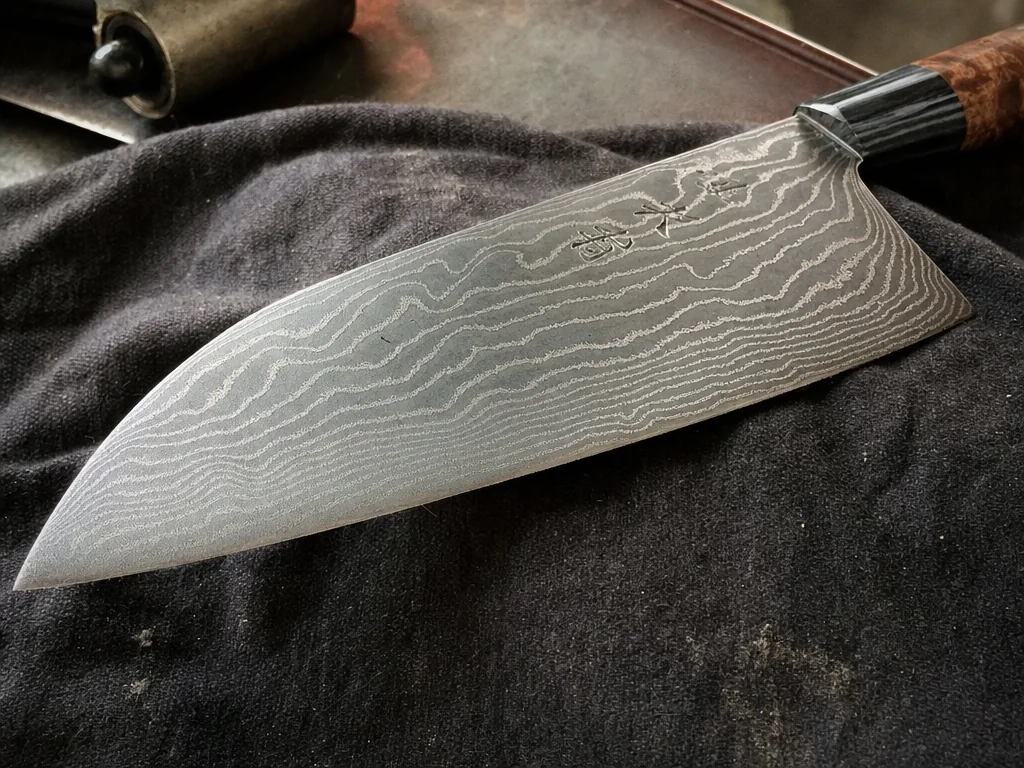
A birds beak paring knife is not a small chef knife. It is a curved tourne tool for peeling, shaping, and turning vegetables, fruit, and trim cuts that need fingertip control. On the grinding line, we check the belly radius in millimeters; a 2 mm shift changes the cut path fast. We run a 12 mm handle on one sample and 14 mm on another, and the buyer feels that difference right away. The wrong curve feels awkward in hand. The right one cuts clean and leaves less waste. This is the math that decides whether the knife works or gets pushed aside.
For kitchenware brands buying from Yangjiang, China, or any OEM source, lock the curve, steel, handle, and packaging before the first sample leaves the factory. A birds beak paring knife can pass a photo check and still fail in use if the blade radius is off or the handle is too thick. QC pulled the sample twice on one order after the buyer flagged a 12 mm handle swell, and the clean PO had to be redone. We have seen this go sideways from one missing line on the spec sheet. That is not a sourcing detail; it is the check that saves you from a bad shipment.
Why The Curve Changes Everything
The bird's beak profile has one job: keep the edge on a round surface without twisting the wrist out of line. That is what matters on garnish work, where we run tourne potatoes, trim apples, and cut bruises from pears or radishes. A straight paring knife can do it, but it leaves more on the board and burns the hand faster on a 200-piece prep run. On the grinding line, we check the sweep with a radius gauge before the sample leaves the station.
For buyers, this is the first sourcing call that separates a working tool from a shelf SKU. A curved tourne blade usually lands best at 60-80 mm blade length, with enough belly to roll through the cut and a tight tip that starts clean. If the curve is too flat, control drops; if it is too aggressive, the tip gets twitchy and the knife takes longer to learn. "Can we make it look sharp?" is the wrong question. The math does not work, and we have seen it go sideways when a 65 mm spec came through as 56 mm on the PO.
For a paring birds beak knife manufacturer, the profile has to repeat across the full batch, not just on one hand-picked sample. The practical test is plain: can the knife cut a clean channel in a potato, peel a strawberry, and turn a carrot without the operator resetting the grip? If the answer is no, the curve is off. In Yangjiang, the factories that ship this well treat the blade profile as a fixed die or template, not a hand-finished guess. QC pulled the sample, checked the belly with a caliper, and sent it back when the tip wandered 0.5 mm.
- Short blade: easier control in tight garnish cuts and shallow peels
- Curved tip: reaches round produce without lifting the wrist
- Balanced belly: cuts fatigue on 200-piece prep runs
Steel And Edge Geometry
Buyers often start with steel grade and miss the geometry. For a bird's beak paring knife, both decide whether the blade slices cleanly or chips when someone twists through a curve. Stainless helps with corrosion, but on the grinding line we check edge thickness first, and a 0.2 mm swing changes the cut feel more than most buyers expect. 420J2 and X50CrMoV15 are the practical picks for mainstream kitchenware programs. We run them because they sharpen fast, source cleanly in China, and stay stable in food-contact production when the rest of the build is under control.
For garnish work, HRC 56-58 is the commercial target we run. That range gives enough edge life for daily prep and still lets the end user resharpen with normal shop equipment. One buyer pushed a harder spec on 9Cr18MoV, then QC pulled the sample after the first twist-cut test because the tip went brittle. A Rockwell reading on the heel will not tell you enough. If you move to a premium steel or an imported grade, you can push toward HRC 58-61, but the heat-treatment window gets tighter and the cost climbs. The math does not work when the program is priced for volume.
Geometry matters just as much. A spine thickness around 1.8-2.2 mm gives enough stability, while the edge angle should stay in the 15-18 degree per side range for a clean garnish cut. Ask for hardness readings at the heel, mid-blade, and tip; one number from one sample tells you little. We checked a run where a PO typo changed the knife length by 5 mm, and the buyer flagged it before packing. The right question is whether the steel and geometry match the cut you need, not whether the spec sheet looks strong.
| Spec | Typical Target | Why It Matters |
|---|---|---|
| Blade length | 60-80 mm | Gives control on curved produce |
| Spine thickness | 1.8-2.2 mm | Keeps the blade stable without bulk |
| Hardness | HRC 56-58 | Balances edge retention for daily prep |
| Edge angle | 15-18 degrees/side | Helps the cut stay clean and makes resharpening easier |
| Finish | Satin 320-600 grit | Controls appearance and scratch visibility |
Handle Shape For Real Grip
Bird's beak knives work right at the tip, usually with a pinch grip and tight finger control. Handle shape matters more here than on a larger kitchen knife. The wrong question is whether it looks slim in a catalog photo. If the handle is too fat, the user cannot roll the blade cleanly. If the bolster is too large, it gets in the way. If the balance point sits too far back, the knife feels lazy in the hand. On the grinding line, we check the thumb rest with a 2 mm gauge and a 3 mm gauge because the buyer will flag a stiff turn on the first sample.
For commercial kitchenware brands, POM and PP are still the cleanest choices for a standard OEM program because they hold cost down, stay stable, and stay consistent from batch to batch. A POM handle gives a stiffer, more premium feel; PP is lighter and usually cheaper. For higher-end lines, pakkawood or G10 can work, but we test water resistance, dishwasher exposure, and color stability before we lock the spec. On a 500-piece pilot run, the buyer pushed for a heavier bolster, then dropped it after QC put the knife on the balance jig and saw it creep past the target feel. We ship plenty of these at 40-60 g total weight, with a handle length of 90-105 mm, and the math only works when the balance stays honest.
For grip texture, do not overdo it. A slight matte finish or a shallow contour is enough for wet hands. Deep texturing traps residue and makes cleaning harder. We have seen that go sideways after a 3-minute wash test, especially when garlic paste stays in the grooves. That is the wrong place to add aggressive knurling. If you are selling into Europe, pair the handle material with a REACH declaration and, where relevant, LFGB or FDA food-contact support. QC pulled the sample, ran the wash test again, and the rough surface still held paste.
Build The Spec Sheet
Fast bird's beak paring knife sourcing starts with a one-page spec. A reference photo and target price do not cut it. Send the drawing, dimensions, steel callout, surface finish, logo position, pack method, and the sample acceptance line. On our side, QC pulled the sample with calipers, and a 75 mm blade that missed the tip radius by 0.8 mm got held before it left the grinding line.
For OEM work, lock the blade profile first, then steel, hardness, handle material, and packaging. If you want custom branding, state whether the logo is laser engraved, pad printed, or stamped, because each method changes wear and setup cost. Laser etch is the clean choice on a small blade because we run it after polishing on the fiber laser, and the mark still reads after washing. One buyer pushed back on a pad print that failed a 24-hour detergent soak, and the math stopped there.
| Spec Item | Recommended Target | Buyer Note |
|---|---|---|
| Blade length | 75 mm | Good default for garnish and peeling |
| Steel | 420J2 or X50CrMoV15 | Balances cost with corrosion resistance |
| Hardness | HRC 56-58 | Safe range for daily kitchen use |
| Logo | Laser etch | Durable for retail and foodservice |
| MOQ | 1,000 pcs/SKU | Typical for standard OEM builds in China |
| Lead time | 35-45 days | After sample approval and deposit |
| Pack | Bulk, sleeve, or color box | Packaging changes affect cost and timeline |
If you need retail-ready packaging, add another 10-15 days and expect tighter carton and insert control. A factory in Yangjiang with 240 employees can still ship fast, but only when the spec is complete before the first sample run. We ship faster when the PO is clean; one typo on the carton mark can burn a day at packing and another on rework.
Quality And Compliance Checks
I’m tightening the prose into a shop-floor QC voice and keeping the HTML structure unchanged. I’m also folding in concrete inspection details and removing the filler language the section currently leans on.Quality problems on a bird's beak paring knife usually show up as tip drift, rough edge prep, or a finish mismatch. We catch them on the grinding line at the 30-minute mark, check the blade profile with a 0.02 mm feeler gauge, then hold the lot to AQL 2.5 for major defects. If the knives go into retail sets, AQL 4.0 for minor cosmetic marks only works when the buyer has signed off; otherwise, keep it tighter. One buyer pushed for final inspection only. Wrong call. By then the scrap is already made.
Check the blade first: tip symmetry, curve consistency, burr removal, and grind evenness. Then check the handle for fit, gap-free assembly, and texture consistency. Finish comes last. Look for scratches, clouding, glue marks, and uneven polish. If a supplier claims better cutting, ask for a repeatable test, not a sales line. CATRA is fine for premium benchmarking, but for most commercial programs a controlled cut test on tomato skin, citrus peel, and potato skin will show bad geometry fast. We run a 20-piece sample and check the edge under a 10x loupe; if the edge starts tearing tomato skin, the math does not work. We have seen this go sideways when the heel burr survives the tumble polish.
For compliance, match the paperwork to the market. LFGB applies to Germany and is often used as a higher standard in Europe, FDA documentation matters for the US, and REACH declarations matter for handle materials, coatings, and inks. If the factory is ISO 9001 certified and has passed BSCI or a similar social compliance audit, that helps with onboarding, but it does not replace your own inspection. In Yangjiang, the better suppliers will show you the actual QC logbook instead of a certificate wall, and QC pulled the sample before the carton seal on more than one line because the buyer flagged a PO typo on the packing list. Paperwork is the easy part. The packing list is where mistakes show up.
MOQ, Price, And Lead Time
Price for a bird's beak paring knife depends on steel grade, handle resin, blade finish, packout, and whether we run stock goods or a private label spec. For a plain stainless blade with a PP or POM handle, FOB China usually lands at USD 0.65-1.20 at 1,000 pcs. Change to VG-10 style steel, mirror polish, a tighter edge grind, or a printed tuck box, and the price moves to USD 1.80-3.50 each. Small knife, fussy work. On the grinding line, a 0.2 mm burr check with a finger cot and loupe can add labor, because the hook tip shows bad grinding faster than a straight paring knife. This is not a supermarket promo rack.
MOQ is where projects stall. Our starting point for an existing handle and blade setup is 1,000 pcs per SKU. If you need a new handle mold or custom retail box, 3,000 pcs is the cleaner target. A new mold can add USD 800-2,500 and a few extra rounds of sampling, and once QC pulled the sample off the grinding line, the buyer flagged a 0.3 mm seam line on the handle. Freeze the shape early. Chasing small geometry changes after sampling is the wrong question to ask, because one revised handle radius can push the mold shop back 7 days and make the math fail on a low-quantity order.
Lead time is usually 35-45 days after sample approval for standard production. Add 25-35 days if the mold changes, and another 10-15 days if you need laser engraving, custom packaging, or carton testing. A Yangjiang factory with 240 people and about 300,000 knives a month can still miss your date if the heat-treatment oven is booked, so ask for the slot number, not a vague promise. We have seen PO typos on carton counts turn into a 12-day delay; “24 pcs/ctn” typed as “12 pcs/ctn” changed the master carton, barcode label, and loading plan. The buyer who gets clean delivery sends the spec, a signed sample, and the box artwork on day one.
Frequently asked questions
For most garnish work, 60-80 mm is the practical range. A 75 mm blade is a safe default for a paring birds beak knife because it gives enough reach to peel and turn produce without making the tool feel oversized. If your line is aimed at fine hotel prep or culinary schools, 60-70 mm feels more nimble. For heavier prep or a wider user base, 80 mm gives a little more leverage. What matters more than the exact number is the curve continuity and the tip geometry. If the curve is too flat, the knife behaves like a small straight paring knife. If the curve is too sharp, users lose control on the turn.
For a commercial kitchenware brand, 420J2 and X50CrMoV15 are the most practical choices. Both work well in China production, both can be hardened into the HRC 56-58 range, and both are easy for end users to sharpen. If you want a premium retail line, 9Cr18MoV or another higher-carbon stainless can push closer to HRC 58-61, but you will need tighter heat-treatment control and a better QC plan. For garnish knives, edge geometry usually matters more than chasing the hardest steel. A clean 15-18 degree per side edge on a well-treated 420J2 blade often performs better in real kitchens than a badly executed premium steel.
A normal MOQ for a standard paring birds beak knife is 1,000 pcs per SKU if the blade, handle, and packaging already exist. If you want a custom handle mold, printed box, or a retail sleeve with your artwork, 3,000 pcs is more realistic. Some Yangjiang factories will quote lower quantities, but the unit price usually rises quickly because the setup cost is spread over too few pieces. For a first order, it is smarter to run one or two controlled SKUs than to split volume across many colors or handle styles. That keeps sampling, QC, and inventory cleaner.
Yes. Private label is standard on this kind of product. The most common approach is laser engraving on the blade plus a custom insert card or color box. If you want a stronger retail presentation, add a printed sleeve or a small gift box, but expect a longer lead time and more packaging control. For kitchenware brands, the key is to freeze the artwork early and confirm the logo size on the actual blade profile, not on a flat drawing alone. On a small curved blade, the usable logo area is limited, so a clean 20-25 mm mark usually looks better than forcing a large graphic onto the metal.
Ask for the material certificate, hardness report, and final inspection report for each production batch. For quality control, specify AQL 2.5 for major defects, and check tip symmetry, edge burr removal, handle fit, and surface finish. For compliance, request LFGB for EU-focused food-contact programs, FDA support for the US, and REACH declarations for handle materials, inks, and coatings. If the factory claims ISO 9001 or BSCI, ask for the current certificate number and audit date rather than a photo of a wall certificate. If edge retention is part of the sales story, ask for CATRA data or a controlled internal cut test so you can compare samples on the same basis.
Send Your Garnish Knife Spec
Share your target price, blade drawing, and packaging idea, and we can quote a paring birds beak knife program from China with OEM options, compliance support, and a realistic schedule.
Request a Quote