Pizza cutter wheels look simple on a shelf. On the buying desk, they are a small parts problem with a big failure rate. QC pulled our sample after 5,000 cuts, measured the guard clearance at 3 mm with a feeler gauge, and checked the edge under a 10x loupe. We run that test for a reason. If the wheel still bites through a cold crust, fine. If it drags, wobbles, or shows rust around the rivet after a few washes, the SKU loses margin fast.
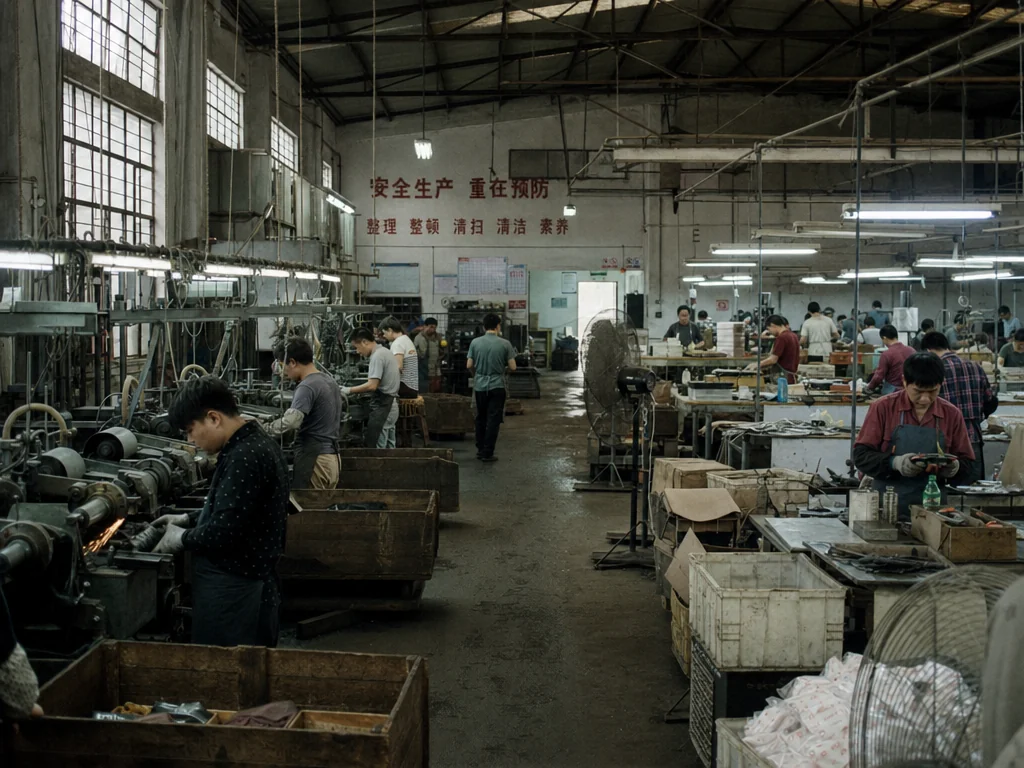
If you are sourcing pizza cutter wheel OEM production in China, treat it like cutlery, not a cheap kitchen gadget. In Yangjiang, Zhejiang, and the other knife hubs, the better shops run stamping dies, polishing drums, edge grinding, and salt-spray checks in house, so the sample finish does not fall apart in a 20,000-piece run. MOQ matters. Lead time matters. The real question is which factory can hold wheel edge, rivet tension, and handle finish when the buyer flags a PO typo and asks for the carton mark rerun by Friday. We have seen that go sideways.
What You Are Really Buying
A pizza cutter wheel looks simple until QC puts it on the spin jig. For a kitchen brand, the real order is wheel bite, axle play, guard clearance, handle balance, and carton strength that survives a 90 cm drop test for retail or e-commerce. The wheel cuts. The guard sells. Put two samples on a buyer's desk and the first complaint is often the guard edge, not the blade. We have seen this go sideways: the blade passed the paper cut, but QC pulled the sample because the polishing line left a 0.4 mm burr on the guard.
For pizza cutter wheel OEM work, define the use before asking for price. A restaurant wheel needs better rust resistance and an open guard shape the dish room can rinse in 8 seconds. A retail gift item needs cleaner polishing, stable plating color, or a branded PP handle insert that stays centered after the rivet is pressed. Promo orders chase price. Fine. But the math does not work if 3% of wheels wobble after the first test cut. We run the quote by wheel diameter, steel grade, axle type, handle material, and guard shape, so one weak part can be adjusted without sending the whole tool back to the grinding line.
When sourcing in China, send a tight spec sheet. One vague sample is the wrong question to ask. A Yangjiang factory that runs cutlery every day should ask direct questions: full ring guard or partial guard? Dishwasher resistance or hand-wash only? FDA, LFGB, or REACH declarations for which market? Last month a buyer flagged a PO typo that said 65 mm wheel while the artwork showed 75 mm; catching that before tooling saved 12 days against an 18-day remake cycle. These questions prove the supplier is treating the order as a sourcing job, not just a machining job.
Wheel Steel And Hardness
The wheel sells the cutter. On the grinding line, QC pulled the sample under a 10x loupe and checked the edge burr before the carton was sealed. For most pizza cutter wheel OEM orders, we run 420 or 420J2 stainless for the cutting wheel; 304 belongs on non-cutting trim, not the edge. If the wheel must cut cheese crust cleanly after repeat use, 420-series steel is the sensible pick. Softer stainless looks fine in a photo. It fails on the counter. Sharpness comes from heat treatment, edge grinding, and final polish.
Most export wheels sit at 52-56 HRC. That range works. It keeps the edge without making a thin disc too brittle around the axle hole. For a restaurant SKU, we usually push a thicker wheel and tighter wobble control because the buyer will test it on frozen crust, not just soft dough. For a giveaway item, a softer wheel may pass the first thumb test, then lose bite after 30 cuts. Asking "which steel do you use?" is the wrong question. Ask for blank thickness, heat-treatment curve, edge polish spec, and corrosion target. We once saw a PO typed as "420J3"; the buyer flagged it after our material check, and that saved one wrong coil from reaching the stamping press.
| Part | Common material | Typical target | Buyer note |
|---|---|---|---|
| Cutting wheel | 420 / 420J2 | 52-56 HRC | Good middle choice for retail packs and food service SKUs |
| Axle and rivet | Stainless steel | No visible play after 1,000 cycles | Check side wobble on the approved sample |
| Guard | PP, ABS, or stainless | Heat stable, no sharp edges | Guard shape must keep the index finger clear |
| Handle insert | TPE or PP | Slip resistant, food-safe finish | Makes sense for premium SKUs with higher shelf price |
If you compare suppliers in China, ask for salt-spray or dishwasher data, not one polished product photo. On our bench, one 420J2 wheel ran 50 dishwasher cycles and still spun true on a 4.8 mm rivet. A real pizza cutter wheel OEM factory in Yangjiang should show the test sheet and explain why one steel choice fits your target price and sales market. We ship by numbers, not guesswork.
Guard Design Is Not Cosmetic
First-time buyers often treat the guard as a styling part. Wrong question. On a solid pizza cutter wheel OEM design, the guard sets hand safety and the first read of product quality. If it is too small, it looks like a promo giveaway, and the buyer flags blade exposure during sample review. If it is oversized, the wheel angle gets awkward, drag goes up, and cheese residue packs behind the plate. We run the sample across a 12-inch pizza board and watch the knuckle line, not just the drawing.
For practical sourcing, the guard diameter often lands in the 70-85 mm range for handheld models, with finger clearance around 15-25 mm depending on the handle layout. The math does not work if you treat diameter as the only spec. The wheel still has to cut a standard pizza or flatbread without the user’s knuckles riding close to the blade path. QC pulled one 78 mm guard last season because the handle pitch left only 11 mm real clearance after assembly. For retail brands, that same detail affects buyer confidence at the shelf. A clean guard looks engineered, not like a generic kitchen giveaway.
Material choice matters too. Stainless steel guards feel more premium and are easier to place in restaurant or upper consumer lines. PP or ABS guards cut cost and work on lighter products when the mold, rib position, and wall thickness are controlled. We usually check for 1.8-2.2 mm plastic wall thickness before quoting tooling, because thin guards warp after polishing and packing. Thin walls are a bad bet. If you want a premium private-label line, consider a brushed stainless guard with a clean rivet line and no burrs. The grinding line catches that edge fast. That small finish is where China-made tools either feel designed or just assembled.
When you brief the factory, define the guard by function first: finger protection, cleaning access, and visual balance. Then define the finish. This is how a reliable pizza cutter wheel OEM manufacturer will quote it on the line, and it keeps the discussion on the part that affects returns. We have seen this go sideways when the PO only says "stainless guard, same as sample" and the buyer later rejects a 0.6 mm burr near the thumb side. Give the factory the callout up front. The buyer flagged it once, and the remake cost more than the tooling change would have.
MOQ, Cost, And Lead Time
Four cost drivers set the quote: wheel steel, handle material, guard material, and packaging spec. On the grinding line, a 0.5 mm change in the guard lip can force a new stamping die, and that is where the price jumps. Keep the shape unchanged and tooling stays under control. Change the guard profile or add a soft-touch handle insert, and the mold or stamping setup cost climbs fast. For a standard private-label run in China, 3,000 pcs per SKU is the normal MOQ. Some Yangjiang factories will take 1,000-2,000 pcs for a plain PP-handle version if we need to fill 6 hours on the line, but that is not the number to plan a launch around.
Lead time is 35-45 days after sample approval and deposit on a standard order. Last month QC pulled the sample for a 0.2 mm print shift on the color box, and that pushed release by two days before bulk could start. Small miss. Real delay. If you need a new mold, custom blister packaging, or laser engraving on multiple components, add another 7-15 days. Basic pizza wheel pricing can sit in a low single-digit FOB range per piece at volume, while a cleaner stainless model with premium packaging moves up fast. For DDP into the EU or the US, freight, duties, carton test, and labeling can move landed cost more than the cutter itself.
The wrong question is, "what is the unit price?" Ask for landed cost after packaging, testing, carton ratio, and rejected-rate allowance. We have seen buyers chase a 3-cent saving on FOB, then lose 10-18% once freight and compliance hit the invoice. Compare the same wheel steel, same guard thickness, same packaging, and same inspection standard, or the math does not work. A PO typo on carton count, such as 48 pcs instead of 72 pcs per master carton, can wipe out the saving before the first box ships.
Factories in China with stable line capacity, such as 300,000 kitchen units per month and around 240 employees, usually hold repeat-order pricing better than small workshops. On a 12-spindle assembly line, the buyer gets fewer surprises on the second run because the jigs are already set and the torque driver setting is still recorded. We run into trouble with small shops when the first operator leaves and the second batch comes back with a 1 mm handle gap. We've seen this go sideways. That matters if you want to reorder the same pizza cutter wheel OEM item next season without rebuilding the whole spec.
Quality Checks That Matter
For pizza cutter wheel OEM orders, QC is about how the wheel runs on the bench and on the packing line, not how thick the file looks. The wheel must spin without drag and cut without skipping; the shelf unit cannot show rust, burrs, or a rivet head that moves under thumb pressure. We run AQL 2.5 with major and minor defects first, then add wheel wobble, edge chips, logo offset within 1 mm, and carton tape seal checks. If the finish is coated or plated, we run cross-cut adhesion tape tests and 500-cycle abrasion rubs. On the grinding line, a 0.3 mm burr is enough for the buyer to flag it.
Ask the factory to test free spin and lateral play with the actual handle fitted, not just send six nice photos from the sample room. A wheel that rattles after three turns is already a fail. Looks fine means nothing. For knife-adjacent products, the rule is blunt: no sharp edge on the guard, no scratch line across the show face, and no oil mark bleeding into the retail box after 24 hours in the carton. If you sell into Europe or North America, REACH documentation, food-contact declarations where applicable, and clear country-of-origin marking belong in the file. We have seen a PO typo on origin wording turn into a 12-day delay. LFGB or FDA alignment may be requested by your customer, even when the blade only touches food for a few seconds.
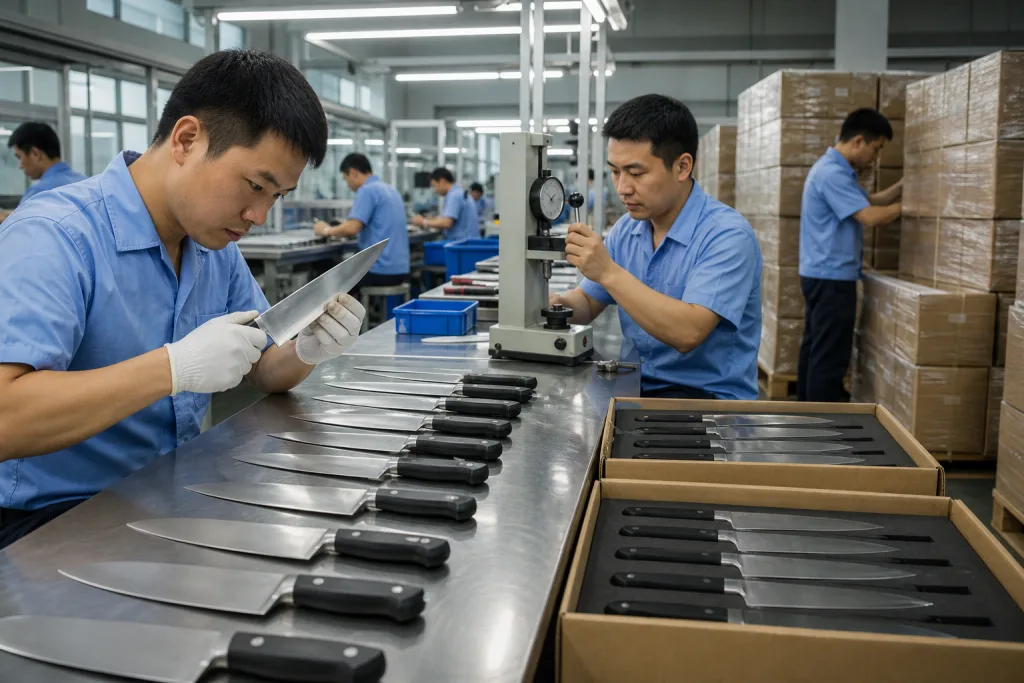
A reliable pizza cutter wheel OEM manufacturer should support pre-production samples, in-line checks, and final random inspection with the same defect sheet. If the supplier cannot explain the reject point in plain English, the math does not work. QC pulled 32 pcs from the lot, checked wheel concentricity with a dial gauge, tested blade sharpness on corrugated sheet, pressed the guard joint by hand, compared finish under a 6000K lamp, counted cartons, and scanned every retail barcode. In Yangjiang and across China, the factories that handle this well run a simple checklist and stick to it. No drama. Just the wheel, the tolerance, and the box.
Packaging And Launch Readiness
Packaging is where OEM margin gets shaved off. A pizza cutter wheel looks small, but the box still has to lock the blade, stop the handle from moving in a 1.2 m drop test, and still load cleanly into the shipper. We ran that carton drop on 24 pcs last month; after the second corner hit, the buyer flagged a loose PET insert. Good catch. If you sell on Amazon or another marketplace, confirm barcode position, hang-tab hole size, and carton compression before mass production. Skip it and the first return notices usually start at the warehouse, not with the end user.
For a private label launch, choose the pack early: clamshell, color box, gift box, or plain polybag with header card. Each pack changes line speed and damage risk. A custom box can improve shelf appeal, but the math does not work if you overspec 350 gsm board and 4C print for a low-price SKU; packaging cost can jump 8-15%. For an entry-level kitchen line, we usually run a paper box with an internal fixture. For a premium set, use a firmer insert and add laser engraving on the wheel hub or handle cap. QC pulled the sample and checked the fit at 0.5 mm. Tight fit. No rattle.
Brand owners should check carton ratio, master carton strength, and whether the supplier can print the correct FNSKU or country-specific label without manual relabeling. We had one PO where the buyer typed the wrong country code, and 3,000 pcs had to be reworked before ship-out. That burned 1 day at the packing table and tied up 2 staff with label guns and a barcode scanner. Good packaging saves warehouse time and cuts the error rate. For a pizza cutter wheel OEM program, packaging is part of the product definition and part of the landed cost, not decoration.
If you already source knives or kitchen tools, place pizza cutters with the same supplier group and let them coordinate [OEM manufacturing](/services/oem-manufacturing.html), [private label](/services/private-label.html), and [custom packaging](/services/custom-packaging.html) under one schedule. We ship this way when the buyer wants one carton spec, one label plan, and one inspection lot. The math works better. The wrong question is whether you can add packaging later. Late changes cost more than a new mold insert.
Brief The Factory Properly
The fastest usable sample starts with a tight brief. Send one page, not 12 screenshots and a “target price” that moves after the first quote. A proper Yangjiang or Zhejiang factory can turn that into a quotation, tooling note, and sample schedule without asking three times for the wheel thickness. If you are comparing 4 pizza cutter wheel OEM factories in China, give each one the same file and make them quote the same spec. We had a buyer push back on “better steel” once. Bad brief. The sample tray came back with 420 from one plant, 430 from another, and a price gap that told us almost nothing. On the floor, the answer starts at the stamping die, a 0-25 mm micrometer, and the burr left after grinding, not in sales talk.
| Spec Item | Example Buyer Input | Why It Matters |
|---|---|---|
| Wheel steel | 420, 1.0 mm thick | Controls bite on crust, rust resistance, and edge feel after the grinding line |
| Hardness | 52-56 HRC | Keeps the edge from rolling while reducing brittle cracks during drop testing |
| Guard type | Full ring, stainless | Changes hand safety, washability, and the retail look on a hanging hook |
| MOQ | 3,000 pcs | Tells us whether your launch fits our stamping die setup and packing line time |
| Packaging | Color box with barcode | Affects carton size, retail cost, and whether FBA labels scan cleanly at inbound |
| Inspection | AQL 2.5 | Sets the defect limit before QC pulls the sample lot for rework or shipment hold |
If you want a repeat program, ask the factory to keep tool records, golden samples, and photo references for the approved version. Simple request. We run better when the approved wheel diameter, rivet position, handle color, and box barcode sit in one file. The better pizza OEM programs are built on repeatability, not a low first-order price. A kitchen brand buying from China should expect a manufacturing partner, not a box mover; if the supplier cannot find last season’s sample retainer in 10 minutes, the math does not work for reorder control. We have seen one PO typo on the barcode line turn into 2,000 mislabels, and QC only caught it when the scanner failed during the packing line check.
Frequently asked questions
For a standard pizza cutter wheel OEM program, 3,000 pcs per SKU is a practical MOQ at many factories in China. Some Yangjiang suppliers will accept 1,000-2,000 pcs for a very simple design if they already have a suitable wheel, handle, and guard setup. Once you request a new mold, a custom guard shape, or premium packaging, the MOQ usually rises because setup and QC costs need to be spread across the run. If your brand is testing the market, ask for a pilot order with the same steel, same finish, and same packaging structure you plan to use later. That is the only way the sample data will mean anything at re-order time.
For most retail and private-label projects, 420 or 420J2 stainless is the usual starting point because it gives a workable balance of hardness, grindability, and corrosion resistance. A useful target hardness is often 52-56 HRC. Softer steel can feel cheap and wear quickly; harder steel may improve edge retention but can become brittle in a thin wheel. Ask the supplier to show you the exact thickness, heat treatment process, and polishing standard, not just the steel grade. If the product is for Europe or North America, also request the relevant material declaration and corrosion test data so your compliance file is not built on assumptions.
The guard is critical. It is not just decorative plastic or a visual frame around the wheel. It affects user safety, cleaning, balance, and how the product looks on shelf. For many handheld models, a guard diameter around 70-85 mm and finger clearance around 15-25 mm is a reasonable starting point, but the final design depends on handle shape and wheel placement. A guard that is too small can look unsafe, while one that is too bulky can make the cutter awkward. For a branded kitchen line, I would treat the guard as a core spec item, not an afterthought.
At minimum, ask for AQL 2.5 final inspection, wheel spin and wobble checks, finish inspection, and carton drop or compression checks if the product is packed for retail or e-commerce. If the cutter has plated or coated parts, ask for adhesion and abrasion checks. For export to the EU or North America, include REACH or equivalent material declarations and make sure any food-contact statements are written clearly. A practical factory should also give you approved samples, pre-production photos, and a final inspection report with defect photos if anything is outside spec. That is how you reduce chargebacks and customer returns.
Do not compare FOB alone. Two quotes can look similar and still land very differently once you add packaging, freight, duty, inspection, and warehouse handling. For a pizza cutter wheel OEM order, packaging can change cost by 8-15% if you move from a polybag to a printed box or clamshell. Freight volatility can add another meaningful swing depending on carton size and density. Ask each supplier to quote the same steel grade, same guard material, same packaging, and same inspection level. Then convert everything to landed cost per sellable unit. That is the number your margin actually depends on.
Send Your Pizza Cutter Spec
Get a factory quote with wheel steel, guard design, MOQ, and packaging aligned to your target market. We can build it for China, the EU, or North America.
Request a Quote