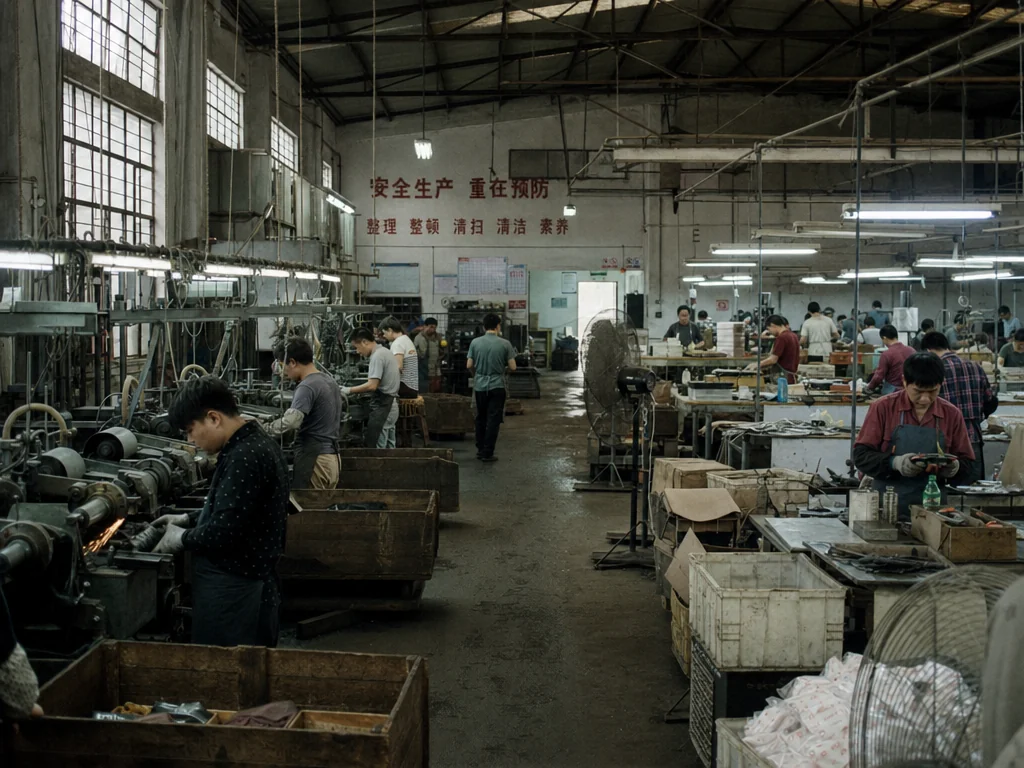
For kitchenware brands, Sandvik 14C28N knife OEM comes down to one buyer question: will this blade take a clean edge, then arrive without rust after sea freight, warehouse handling, and six months in a home kitchen? Yes, with tight heat treat. No, if the furnace operator is guessing. We have seen QC pull a 2.0 mm spine chef knife sample from the tray; the satin finish looked premium, but it failed our wet towel corrosion check after 24 hours. Good steel name. Weak process. The math does not work.
At TANGFORGE in Yangjiang, China, we run into this every season with importers ordering chef knives, utility knives, and premium pocket tools. 14C28N is not magic steel. It needs correct blade geometry, vacuum heat treatment, quench control, cryo use, and a stable hardness window, usually 58-60 HRC for fine-edge kitchen work. If you are doing sandvik 14c28n knife oem sourcing, do not spend the call reading the brochure back to the factory. Ask for the cut test result, salt-spray target, MOQ, and repeatability plan. Fifty samples are easy. Holding the same edge angle and finish across 5,000 units on the grinding line is where the buyer starts seeing the factory's real level.
Why 14C28N suits fine edges
Sandvik 14C28N fits kitchenware because it solves the complaint buyers usually send after the first container: enough rust resistance, a tighter carbide structure, and a steadier edge than 3Cr13 or low-grade 5Cr15 at about the same shelf position. For European and North American brands, chasing one higher HRC number is the wrong question. If the knife is meant for tomatoes, onions, boneless chicken, and daily prep, 14C28N takes a thin, quick edge without the glassy chipping we see when stainless gets pushed past its comfort zone. QC pulled 32 pcs from one 600-piece trial order last month. Paper cut still passed after salt-spray handling, but the buyer flagged two blades for water marks near the heel.
On the heat-treatment sheet, we normally run 58-60 HRC for chef knives and utility knives, and 56-58 HRC for larger blades where toughness matters more than bite. Simple target. Hard to hold. The steel can carry a fine edge around 12-15° per side, but only if the grinding line keeps both bevels even and thickness behind the edge stays near 0.25-0.35 mm, not 0.5 mm. That is where 7 out of 10 weak sandvik 14c28n knife oem projects fail: the steel is fine, the blade is too fat, and the buyer says the sample feels slow through carrots. A good sandvik 14c28n knife oem manufacturer talks geometry first, then steel grade.
For kitchen brands, 14C28N also lowers complaint pressure because it asks less from the end user than high-carbon non-stainless steel. We ship to distributors whose customers wash the knife, wipe it once, and throw it into a drawer. The math doesn't work if a retail line gets 18 rust claims per 1,000 pcs instead of 6. With 14C28N, distributors send us fewer rust photos and fewer return emails; last quarter one buyer's after-sales sheet dropped from 14 finish complaints to 5 after we changed the satin pass and tightened final wipe inspection with a clean microfiber check before packing.
Set the HRC and edge angle
Do not approve a sample until the hardness target and edge profile are on the spec sheet. A blade stamped “14C28N” can still cut flat if the heat treat lands soft or the bevel is opened too much at final sharpening. We saw a 0.25 mm note turn into a thick-looking edge after one extra pass on the polishing wheel at the grinding line. That is the kind of miss that costs time. For kitchen OEM work, we run a thin, controlled grind and lock the hardness band so the factory can repeat it from the first carton to the last. In Yangjiang and the other knife hubs, the shops that keep premium stainless sharp are the ones checking each heat lot, logging quench temperature, and keeping temper cycles steady on the oven rack.
Use a simple technical target like this:
- Chef knife: 58-60 HRC, 12-15° per side, 0.15-0.25 mm edge thickness after polishing
- Utility knife: 58-60 HRC, 14-16° per side, slightly more edge support for board contact
- Paring knife: 57-59 HRC, fine grind, high polish for corrosion resistance
If you ask for 61-62 HRC on a mass-produced stainless kitchen blade, the lab sheet may look stronger, but chip complaints show up fast when the bevel is wrong. QC pulled a sample from a trial batch, checked it with the Rockwell tester, then the edge started to micro-chip after a small cardboard test. The math does not work if you push hardness and forget the bevel. For retail buyers, a clean stainless edge has to cut well, resist staining, and still be easy for the customer to touch up at home. We usually tell China and Europe buyers to take a moderate hardness band with steady finishing instead of chasing a hard, brittle spec. This is the wrong question to ask if the goal is a knife that survives real use.
At TANGFORGE, our monthly output is around 300,000 units across knife categories, so we see the gap between a sample that cuts well and a run that survives packing, shipping, and daily use. We ship enough volume to catch small mistakes, including a PO that says 15° on one line and 150° on the next. That typo stopped the order for half a day. If your sandvik 14c28n knife oem project is for a premium kitchen line, put the edge angle in the CAD or blade drawing, not in a loose email note. We have seen that go sideways before.
What to ask your OEM factory
For sandvik 14c28n knife oem sourcing, the mill certificate only proves where the steel began. The better question is what happens after the coil reaches our gate. Ask how incoming 14C28N is booked into the warehouse system, how we stop mixed heats from entering one work order, which heat-treatment oven we run, and whose name is on the lot release before grinding starts. On our line, QC checks the heat number against the warehouse tag before the first blade blank goes to the hydraulic punch. No shortcut here. A serious sandvik 14c28n knife oem manufacturer should answer these without drama:
- Can you provide material traceability by heat number and coil or bar batch?
- Do you use vacuum heat treatment, salt bath, or conventional furnace?
- What is your standard HRC tolerance on a 3,000-piece run?
- How do you test edge retention and corrosion resistance?
- What is your AQL level for final inspection?
The Yangjiang factories worth your time will show blade flatness control records, burr removal notes, and polishing logs, not just one shiny sample from the showroom drawer. Small detail, big result. We once pulled a 1,200-piece batch that looked fine until 240-grit belt marks on the bevel showed after the salt spray check, and the buyer flagged it on the spot. That was a grinding line problem, not a steel problem. Ask for polished or stonewashed finishes where they match the price point, because a full mirror finish on a mid-price knife is the wrong promise to make. The math does not work. For premium kitchen lines, we prefer a mirror-polished edge area with controlled satin flats; it cuts cleaner and looks more honest on the shelf.
From a sourcing standpoint, ask for ISO 9001 documents, production photos, and a sample approval flow that includes hardness check, cutting test, and visual inspection under fixed lighting. We use the same light box for pre-production samples and shipment samples because one buyer once flagged a “color difference” that was just warm office lighting in their meeting room. If the factory cannot explain the process in plain words, you are not buying quality control. You are buying hope.
Source data and commercial terms
For kitchenware brands, price matters, but the lowest quote on the sheet can hide steel loss, polishing minutes, and QC rework. On our grinding line, 14C28N takes a cleaner edge than 420/5Cr15, yet we still leave about 0.25-0.35 mm extra before final grinding because heat treat movement is real. We run this with a micrometer on the bench, not a guess. Cheap can get expensive. The wrong question is “what is the lowest unit price?” Ask whether the knife still lands in spec after heat treat, edge grinding, logo laser, and final packing.
| Item | Typical range | Buyer note |
|---|---|---|
| Blade steel | Sandvik 14C28N | Ask for heat lot traceability |
| Hardness | 58-60 HRC | Good balance for fine-edge kitchen use |
| MOQ | 1,000-3,000 pcs/model | Depends on handle, blade size, and packaging |
| Lead time | 35-60 days after sample approval | Custom color box or laser branding can push 35 days closer to 50-60 days |
| Inspection | AQL 2.5 general / 4.0 minor | Specify critical defects separately |
FOB China pricing for a basic OEM chef knife in 14C28N moves with handle material, satin or mirror finish, and retail pack style. A PP or Pakkawood handle sits in one cost bucket; G10 or micarta needs different machining time and more dust control at the handle bench. We had a buyer flag a PO because the FNSKU was one digit off, and the relabel room lost 2 extra days on cartons and scans. If the pack needs FNSKU labels, retail inserts, hang tags, and polybag compliance, put it in the quote from day one. On DDP shipments to Europe or North America, customs duty, inland trucking, and carton labeling often move landed cost more than the blade steel itself. We have seen buyers miss that on the first round.
If your supplier is in Yangjiang, China, ask for both FOB and DDP on the same sheet so you can compare cleanly. We ship both ways, and the spread usually shows where the real cost sits: packaging, carton size, and inspection labor. A 3 mm carton change looks small until it changes pallet count; QC pulled this on a 12-carton pilot run last season, and the master carton no longer fit the buyer’s pallet plan. The math does not work if the carton spec is loose.
Test the edge, not the brochure
A stainless edge can photograph clean and still fold the first morning it hits a board. For a premium knife line, approve the edge by cutting. CATRA is still the edge-retention reference, but 8 out of 10 buyers we work with do not need a full lab run for first approval. We run one bench test after final sharpening: controlled cardboard cuts, tomato slices, and paper push-cuts on the same fixture; QC writes the blade ID on tape and records the bevel angle in degrees with the angle gauge. Simple work. If the edge rolls after a light test, look at heat treatment, edge geometry, or both. The Rockwell number alone will not save it. Pretty samples do not pay claims.
For 14C28N, a proper test pack should include:
- Initial sharpness: clean push-cut through A4 paper, plus shaving-level edge if requested, checked after the grinding line finishes the last 1000 grit belt pass
- Corrosion check: 24-48 hour salt mist or spot humidity exposure for finish validation, with close-up photos of rust dots near the heel, logo area, and spine corner
- Hardness spot checks: multiple blades from the same heat lot, normally 3-5 pcs checked on the Rockwell tester before packing
- Visual defect inspection: scratches, burrs, edge waves, handle gaps, and any uneven bevel over 0.3 mm that the buyer will flag during incoming QC
When buyers ask for “fine edge,” we put numbers on it. Specify 10 mm rope slicing, standard cardboard after 50 cycles, or a maximum force increase measured with a pull gauge. One line in the spec sheet prevents the usual argument later, especially when the PO says “sharp edge” and the supplier reads it as “looks sharp.” We have seen a PO typo change 15 degrees per side into 25 degrees, then the buyer wondered why the sample felt like a camp knife. In China, where OEM suppliers often fight over 12 days vs 18 days lead time, a solid factory will accept clear test criteria because the process repeats on the line. A weak factory sends mirror photos and avoids the cutting data. We have seen this go sideways.
If your product is sold as a clean stainless kitchen knife, the edge test should match the real job: soft vegetables, cooked meat, fruit, and light daily prep. Not bone chopping. This is the wrong question to ask for 14C28N fine-edge OEM work. The math does not work when a buyer wants thin slicing geometry, 0.3 mm behind the edge, and abuse-test survival in the same sample.
Choose the right finish and handle
Finish changes rust behavior and shelf appeal. On the grinding line, we run a 600-grit satin pass on 14C28N for 7 out of 10 kitchen programs because it hides thumb marks, takes carton rub better, and still looks clean when the buyer opens the box in Berlin or Chicago. Mirror polish looks good on the quotation sheet. Then QC sees hairline scratches after 12 days in distribution, usually near the heel where the PE sleeve shifts by 2 mm inside the carton. Ask the right question. It is not which finish looks most premium; it is which finish still reads clean after warehouse handling and retail display.
Handle choice can move the whole program. For a sandvik OEM kitchen knife, POM and PP keep injection cost and cycle time down in humid markets, while micarta, G10, and pakkawood mean CNC milling, faster cutter wear, more color sorting, and slower buffing at the wheel. We quote it line by line. QC pulled the sample once because the buyer flagged a glue line at 0.3 mm under the bolster. For food-contact programs, check the handle surface, adhesive system, and paperwork path against REACH and, when needed, LFGB or FDA. A handle that saves 8 cents but leaves a file gap is not a saving. The math does not work.
A clean stainless edge program still has to feel balanced in hand and be easy to re-sharpen. Small detail, big trouble. If the handle is 6 mm too thick at the palm swell, the blade feels dull even when the edge geometry is right. We have seen that go sideways on a reorder: the cutting test passed at the bench, the hand feel failed in the buyer meeting, and the buyer killed the PO. That is a commercial problem, not just a technical one.
How to avoid sourcing mistakes
Most 14C28N sourcing failures are not steel failures. They begin on the PO. The buyer writes “premium kitchen knife,” the factory enters it as “standard stainless, satin finish, laser logo,” and the video sample passes because nobody cuts 200 tomatoes on camera. Then the first counter sample comes back dull at the heel. We see this on the grinding line every month, usually 6 or 7 cases in a busy season. Build the spec around four hard controls: Sandvik 14C28N named on the material sheet, target HRC with tolerance, blade geometry in mm, and inspection points tied to AQL 2.5 or your own limit sample. Lock those before tooling. Otherwise 5,000 pieces can turn into 5,000 arguments.
We keep seeing the same bad calls. A 2.5 mm chef blade gets ordered for a light retail set. A mirror-polished sample is approved with no production reference photos. Carton artwork is checked 3 days before vessel closing, then someone finds the word “stainless” typed as “satainless” on the side mark. The math does not work. Do not treat every Chinese supplier as the same factory with a different logo. A Yangjiang knife factory with OEM grinding lines, Rockwell tester records, and signed QC sheets works differently from a trader forwarding photos from another workshop. Ask who runs heat treatment, who signs the QC report, and where final inspection is done. We ship a lot of projects through that gap, and this is where buyers get burned.
For a serious Sandvik 14C28N knife OEM project, write down the parts you will reject over: HRC range, edge angle, finish, packaging, and acceptable defect levels. Be blunt. If you need 15 degrees per side, say 15 degrees per side, not “sharp edge.” QC pulled one sample last month that measured 18 degrees on the left bevel and 23 degrees on the right; the buyer flagged it after retail packing had already started. On our bench, the angle gauge does not lie. One rule matters more than a nice sample: if the supplier cannot repeat the same result on the third production lot, you do not yet have a stable program. We have seen this go sideways. That rule saves real money.
Frequently asked questions
Yes, it is one of the better stainless choices for clean slicing and easy maintenance. For kitchen knives, we usually target 58-60 HRC and a 12-15° per side edge. That gives good sharpness without making the blade too brittle. It also resists rust better than many basic stainless steels, which reduces complaints from retail buyers and end users. If your brand sells in humid markets or handles returned goods through distributors, that corrosion resistance matters. The key is not just the steel; it is the heat treatment, grind, and final polish. A good OEM program in China can make 14C28N perform very well if the factory controls those details.
For a custom kitchen knife, a realistic MOQ is often 1,000 to 3,000 pcs per model. The exact number depends on whether you are changing the handle, blade length, finish, and retail packaging. If you need custom boxes, inserts, laser logos, and FNSKU labels, the MOQ may move up because of packing line setup. In Yangjiang, China, factories with stronger OEM systems can sometimes support lower pilot runs, but pricing will be higher. If you are testing the market, ask for a 300-500 pcs pilot only if the factory already has the same blade platform in production; otherwise, the cost per unit can become inefficient very quickly.
For a fine stainless edge, 58-60 HRC is the practical range for most kitchen applications. Below 57 HRC, the edge can feel less crisp and may roll sooner. Above 60 HRC, you may gain edge retention, but you also increase the risk of chipping if the blade is thin or the user is careless. The right answer depends on blade thickness, bevel angle, and intended use. A chef knife for slicing and prep can run at 59 HRC comfortably. A heavier utility blade might be slightly softer for toughness. Ask your supplier to measure hardness on multiple blades from the same batch, not only on a sample knife.
Check hardness, edge geometry, finish, and packaging together. A sample that looks sharp can still fail if the bevel is uneven or the edge rolls during a simple cut test. Ask for HRC readings, a basic paper and cardboard test, and close-up photos of the spine, heel, and tip. Confirm whether the sample reflects the same process as mass production, especially heat treatment and polishing. If your program needs corrosion resistance, request a salt mist or humidity exposure check. For export buyers, also confirm carton size, barcode format, and any compliance labels needed for Europe or North America. Sample approval without those checks often leads to expensive rework later.
Yes, if the factory has proper heat treatment control, in-house QC, and enough production volume to keep the process stable. In China, especially in Yangjiang, there are factories that can hold a consistent HRC band and clean edge geometry on repeated runs. What you need to verify is not the location, but the process discipline. Ask for ISO 9001, material traceability, and batch inspection records. A reliable OEM partner should also explain its lead time, often 35-60 days after sample approval, and be able to quote FOB and DDP clearly. If the factory cannot explain how they keep the edge consistent across 3,000 pieces, the steel choice will not save the project.
Request a 14C28N OEM quote
Send your blade size, target HRC, handle spec, and packaging needs. We can turn that into a practical sandvik 14c28n knife oem plan with clear pricing and lead time.
Request a Quote