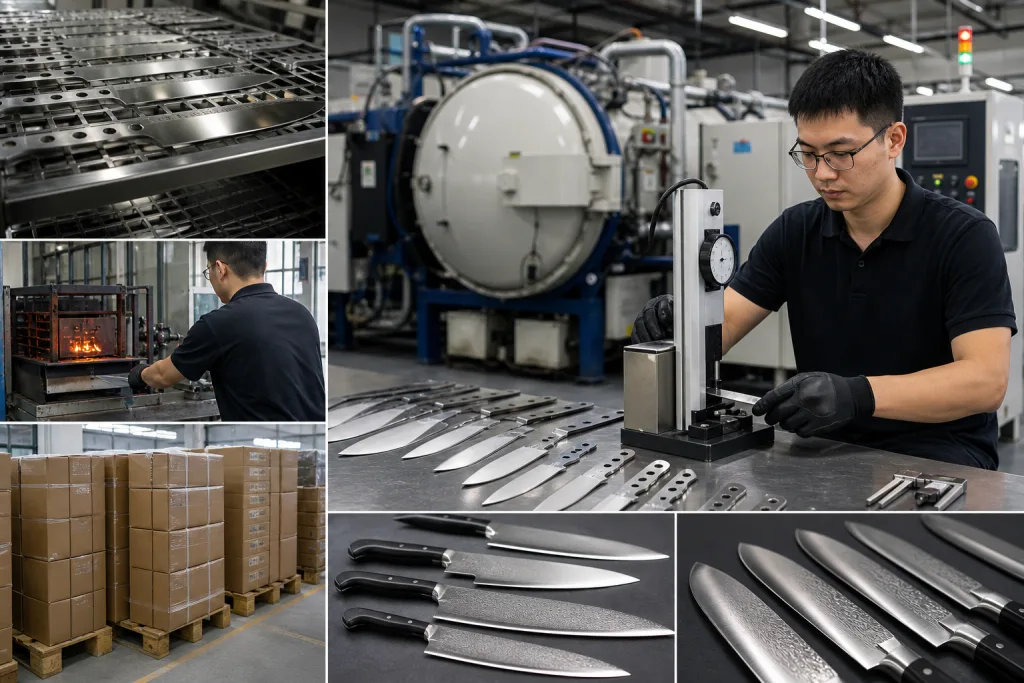
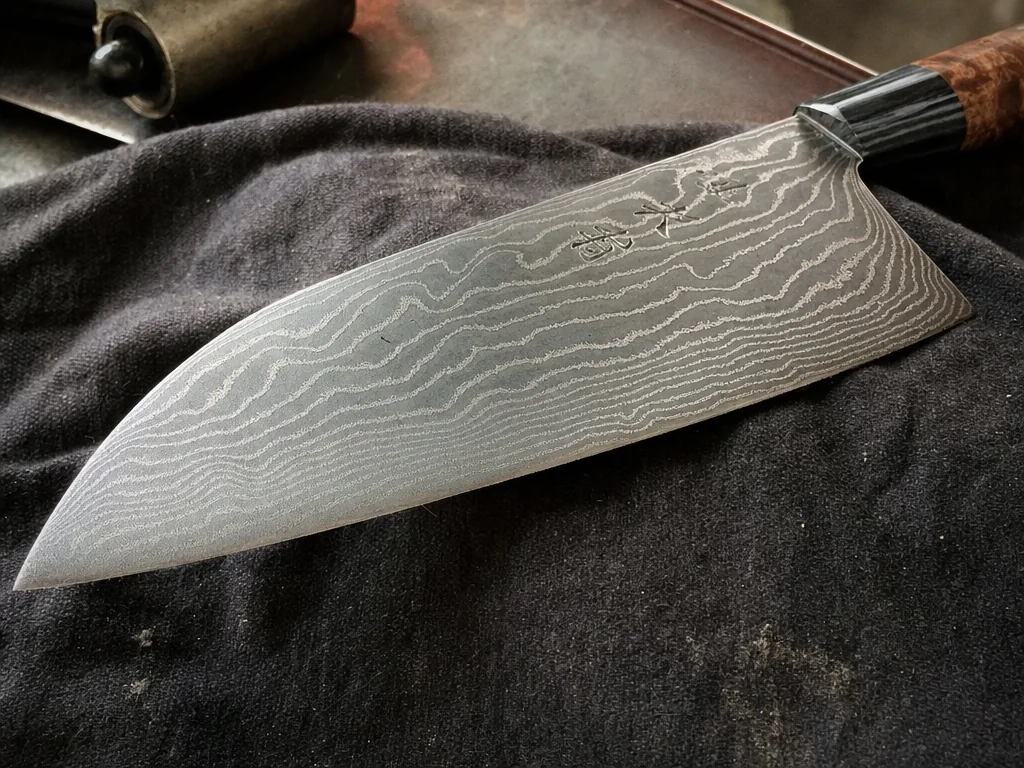
If you buy Japanese-style kitchen knives, steel choice shows up fast: edge life at the board, sharpening time on a #1000 stone, rust complaints after a wet sink test, and return rates 30 days later. Shirogami aogami carbon steel is factory shorthand, not a shelf label. White paper and blue paper steels act differently after the geometry is fixed, the furnace batch is quenched, and the 120-grit belt finish leaves the grinding line. In the last 12 months, we saw 9 buyers ask for the hardest blade on paper. QC pulled samples at 63 HRC. The buyer flagged micro-chips in the first month. Numbers sell. Returns hurt. Most brands did better with steady performance at 60 to 62 HRC.
For a shirogami OEM program, start with the end user, not the catalog claim. A home cook touching up on stones every 3 weeks needs a different blade from a specialty retailer serving enthusiasts in Europe or North America, where a thin edge feels good on day 1 but can come back as a chip claim by day 30. If you are working with a shirogami aogami carbon steel manufacturer in Yangjiang, China, ask for lot traceability first. Lock the hardness tolerance next. Then check grind control at 0.18 to 0.22 mm behind the edge with a digital caliper, and write care instructions before you talk about price. We run that sequence for a reason. Price-first is the wrong question.
What White And Blue Steel Mean
Shirogami is white paper steel. Aogami is blue paper steel. On export quotes, we usually run five grades: Shirogami #1, Shirogami #2, Aogami #1, Aogami #2, and Aogami Super. White steel is the cleaner carbon version with less alloy in the mix, so the burr comes up fast on a #1000 stone. If the grinding line holds about 0.25 mm behind the edge before final sharpening, it will take a clean apex. Blue steel brings in tungsten and chromium, so wear resistance is better and the bite stays longer on a board. QC still puts the edge under a 20x loupe, because one hot pass on the belt can cook the edge and kill the feel.
You see the gap fast in a product brief. A white steel gyuto feels crisp on the stone and raises a burr sooner, but on a busy kitchen line, we usually see touch-ups after 12 days instead of 18 days on a similar blue steel blade. We had a buyer flag this during sample testing: the first Shirogami piece flew through shallots, then lost bite before their line cook finished a two-week trial. If the brand story is old-school Japanese sharpening feel, Shirogami makes sense. If the retail customer wants fewer complaints after normal prep use, Aogami is the safer commercial call. We ship A/B samples with the same handle and the same 15 dps edge when we can, or the comparison turns sloppy.
The wrong question is, "Which steel name is better?" Two blades marked Shirogami #2 can still cut and sharpen like different products if one has a coarse grind, edge decarb, or a lazy heat-treat cycle. QC pulled samples here where the carton label said Shirogami #2, then the Rockwell readings came back 58 to 62 HRC across 8 pcs. That spread does not belong on a premium line. We have seen this go sideways after a PO typo changed Aogami #2 to Shirogami #2 and nobody caught it until pre-shipment inspection. In China sourcing, the steel name only counts when the factory can show the heat lot record and hold a stable hardness band while keeping the finish clean.
Edge Life Versus Sharpening Feel
Most buyers frame it as a simple trade-off: white steel sharpens faster, blue steel keeps cutting longer. That is the wrong question to ask. The better test is what the user feels after 30, 60, and 120 days, not the clean line on a sales sheet. Shirogami gives a clean, crisp bite because the carbide mix is simple; on our sharpening bench, a #3000 stone raises a tidy burr in about 45 seconds, and the edge looks even under a 10x loupe. For katsuramuki and fish prep, that feel matters more than a wear-resistance number.
Aogami usually wins once the knife sees harder service. In a busy kitchen, a blue steel blade can hold usable sharpness 15-25% longer than a comparable white steel blade at the same geometry and hardness. The math is not free. Blue steel takes more time on the stone, and when a buyer asks us to run a thin edge at 64 HRC or above, micro-chipping shows up fast; QC pulled one sample last month with chips along 18 mm of the heel after rough board contact. Steel choice and blade geometry need to be quoted together. A 210 mm gyuto with a thin convex grind will not behave like a thicker petty, even when both use the same steel.
If the customer sharpens at home, white steel usually brings fewer complaints because the feedback is clear and the burr comes up fast; we saw this in return notes when a buyer flagged “hard to get edge back” on a blue-steel PO from a gift shop account. Easy matters. For a premium gift line, or for a knife used daily in a 35-seat restaurant, blue steel often gives a smoother ownership cycle. We ship both. We have also seen this go sideways when the retail story talks only about edge life and says nothing about sharpening feel.
Heat Treatment Sets The Real Value
The steel grade on the quotation does not decide how the knife cuts. Heat treatment does. For shirogami aogami carbon steel knives, put the target HRC, tolerance, quench method, and temper cycle on the spec sheet before we run the order. For kitchen knives, 61-63 HRC is a workable starting point for Shirogami #2, 62-64 HRC for Aogami #2, and 63-66 HRC for Aogami Super. Then we tune from there by spine thickness, edge geometry, and whether the buyer wants a slicer or a tougher line knife. On our floor, QC checks the first 5 blades with a Rockwell tester, and the grinding line stays parked until those readings match the sheet.
Hardness is one reading, not the whole answer. That is the first check, not the answer. You still need fine grain, low decarb at the edge, and blades that stay straight after quenching. Too soft, and the edge loses the bite buyers paid for. Too hard on a thin Japanese profile, and chip claims start after users hit hard squash, frozen garnish, or dense proteins on the board. We have seen this go sideways. One buyer approved a polished sample at 64 HRC, then QC pulled random pieces from the lot and found 3 blades bent over 1.5 mm after tempering. The buyer flagged it fast. We measured the bow on a flat granite plate with a 0.05 mm feeler gauge. A solid shirogami aogami carbon steel manufacturer in Yangjiang, China should show hardness readings from several points in the lot, not one showpiece.
For OEM specs, ask for plus or minus 1 HRC, a clear straightness limit, and one inspection point after tempering. Keep it on the PO. We usually write the straightness limit in mm and have QC recheck after the temper furnace cools; last month one PO even came in with the HRC line typed twice and no straightness limit at all. If the factory cannot hold those numbers on a 300 pcs trial order, the steel choice is the wrong question to ask. The math does not work if the sample looks clean and the trial lot drifts.
Sourcing Specs Buyers Should Ask For
Start shirogami aogami carbon steel sourcing before the blade blank price. Lock the stack first: mill cert with heat lot, heat-treat sheet with temper time, grind spec with spine and edge thickness, approved finish sample, oil-paper packing, rust care card, and AQL 2.5 inspection rule. For a normal Yangjiang OEM carbon-steel SKU, we run 300 pcs per SKU, with 35-60 days after sample approval. Cheap blanks look clean on a cost sheet. Then QC pulls 37 warped blades at final inspection because the quench rack was loaded too tight, and the USD 0.40 saving is gone.
| Steel | Typical HRC | Sourcing note | Best fit |
|---|---|---|---|
| Shirogami #2 | 61-63 | Sharpens fast on a 1000/3000 stone; simple chemistry, but expect rust claims if the PO misses oil paper, a care card, and dry carton packing | Entry pro gyuto, petty, practice-focused lines |
| Shirogami #1 | 62-64 | Finer edge potential, but the quench and temper window is narrow; QC should test HRC on each heat lot with the Rockwell tester, not just the first sample | High-touch artisan or flagship SKUs |
| Aogami #2 | 62-64 | Good daily-prep wear resistance; buyers accept the slower sharpening after they cut 30 tomato skins and a half crate of onions in sample testing | Mainline premium Japanese-style knives |
| Aogami Super | 63-66 | Best edge life in this group; heat-treat drift shows up fast as micro-chipping on the grinding line sample, often before polishing | Top-tier retail or chef-focused programs |
Ask for the mill certificate, heat lot number, and final hardness report for each batch. Carbon content cannot be checked by XRF alone, so the file needs furnace records and traceability, not a sales-desk guess. This is the wrong place to trust a neat quotation. AQL 2.5 works for cosmetic checks, but edge defects and blade warp need a tighter gate; last month QC pulled one 240 mm gyuto with a 1.8 mm tip lift, and the buyer flagged it before packing. Small handle blemish? We can sort it. A bent carbon steel knife ships back.
OEM Pitfalls That Cause Returns
Most returns on carbon steel knives start on the line, not with shirogami or aogami. We see five repeats on OEM orders: a burr left after final sharpening on the felt wheel; bevels drifting 0.2 mm from left to right; mirror polish covering a thin decarb band near the edge; handle fit with a 0.3 mm glue gap at the bolster; packaging that traps moisture during 12-day transit. Blaming white steel is the wrong question to ask. One bad shipment can erase the cutting story you sold in the catalog.
Control starts at the sample stage. The sample must come from the same production heat treat, the same grind setup, and the same finish we ship in bulk. Not a hand-tuned piece from the senior polisher on a slack belt. We have seen this go sideways: QC pulled the approved sample at 61 HRC, then bulk goods ran on a different grinding line with a softer feel and thicker edge, and the buyer flagged it in the first 300 pcs. Keep one retained sample from the approved master. Mark the outer carton with the lot code and pack date, and keep the line ID in the record. In a Yangjiang, China export program, that small record saves the private-label line from a return loop.
Check the non-blade items too. Rust preventive oil must be food-contact safe, or we wipe it off before packing and write it on the PO; last year one buyer sent back 24 pcs because the inner bag trapped condensation under a blade sleeve, and QC found the desiccant pouch clumped hard on opening. For Europe and North America, expect REACH-related documentation for packaging materials, plus LFGB or FDA support for handles and food-contact claims where relevant. Carbon steel is honest. The sleeve, oil, handle, and carton still need to pass your compliance review.
Choosing The Right Steel By Channel
White steel sells on feel. It fits 30-80 pcs/month specialty knife shops and cooking schools, especially where staff actually hands over the care card and can sell the Japanese carbon story face to face. In our sample room, after a 1000/6000 grit stone pass, Shirogami gives the crisp feedback chefs talk about, and the edge takes a clean bite on vegetables right off the board. Clean. Direct. Blue steel is the safer pick when the channel wants fewer edge-retention complaints. We ship it into 300-800 pcs/month retail runs and private-label programs, including chef gift sets, where QC pulled the sample after 7 days of prep use and the buyer asked, "Will this still cut tomatoes out of the box?"
Here is the shop rule. If the user sharpens weekly, Shirogami sells better. If the user expects 18 days between touch-ups instead of 10-12 days, Aogami is the better commercial choice. For rough handling or dishwasher homes, carbon steel is the wrong question to ask. The math doesn't work. We have seen this go sideways: a retailer ordered 600 carbon gyuto knives for a general home-cook bundle, then the buyer flagged orange rust at the heel in sink-soak return photos.
When we build a Japanese-style line in Yangjiang, China, we set the use case first, then match the steel, HRC band, grind angle, handle material, and packaging. On the grinding line, a 12-15 degree edge and a 60-62 HRC spec mean nothing if the buyer's channel cannot explain wiping the blade dry before it goes back in the drawer. One PO even called the same item "white steel" on page 1 and "blue steel" on page 3, so we stopped production before heat treatment. Source shirogami aogami carbon steel knives by matching the blade to the real owner, not to the hardest number on the spec sheet.
Frequently asked questions
No. Aogami usually gives better edge retention, often 15-25% longer in similar geometry, but Shirogami sharpens faster and can take a finer, cleaner edge. If your buyer sharpens by hand and values feedback on the stone, white steel is often the better fit. If the knife will see daily prep and you want fewer touch-ups, blue steel is usually the safer commercial choice. The right answer also depends on blade thickness, bevel angle, and final hardness. A 62 HRC Shirogami blade can outperform a poorly treated 64 HRC Aogami blade in real use.
For most Japanese-style kitchen knives, a practical starting point is 61-63 HRC for Shirogami #2 and 62-64 HRC for Aogami #2. Aogami Super can go higher, often 63-66 HRC, but only if the grind and quench are controlled well. Ask for a tolerance of plus or minus 1 HRC, not a single number. That matters because production variation will happen. A blade that is too soft loses the carbon steel benefit, while a blade that is too hard can chip when the customer hits hard squash, bones, or frozen ingredients.
Do not rely on appearance. Carbon steels cannot be confirmed by XRF alone because carbon is not measured that way. Ask for the mill certificate, heat number, and heat-treatment record for the batch. Then check hardness at multiple points on the blade and compare it with the approved sample. If the supplier is a serious shirogami aogami carbon steel manufacturer, they should be able to show traceability from incoming bar stock to finished goods. For an OEM order, keep a retained master sample and require lot codes on cartons so you can trace any issue back to the right batch.
For a custom Japanese-style knife program in Yangjiang, China, a common starting MOQ is 300-500 pcs per SKU, depending on blade size, handle complexity, and packaging. Sample approval usually takes 10-15 days. Production after approval is often 35-60 days, with extra time if you add laser engraving, custom boxes, or special oiling and wrapping. Small runs are possible, but the unit price rises fast because setup cost is spread across fewer pieces. If you are comparing offers, ask whether the quoted lead time includes inspection, packing, and carton labeling, not just blade grinding.
Usually yes, but compliance is not only about the steel. The blade itself is straightforward; the bigger issues are handle materials, rust preventive oil, inks, coatings, and packaging. For Europe, you may need REACH-related support on relevant materials, and for food-contact claims you should review LFGB expectations. For the US market, FDA-related food-contact documentation may be relevant depending on the materials and claims. Carbon steel also needs clear care instructions because it will patina and rust if the user leaves it wet. A good supplier will provide dry packing, safe oils, and care cards rather than assuming the end customer already knows how to handle the knife.
Specify the steel, then verify the process
Send your target knife type, HRC band, MOQ, and market. We can map the right shirogami or aogami build for your retail channel and compliance needs.
Request a Quote