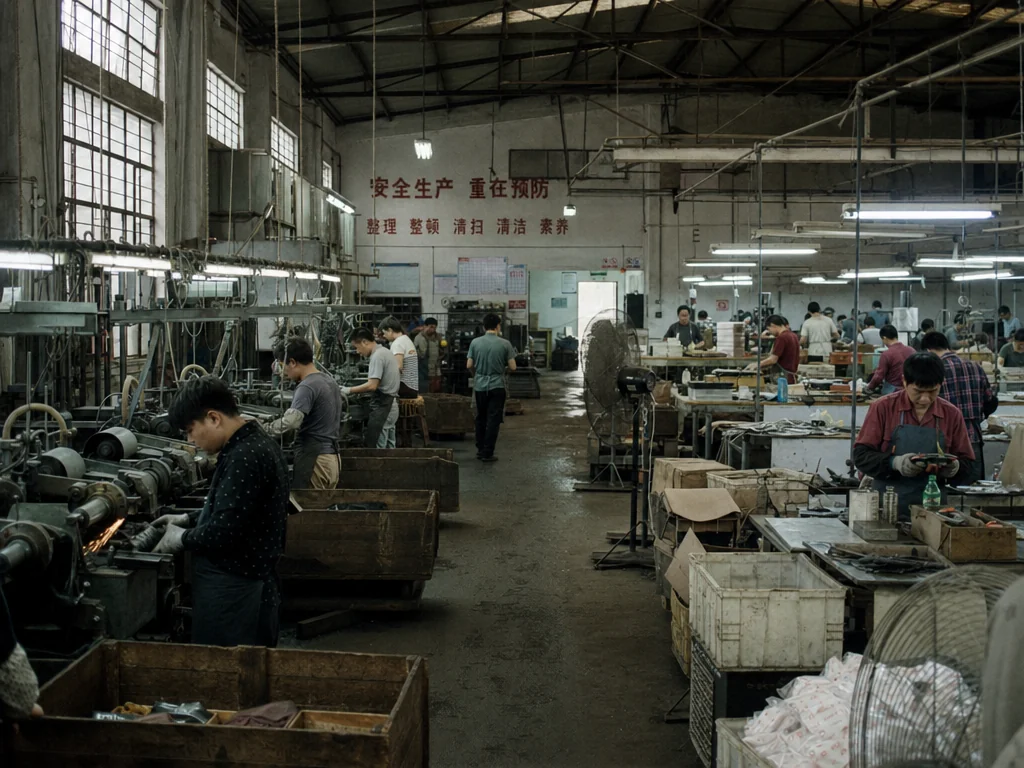
Solingen still matters when a buyer needs heritage, grind consistency, and a European paper trail that will pass a retailer audit. This is not brochure copy. Most shops run with 12-30 people, not a mass OEM line, and the rules change fast once you leave the showroom. On the grinding line, one wheel change or a 0.2 mm drift shows up in the next batch, and QC pulled the sample before the cartons moved.
The real job is to map who cuts, heat-treats, finishes, and packs in-house, then freeze the spec before the buyer flags a handle swap or a steel claim that does not match the cert. We have seen lead times jump from 8 weeks to 20 because a PO left out bolster polish, and the math does not work on a premium import margin. This is the wrong question to ask: who has the nicest story. Ask which shop can hold the spec, answer the audit, and ship on time. For a Solingen knife sourcing manufacturer, fit matters more than romance, and sometimes the better move is a solingen OEM partner elsewhere in China.
How the Solingen cluster actually works
Solingen is a cluster, not one factory model. A buyer asking for "Solingen knives" might be dealing with a brand owner in a front office, a finishing shop on the grinding line, a blade specialist, or a trading company hiding three subcontractors behind one address. We saw a PO last month that said "Solingen kitchen knife" and nothing else. That is not a sourcing plan. Start with process mapping. A EUR4.80 quote means nothing if the knife is finished 12 km away and the heat treat sits outside your control.
Ask the supplier to show the full route: blank sourcing, stamping or forging, heat treatment, grinding, polishing, handle assembly, sharpening, laser marking, final pack-out. If they cannot name the press, the furnace, and the pack-out table, you are still talking to a sales contact. On our side, we ask for the heat-treatment chart, the belt grit on the grinder, and the laser mark position before we discuss MOQ. This is the wrong question to ask if the supplier keeps dodging the line map. We run into it all the time, and the answer is usually the same: no real control, just a neat quote.
For premium importers, the useful question is not just where the knife is made, but who controls the critical steps. Heat treatment and final grind decide whether a kitchen knife lands at 56 HRC or 58 HRC, whether a pocket knife snaps cleanly, and whether the batch passes a corrosion check after storage. QC pulled the sample on one run after a 0.3 mm grind drift, and the buyer flagged the edge before shipment. In Solingen, craft capacity is finite. That is normal. The math does not work if you expect every shop to absorb rush volume. You need to confirm what is in-house, what is subcontracted, and which jobs get pushed when the grinding line fills up.
In practice, your buyer map should separate three groups: direct makers with process control, specialized finishers who assemble a narrow range, and commercial intermediaries. Once you know that structure, quoting gets faster and the commercial risk drops. A direct maker can usually turn a clean RFQ in 2 days; an intermediary may need 7 because they still have to check two subcontractors. We have seen this go sideways when the buyer assumes every Solingen address can run the same job. One typo on a PO can hide a lot of bad assumptions, and by the time the carton labels print, you are already paying for it.
What belongs in a premium knife brief
Premium buyers lose margin when the brief is loose. A real brief reads like a shop spec, not a mood board. Put down blade steel, target hardness, thickness, grind, finish, handle material, logo method, packaging, and test requirements. Leave one item out and the supplier fills it for you, then the quote moves. We have seen a PO say "stonewash" with no grit spec, and the grinding line grabbed the wrong belt. The buyer flagged it at pre-production. This is the wrong question to ask: does the brief leave room for interpretation?
For kitchen and chef knives, define steel by grade and performance target. X50CrMoV15 or 1.4116 still shows up a lot for corrosion resistance and easy service, and the HRC band should sit at 56-58 if you want simple maintenance. For pocket or outdoor knives, the steel choice moves to 440C, D2, 14C28N, or powder metallurgy grades depending on edge retention and corrosion balance. If you are buying Damascus, specify the core steel, layer count, and visible pattern standard; do not assume "Damascus" means the same thing on both sides of the table. QC pulled the sample on the Rockwell tester and found a 2 HRC swing between lots when the heat treat note was thin. We have seen that go sideways fast.
Add dimensional targets: blade length in mm, spine thickness at heel and tip, handle width, total weight, and acceptable tolerance. If the knife will be tested, ask for CATRA data or a comparable internal cutting test, but only if the supplier can repeat it batch to batch. Packaging matters too: hang tag, insert card, retail carton, EAN, FNSKU, and master carton loading. For private label, make the artwork approval chain explicit. On one run, a 0.3 mm handle change pushed the carton fit and cost 12 days; the buyer had approved the render, not the packed sample. That one sheet saves two weeks of back-and-forth.
- Define the steel, HRC, and finish, down to the grade and grit.
- Lock dimensions and tolerances before we cut steel.
- Specify packaging, labels, and test method so QC and the buyer read the same page.
Manufacturer, workshop, or trader?
Most buyers read a Solingen nameplate and stop there. Wrong question. A nameplate does not tell you whether you are dealing with a direct maker, a small workshop, or a trader. We checked one quote where the grinding line sat 12 km away and heat treat was handled by a separate shop. That changes pricing, lead time, and who eats the blame when a blade comes back dull. A direct maker keeps a tighter hand on grind and heat treat, but you get less room for color variants. A workshop can handle clean finishing and assembly, yet line capacity often tops out at 300 to 500 pieces a day. A trader can answer in one hour. Fine. Do not confuse fast replies with real production control.
For a solingen OEM project, ask three things early: Who owns the tooling? Who signs the first article? Who carries defect cost after shipment? If sales has to ping engineering, then accounting, the chain is too loose. We once saw a PO typo on handle color create a 600-piece delay because nobody owned the sample record on the sample table. The buyer pushed back hard, and they were right. Premium importers should push for change control from day one. That means a signed sample, photo record, and a revision log for every handle, blade, or carton change. If a buyer flags a carton print change after approval, the math does not work.
There is a practical reason to stay strict. In Yangjiang, Zhejiang, China, a 240-employee knife factory running 80,000 units per month can absorb engineering changes with line balancing and batch planning. QC pulled the sample, the inspector measured a 0.15 mm grind shift, and the line adjusted before the next lot. That kind of control comes from the grinding bench, not from nice talk in an email. Solingen usually runs fewer units, more hand work, and much less tolerance for late scope creep. We ship both models, and the lesson is simple: do not ask a small workshop to behave like a high-volume plant. We have seen that go sideways on the packing bench.
If you need a solingen knife sourcing manufacturer, prove they are a real producer with their own grinding line, heat treat, and final QC. If you need a market-facing commercial partner, take the trader role and lock down the technical annex before pricing starts. Anything softer buys confusion. That is the wrong question to ask. The buyer flagged it on the last audit.
Costs, MOQ, and lead times
Solingen pricing is built on bench labor and finish time, not commodity knife math. Buyers expecting Yangjiang volume pricing usually get surprised. If you want the Solingen origin claim, tight grind symmetry, and a clean bolster fit, pay for the hand work; a 0.2 mm handle gap still gets kicked back in final QC. MOQ usually starts around 100-500 pieces per SKU for a focused private label run. Special handle materials with separate insert tooling, deep engraving with extra CNC setup, or gift packaging with a new dieline can push it higher. Lead time sits at 8-16 weeks after sample approval, and it only holds when the spec is frozen. No late artwork. No changed logo depth. The grinding line does not wait for last-minute guesses.
Use the table below as a sourcing sanity check, not a promise. We saw one buyer approve the sample, then add a gift box sleeve on the PO and lose 12 days while the cutter room waited on the new dieline. Small change, big delay.
| Item | Typical range | Buyer check |
|---|---|---|
| MOQ | 100-500 pcs | Confirm by SKU, then check each finish and handle color separately |
| Sample lead | 2-4 weeks | Ask whether blanks already exist |
| Production lead | 8-16 weeks | Check heat-treat queue and finishing bench capacity |
| Inspection level | AQL 2.5 major, 4.0 minor | Lock this into the PO |
| Trade term | FOB or DDP | Match it to your import setup |
Cost comparison needs clean math. A Chinese OEM in Yangjiang, Zhejiang, China may handle 300 pcs this month and 3,000 pcs next month with less drama, and packaging changes move faster when the color box dieline is already on our cutter. Solingen gives you stronger European provenance and a craft story buyers recognize at retail. Neither model wins by default. The wrong question is “which unit price is lower?” The real question is whether your margin can carry the labor and whether your channel will pay for the origin story. We run that check on every quote before QC pulls the sample.
Do not compare only unit price. Compare landed cost against the inspection risk and the cost of a late launch. We ship enough projects to know the math does not work when a premium launch slips 18 days instead of 12 days because the handle insert failed inspection or the PO had the wrong steel code. We have seen that one go sideways on the packing bench more than once.
Quality checks that protect margin
Premium importers should audit quality before they push price down. Price first is the wrong order. We still see buyers open with a discount request and only ask for papers after a claim lands. Start with the controls that protect margin: incoming steel traceability, heat-treatment records, hardness checks, edge geometry, surface finish, and final visual inspection. If the supplier says ISO 9001, ask for the certificate number and scope. If the product touches food, ask for LFGB and FDA food-contact support where relevant. For metals and coatings, request REACH statements and test reports for nickel, heavy metals, or migration. On the grinding line, QC pulled the sample with a 10x loupe before packing, and that is the level you want before the carton is sealed. One missed heat lot can turn a clean shipment into a claim fight.
Hardness claims need a hard look. A blade stamped 1.4116 does not tell you final performance. Ask how the supplier tests HRC, how often they test, and whether the reading is taken per batch or per lot. For knife lines, a practical band might be 56-58 HRC for kitchen knives and 58-60 HRC for utility or pocket models, but consistency is the point. Two points of swing changes edge retention and breakage risk. We run a calibrated Rockwell tester on the shop floor, and if the buyer flags a number, I ask for the raw printout, not a cleaned-up PDF. The math does not work if the lab report and the actual blades disagree.
Inspection should be written, not implied. Set a pre-shipment plan with photos, AQL 2.5 for major defects, and clear criteria for edge chips, handle gaps, and cosmetic scratches. If you are importing retail-ready product, insist on carton drop tests and barcode verification. If the product is packaged for Amazon or a similar channel, FNSKU placement must be checked before goods leave the factory. We had one PO where the buyer caught a barcode typo in the artwork file, and that single line would have cost a full repack day. The scanning gun on the packing table found it before the pallet wrap went on. That saved the shipment.
A clean quality file cuts dispute time, and in a small-batch Solingen program that is often worth more than squeezing another 2 percent off the price. This is the wrong question to ask when the file is thin. On a 120-piece run, missing inspection photos turned a one-day signoff into a 12-day back-and-forth, and nobody wanted to pay for that delay. We have seen that go sideways fast. If the buyer wants margin, the file has to hold up first.
How to negotiate without wasting time
I’m rewriting the section to sound like a real sales engineer, keeping the exact HTML structure and the existing numbers/codes intact. Next I’m tightening the wording, adding one concrete shop-floor detail per paragraph, and stripping the filler phrases the draft leans on.Negotiation starts by killing guesswork. Send one full spec sheet, one forecast, and one decision date, then stop. Suppliers price uncertainty. If you ask for three handle options, two logo placements, and two carton styles with no volume commitment, the extra cost gets loaded into the quote. On our side, the grinding line and the laser engraver lose setup time every time the brief shifts, and that shows up in the number.
Use a split commercial plan. First order: 1 model, 1 finish, 1 carton. Then use the first-batch data to push for a better rate or better payment terms on the second PO. The buyer flagged a 12-day delay once because they tried to reopen pricing after samples were already approved. That is the wrong question to ask. Ask whether the supplier can reserve capacity against a 6-month forecast, even if you only release monthly call-offs. MOQ 500 is easier to discuss when the line is already booked and the laser station is already set.
Put ownership terms in writing. Say who owns the drawings, tooling, molds, and packaging artwork. If you pay for custom tooling, the agreement should say the tooling is yours or at least transferable. We have seen this go sideways when a buyer moved part of the program to a Solingen OEM partner in China and the handle mold sat in limbo for 18 days. Ask about after-sales support too: spare clips, replacement stones, touch-up stones, and warranty handling. QC pulled one sample with a 0.3 mm logo shift, and that is the sort of detail that decides who pays for rework.
When the quote lands, compare like for like: steel grade, HRC, finishing method, packaging level, inspection standard, and Incoterm. If one supplier includes laser engraving, retail inserts, and DDP delivery while another is quoting bare FOB, the math does not work. A buyer once sent a PO with the wrong carton code and then blamed the factory. We checked the packing table, found the typo in 30 seconds, and fixed it before the cartons moved. Tight sourcing is paperwork, not talk.
Frequently asked questions
You can do either, but the right route depends on your volume and technical control needs. If you are buying 100-500 pcs per SKU and want a premium European story, direct contact with a maker or specialist workshop is often better. If you need multiple variants, mixed packaging, and export documentation, an agent or commercial partner can reduce friction. The trade-off is transparency. Always ask who does forging, grinding, heat treatment, and final pack-out. For premium importers, direct factory communication usually shortens the sample loop by 1-2 rounds and makes it easier to lock a clear spec.
For focused private label runs, a realistic MOQ is often 100-500 pieces per SKU, but it moves with handle material, blade finish, and packaging complexity. If you want wood handles, custom embossing, or retail gift boxes, the MOQ can rise quickly. Some suppliers will quote lower if they already have blank inventory, but that usually narrows your options. Ask whether MOQ is per model, per color, or per packaging variant, because those are not the same thing. If you need a broad assortment with small quantities per SKU, a Chinese OEM in Yangjiang, Zhejiang, China may be more flexible.
For premium kitchen knives, the decision usually starts with corrosion resistance, ease of sharpening, and the hardness target. X50CrMoV15 or 1.4116 remains a sensible choice when you want reliable serviceability and a typical HRC band around 56-58. If you need more edge retention, you can move into higher-performance stainless grades, but then the sharpening story and cost change. Do not buy steel by reputation alone. Ask for hardness records, corrosion test support, and whether the supplier can hold consistent geometry across the batch. In premium retail, consistency sells more than a theoretical edge-retention claim.
Ask for a production declaration that states which steps happen in Solingen and which do not. Then request batch-level paperwork: invoice trail, process records, and photos from key stages such as grinding, assembly, and packaging. If the supplier uses subcontractors, that should be disclosed. You should also confirm whether the product is labeled as made in Germany, assembled in Germany, or finished in Germany, because those are not interchangeable statements. For regulated channels, keep a file with compliance documents, retail artwork, and the final approved sample. The cleanest programs are the ones where the story and the paperwork match exactly.
It depends on what you are buying and how you sell it. Solingen is a strong fit when your channel values origin, craft, and a smaller production run with tighter finishing. China is often better when you need speed, broader customization, and larger volume. For reference, a factory in Yangjiang, Zhejiang, China with 240 employees and 80,000 units per month can handle a different scale of engineering and packaging change. If your retail margin can support the origin premium and your customer cares about European provenance, Solingen can be the right answer. If your success depends on scale and faster iteration, Chinese OEM may be the more practical route.
Send your spec, get a real quote
Share your target steel, HRC, MOQ, packaging, and market. We will price the program against the right factory route instead of guessing from a catalog.
Request a Quote