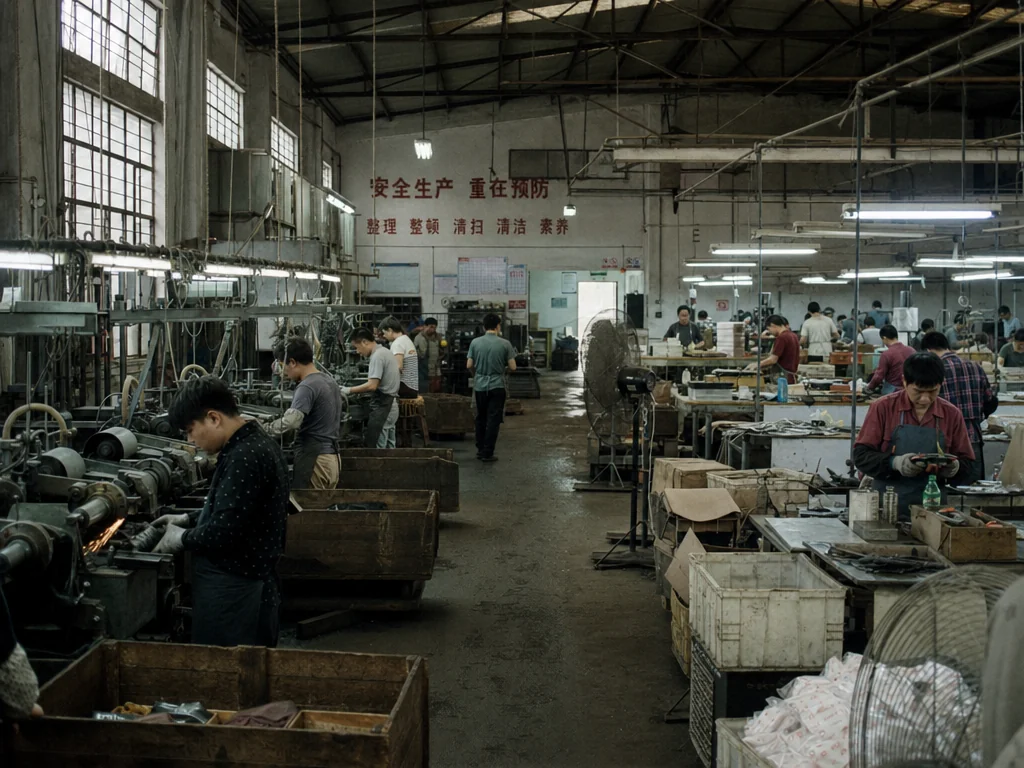
A stonewash blackwash finish knife looks plain on a product page, but for an EDC buyer it is a sourcing call on wear, corrosion, batch-to-batch consistency, and how the blade feels in hand. On our grinding line in Yangjiang, we get the same brief split three ways: a plain stonewashed blade, a black-coated blade with polished highs, or a darker tumble that stays low-glare. Different work. This is the wrong question to ask if you call all of it “blackwash” and expect one price.
If you are working with a stonewash blackwash finish knife manufacturer in China, the spec needs to name the steel, HRC band, coating system, tumble media, acceptance standard, and packing method. QC pulled the sample under the 10x lamp, checked the flats for rub-through, and measured the lot against AQL 2.5 before release. We have seen a buyer flag a PO typo on the blade code, then blame the finish when the mix-up started on paper. One batch comes out matte and clean, the next batch turns glossy or shows thin coating on the flats. We run this inside an ISO 9001 system, with repeat programs starting around 500 pcs and lead times of 35 to 45 days after sample sign-off. The math does not work if the PO is vague.
What Stonewash And Blackwash Mean
Stonewash is a mechanical finish. We run the blade through ceramic media or steel shot in a tumble drum, and the surface takes a field of fine micro-scratches with a low-glare look. It does not change hardness or corrosion resistance by itself. What it does is hide handling marks, pocket rub, and the scuffs you see after 7 days in a pocket. On the grinding line, a blade can look clean at packing and still show fingerprints under a 600-lux bench light when QC pulls it twice. For EDC brands, that is the test.
Blackwash is a coating-plus-tumble finish. First we apply PVD, DLC, black oxide on carbon steel, or another dark coating, then we tumble the high points so the blade reads as broken-in instead of flat black. Asking only for "blackwash" is the wrong question to ask. The market uses the word loosely, so ask what sits under the tumble. If the supplier cannot say whether the base is coated, blasted, or chemically darkened, the spec is not ready. We have seen buyers sign a blackwash sample, then push back on production when the edge line came back too silver on 1,000 pieces; the math does not work if the base layer is vague.
For a stonewash blackwash finish knife, write the target in buyer language and factory language. Say silver highs, dark gray body, satin edge line, or a muted anti-glare look. Put the sample note in writing, down to the finish level and the reference piece. On one PO, the buyer flagged a typo on the finish callout, and "mat black" went through where "matte black" was meant. QC pulled the sample at incoming, caught it fast, and the order moved only after the spec was cleaned up. In Yangjiang, one line can decide whether a repeat order stays smooth or goes back for revision.
Pick The Right Blade Steel
Steel choice changes how the finish behaves on the line. A fine-grained stainless like 14C28N or 8Cr13MoV usually takes a stonewash evenly, and QC pulled the sample from a 300-piece lot with the same dull-silver look after 18 minutes in the tumbler. Move to D2, 9Cr18MoV, or 154CM, and the blade shows a different texture because carbide content, polish level, and heat treatment all change how the media breaks the light. Better is the wrong question here. The buyer sees the hand feel and the shelf hit.
For EDC, the practical range is usually 57-60 HRC, depending on the steel. At 57-59 HRC, sharpening is easier and the edge is less brittle in use. At 59-60 HRC, edge retention improves, but the finish will show grind lines or patchy burnish if the pre-polish is weak. We saw that go sideways on a 12,000-piece order when the grinding line skipped the 800-grit belt at station 3. For a blackwash blade, steel also changes corrosion risk. Carbon steel or D2 can look right, but the math does not work unless packaging and storage are controlled. Stainless is the safer call if the knife will sit in humid China, coastal Europe, or summer U.S. distribution channels.
Use an actual materials reference such as our knife steel comparison and decide whether the finish should carry a premium story or just hide wear. A buyer once flagged a PO that asked for blackwash on D2 but left out the corrosion spec, and that saved a messy rework. If the steel cannot hold the finish after tumble time and salt-spray exposure, the sourcing call is already made. Chasing a cheaper grade here usually costs more at QC.
Control The Finishing Process
The finish comes from process control, not what gets written on the PO. We run stonewash on a clean blade face, keep the grind stable, and check the pre-finish surface with a loupe at the grinding line. If the scratch pattern is 0.05 mm too deep, the tumble will not hide it; it only knocks the peaks down. Media size, tumble time, load density, and whether we fixture the parts or run bulk decide whether the blade lands matte, pitted, or just dirty-looking.
Blackwash is tighter. The coating has to survive the tumble and still break on the high spots. On the floor, we usually run a coated blade for 15 to 45 minutes, then QC pulls the sample and checks the edge line, pivot area, and clip side for uneven wear. Run it too long and the coating strips where it should stay. Cut it short and the buyer flags it as plain black, which is the wrong question to ask if you want a real blackwash.
On a Yangjiang, China production floor, repeatability comes from standard work, not operator memory. A 240-employee factory can still miss finish consistency if the same model moves across two lines without the same sample board and finish card. We have seen this go sideways on a 500-piece PO because of one typo on the finish note, so OEM buyers should ask for a retained master sample, a photo standard, and a signed finish card before mass production starts.
Build A Useful Spec Sheet
If you're buying a stonewash or blackwash knife finish from China, the spec sheet has to leave almost no room for guesswork. Do not write only "blackwash blade." Call out the steel, hardness target, coating system, tumble media, gloss level, logo method, and the wear limit on the flats and edge shoulders. Last month QC pulled a sample off the grinding line at 10:20; the buyer flagged it because the PO only said "dark finish," and three shops turned that into three different looks. That is the wrong question to ask if you want 2,000 blades that match.
A spec sheet that actually works also puts the commercial terms in one place. Put MOQ, sample lead time, production lead time, carton count, and inspection method on the same page, not scattered across email threads. For repeat EDC programs, we run 500 pcs MOQ, 7-10 days for pre-production samples, and 35-45 days for bulk after sample approval. Add custom packaging or laser marking, and the line slows down; on a 3,000-piece run with a 2-color box, we saw it move from 35 days to 48 days. The math does not work if you leave those items out.
| Spec item | Practical target | Why it matters |
|---|---|---|
| Base steel | 14C28N, 8Cr13MoV, D2, or 9Cr18MoV | Keeps corrosion risk under control and changes how the finish reads |
| Hardness | 57-60 HRC | Balances edge retention against finish consistency |
| Finish type | Stonewash or blackwash with named coating | Stops quote drift at the first RFQ |
| Inspection | AQL 2.5, photo standard, retained sample | Gives you one acceptance line the inspector can follow |
| Commercials | MOQ 500 pcs, 35-45 days, FOB or DDP | Keeps sourcing and landed cost clear |
This is where private-label work goes sideways if you are sloppy. If you want a logo, clip mark, or serial code, lock it to the finish so the engraving does not fight the texture. We ship cleaner when that note is on the spec sheet, not buried in a revision email, and a typo on the PO can send the laser operator to the wrong file. On one 5,000-piece order, the buyer flagged a 0.2 mm shift in logo position after the laser jig was already set, and we had to rerun the lot. For branded programs, see our private label knife programs and knife OEM manufacturing options.
Test Durability, Not Just Looks
Test the finish the way the knife gets used. Pocket carry brings coins, keys, zipper teeth, sweat, cardboard dust, and the occasional drop onto concrete. On our grinding line, QC pulled a blackwash sample with scuffs at the thumb stud after 18 pocket-carry cycles, while the stonewash part still looked acceptable at cycle 30. Stonewash hides that abuse better than a polished blade. Blackwash keeps a clean look longer, but only if the adhesion is right. If the coat lifts at the thumb stud or along the grind line, the knife looks tired before the first carton ships. The wrong question is which finish looks prettier in a photo.
For QC, ask for adhesion and wear checks, not showroom approval. Cross-hatch adhesion to ASTM D3359 fits coated blackwash blades. Salt fog testing to ASTM B117 fits corrosion-sensitive steel and coated surfaces, especially for humid coastal markets. On our line, a 50-rub cloth test and a 24-hour pocket-carry simulation tell you more than a polished sample under lights. AQL 2.5 works for cosmetic defects, but the defect sheet has to say what counts as a scratch, a speck, or a flake. If that line is vague, the inspection result is noise. We run the test with a gray cloth, and the buyer usually stops arguing after that.
Do not mix up edge testing with finish testing. CATRA tells you cutting retention, not whether the tumble pattern is even. This is the wrong question to ask if the buyer flagged a blotchy blade flat on a 3.2 mm EDC sample. We have seen a knife pass cut tests and still get rejected because the black coat scuffed too fast or the blade flats looked patchy after one week in a distributor bag. Buyers in Europe and North America spot that fast, and they care more when the knife is sold as an everyday carry tool than as a display piece. The math does not work if you only check the edge.
Buy For Your EDC Price Band
The right finish follows the sell price, not taste. For an EDC knife in the USD 25-40 band, we usually run a clean stonewash. The tumbling drum on line 2 knocks down handling marks, so the blade still looks hard-use without much cost creep. In the USD 45-90 band, blackwash makes sense when the handle, clip, and box already look premium. The finish itself usually adds about USD 0.35-1.20 per knife, but the landed number moves with coating type, masking, scrap rate, and whether QC pulls extra samples. Last month a buyer flagged a USD 0.18 increase on a 500-piece run. The math did not work.
On a true OEM order, the finish also changes freight and packing. Blackwash blades should not rub against hard inserts without a sleeve or bag, or the high points pick up marks before the cartons leave the packing line. We run 0.8 mm protective sleeves on tighter specs for that reason, and QC will reject cartons if the blade tip shows a rub line after the 1-meter drop check. If you are shipping DDP into the U.S. or EU, ask your supplier to quote the finish with carton counts, barcode labels, and any FNSKU or retail sticker work. Asking for finish only is the wrong question.
For brands that want a broader assortment, a stonewash pocket model and a blackwash flagship can share the same platform while changing only the blade surface and handle color. We have seen this go sideways when the buyer changed the blade code after the grinding line had already started. Start with our EDC pocket knives and then decide whether the finish should lead the design or just support it. In China, the cleanest quote comes when the buyer gives the target retail price and the maximum landed cost, plus the acceptable finish wear after 1,000 openings. A typo on the PO can still send the wrong code to the line, and then everybody loses a day.
Frequently asked questions
Yes, but the order of operations matters. For stonewash, laser engraving can be done before or after the tumble depending on how sharp you want the logo to read. For blackwash, most buyers prefer engraving after coating and before final inspection so the mark stays clean and readable. If the laser is too aggressive, it can expose bright metal that clashes with the finish. If it is too light, it can disappear into the texture. On a commercial program, I would ask for one engraved sample, one unengraved control sample, and a photo standard before bulk production. That is the fastest way to avoid a logo that looks too faint or too harsh on the final knife.
Specify Your Finish Before Quoting
Send the steel, HRC target, and finish reference first. You will get cleaner quotes, fewer sample revisions, and a stonewash blackwash finish knife that matches the design intent.
Request a Quote