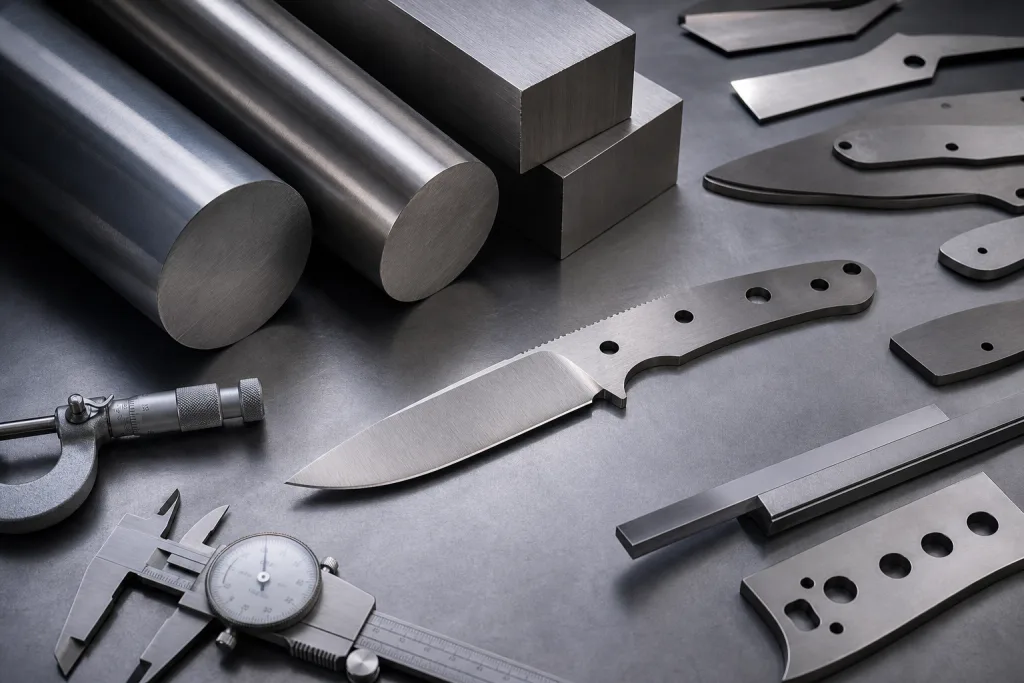
Boning knives look simple on a product page. On the grinding line, they are not. A 150 mm semi-flex blade and a stiff 6 inch butcher pattern can both sit under the Butchery Knife category, but we set them up differently. For one SKU we run 2.0 mm steel with a tighter tip grind; for another, the fitter checks handle gaps under 0.3 mm before carton packing starts. QC pulled a 150 mm sample last month: sharpness passed, tip symmetry failed by 1.2 mm. Small miss. Buyers usually catch that only after the master carton is opened.
If you sell on Amazon or run a DTC cutlery brand, “Who has the lowest MOQ?” is the wrong question to ask. The better question is whether MOQ and lead time match your sell-through before you hit zero stock or sit on 800 slow-moving units. We have seen this go sideways. One buyer planned 12 days for packing approval, but the printed color box took 18 days because the barcode on the PO had one wrong digit. From our factory team in Yangjiang, Zhejiang and China export work since 2008, this is how we would plan it with you.
What MOQ Really Means
MOQ is the break-even line, not a trick to scare buyers off. We price it from steel sheet yield, heat-treatment basket loading, grinding line setup, handle molding or CNC time, laser marking, box printing, plus AQL 2.5 inspection hours. For a custom boning knife, MOQ jumps when you move from a stock 150 mm blade to a 165 mm blade, change ABS to Pakkawood, or ask for a retail box with 2 printed inserts. Last month, QC pulled the sample because the logo sat 3 mm too close to the bolster. Easy fix at 600 pcs. Painful at 200 pcs.
For Amazon and DTC sellers, the common mistake is asking for 200 pcs with full customization: a new blade profile, private label, printed color box, custom sheath, barcode labels, plus carton marks. The math doesn't work. Some factories will take the order, then lift the unit price, and the sample-to-bulk match gets loose after the grinding wheel, jig, and handle fixture are reset for such a small run. At TANGFORGE in Yangjiang, Zhejiang, we run a practical MOQ of 600 pcs per SKU for a private-label boning knife on an existing blade and handle platform. For a new handle, new mold, or new packaging structure, we quote 1,000-1,200 pcs.
One SKU means one blade model, one handle color, one logo, and one retail package. Simple rule. If you want black Pakkawood plus walnut-look Pakkawood, we count that as two SKUs because the handle bins split, the polishing wheels need separate control, and final packing labels cannot mix. If the same knife goes into a gift box for one channel and a clamshell for another, MOQ changes again because the box supplier usually asks for 1,000-3,000 printed pieces before they start the press. We have seen POs go sideways over a tiny typo too: “matte black handle” in the email, “brown handle” on the PO.
A buyer-friendly way to control MOQ is to customize in layers. Start with an existing 6 inch or 150 mm blade blank, choose a tested handle material, add laser engraving, and pack it in a standard kraft or color box with your artwork. You still get a private-label product ready for a product page, without mold fees, 18-day sampling instead of 12-day sampling, or dead stock on your first order. We ship cleaner first runs this way. The grinding line does not need a new fixture for every small idea, and that is where small MOQ projects often lose money.
Lead Time From Sample To Shipment
Boning knife lead time runs on two clocks: sample work and bulk production. Buyers often miss the first one. A supplier may quote only grinding-line days, then the launch slips because the CAD drawing sat in purchasing’s inbox for 6 days. For a new custom boning knife, sample development usually takes 10-20 days when the blade profile stays close to one of our factory patterns; we pull the old 6-inch boning blade die, check the spine with a Mitutoyo caliper, and set the first grind from that reading. If the order needs a fresh CAD profile, a handle prototype, balance correction, or a packaging mockup, plan 20-35 days. “How fast can you ship?” is the wrong question until the sample spec is locked.
Mass production starts only after the deposit hits our account and the approved production sample matches printable packaging files, including barcode size and bleed. For a standard private-label boning knife, our normal China production lead time is 45-60 days. For high polish blades or Damascus cladding, use 60-70 days; resin handles, molded sheaths, and gift boxes with inserts can push the same range if tooling queues are full. We’ve seen this go sideways when a buyer approved the knife but left one typo on the PO color box text. QC pulled the sample. The carton line stopped, and the order lost 4 days. Small mistake. Big delay. If 6 SKUs share one carton shipment, the slowest SKU controls the ship date.
Here is a realistic planning view for Amazon and DTC sellers. We run this schedule on mixed private-label orders every month, and the weak point is rarely blade grinding. It is usually artwork approval or FNSKU placement; last-minute carton changes hurt most after the packing team has already set the tape machine and label jig.
| Stage | Typical Time | Buyer Risk |
|---|---|---|
| Spec confirmation | 2-5 days | Blade thickness not fixed, such as 1.8 mm vs 2.2 mm, or handle material changed after quotation |
| Sample making | 10-25 days | Logo depth changed after laser test, or buyer flagged balance after the first 2 samples on the bench scale |
| Sample shipping and approval | 5-10 days | Sample sits with 3 internal reviewers before anyone gives written approval |
| Mass production | 45-70 days | Packaging print delay, steel batch delay, or resin handle color mismatch found at incoming inspection |
| Inspection and loading | 2-5 days | AQL failure, mixed carton labels, or Amazon FNSKU sticker position rejected by QC |
If you are shipping to the United States by sea, add roughly 25-40 days port-to-port plus customs clearance and local trucking time before FBA receiving starts. Europe can run 30-45 days on routes where the vessel transships through another port. DDP air can save a launch, but the math doesn't work on heavy knife cartons; one 18 kg master carton can eat the margin fast. Plan early. We ship cleaner when the buyer gives us 12 days for artwork approval instead of trying to fix packaging 2 days before loading.
Cost Drivers Behind MOQ
A boning knife factory is not pricing only the blade blank. FOB starts with steel grade and blade size, then the small items start cutting into margin: 2.0 mm versus 2.5 mm stock, heat-treat yield, belt-grinding loss, handle resin, rivet count, satin or mirror finish, sheath, color box, barcode label, AQL 2.5 inspection, and export carton packing. Those choices move cost by USD 0.20-1.50 per unit. That hurts after Amazon referral fees, FBA fees, returns, and PPC have taken the easy margin. We run this on the grinding line every week; QC pulled a 6-inch sample last month after the buyer changed PP to TPR after the PI, and the math didn’t work anymore.
For a wholesale target, a basic 5Cr15MoV or 1.4116 stainless boning knife with PP or TPR handle often lands around USD 2.20-4.20 FOB at volume. A better private-label retail knife using 1.4116, 420HC, AUS-8, or 14C28N steel needs tighter checking: full tang fit-up checked with a 0.05 mm feeler gauge, Pakkawood or G10 handle slabs, cleaner logo etching, and a color box that survives a 60 cm drop test. That order type usually sits around USD 5.00-11.00 FOB depending on finish. Damascus or premium powder steel is another build. One steel batch can tie up 300-500 pcs before the first handle trial starts, so “just upgrade the steel” is the wrong question to ask.
Steel hardness has to match the job, not the listing photo. A butcher-friendly boning knife usually runs well at 56-58 HRC for stainless steels because it holds a usable edge without making sharpening a headache. We check it with a Rockwell hardness tester after heat treatment, and a 0.3 mm edge on a flexible blade tells more truth than a spec sheet. Pushing to 60 HRC sounds premium. Bad geometry at that hardness brings chip complaints in the first 30 days, and we’ve seen this go sideways on the test bench more than once.
MOQ climbs when upstream vendors set their own minimums. Color boxes often start at 1,000-2,000 pcs, and the box plant will not stop the offset press for 200 pcs because a trial order feels safer. Injection molded handles or sheaths need tooling, T1 samples, and at least one correction round if the bolster fit is tight. Custom G10 colors also hit sheet minimums; we had a buyer flag a PO typo from “green/black” to “green/blank,” and approval slipped by 4 days. If you want less first-order risk, ask which parts we already run each month. Existing components save money and cut lead time, often 12 days vs 18 days on a repeat handle.
Specs To Lock Before Ordering
A PO that says only “6 inch boning knife” leaves too much room. Wrong question. Before deposit, lock one spec sheet in mm so our factory, the inspection company, and your buying office chase the same target. We have seen reorders go sideways after 6 months because the first PO missed spine thickness; QC pulled a sample from carton 7 and measured 2.6 mm at the heel, not the approved 2.1 mm on the Mitutoyo caliper.
For the blade, write the length in mm and the steel grade, such as 5Cr15MoV or your chosen grade. Add the target HRC band, spine thickness at heel and mid-blade, grind type, edge angle per side, finish, and flex target. A common 150 mm boning knife often runs 1.8-2.2 mm spine thickness near the heel. A stiff butcher version can sit at 2.3-2.8 mm. A semi-flex version needs a thinner blank and a separate pass on the grinding line. If your listing says “flexible,” cut around pork ribs or chicken joints with the sample. Bend tests by hand? Almost useless.
For handles, lock the material code and color, then attach the surface texture sample number. State the rivet type or injection handle spec, tang exposure, logo position in mm from the butt, and food-contact requirement. For North America, FDA food-contact expectations are common. For Europe, ask about LFGB and REACH if your importer needs them on file. Not every handle material needs a fresh lab test for every order, but check whether the report matches the shipped material code; we once had a buyer flag a PO typo where black PP was written as TPR, and the math did not work for the quoted handle mold.
Packaging needs the same discipline. Amazon sellers should define FNSKU placement and suffocation warning text, then lock carton drop target, master carton size, gross weight, units per carton, and blade-tip protection. A sharp boning knife moving inside weak packaging becomes a claims problem fast. We run 12 pcs per inner box on some wholesale packs, but for FBA we ship with a blade guard or molded insert after checking tip movement with a 1.2 m drop test.
Inspection Standards That Matter
Inspection starts before packing. We check incoming steel coils by heat number, then match heat-treatment records against the batch card before the blanks reach the grinding line. QC also checks grinding marks, handle fitting gaps with a 0.20 mm feeler gauge, edge sharpening, ultrasonic cleaning, and final cartons. The PO still needs a final inspection clause. For most Amazon and DTC cutlery orders, AQL 2.5 for major defects and AQL 4.0 for minor defects is a fair starting point. Critical defects should be 0. Last month QC pulled the sample at the packing table and found 3 cartons with mixed color labels because one PO line had a typo in the SKU suffix. Small typo. Big delay.
Major defects include loose handles, cracked scales, wrong steel grade, wrong logo, blade warpage over the agreed mm limit, unsafe burrs, exposed sharp tang edges, rust spots, broken packaging, incorrect barcode, and carton quantity mismatch. Minor defects are smaller calls: cosmetic scratches under the agreed length, slight shade change on natural wood handles, or print flaws that still pass a retail shelf check at 600 mm viewing distance. Write the limits down. Leaving this for a video call after production is the wrong question to ask, because the grinding line has already moved on to the next 3,000 pcs and the setup wheels are gone.
For cutting performance, start with shop-floor tests, then pay for formal testing when the order value supports it. CATRA testing makes sense when you compare edge retention across two blade designs, but the math doesn't work for every 500 pcs reorder. At factory level, we check edge sharpness consistency, burr removal under a cotton-wipe test, point alignment, handle fit, and HRC sampling against the approved sample. For a 56-58 HRC stainless boning knife, random HRC readings should stay inside the agreed band, not swing from 54 to 60. Our inspector uses a Rockwell tester after heat treatment and again after grinding if the buyer flagged soft blades on the last shipment.
Ask your boning knife manufacturer for production photos at key stages, not just finished glamour shots. Heat treatment racks, grinding lines, handle assembly benches, logo marking plates, and packed cartons show whether the order is moving normally or sitting in a corner waiting for a missing carton mark. TANGFORGE runs about 180,000-220,000 knife units per month across kitchen, outdoor, pocket, and butchery categories, but capacity only helps when the checkpoints are clear. We ship faster when QC knows the blade length, logo position in mm, carton mark, and barcode standard before mass production starts.
Reorder Planning For Amazon Sellers
Reorder planning is where solid Amazon boning knife SKUs get hurt. We see a SKU run 25-40 units a day for 4 months, then stock out right when ranking and reviews start paying back. If the first order ships by sea, plan a 90-120 day cycle from purchase order to sellable FBA inventory. That means blade grinding, handle assembly, carton packing, China export handling, ocean freight, customs, inland trucking, Amazon receiving, plus the 3-7 day delays nobody signs for. Small things bite. QC pulled a reorder sample last month with the FNSKU label 2 mm too close to the carton seam; Amazon receiving would have flagged that carton before it ever reached sellable stock.
Use the basic formula: reorder point equals daily sales multiplied by total replenishment days, plus safety stock. If you sell 25 units per day and realistic replenishment time is 100 days, you need 2,500 units before safety stock. Add 20-30 percent safety stock for holiday cooking months, or when we run the grinding line close to full booking in peak season. That puts the reorder trigger around 3,000-3,250 units, not 800. Buyers push back here. Fair enough. But the math doesn't work if the PO waits until the last pallet count and the carton room already has 14 other export orders queued.
Chinese factory calendars matter. Before Chinese New Year, Yangjiang knife lines get crowded, 8-12 workers per line start leaving early, and handle material suppliers slow CNC cutting schedules by 6-10 days. For Q4 Amazon sales, confirm replenishment POs by July or August if you want sea freight and safe FBA check-in. DTC sellers using 3PL warehouses sometimes receive 5-10 days faster than FBA, but customs clearance and domestic delivery still need buffer. We've seen this go sideways: a buyer marked “urgent reorder” on September 18, asked for ocean freight, then questioned why the ETA missed Black Friday.
For reorders, keep the spec sheet unchanged if possible. Changing the handle color or steel grade turns a reorder into partial new development, with new samples, carton drop checks, and another pre-production sample sign-off. If you want a version 2.0, run it as a separate project while the stable SKU keeps shipping. Clean handoff matters. One PO typo on blade thickness, 2.5 mm written as 2.0 mm, can stop the line while the caliper check gets confirmed and open a stock gap on Amazon.
How To Brief A Factory
A solid RFQ saves quote time and kills the 6-email guessing game. Send blade length in mm, target retail price, sales channel, first order qty, packaging style, logo method, destination market, and compliance requirement. If you have a sample, send top-view photos plus spine thickness, handle length, blade height, weight, and Rockwell target if you know it. Don’t ask the factory to “copy this one.” Wrong question. Ask what needs fixing: wet-hand grip slip, front-heavy balance, weak edge life, blister pack cost, or the 2-star reviews saying the knife feels cheap. Last month QC pulled one buyer sample with a digital caliper and found a 1.8 mm spine at the heel but only 1.2 mm near the tip. That changes grinding time. It changes the quote too.
For Amazon, tell the factory if you need FNSKU labels, carton labels, polybag warnings, insert cards, or DDP delivery. For DTC, say whether the boning knife ships alone, with a sheath, or inside a gift set with 3 other SKUs. Small details save real days. A boning knife sold as a meat-processing tool usually needs plain protective packaging that survives warehouse drops; a premium home-cook set needs cleaner printing and tighter color control, plus a box corner that does not crush under a 12 kg master carton. We’ve seen this go sideways when the buyer flagged carton marks after the quote, then asked why the lead time moved from 30 days to 42 days.
Be straight about the order plan. If the first order is 600 pcs and the reorder target is 2,000 pcs every 60 days, put that in the first email. We can sometimes run a lower first MOQ when the handle mold, blade blank, and inner box already sit in our tooling cabinet. The math does not work when a buyer asks for the lowest price, custom handle color, new gift box, and 7-day sampling on 300 pcs. The grinding line still needs setup time. A small batch can lose 2 hours just changing jigs and checking the first 20 blades against the golden sample.
At TANGFORGE, established in 2008 with about 240 employees, we prefer to quote with a spec sheet, packaging file, and inspection standard attached. Slower than a one-line price. Cheaper than a wrong order. We check carton size, logo position, blade thickness tolerance, and AQL 2.5 before we lock the offer. One PO came in with “bonning knife” on the color box artwork; catching that before plate-making saved the buyer 12 days vs 18 days for a reprint. Whether you choose us or another boning knife supplier in China, buy the process, not just the unit price.
Frequently asked questions
For a custom boning knife using an existing blade and handle platform, 600 pcs per SKU is a realistic starting MOQ. If you need a new handle mold, special color G10, custom sheath, or fully printed retail packaging, expect 1,000-1,200 pcs. Packaging suppliers often set their own minimums, so a factory may be flexible on blades but limited by box printing or insert cards. For Amazon sellers testing a new ASIN, the best path is usually existing tooling, laser logo, and standard color box. That keeps first-order risk lower while still giving you a private-label product.
After sample approval, deposit, and final artwork confirmation, normal mass production takes 45-60 days for a standard private-label boning knife. More complex versions, such as Damascus blades, resin handles, molded sheaths, or high-polish finishes, usually need 60-70 days. This does not include sample development, international freight, customs, or FBA receiving. If you ship by sea to the US or Europe, plan 90-120 days from purchase order to sellable inventory. Reorders can often be 30-45 days if no specs, packaging, or labels change.
Sometimes, but you should expect trade-offs. At 300 pcs, a boning knife factory may only offer existing stock shapes, limited handle choices, laser logo, and simple packaging. Unit cost may be 15-35 percent higher than a 1,000 pc order because setup, sharpening, packing, and inspection time are spread across fewer units. If your goal is a serious Amazon listing with reviews, PPC, and reorder potential, 600 pcs is usually a better balance. It gives enough inventory to test demand without forcing a full container-style commitment.
For most stainless boning knives, 56-58 HRC is a practical band. It gives reasonable edge retention while keeping the blade tough enough for trimming meat, working around joints, and repeated sharpening. A harder blade, such as 59-60 HRC, can work with the right steel and geometry, but it is not automatically better. Thin flexible blades need toughness and controlled heat treatment. Your spec should define the steel grade, target HRC band, blade thickness, edge angle, and flexibility so the factory and inspector are checking the same standard.
Use daily sales multiplied by total replenishment days, then add safety stock. If you sell 20 units per day and replenishment takes 100 days, your base reorder point is 2,000 units. Add 20-30 percent safety stock, so you should reorder around 2,400-2,600 units remaining. For Q4 or Chinese New Year periods, add more buffer because production and logistics slow down. If you wait until only 500 units remain, air freight may be the only way to avoid a stockout, and that can remove most of your margin.
Plan Your Boning Knife Order Properly
Send your target MOQ, blade spec, packaging idea, and sales channel. We will quote realistic cost, lead time, and reorder options.
Request a Quote